African Wild Dog - Lycaon pictus Wild African Dog - The original dog of Africa 14 Wild African Dog Locations Indigenous African Dog Wild African Dog Dog Temperament Wild African Dog Dog Breed Wild African Dog Dog Photos Wild African Dog Characteristics Wild African Dog Temperament Wild African Dog Behavior Where From Wild African Dog? Wild African Dog Care Tips Wild African Dog Health Tips Wild African Dog Coat Wild African Dog Diet Wild African Dog Training Tips Wild African Dog Variations
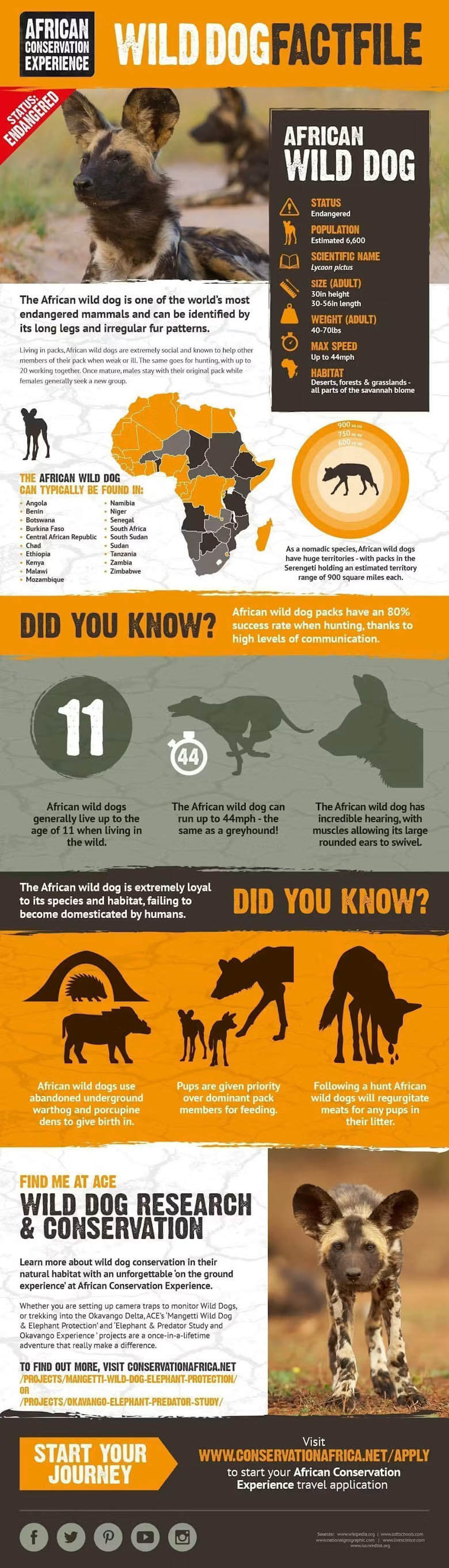
6,600 SPECIES ESTIMASTED LEFT IN THE WILD.
There are only 650 African Wild Dog packs left in the whole world.
Adopt a pack and help save the species from extinction.
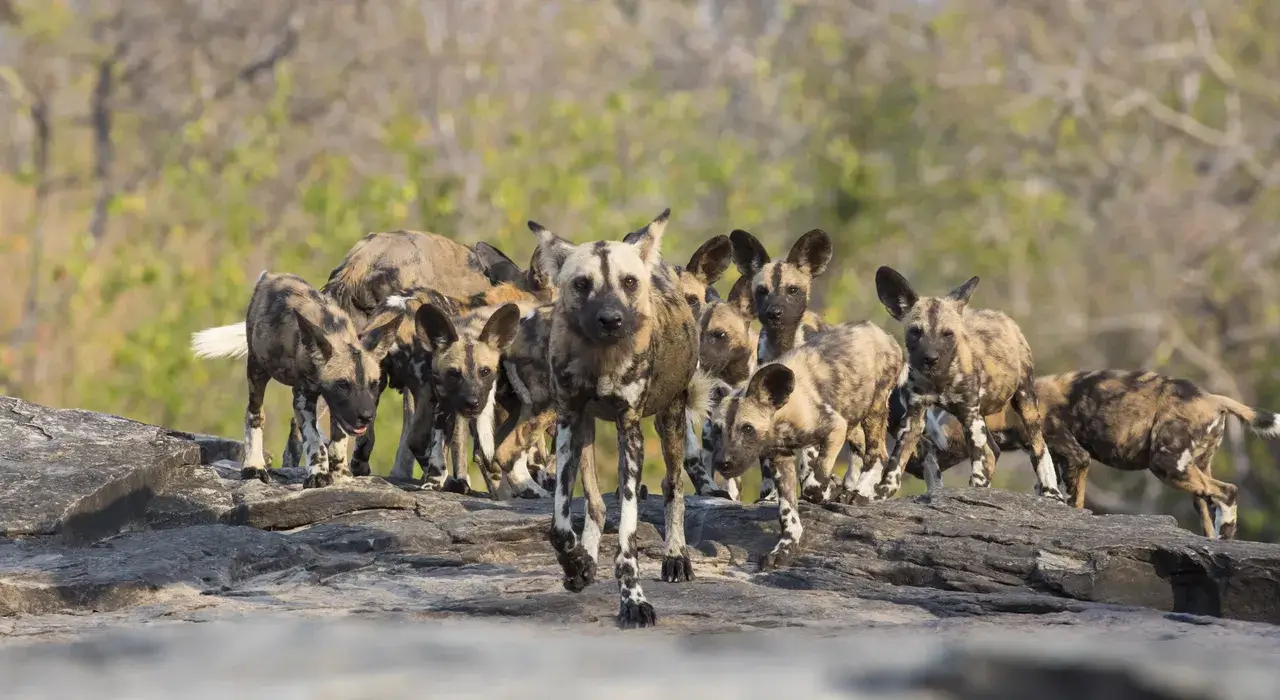
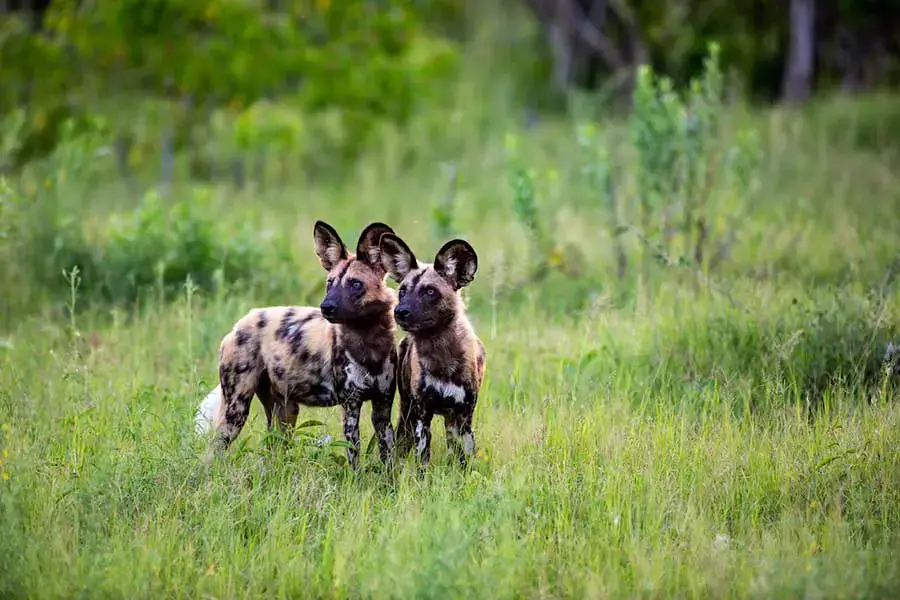
The African wild dog (often called the painted dog or painted wolf) is not a domestic dog breed, but rather a distinct, endangered species (Lycaon pictus). They are highly social, pack-hunting carnivores native to sub-Saharan Africa, known for their unique patchy coats, large rounded ears, and incredible endurance.
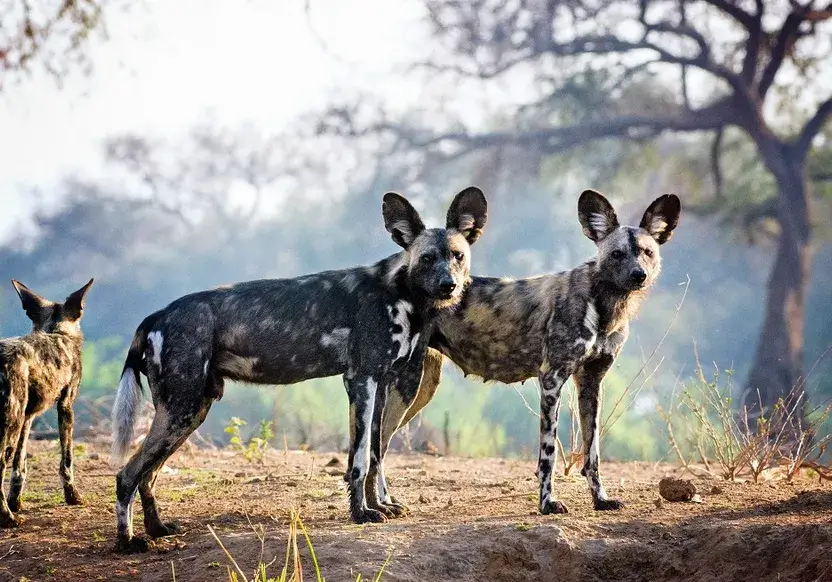
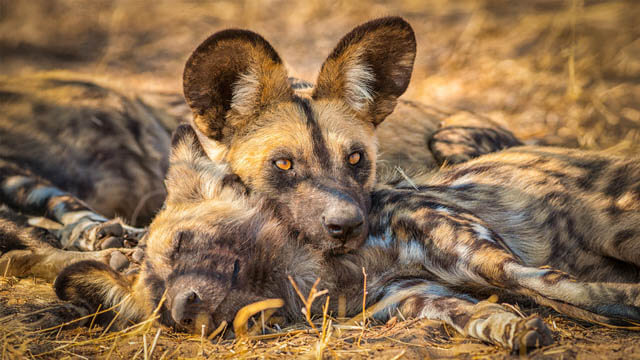
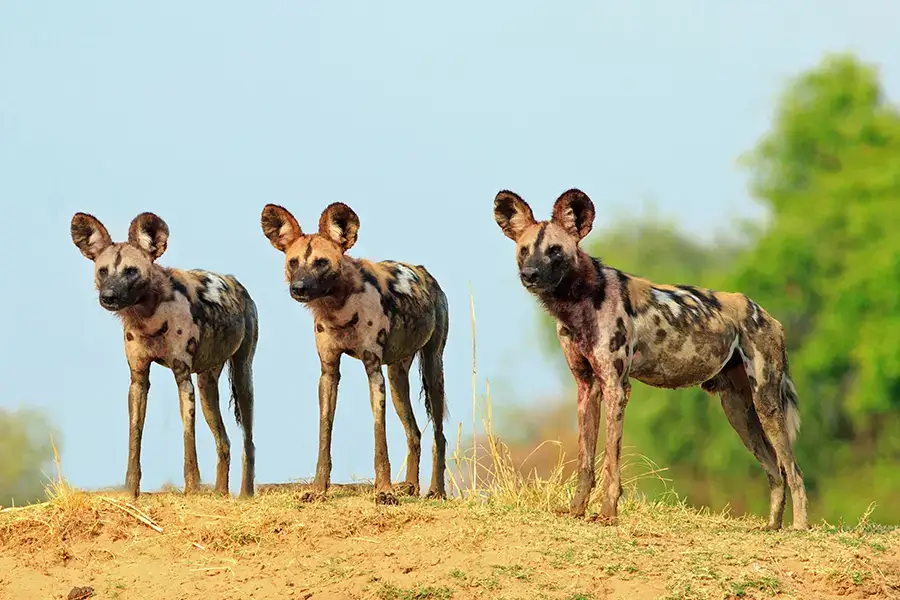
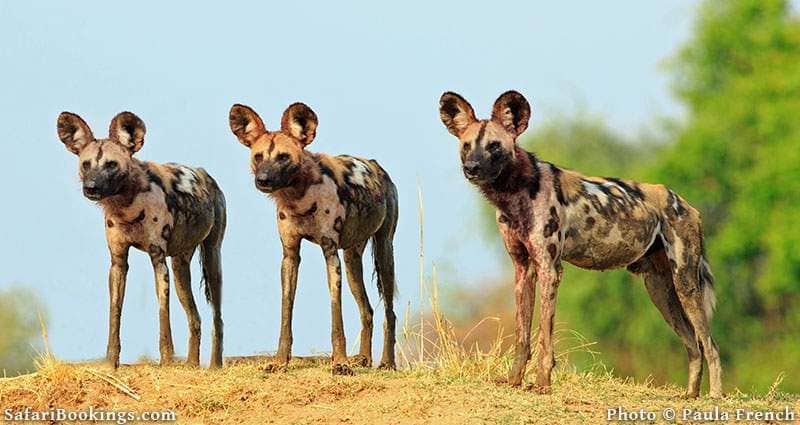
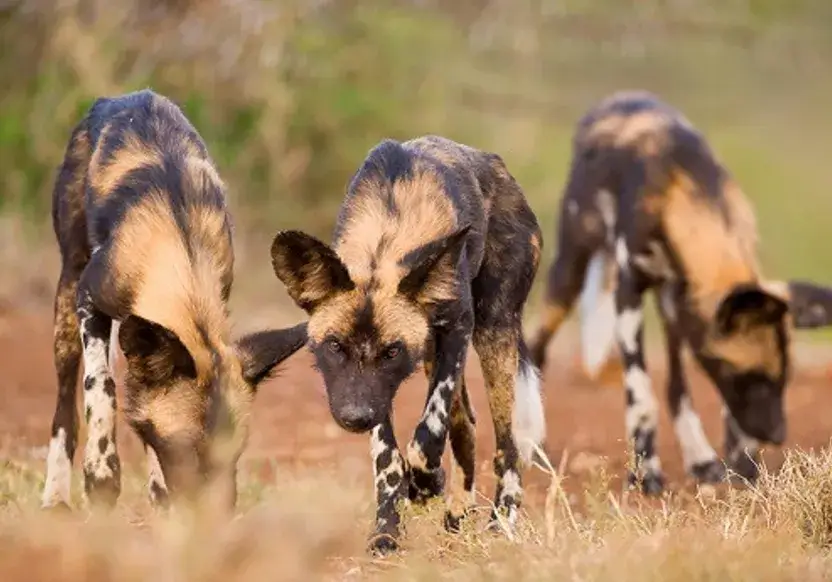
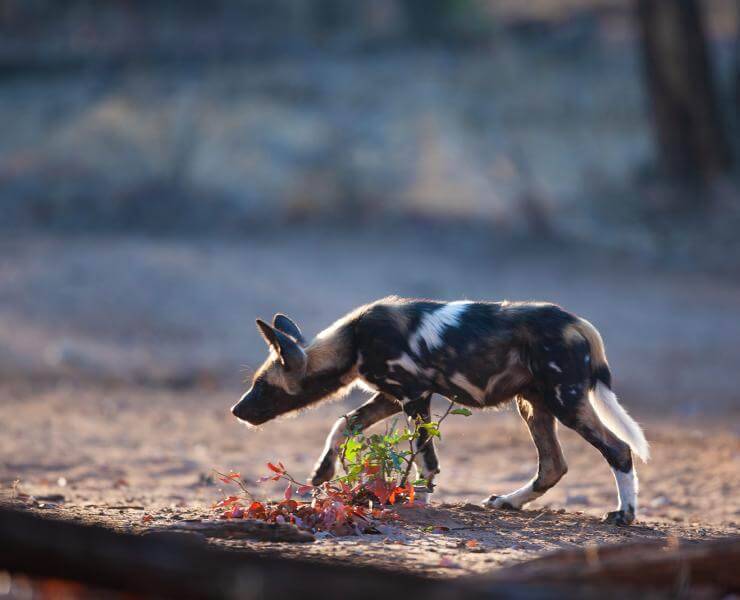
Once known as African wild dogs, painted wolves, and cape hunting dogs, painted dogs get their name from their incredible coats – interestingly, each as unique as a fingerprint. In fact, researchers believe their color patterns allow pack members to recognize each other from distances up to 100 meters away.
African wild dogs are not actually part of the normal dog family at all, as they have some very distinct differences. For instance, they have 4 toes per foot, not 5 like domesticated dogs. Although they share a common ancestor with wolves and are distantly related to dogs, they absolutely cannot be domesticated as it is not in their genetic framework.
AFRICAN WILD DOG This material proudly presented by WWW.DOGICA.COM
Top Highlights of the
African Wild Dog
The African wild dog (Lycaon pictus), also known as the painted dog or painted wolf, is one of Africa’s most endangered and captivating carnivores.
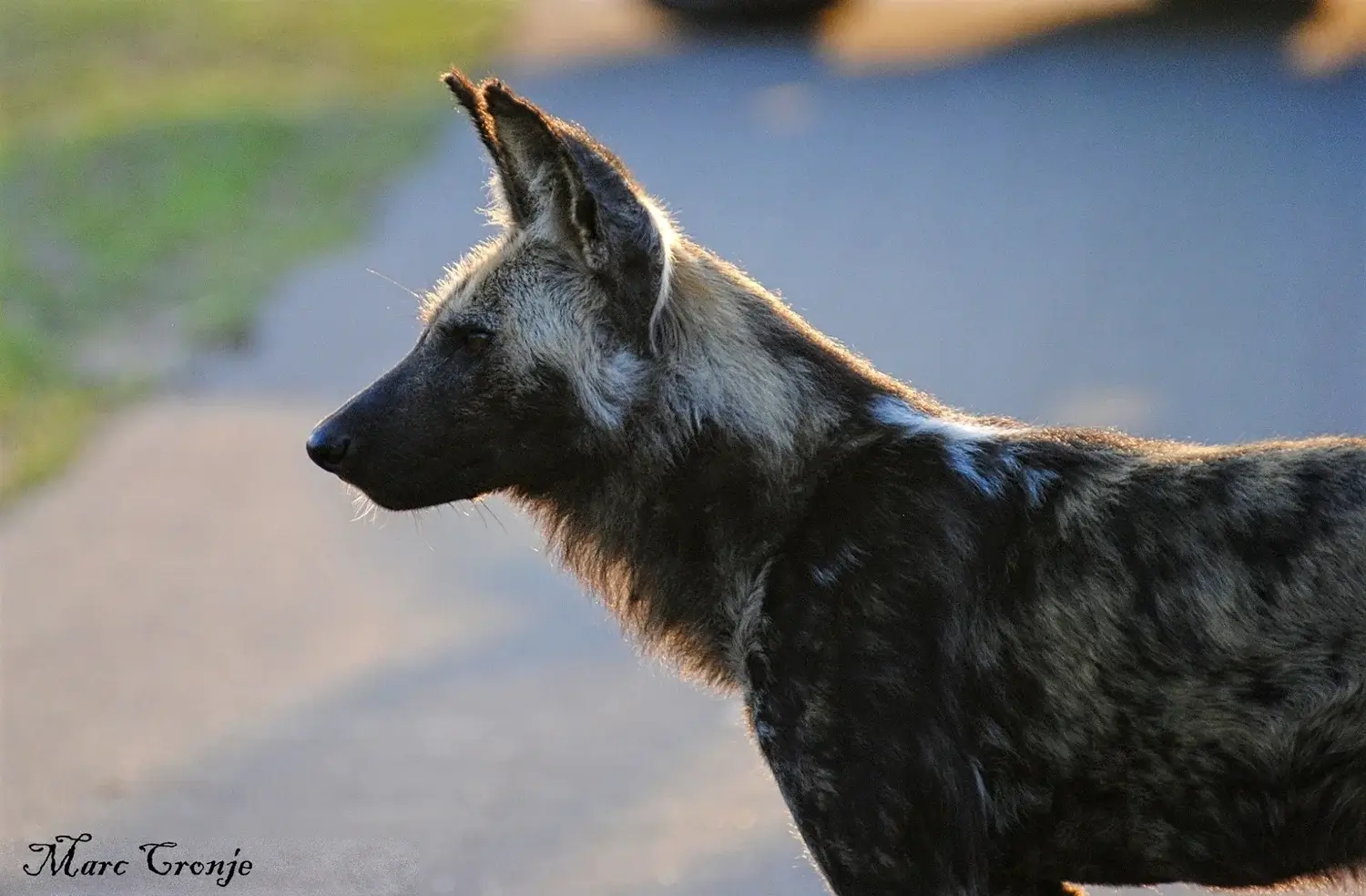
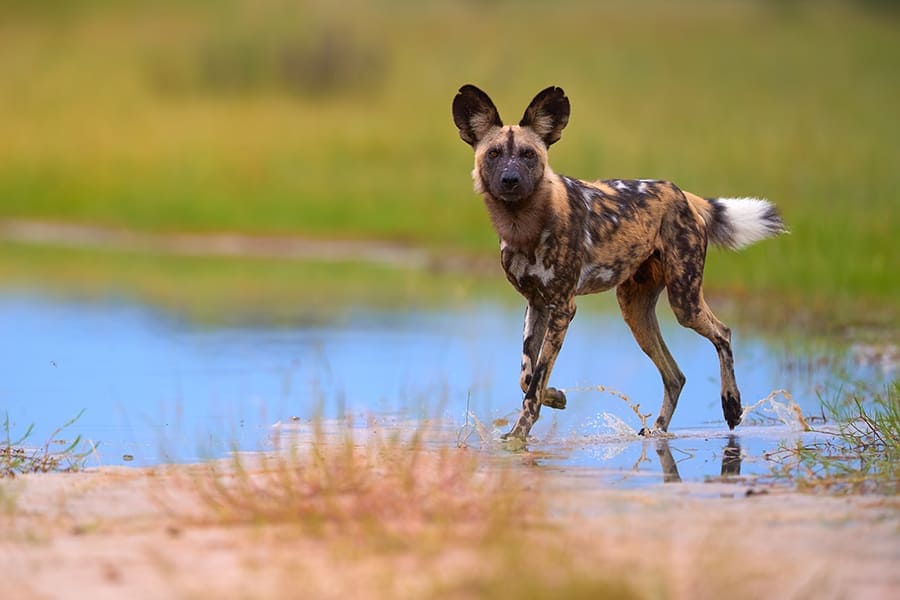
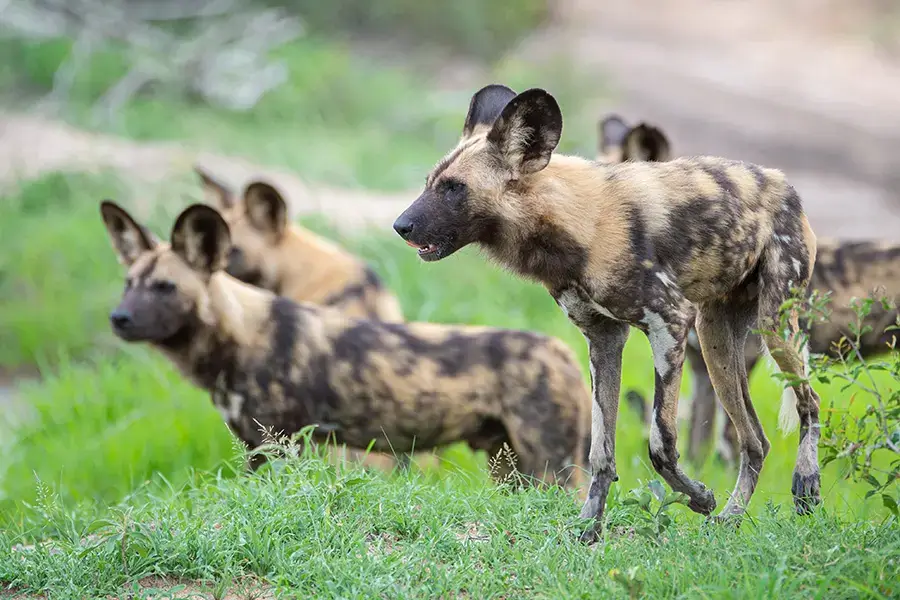
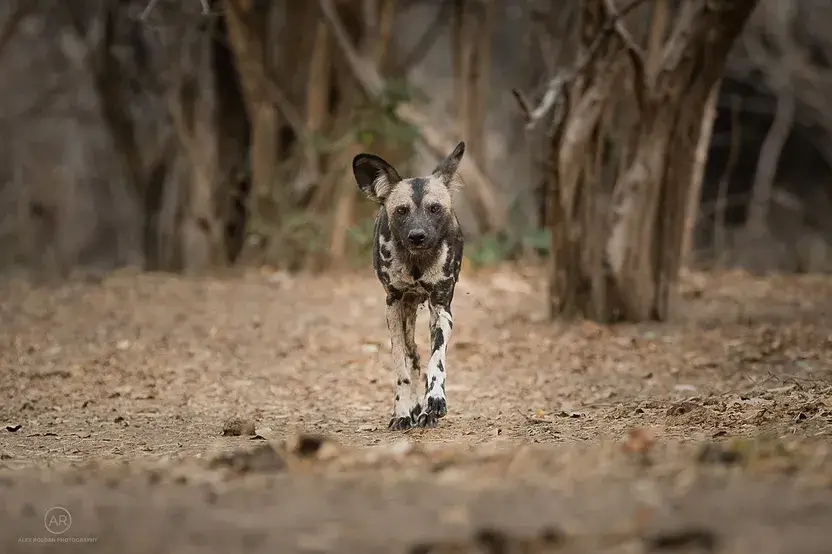
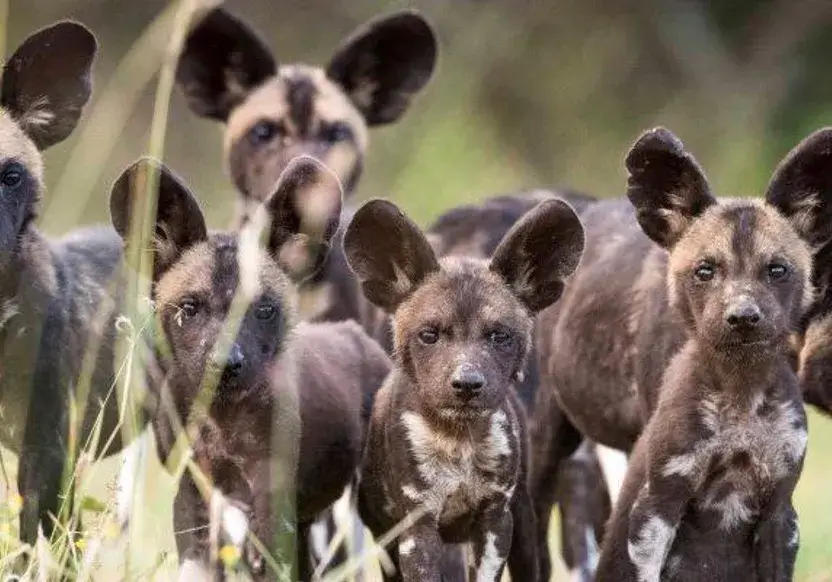
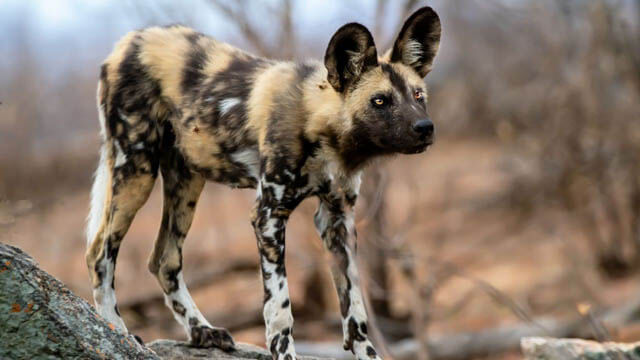
Recognizable by their unique, multicolored coats and large, rounded ears, no two wild dogs have the same pattern.
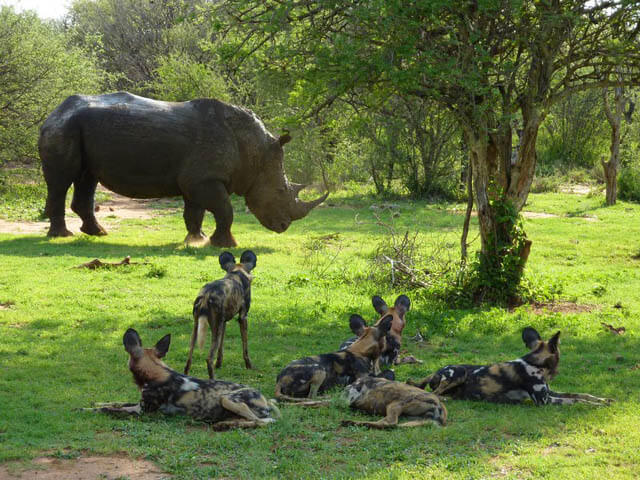
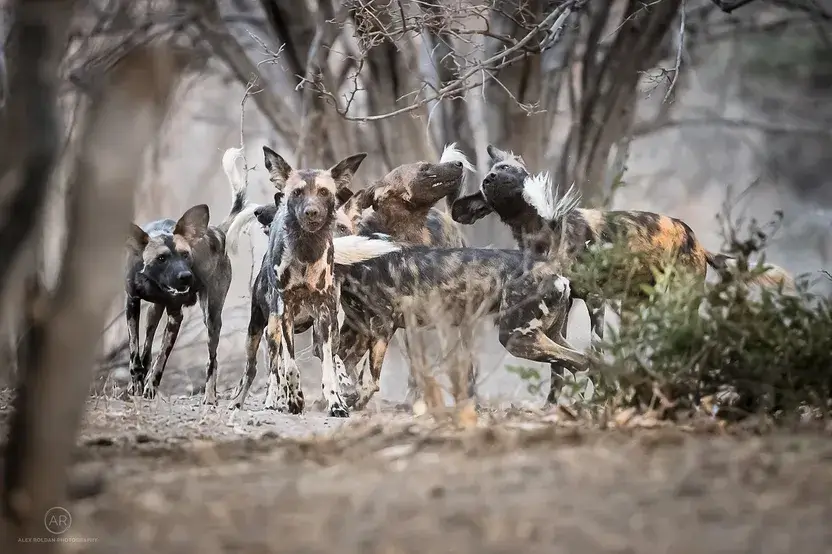
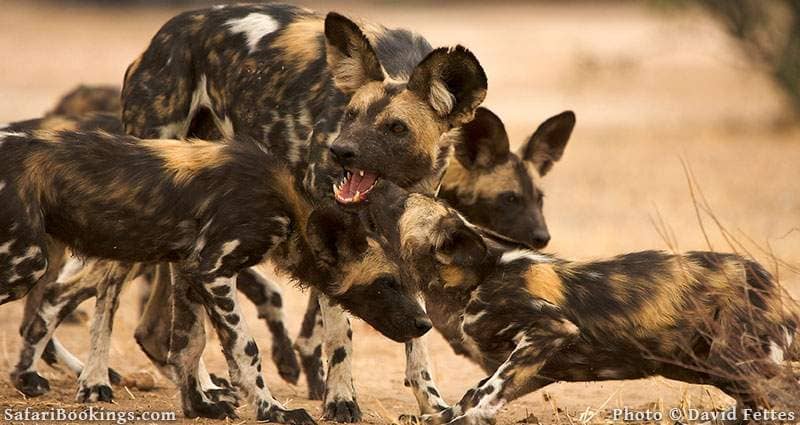
These highly social animals live and hunt in packs, with strong cooperation and communication, including the fascinating "sneeze-voting" behavior to make group decisions.
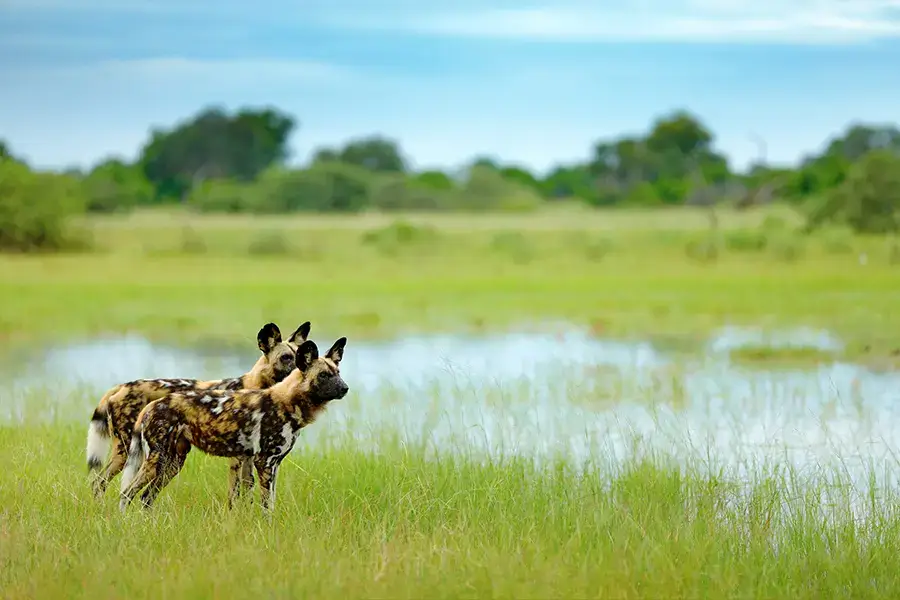
African wild dogs primarily inhabit the open plains and savannas of sub-Saharan Africa, especially in southern Africa and east Africa, but have experienced a recent population decline, resulting in an endangered population due to habitat fragmentation and human-wildlife conflict.
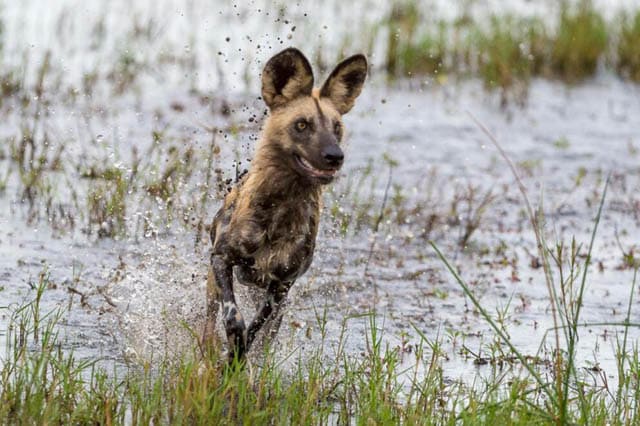
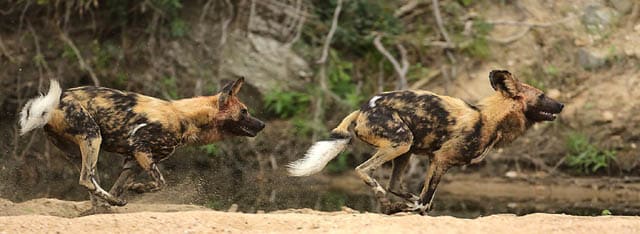
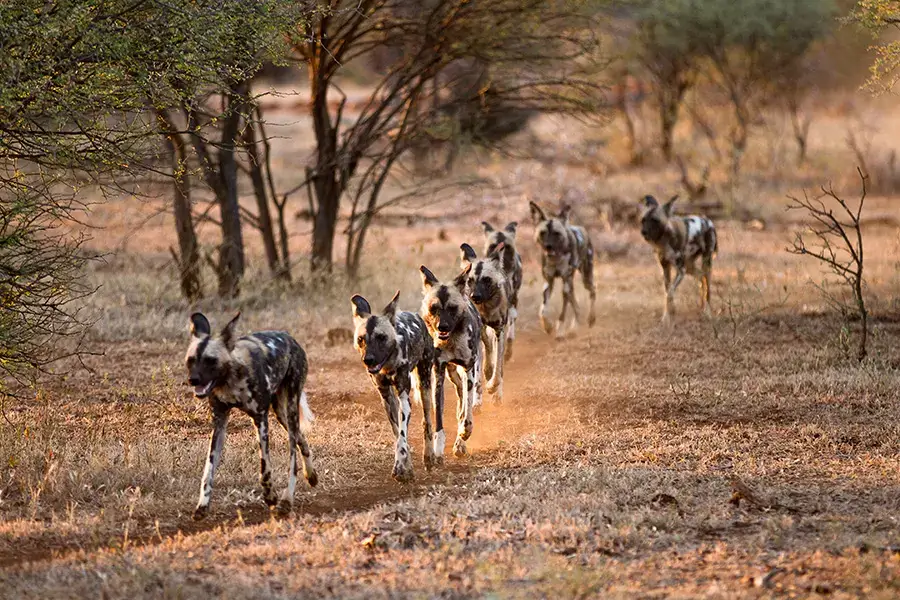
They are specialized hunters with impressive stamina, capable of chasing prey at speeds up to 44 miles per hour over long distances.
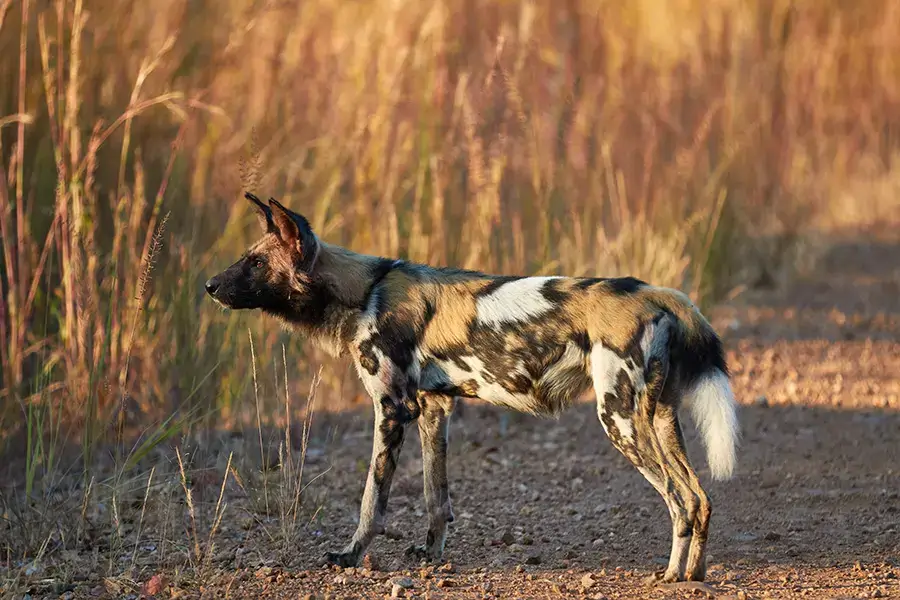
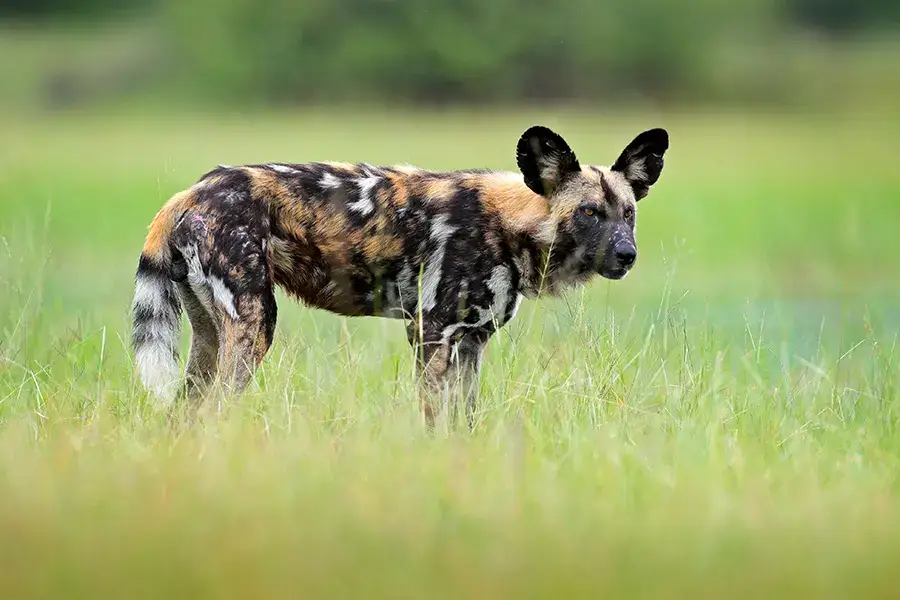
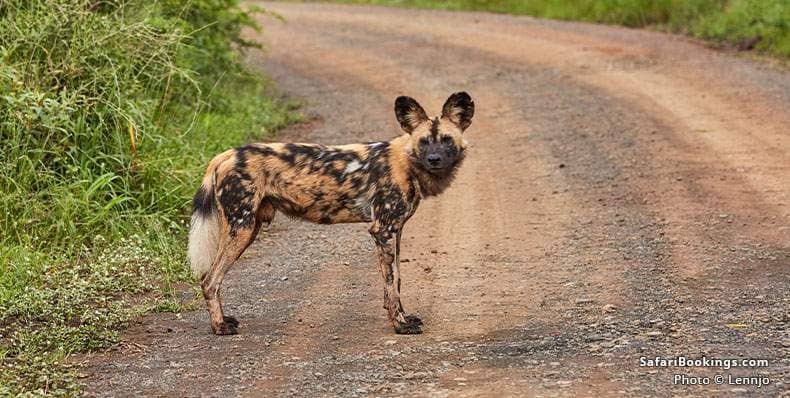
The coat pattern of an African wild dog is completely unique to each individual, functioning much like a human fingerprint or a zebra's stripes. Because no two coats have the same markings, researchers use these asymmetrical patterns of black, brown, white, and yellow to identify and track specific animals in the wild.
Unlike other dogs, African wild dogs have only four toes on each foot instead of five, with the middle two toepads fused, which enhances their speed and maneuverability, further distinguishing them from domestic and other wild dog species.
African wild dog packs are led by a dominant pair - an alpha male and an alpha female. These two alphas share leadership responsibilities equally, but the female generally has the highest authority over other females, while the male holds the highest authority over other males.
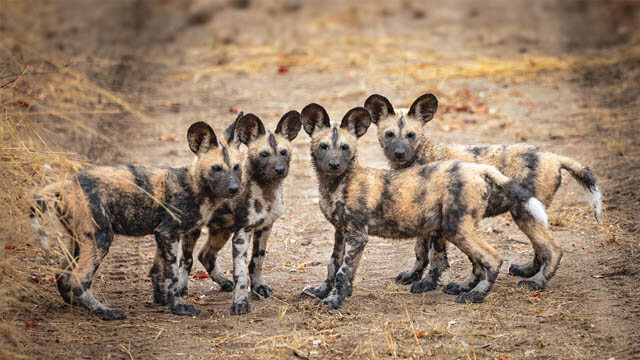
Unlike most social mammals, female African wild dogs typically disperse to join other pack members in new packs, while males often remain with their natal group. Packs typically consist of two to 27 adults, with a dominant female producing more pups than any other canid species, usually between six and sixteen per litter.
African wild dogs are primarily diurnal, meaning they are most active and hunt during the day, especially in the early morning and late afternoon.
They can roam over long distances - up to 250 square kilometres - and may travel over 50km in a single day looking for food.
Wild Dog prey can weigh anywhere from 2x to 10x more than their own body weight.
African wild dogs play a vital ecological role by regulating prey species and maintaining the animal diversity web within their habitats, and understanding key African wild dog facts, population trends, and survival strategies helps highlight just how important their conservation really is.
Threats include habitat loss, diseases like canine distemper, human persecution, road accidents, and competition with larger predators such as lions and spotted hyenas. Their IUCN Red List status is Endangered.
Conservation efforts include protected wildlife corridors, community-based livestock management techniques, and awareness campaigns led by conservation groups and partnerships with zoological societies.
National Geographic and other research organizations have extensively documented their behavior, social structure, and conservation challenges, providing valuable guides on behavior and raising global awareness.
African wild dogs are some of Africa's lesser known animals and certainly some of the most misunderstood. Due to their being critically endangered, with only 5,000 left in the wild, sightings are rare outside of specific areas. However, they are probably Africa's most effective predators, boasting an 80% success rate with hunts - far higher than the 30% rate of lions.
1. A fascinating Physique
Their scientific name Lycaen pictus literally means painted wolf, referencing their mottled fur with black, brown, yellow and white colourings. Every dog's coat has a unique pattern making individuals easy to spot. They have an extremely powerful bite with specialised molars for shearing meat and breaking bone and have exceptionally keen senses of sight, smell and particularly hearing. Large rounded ears lined with numerous muscles allow the dogs to swivel them like two radar dishes, picking up the minutest of sounds. Long legs, a lean build and rapid muscle recovery all assist in making this animal a formidable endurance hunter.
2. They have a
Unique Social Hierarchy
The social structure of a wild dog pack is a fascinating, almost altruistic system. Like other pack animals there is a strict hierarchy, with an alpha breeding pair in charge of the group and the rest of the pack members are all subordinates. When a litter of pups is born, they take priority over even the alphas. At first pups are fed by the dogs regurgitating fresh meat after returning from a hunt, but once old enough, they are taken to the kill and given first choice over the spoils. The other dogs patiently wait on the side lines, standing guard until their turn to feed. They almost never fight amongst themselves over food due to this ranking system. When a dog becomes ill, injured or elderly restricting or even incapacitating their effectiveness as a hunter, the rest of the pack cares for and feeds them. Recently the alpha female of a pack in Botswana lost one of her forelegs during a hunt. For any other predator, this would be a death sentence. However, she remained the alpha female for a few years afterwards continuing to breed and raise pups while being looked after by the pack.
Painted dogs have a characteristic very unusual in the canid world: upon maturity (14-30 months), females, not the males, either singly or as a group, strike out on their own, abandoning their natal pack in search of a mate. These sisters may split up or stay together, with the alpha female emerging from among them. A new pack is created when an appropriate mate joins the alpha female. This system ensures that adult males will not be related to the adult females within a pack and keeps the instance of inbreeding very low. Painted dogs can live up to 11 years.
3. They are Nomads
Wild dogs are nomadic animals and can traverse 50km in a single day. As a result, their territories can range between 400 and 1500 square kilometres. They only remain in one area when denning.
4. Wild dogs are
Well Coordinated
The 80% success rate in wild dog hunts can be attributed mainly to the coordinated nature of the pack. Communication is key and the dogs constantly let one another know both their location and that of the prey. Their high intelligence and teamwork allows them to adapt to changing scenarios during a hunt.
5. They are
Agile Hunters
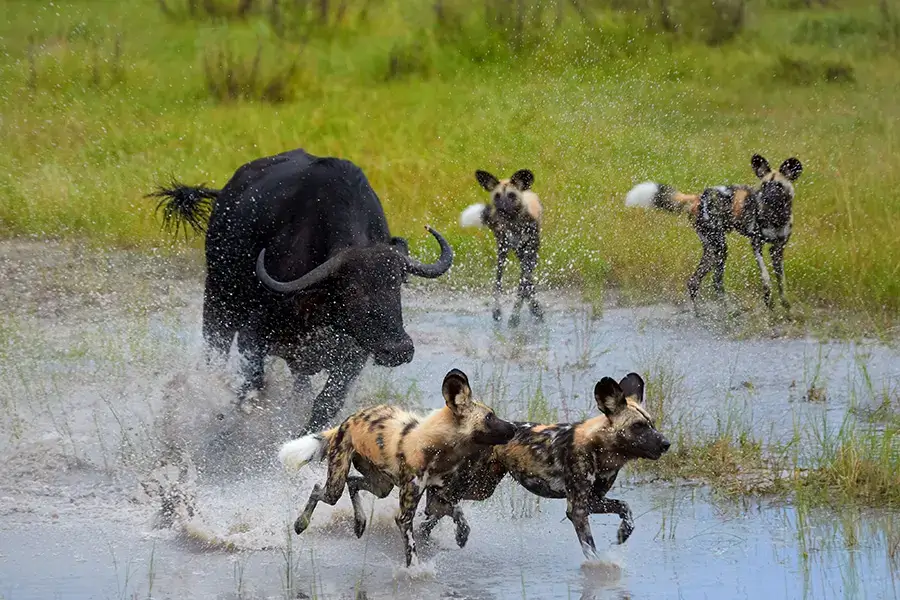
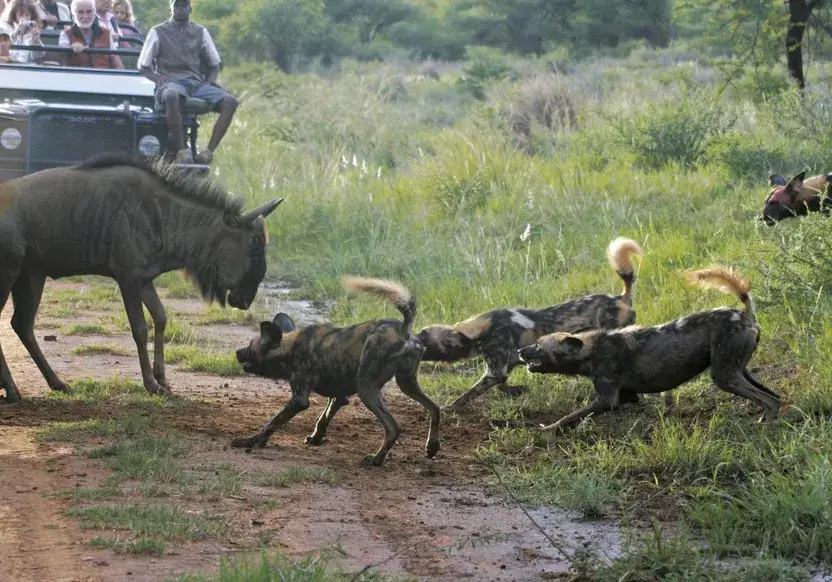
Most predators rely on stealth to hunt their prey, but wild dogs rarely require such tactics. The dogs are built for high stamina chases. A typical hunt will involve the pack spreading out in a line to cover more ground and give each member space to manoeuvre. Upon finding prey the dogs will immediately approach and test the animals' defences, probing a herd for any weak members. Once a target is selected, the pack attempts to panic and separate the herd. The pack then gives chase to the selected individual, with some dogs performing flanking movements to cut off any avenues of escape. Like an Olympic cycling team, the dog at the head of the chase will pull back as they tire and another one will take their place. Eventually, after a few kilometres, the prey begins to become exhausted. At this point the pack, with their high endurance and teamwork, easily take the animal down.
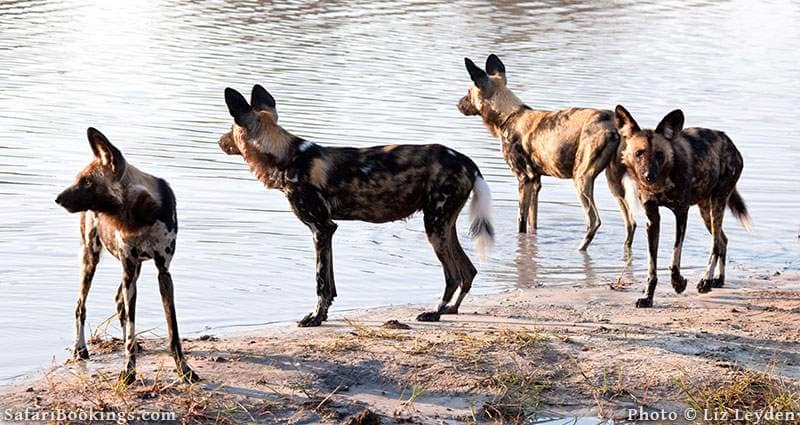
Another favorite tactic of the wild dogs is to herd their prey towards rivers, lakes and other bodies of water. Most wildlife in Africa is afraid of deep water due to the risk of crocodiles. So when an animal is chased towards water it will either be brave enough to dive in, or, the more likely outcome is that they will panic, turn back into their pursuers and be quickly dispatched. Sometimes the dogs use tactics similar to the lions, where one pack member flushes out and drives prey into the others waiting in ambush.
6. They have
Few Natural Enemies
Humans are easily the largest threat to the wild dogs' survival. For a very long time they were considered pests though there was little to no evidence suggesting so. They would only go after livestock if desperate, and to this day there are no recorded incidents in Africa of wild dogs attacking humans. In the wild, lions are the dogs' main threat. When an area has a high population density of lions, it directly correlates to a low population of wild dogs. Other predators, while still a threat, generally don't cause the dogs any problems. Hyenas will attempt to steal kills from them but wouldn't hunt adult members of the pack.
7. We are the Reason
They are Endangered
The reason why there are only about 5,000 African wild dogs left is mainly down to people. Farmers, believing them to be vermin, would shoot any dogs they saw, sometimes even tracking down dens and poisoning the inhabitants inside. Poachers' snares meant for other game and human civilisation encroaching on their habitats also contribute. The main causes of their population decline though are diseases such as rabies, contracted usually from domestic animals. Because of their highly social nature one rabid wild dog would quickly infect the rest of the pack, wiping them out entirely.
8. Wild Dogs have
Great Relationship Values
The dominant pair is monogamous and would usually be the only ones to breed in a pack, though a beta pair does sometimes produce pups as well, which are then either killed or adopted by the alpha pair. Each litter can have between four and 12 pups. Unlike most other pack animals, male wild dogs tend to stay within their pack's territory once reaching sexual maturity, whereas the females will travel long distances to find a mate. This behaviour is a good countermeasure against inbreeding.
9. An Interesting Set
of Genetics
African wild dogs used to be found across the whole continent but are now limited to countries in the south and east of Africa, the main strongholds being in the Okavango Delta and the Selous Game Reserve. East African wild dogs are slightly smaller than their counterparts in the south. There are five subspecies of wild dog in Africa. The Cape wild dog, the East African wild dog, the West African wild dog, the Chadian wild dog and the Somali wild dog, though the genetic diversity of these subdivisions is under debate. Although wild dogs do share a common ancestor with wolves from a few million years ago, they are not genetically compatible, so interbreeding with any other canid is not possible. The selective breeding applied to domesticated dogs which formed the different breeds could never work with African wild dogs. These long-legged canines have only four toes per foot, unlike other dogs, which have five toes on their forefeet.
10. They
Cannot Be Domesticated !
People have attempted to tame wild dogs but never successfully. They are naturally distrusting of humans or indeed any animal outside of their own pack. When humans have domesticated dogs in the past, it was due to certain character traits prevalent in canines that could be amplified through breeding. One of these traits was a willingness to be touched by humans.
This combined with traits of curiosity and opportunism paved the way for humanity's greatest symbiotic relationship with an animal affectionately named man's best friend. Wild dogs have never displayed these traits and it's unlikely they ever will.
Seeing African wild dogs on safari is a privilege few travellers forget. Also known as painted wolves or painted hunting dogs, these rare and highly social predators are among Africa's most sought-after sightings, loved for their striking coats, close-knit packs and extraordinary teamwork. From the thrill of watching a pack on the hunt to the quiet joy of finding them resting in the shade, every wild dog encounter feels special. In this guide, we share when to see African wild dogs, what to expect from their behaviour, the best places to find them on safari, why they remain endangered and how you can help protect their future.
Safari season in Africa runs anywhere from March to October, with different regions experiencing their driest periods at different times. From March to June, sightings of African wild dogs will be highest around the sites that they select to den. For up to 12 weeks after birth, packs will use these dens, leaving their pups there until they are a few months old. The sites are usually away from waterfront areas that have higher predator populations, with packs being especially careful to avoid areas with high lion activity. Instead, they opt to locate their sources of food and water within the ranges of their carefully selected homes.mFrom July to October, wild dogs will gather more closely to water sources as these are the driest months in Southern African regions.
1. Nyerere (Selous)
NP & Ruaha NP
(Tanzania)
Both Nyerere and Ruaha National Parks have for many years been excellent venues for die-hard wild dog fans and offer excellent sightings on a regular basis. One of the world's biggest conservation areas, Nyerere (previously Selous) offers vast tracts of land for a limited number of travellers to explore. It is also home to around 800 wild dogs, making it perfect for an African wild dog safari. Because it is so big, wildlife has plenty of space to move around but going out on the chase yourself is half the fun of safari! Being a lesser-visited area, Nyerere offers an intimate safari experience. Wild dogs can generally be found in the Ngorongoro Crater region, but a better opportunity would be Selous National Park which is home to potentially the largest populations of wild dogs left in Africa – with some 800 roaming the reserves beautiful open grasslands and stunning forest areas. Selous is approximately 50,000 square kilometres in size and although this can make for tough time finding wildlife, it is certainly a far less busy place to visit in comparison to the Serengeti which makes for a more authentic and intimate safari experience.
2. Northern Botswana
Concessions & Okavango
Delta
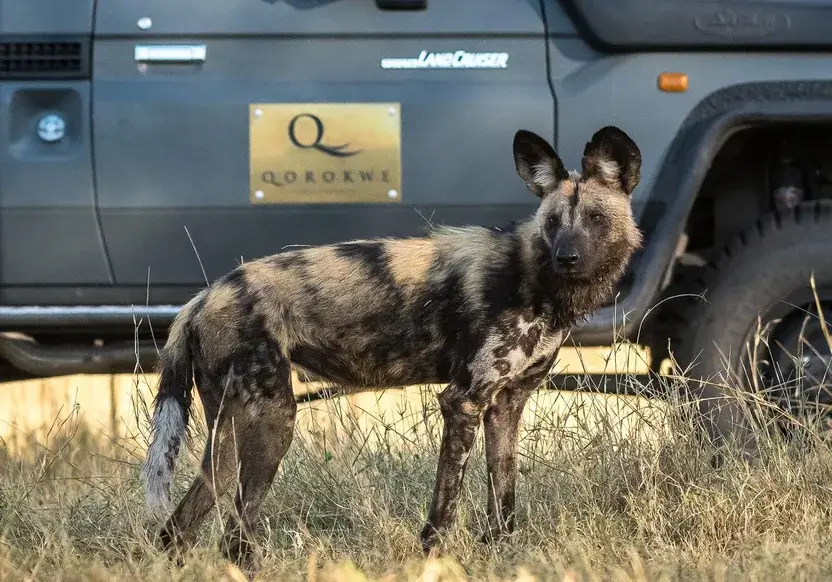
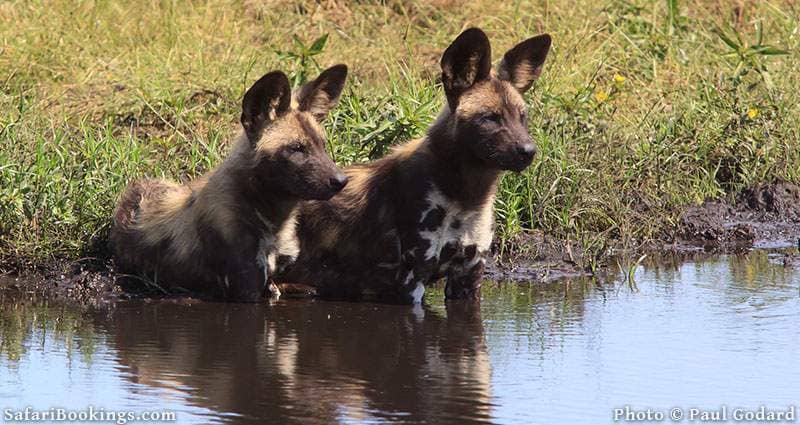
This extensive region of northern Botswana, which includes the Okavango Delta, Savuti and Linyanti, Kwando and Selinda concessions, has one of the most significant populations of wild dog on the continent and offers excellent sightings. The concessions of Chitabe and Qorokwe are also gaining a reputation for wild dog sightings. The Linyanti is an area in northern Botswana wedged between the border with Namibia, the Selinda Channel and Savute. The Linyanti Swamp is one of the most productive regions for excellent wildlife sightings. Adjoining Linyanti, Kwando is one of the largest private concessions in all of Botswana, offering guests complete privacy and exclusivity. There are only two lodges here and you have access to a phenomenal 232 000 hectares of boundless land to explore virtually all by yourself. Kwando safari goers also report frequent wild dog sightings. Okavango - the world's biggest inland delta, is made all the more remarkable by the fact that it is found in a country that is more than seventy percent semi-desert. Wild dogs are more likely to be found in "drier" camps rather than those that are almost permanently surrounded by water and on Chief's Island. They are fairly nervous about the water, instinctively fearing crocodiles that may be lurking just under the surface of the Okavango's water.
3. Hwange NP
(Zimbabwe)
Hwange National Park is Zimbabwe’s largest national park and ideal habitat for wild dogs. It’s a great park to see wild dog on safari. This is also the home of the long-running Painted Dog Conservation (PDC) project, which aims to protect, rehabilitate and reintroduce wild dog packs into the wild. Its Interpretive Hall and Walkway not far outside the gate near Main Camp is interesting and well worth a visit. Hwange National Park is Zimbabwe’s largest and premier safari destination for observing African Wild Dogs. Home to approximately 200 wild dogs in over 30 packs, it boasts one of Africa’s highest concentrations of these endangered animals. The park also hosts the longstanding Painted Dog Conservation Project, dedicated to safeguarding and reintroducing wild dog packs. With diverse landscapes, including savanna grasslands and mopane woods, Hwange offers exceptional wildlife encounters. Besides vehicle-based safaris, visitors can enjoy walking tours along with viewing hides for incredible wildlife sightings.
4. Luangwa Valley
(Zambia)
This has long been a reliable region for wild dogs, with regular sightings in South Luangwa National Park. The wild dog population in North Luangwa National Park is also recovering after years of persecution and disease. South Luangwa National Park is amongst Zambia’s most-loved safari destinations and for many, this is because it is home to the big five, but it also offers one of the most exceptional chances to witness African Wild Dogs. Efforts such as de-snaring and vaccinations are implemented to protect the wild dogs within the area, with an estimated 350 of them in the Luangwa Valley. The perfect time for visitors to go on walking safaris is between June and October, with guides tracking wild dogs through the wood and grasslands- an exciting experience. The impala, puku and other prey species in the region attract the dogs and make it a top sighting spot for enthusiasts. Up close and personal game drives and guided walking safaris provide intimate encounters with these fascinating creatures and give you a chance to observe their unique social dynamics in real time. The area is also well-known for predator sightings; lion, leopard and spotted hyena are seen regularly as well as the illusive Wild Dog. Zambia and South Luangwa might not be the first name on everyone’s safari list but a visit to this stunning area is more than worth consideration as an alternative for those looking for a slightly more adventurous safari. With an estimated population 350 in the Luangwa Valley, the fortunes of the African wild dog have been given a boost by the Zambian Carnivore Programme’s strategy of de-snaring, land-use planning and vaccinations in local communities to prevent the spread of disease from domestic dogs.
5. Madikwe GR
And Pilanesberg
(South Africa)
The land where Madikwe Game Reserve now stands was used for farming. The poor soil meant that farming was mostly unsuccessful and the South African government then decided that it would best be used as a national park to help economically uplift this disadvantaged area. Madikwe is malaria-free, home to the Big Five (lion, leopard, buffalo, elephant and rhino) and caters well for families. Wild dogs were introduced into the park in 1994 and have subsequently thrived, despite many challenges. Since Madikwe is a fenced reserve, the wild dog packs are not able to leave it, and sightings are regular. Madikwe Private Game Reserve was a frontrunner in the successful re-introduction of wild dogs to reclaimed farmland. The packs here were previously under threat from disease but the wild dog population now thrives throughout the game reserve with dogs known to be lively and even unflinching around vehicles. An added benefit of Madikwe is that safari goers are able to take advantage of closer off-road viewings as they are not limited to the roads. Additionally, the lack of foliage in winter makes it easier to spot the animals as they can't hide as much. It is important to note though, that as a private game reserve entrance is only permitted by reservation and not to the general public. The Pilanesberg National Park is situated just on the border of the famed Sun City resort. Renowned for its exceptional Pilanesberg Safari experiences, this park showcases a frequent occurrence of wild dog sightings, although the wild dogs in this area tend to avoid tourist roads.
6. Mana Pools NP
(Zimbabwe)
Lower Zambezi NP
(Zambia)
These two parks lie on opposite sides of the Zambezi downriver of Kariba Dam. Every year wild dogs den in and around Mana Pools National Park and provide visitors with regular and exciting sightings through the safari season (May through November). After several years’ absence, wild dogs are also now regularly seen in Lower Zambezi National Park, which lies within the range of several large packs. Situated alongside the Zambezi River, the Lower Zambezi National Park, with its decided landscapes, forests, and endless plains is where you'll encounter tracks and hear the distinctive calls of African wild dogs. Visitors here find the wildlife encounters more intimate and personalized because it has fewer tourists. The Lower Zambezi is home to a thriving population of these rare predators, making it a prime destination for witnessing these canines and their charismatic disposition in their natural habitat. Zimbabwe offers many opportunities to see African wild dogs in action, with the Painted Conservation recording around 700 dogs across the region. Although Zimbabwe's flagship wildlife area is Hwange National Park, a Mana Pools safari, favoured by Zimbabwe Safari enthusiasts, offers abundant encounters with wild dogs. In fact, this is where the BBC's Dynasties wildlife programme was filmed, which features memorable interactions like elephants charging wild dogs that get too close. This pretty park on a stretch along the Zambezi River is good to combine with time at Victoria Falls.
7. Laikipia (Kenya)
This is the only region in Kenya where wild dogs have been seen regularly in recent times, and where packs have denned consistently. Much more arid and hillier than the Masai Mara, Laikipia and Samburu are two lesser-visited areas of Kenya that pack a massive punch in terms of wildlife viewing. You may be lucky enough to spot wild dogs but also look out for the Samburu Special 5, endemic species found only here (reticulated giraffe, beisa oryx, Somali ostrich, long-necked gerenuk and Grevy's zebra). Lying at the end of the eastern escarpment of the Great Rift Valley, Laikipia is renowned for its community-run conservancies with several endangered species benefitting from locally run conservation programs including black rhino and reticulated giraffe. The semi-arid wilderness of Laikipia is probably the only region in Kenya where wild dog sightings occur with a fair amount of regularity, this mainly due to a number of packs which seem to den consistently in this area. But this was not always the case. During 2017, wild dog populations was decimated with around 10 packs being wiped out by canine distemper. There is good news, they’re making a comeback. Towards the end of 2018, wild dogs were once more spotted in the Loisaba Conservancy – no doubt helped by helped by ambitious vaccination programmes for domestic dogs in the area.
8. Greater Kruger
Amd Sabo Samds
(South Africa)
Although never a regular sighting within the Kruger National Park itself, or in any one of the private game reserves surrounding the park, wild dogs are nevertheless widespread in the region. The Greater Kruger area takes in not only the Kruger National Park but also surrounding private reserves like the Sabi Sands, Timbavati, MalaMala and Manyeleti. There are fairly regular sightings of packs throughout the region, which lies to the northeast of South Africa, with around 400 wild dogs in the park. Kruger National Park is one of the most well-renowned wildlife areas in Southern Africa and for good reason. It is South Africa’s largest national park and has remarkable diversity with the main park being perfect for exploring on a self-drive safari or staying at one of its private, world-class lodges in the Sabi Sands. The sheer size of Kruger can make finding the dogs somewhat difficult on a self-drive safari, but from personal experience, I’ll have to admit to being very fortunate with only one trip out of many not resulting in a wild dog sighting. If you're self-driving in Kruger and if you do find dogs asleep under a tree during the heat of the day, the best thing you can do is wait. As the heat begins to subside, that’s when the wild dogs will begin to wake from their daytime slumber and provide you with a fantastic behavioural display. Sabi Sands – a collection of private safari lodges and areas of land which are still part of the Greater Kruger area but are only accessible to guests staying at the safari lodges which means more intimate, exclusive safari game drives. Even off-roading is permitted for special sightings usually reserved for predators including lions, leopards, cheetah and of course wild dogs.
9. Liuwa Plain NP
(Zambia)
In far western Zambia, Liuwa Plain National Park offers vast open grassland and a good supply of prey species for wild dog, which were reintroduced here in 2021.
10. Hluhluwe-iMfolozi GR
(South Africa)
A small reintroduced population of wild dogs can be found in KwaZulu-Natal’s Hluhluwe-iMfolozi Game Reserve, one of the lesser known of South Africa’s parks. It's a real gem of a location that is worth adding to any planned safari trip to this region. Located in beautiful Kwa Zulu Natal lies the oldest proclaimed protected reserve area in South Africa, which dates back to 1895 and is the second largest reserve after Kruger National Park. HIP, as it’s affectionately referred to by local South Africans is famous for playing a huge role in ensuring modern day survival of rhino – in fact almost all rhino lineage across Southern Africa can be traced back to this stunning park. Hluhluwe Imfolozi is a Big Five reserve but seeing wild dogs thriving here is a special treat in itself. With numbers previously decimated, wild dogs were reintroduced to HIP in the early 1980’s and through the valiant efforts of conservation programs, their numbers have grown with multiple packs now being found all over this vastly diverse reserve.
11. Moremi Game Reserve
And Khwai
Encompassing a massive swathe of the central and eastern Okavango Delta, Moremi Wildlife Reserve is a classic collection of wetland, fertile floodplains, open grassland and riverine forest. The Khwai Concession is run by the local community and borders the Khwai River and the north-east of Moremi. There is often game along the Khwai river which attracts wild dogs to the area. Located on the north-eastern edge of Moremi Game Reserve, this remarkably stunning concession is one of the smallest in Botswana, yet also one of the most scenic. The landscape of the Khwai Concession is dominated by the Khwai River and operated by the local communities, who take exceptional pride in their local and natural heritage. Beautiful riverine forests line the banks of the river, with regular sightings of lion, leopard and of course wild dogs – making for a wonderfully prolific and world-class safari experience.
12. Tswalu Kalahari
Privately owned, and the biggest game reserve in South Africa, Tswalu is rich in game. Its vastness can make it difficult to know where to spot the wild dogs, but expert guides and trackers have made regular sightings throughout the area possible.
13. Ngala
(South Africa)
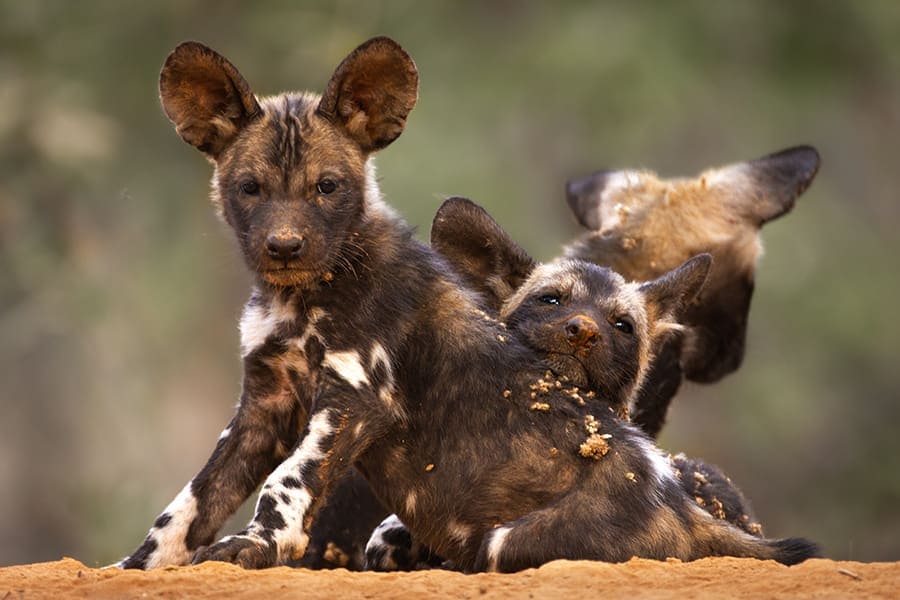
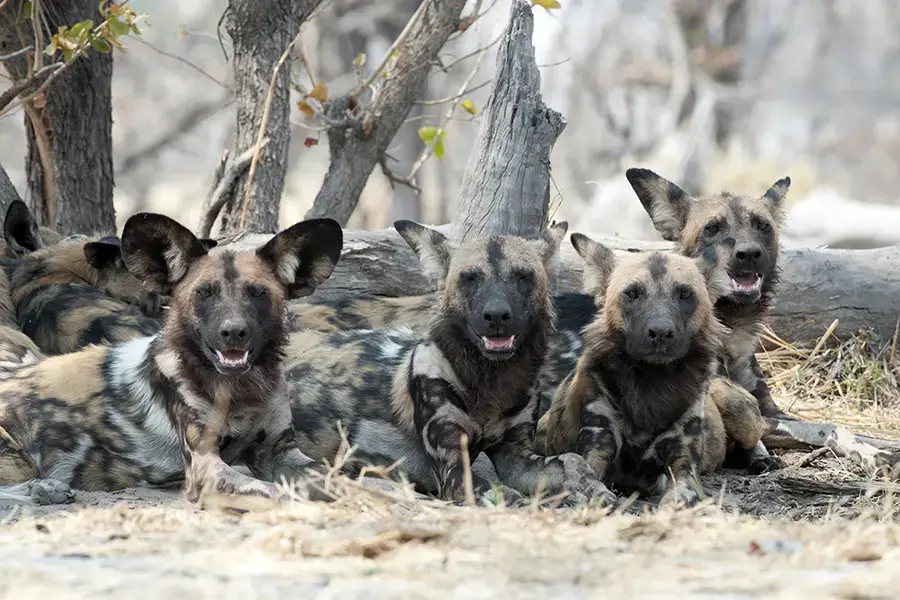
Then there’s Ngala. For three months of the year, almost like clockwork, the reserve becomes one of the most reliable places in South Africa to witness something extraordinary: the denning season. It starts with the pack choosing a site, often a disused aardvark burrow and then the rhythm changes. From being highly nomadic, the world narrows to this one place, this one purpose. Adults range out and return with meat to regurgitate. Once an adult twitters the cue, the pups tumble from the inner sanctuary to beg and whine for food. To sit quietly a few metres away as this ritual unfolds in the early sunlight, tiny ears twitching in your presence, steam rising off your gasps and sighs in the cool air, is the kind of wild dog moment that stays with you for life. Not for its drama, but for its intimacy. Ngala shares an unfenced boundary with Kruger National Park, which means the dogs are free to go. And yet, every winter, they come back. Year after year. As if this land beckons them.
14. Chobe National Park
(Botswana)
Chobe National Park encompasses four distinctive eco-systems, including the amazingly fecund Chobe River front, the Savute, the Ngwezumba pans, and Linyanti. In Chobe, you can find a huge variety of wildlife and birds, including Africa’s largest surviving population of elephants (120,000 individuals). These are migratory elephants, moving 125 miles (200 km) from river to pans seasonally. Painted dogs may be seen in the Linyanti River section of the park near the border with Namibia. The best time to visit is in their dry season: April through October.
Photographing African wild dogs presents unique challenges and rewarding opportunities, much like any dedicated photo safari focused on Botswana's pristine landscapes and wildlife. Here are some tips to help you capture stunning images on your Wild For Game Safaris mobile photographic safari, which pair well with broader advice on how to plan a photographic safari, from timing to equipment and guiding:
1. Know Their Behavior
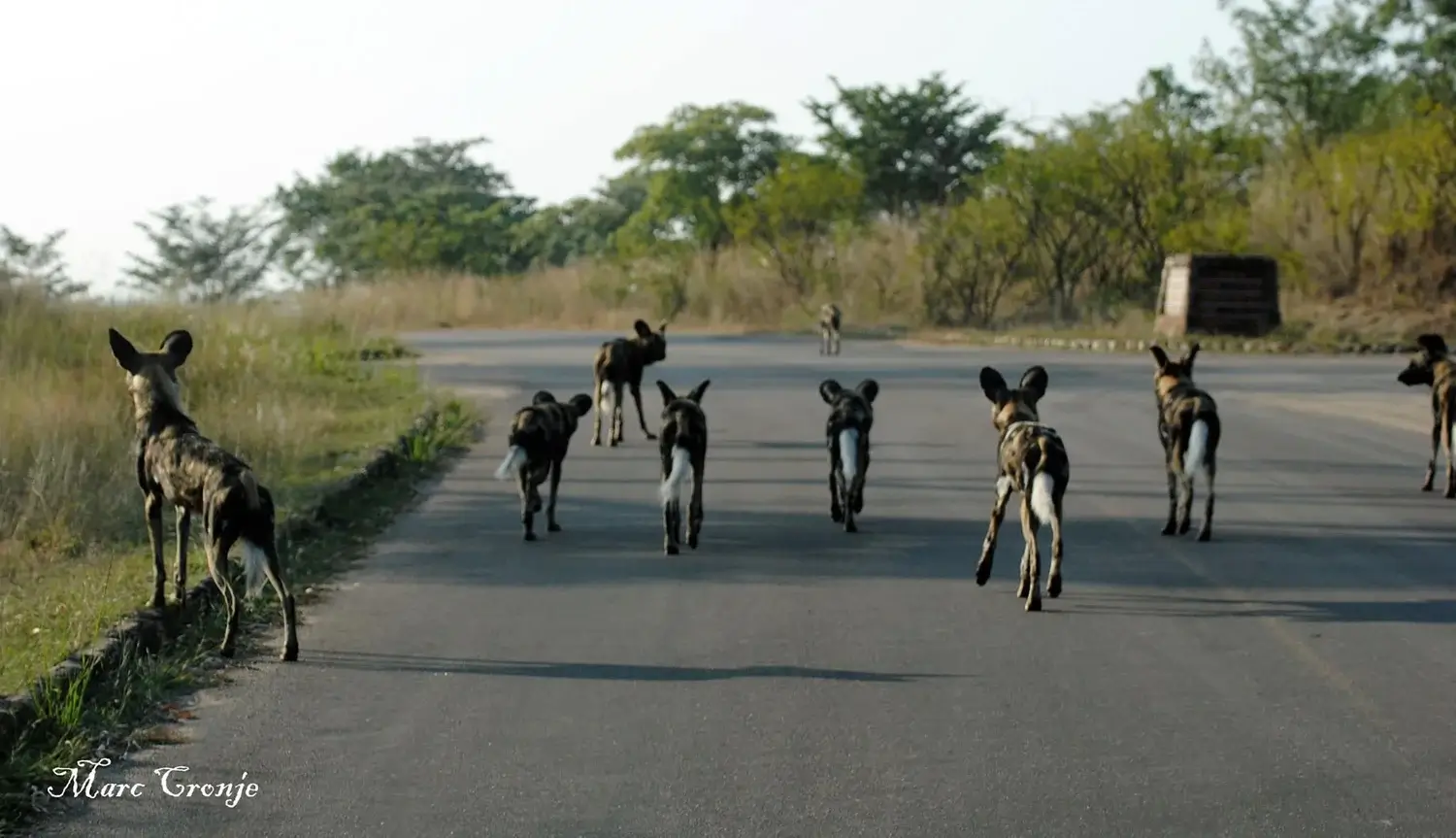
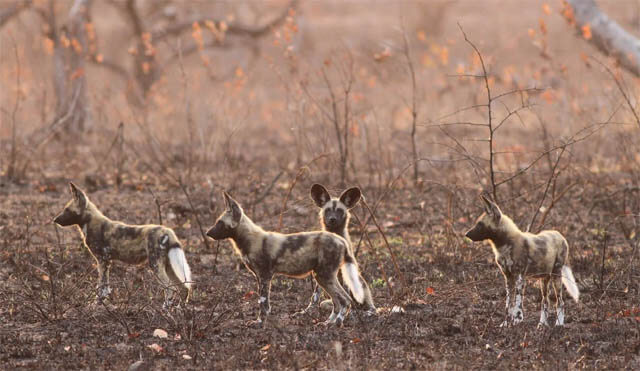
Understanding pack dynamics and hunting behavior will increase your chances of capturing compelling shots. African wild dogs are most active during the day, especially in early morning and late afternoon when they hunt. Look for the pack’s bushy tails with white tips and large rounded ears to spot them from a distance.
2. Use a Telephoto Lens
Given the wild dogs’ wary nature and the open habitats they prefer, a telephoto lens (at least 300mm) is essential to photograph them without disturbing their natural behavior. A zoom lens also allows you to capture close-up shots of facial expressions and social interactions within the pack.
3. Focus on the Eyes
and Unique Patterns
The African wild dog’s eyes and coat patterns are captivating. Use your camera’s autofocus to lock onto the eyes for sharp portraits. Try to highlight the distinctive yellow fur patches and irregular markings that make each dog unique. African wild dogs are social animals with rich pack dynamics. Photograph moments of cooperation like regurgitating food for pups, greeting rituals, or hunting teamwork. These scenes tell the story of their complex social structure and make your photos more engaging.
5. Mind the Light
and Background
Open plains can produce harsh sunlight, so aim to shoot during the golden hours around sunrise and sunset for softer, warmer light. Use the natural environment, such as tall grasses or acacia trees - to frame your subjects and add depth to your images.
6. Be Patient and
Respectful
Wild dogs are endangered and sensitive to disturbance. Always maintain a respectful distance, follow your guide's instructions, and be patient. Sometimes the best shots come from waiting quietly and observing their natural behavior over time.
The African wild dog (Lycaon pictus), also known as African hunting dog, African painted dog or painted wolf, is a canid native to Sub-Saharan Africa. It is the largest of its family in Africa, and the only extant member of the genus Lycaon, which is distinguished from Canis by its fewer toes and its dentition, which is highly specialised for a hypercarnivorous diet. It is classified as endangered by the IUCN, as it has disappeared from much of its original range. The current population has been estimated at roughly 39 subpopulations containing 6,600 adults, only 1,400 of which are fully grown. The decline of these populations is ongoing, due to habitat fragmentation, human persecution, and disease outbreaks.
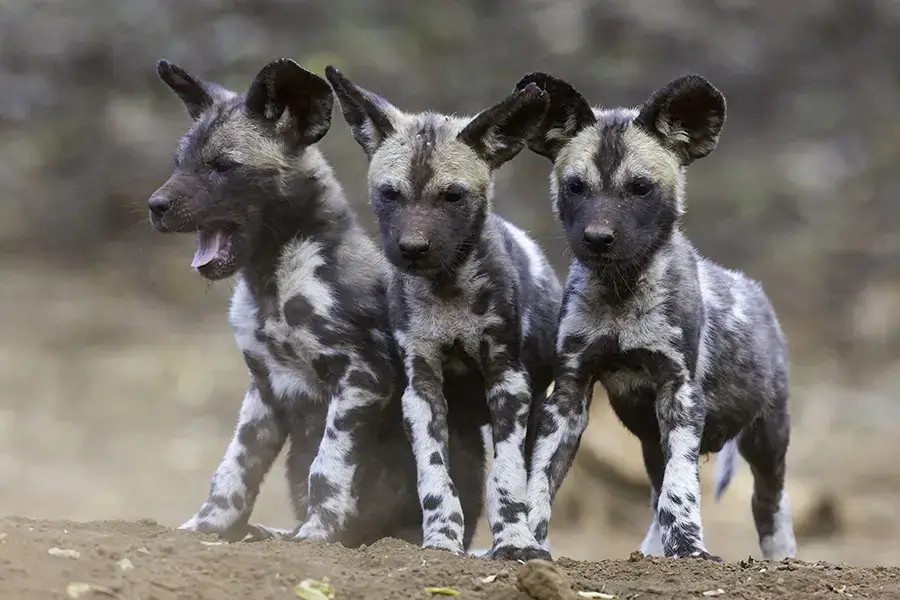
They are the largest canids in Africa and have a hyena-like head with very large, bat-like ears. They are slender bodied and long legged and their tri-colored coat is short and coarse: black and white at birth, with tan patches developing during the second month. Patterns are unique to each individual. These carnivores will eat almost anything they can catch and are extremely effective hunters, with success rates averaging 70% of all prey chased being caught. They are intensively hunted and poisoned because of a largely undeserved reputation as killers of livestock. Other reasons for decline are loss of habitat and introduction of diseases such as distemper and anthrax. Each pack has a dominant breeding pair which tends to remain monogamous. Gestation is approximately ten weeks and litter sizes can vary from 2 to 20. Females give birth in grass-lined burrows and pups remain in the den for three to four weeks. Once out of the den, they become the responsibility of the whole pack and can nurse from any female. They can run incredibly fast and have been clocked at 37 miles per hour.
The African wild dog is a highly social animal, living in packs with separate dominance hierarchies for males and females. Uniquely among social carnivores, it is the females rather than the males that scatter from the natal pack once sexually mature, and the young are allowed to feed first on carcasses. The species is a specialised diurnal hunter of antelopes, which it catches by chasing them to exhaustion. Like other canids, it regurgitates food for its young, but this action is also extended to adults, to the point of being the bedrock of African wild dog social life. It has few natural predators, though lions are a major source of mortality, and spotted hyenas are frequent kleptoparasites. Although not as prominent in African folklore or culture as other African carnivores, it has been respected in several hunter-gatherer societies, particularly those of the predynastic Egyptians and the San people.
The wild dog is one of the world's most endangered mammals. The largest populations remain in southern Africa and the southern part of East Africa - especially Tanzania and northern Mozambique. Wild dogs are social and gather in packs of around ten individuals, but some packs number more than 40. They are opportunistic predators that hunt medium-sized ruminants, such as gazelles. In a sprint, African wild dogs can reach speeds of more than 44 miles per hour. African wild dogs live in widely distributed, fragmented populations throughout the grasslands, savannas and open woodlands of Africa. Versatile carnivores, African wild dogs feed on animals up to twice their size, and will sometimes take on larger prey, like wildebeests, that are sick or old. There is an intricate social structure within African wild dog packs. Wild dogs take care of one another, and food is shared with individuals that did not participate in the hunt. Currently, these predators face increasing threats posed by habitat loss and diseases from non-native species.
One of the coolest African wild dog facts is that they are the most efficient hunters of any large predator, and succeed at a rate of over 80%. The African wild dog, also known as the Cape hunting dog, and African painted dog, is a large, intelligent, canine with a complex social life similar to a wolf. On the hot plains and grasslands of Africa, wild dogs live in tight-knit packs of 20 to 40 animals, the members of which remain so for their entire lives, Often confused with hyenas and having a bit of a reputation, African wild dogs regularly appear on peoples least-liked animals list. This page however, is unashamedly partial and will attempt to gain favor upon these fabulous fellows whose intense social drives echo back to the first four paws to ever recline beside us in dark caves of centuries past.
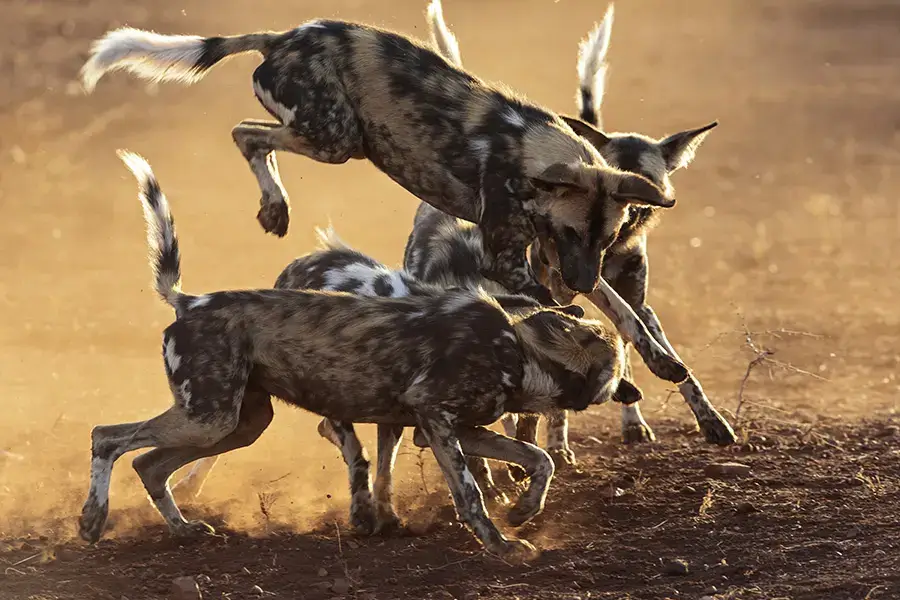
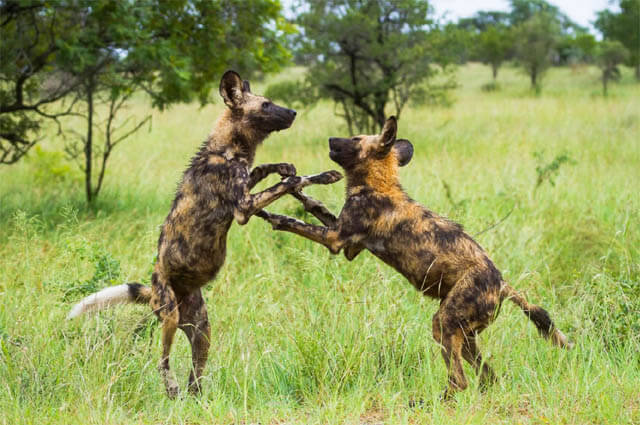
Wild dogs are achingly social, playful, and full of mischief and raw energy. They are constantly on the move, rarely staying in one location for more than a day or two, and this need for roaming space has contributed to their critical status in the wild. There are no preserves large enough to comfortably contain a pack of African wild dogs, and when they stray out onto farmlands and roadways, they fall prey to car bumpers and farmers bullets. The African wild dog is the second largest canine in the world, with the northern grey wolf being much heavier, but not neccessarily taller.
These dogs make lots of eerie noises and their habits of grinning and bowing to one another to show submission and friendship is perceived as skulking, and kind of creepy to many observers. The most unfortunate habit wild dogs have is their hunting style, or rather their killing style. As opposed to using a choke hold or a kill bite like most predators, African wild dogs will as a group grab a piece of their victim and basically tear it apart. This is an absolutely horrific sight, but actually may be a shorter death for the hapless victim.
African Wild Dog
Reproduction
Within the pack generally only the dominant male and female, called the Alpha pair, will reproduce. After a six week pregnancy the Alpha female will find a safe place, often an abandoned aardvark den, where she may deliver up to 20 puppies in a single litter - the most in the canine kingdom! More commonly about 10 puppies are born. The entire pack helps in the rearing of this one litter. In the world of wild dogs it is the submissive animal who can most fervently beg that tends to eat first. Food is distributed to the youngest pack members and sometimes the Alpha pair are actually be the last dogs to eat. The pack will settle down for several weeks while the pups are growing, going out to hunt twice a day and bringing food back in thier bellies which they will regurgitate for the mother and pups to eat. At some point, however, in a strange twist, the mother will join in the hunts - being the Alpha female with lots of experience and several designated "babysitters, usually males, will stay behind. Because the entire pack contributes to the raising of one large litter of puppies a year, African wild dog puppies catch on quick, and may be seen out hunting with the pack by the time they are 6 months old.
African Wild Dog
Leader
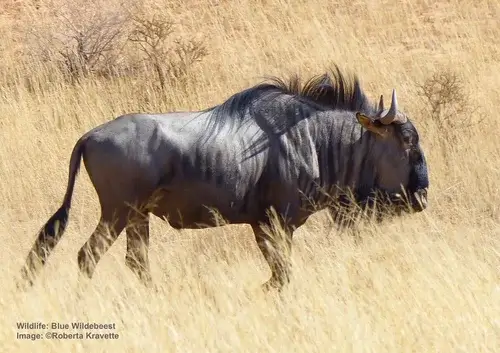
The African wild dogs intensely close pack structure is its greatest strength, making the pack a force to be reckoned with. Wild dogs are the most efficient hunters in Africa. They are successful 80% of the time in bringing down antelope, pig, and massive prey such as zebra and wildebeast that may easily be 10 times the size of an individual dog. After the hunt, the meal is freely distributed to pups, the nursing mom, and the sick, old or injured. Although they make a tremendous amount of noise and may scream and squabble, African wild dogs are rarely aggressive with each other. In fact, it is often a race to submission rather than dominance, with each dog giving the other a wide-lipped grin, bowing their heads low and "ha-ha" or "huffing" in reverance.
The wild dog pack is extremely tight-knit and works as a big, well-oiled machine because of this harmony. They build up each others confidence with group "rallies" where they trot about shoulder to shoulder, tails held high, jostling and mouthing each other, definitely similar to wolves, but also to football players before the big game. With the right numbers on their side, they will take on some of the largest land predators in the world, including hyenas and African lions, surrounding and tormenting their foe with a circle of grimacing determination. Wild dogs don't generally kill these big adversaries, although there are accounts of them doing so. Usually though, the plan is just to gain whatever the larger animal had in its possesion, or drive it from their territory.
Girl Power
Female African wild dogs are often larger than males, and many male/female roles in the pack structure are reversed. Although the pack most often hunts together, when the Alpha female has a young litter, it is usually a small group of adult males that will remain back at the den with her, tending to the many pups, while a hunting party of swift and powerful females set out first thing in the morning, and then again in late afternoon to procure the two meals a day the pack enjoys. But in one of the most unique role reversals, small groups of young females wean away from the pack to form a new pack of their own, or join a pack whose females have also left, while the majority of young males stay with the pack their entire lives, dutifully tending to the needs of another males puppies. Amazing!
Cricket? Owl? Dolphin?
No!
Just an African Wild Dog!
The African wild dog is an incredibly vocal animal emitting squeaks, chirps and hoots reminiscent of many common birds, but they make very few of the sounds created by the more familiar dog species we may have overheard. They really do not bark at all, and instead of howling in the night, a separated wild dog looking for the pack makes a "hoo" noise which sounds almost exactly like an owl! While hunting and feeding, the pack chirps and squeals like a flock of small birds, or a noisy pod of dolphins! They also make many cackling noises similiar to hyenas, although there is no relation.
Proximity = Play
= Personality
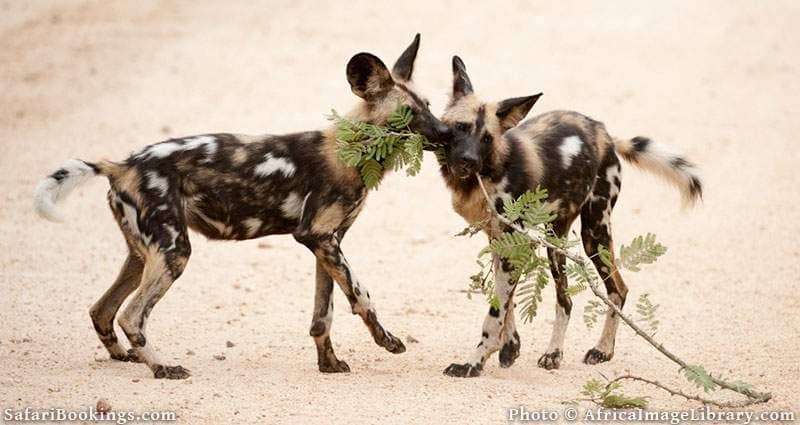
Almost all animals are driven to play as youngsters, practicing fight or flight techniques that will make them successful adults. Even without siblings or friends to experiment with, youngsters who grow up alone, like certain antelope, bear or cat species, will entertain themselves all day long with imaginative play. As most animals mature, however, play is replaced by the actual activities they once practiced and, especially with animals whose destiny after leaving their mothers side is to live a solitary life, with only occasional interaction for breeding purposes, the urge to play may simply fade away. But many canine species maintain high levels of play and joyful interaction with no real purpose all through their adult lives leading to mature animals that are full of curiosity and richness of character.
A little bit more
about African Wild Dogs...
Wild dogs are known by many different names including painted dog, painted wolf, cape hunting dog, African hunting dog, singing dog and ornate wolf. They are the most efficient hunters of any large predator with an 80% success rate. Wild dogs don't use a kill bite when hunting, the pack will actually begin to eat their prey alive, which may be a big reason for their unpopularity, but is often actually a quicker ending. The African Wild Dog is the second largest dog species after the grey wolf.
A Diet...
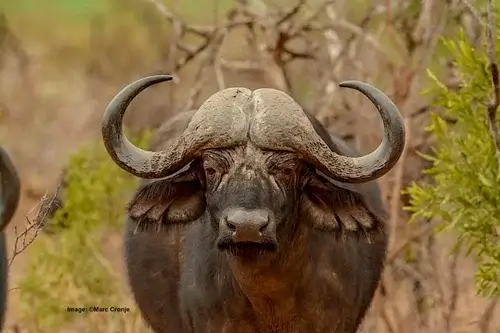
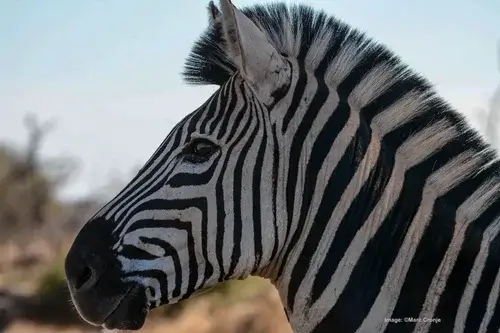
In East Africa, its most common prey is Thomson's gazelle, while in Central and Southern Africa it targets impala, reedbuck, kob, lechwe, and springbok.Its diet is not restricted to these animals though, as it will also hunt wildebeest, warthog, oribi, duiker, waterbuck, Grant's gazelle, zebra, bushbuck, ostrich, African buffalo, especially calves, and smaller prey like dik-dik, hares, spring hares and cane rats. Certain packs in the Serengeti specialized in hunting zebras in preference to other prey. One pack was recorded to occasionally prey on bat-eared foxes, rolling on the carcasses before eating them. African wild dogs rarely scavenge, but have on occasion been observed to appropriate carcasses from spotted hyenas, leopards, cheetahs, and lions, as well as animals caught in snares. Lions dominate African wild dogs, and are a major source of mortality for both adults and pups. Population densities of African wild dogs are low in areas where lions are more abundant. One pack reintroduced into Etosha National Park was destroyed by lions.
A population crash in lions in the Ngorongoro Crater during the 1960s resulted in an increase in African wild dog sightings, only for their numbers to decline once the lions recovered. However, there are a few reported cases of old and wounded lions falling prey to African wild dogs. On occasion, packs of wild dogs have been observed defending pack members attacked by single lions, sometimes successfully. One pack in the Okavango in March 2016 was photographed by safari guides waging "an incredible fight" against a lioness that attacked a subadult dog at an impala kill, which forced the lioness to retreat although the subadult dog died. Naturalists John McNutt and Lesley Bogg McNutt, founders of the Botswana Predator Conservation Trust, observed a pack of 4 wild dogs furiously defend an old adult male dog from a male lion that attacked it at a kill, the dog survived and rejoined the pack.
Spotted hyenas are important kleptoparasites, and will follow packs of African wild dogs in order to appropriate their kills. They will typically inspect areas where African wild dogs have rested and eat any food remains they find. When approaching African wild dogs at a kill, solitary hyenas will approach cautiously and attempt to take off with a piece of meat unnoticed, though they may be mobbed in the attempt. When operating in groups, spotted hyenas are more successful in pirating African wild dog kills, though the latter's greater tendency to assist each other puts them at an advantage against spotted hyenas, who rarely work in unison. Cases of African wild dogs scavenging from spotted hyenas are rare. Although African wild dog packs can easily repel solitary hyenas, on the whole, the relationship between the two species is a one-sided benefit for the hyenas, with African wild dog densities being negatively correlated with high hyena populations.
Modern Predators
and Cleaners
A "Painted Wolf-Like Animal" - The African wild dog is a highly intelligent and social animal. Like most predators, the African wild dog plays an important role in eliminating sick and weak animals. This helps to maintain a natural balance in nature, and in the long run, improves the prey species. African wild dogs face a number of serious threats, including habitat loss, hunting and poisoning by human, as they are considered a threat to livestock. Another danger that these dogs face is disease that spreads from domestic animals. African Wild Dogs have disappeared from much of their former range, and most of those that remain live in game preserves or national parks. Many organizations work to understand and combat the problems that these dogs are facing. These organizations also have conservation and education programs to change the negative attitudes that have existed for decades, towards these colorful painted African wild dogs. No two wild dogs have the same markings, which makes them easily identifiable as individuals.
On the Hunt...
No one is sure why African painted dogs sneeze before a hunt, and the painted dogs are not telling, but researchers feel that it may be a kind of voting system. The more sneezes, the more likely a hunt is about to start. ewer sneezes, and the pack may go back to rest for a while longer. On the hunt, the alpha individual leads and chooses the prey. However, another pack member may also spot a prey candidate, splitting the group into two hunting parties. This is not necessarily a sign of competition between the dogs, but a way to provide more food for all. The result is often two kills for the pack to share. Painted dogs might target prey up to 10 times their size. Unfortunately, their audacious hunting style has led to a very bad reputation for this amazingly unaggressive animal.
Painted dogs are fast (up to 37 miles per hour / 60 km/h). Long legs and large lungs give them speed and great endurance. Unlike other predators, painted dogs have relatively small, weak jaws and so do not use a "kill bite" or strangulation bite. They chase their target at full speed for up to three miles (5 km) until it falls from exhaustion or shock, tearing at the animal’s flesh and disemboweling the prey as it runs. This method is thought to kill more quickly than the traditional neck bite but can be horrifying to a human onlooker and helped give rise to their ferocious reputation. This close teamwork leads to reward. Painted dogs are the most efficient hunters in Africa, successful 70% - 90% of their attempts, a far higher rate than other predators, lions only bring down 30% of their prey.
Painted dogs hunt in packs, twice a day, early morning and evening, resting in between. How do they decide when to hunt and when to rest? They have a system. In anticipation of a hunting expedition, the pack first "revs each other up" in what looks very much like play. They bow to each other and jump around, tails wagging, noses touching. It all looks like fun, but they are reaffirming the team - getting in sync. The frenetic action is accompanied by high-pitched whining or "chirping" sounds. Listen to the video. Painted dogs do not bark. Then, the sneezing starts.
What is on the
African Wild Painted Dog
Menu?
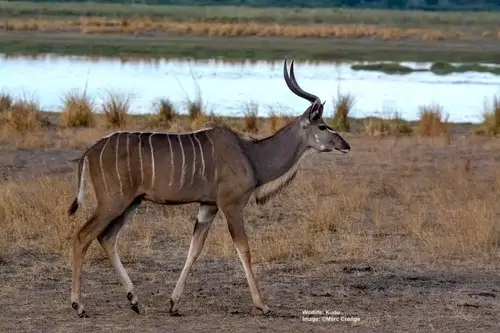
The painted dog is a carnivore. Its preferred menu includes small to mid-sized antelope such as impala, bushbuck, duiker, kudu, and reedbuck. It will also prey on a zebra, wildebeest, or even a buffalo, choosing the weakest of the herd or lone animal. All of these prey animals significantly outweigh the African painted dog. Smaller mammals and birds supplement their diet. Their unselfish system of dividing the food among the pack differs from other canids.
Treats
Lions and hyenas are their natural enemies, lions often kill wild dogs, and ecosystems that have high lion numbers tend to have fewer wild dogs. African wild dogs are the second most endangered carnivore in Africa after the Ethiopian wolf. They are primarily threatened by habitat fragmentation. The destruction of their habitat also forces them into conflict with humans, especially when they hunt livestock. When wild dogs enter human-dominated landscapes, they are susceptible to diseases, like rabies and canine distemper, that are carried by domestic dogs and can wipe out entire packs. Roads, too, are a major threat to wild dogs, and road accidents are a major cause of mortality. Snares, a method of poaching which captures wildlife indiscriminately, also kill many wild dogs in some areas.
What makes
African wild dogs
different from hyenas?
Although they share some similarities, African wild dogs are more agile, have unique coat patterns, and belong to a different genus. Hyenas have stronger jaws for bone-crushing and tend to scavenge more, while wild dogs are primarily diurnal hunters relying on endurance and cooperation.
The earliest possible written reference to the species comes from Oppian, who wrote of the thoa, a hybrid between the wolf and leopard, which resembles the former in shape and the latter in colour. Solinus's Collectanea rerum memorabilium from the 3rd century AD describes a multicoloured wolf-like animal with a mane native to Ethiopia.
The species was first described scientifically in 1820 by Coenraad Temminck, after having examined a specimen taken from the coast of Mozambique. He named the animal Hyaena picta, erroneously classifying it as a species of hyena. It was later recognised as a canid by Joshua Brookes in 1827, and renamed Lycaon tricolor. The root word of Lycaon is the Greek lykaios, meaning "wolf-like".
The specific epithet pictus - Latin for "painted", which derived from the original picta, was later returned to it, in conformity with the International Rules on Taxonomic Nomenclature. The English language has several names for Lycaon pictus, including painted lycaon, African wild dog, Cape hunting dog, and painted dog or painted wolf. The latter name is being promoted by some conservationists as a way of rebranding the species, as "wild dog" has several negative connotations that could be detrimental to its image. Nevertheless, the name "African wild dog" is still widely used.
AFRICAN WILD DOG
EVOLUTION
The evolution of the African wild dog was once poorly understood, due to the scarcity of fossil finds. One proposed ancestral genus was Xenocyon, which lived throughout Eurasia, from Germany to Japan, as well as in Africa from the Early Pleistocene to the early Middle Pleistocene. The species X. falconeri shared the African wild dog's absent first metacarpal (dewclaw), though its dentition was still relatively unspecialised. This connection was rejected by one author because X. falconeri's missing metacarpal was a poor indication of phylogenetic closeness to the African wild dog, and the dentition was too different to imply ancestry. A more likely ancestral candidate is the Plio-Pleistocene L. sekowei of South Africa, on the basis of skull shape and tooth morphology, which shows the same adaptations to a hypercarnivorous diet as the modern species. L. sekowei had not yet lost the first metacarpal absent in L. pictus, and was more robust than the modern species, having 10% larger teeth.
Wang and Tedford proposed that in Eurasia during the Middle Pleistocene, C. falconeri gave rise to the hypercarnivore genus Xenocyon, which then gave rise to genus Cuon (the dhole) and genus Lycaon (the African hunting dog). Just before the appearance of C. dirus, North America was invaded by genus Xenocyon that was as large as C. dirus and more hypercarnivorous. The fossil record shows them as rare and it is assumed that they could not compete with the newly derived C. dirus. The large wolf C. antonii from late Pliocene to early Pleistocene China was assessed as being a variation within C. chihliensis and the large wolf C. falconeri occurred abruptly in Europe in the Early Pleistocene, perhaps representing a westward extension of C. antonii. Fossil of Lycaon sekowei, a possible ancestor of the modern L. pictus.
Paleontologist George G. Simpson placed L. pictus in the subfamily Simocyoninae, along with Cuon alpinus and Speothos venaticus, on the basis of all three species having similarly trenchant carnassials. This grouping was disputed by Juliet Clutton-Brock, who argued that, other than dentition, there were too few similarities between the three species to warrant classifying them in a single subfamily. The species' molecular genetics indicate that, although it is far removed from the genus Canis, it is nonetheless more closely related to it than to other canid lineages. Phylogenetic studies place L. pictus and Cuon alpinus into a clade of "wolf-like canids" alongside the extant members of the Canis genus, including C. simensis, C. aureus, C. latrans, C. lupus and the more basal C. adustus and C. mesomelas.
Nevertheless, although the species is genetically diverse, these subspecific designations are not universally accepted. It was once thought that East African and Southern African L. pictus populations were genetically distinct, based on a small number of samples. More recent studies with a larger number of samples showed that there has been extensive intermixing between East African and Southern African populations in the past. Some unique nuclear and mitochondrial alleles are found in Southern African and north-eastern African populations, with a transition zone encompassing Botswana, Zimbabwe and south-eastern Tanzania between the two. The West African L. pictus population may possess a unique haplotype, thus possibly constituting a truly distinct subspecies.
PHYSICAL
CHARACTERISTICS
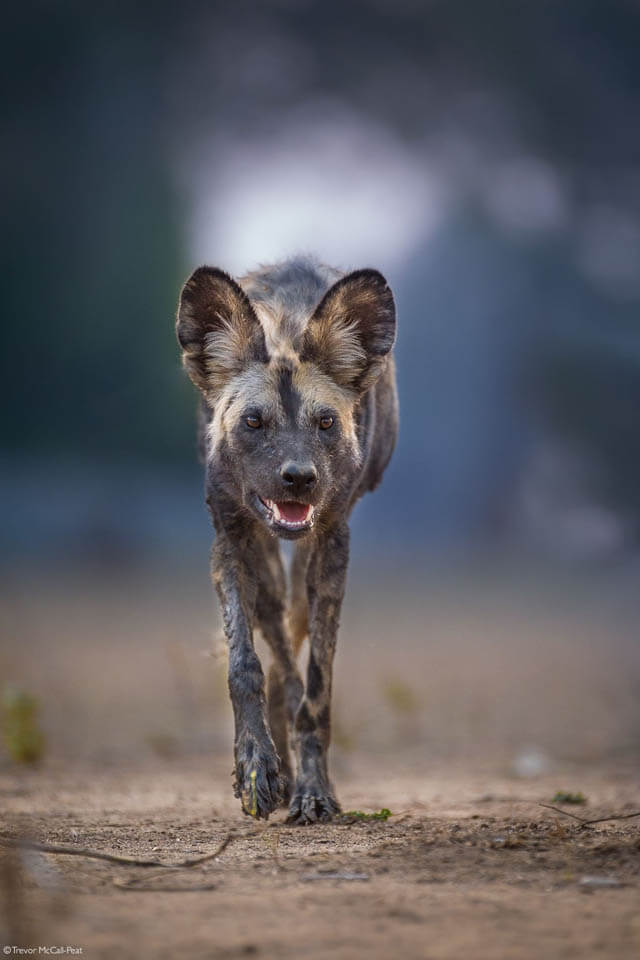
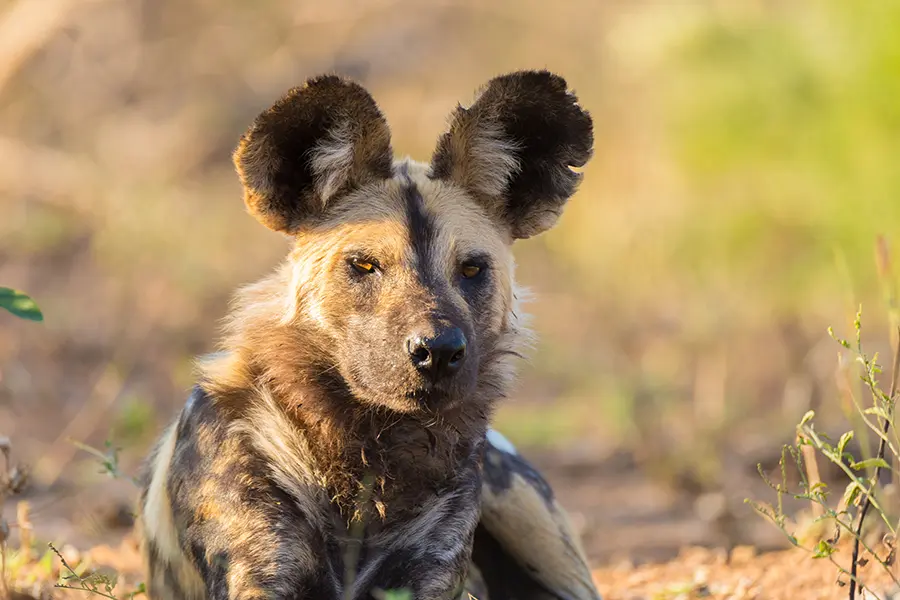
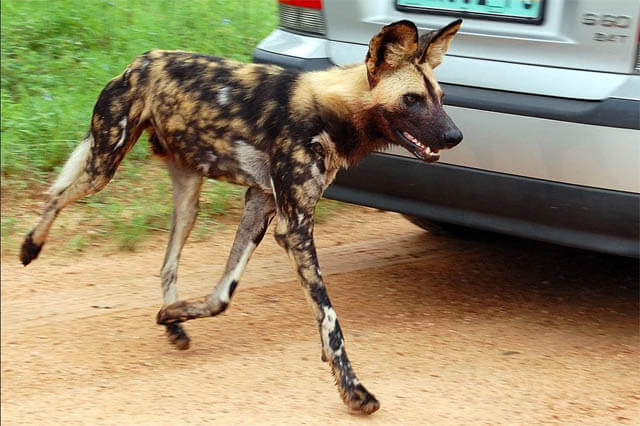
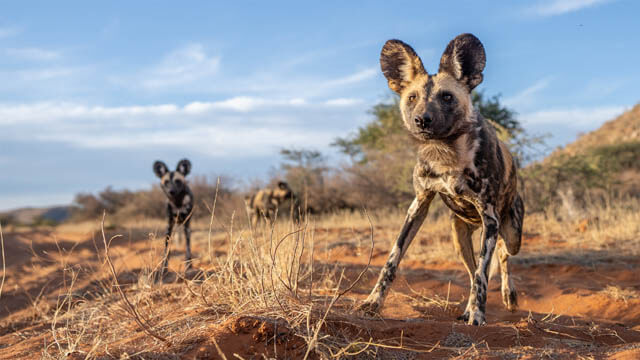
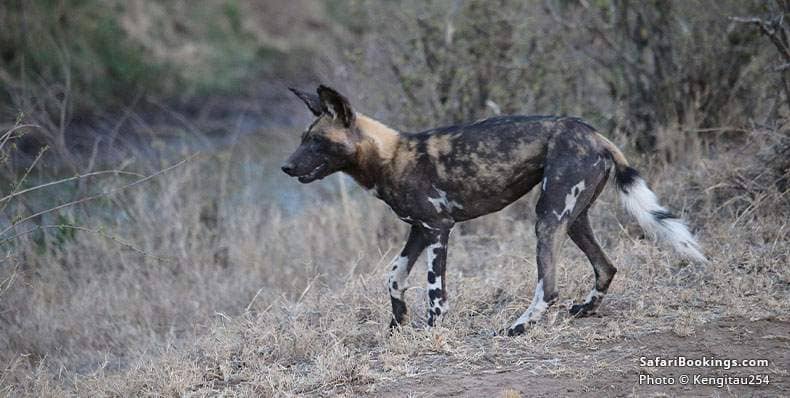
The African wild dog is the bulkiest and most solidly built of African canids. The African wild dog is long-legged, with massive jaws and very large, erect batlike ears. Although it resembles some domestic dogs, it differs in that it has four toes on each foot instead of five. The colorful coat of dark brown, black and yellow patches. Wild dogs have bushy tails with white tips that may serve as a flag to keep the pack in contact while hunting The species stands 60-75 cm (24-30 in) in shoulder height, and weighs 20-25 kg (44-55 lb) in East Africa and up to 30 kg (66 lb) in southern Africa. Females are generally 3-7% smaller than males.
Compared to members of the genus Canis, the African wild dog is comparatively lean and tall, with outsized ears and lacking dewclaws. The middle two toepads are usually fused. Its dentition also differs from that of Canis by the degeneration of the last lower molar, the narrowness of the canines, and proportionately large premolars, which are the largest relative to body size of any carnivore other than hyenas. The heel of the lower carnassial M1 is crested with a single blade-like cusp, which enhances the shearing capacity of the teeth and thus the speed at which prey can be consumed. This feature, termed "trenchant heel", is shared with two other canids: the Asian dhole and the South American bush dog. The skull is relatively shorter and broader than that of other canids.
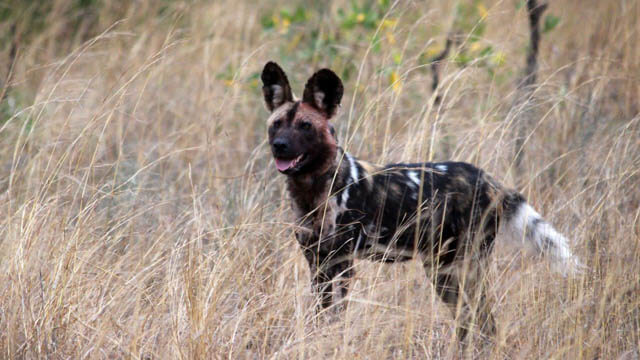
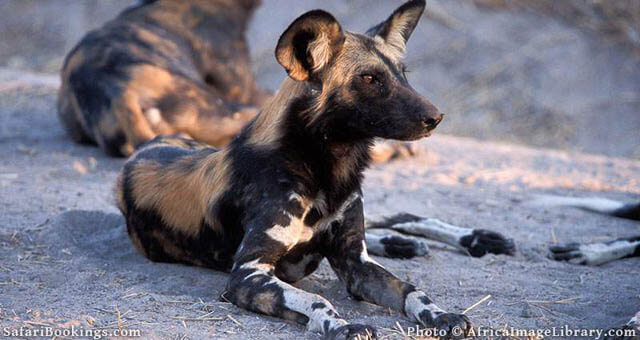
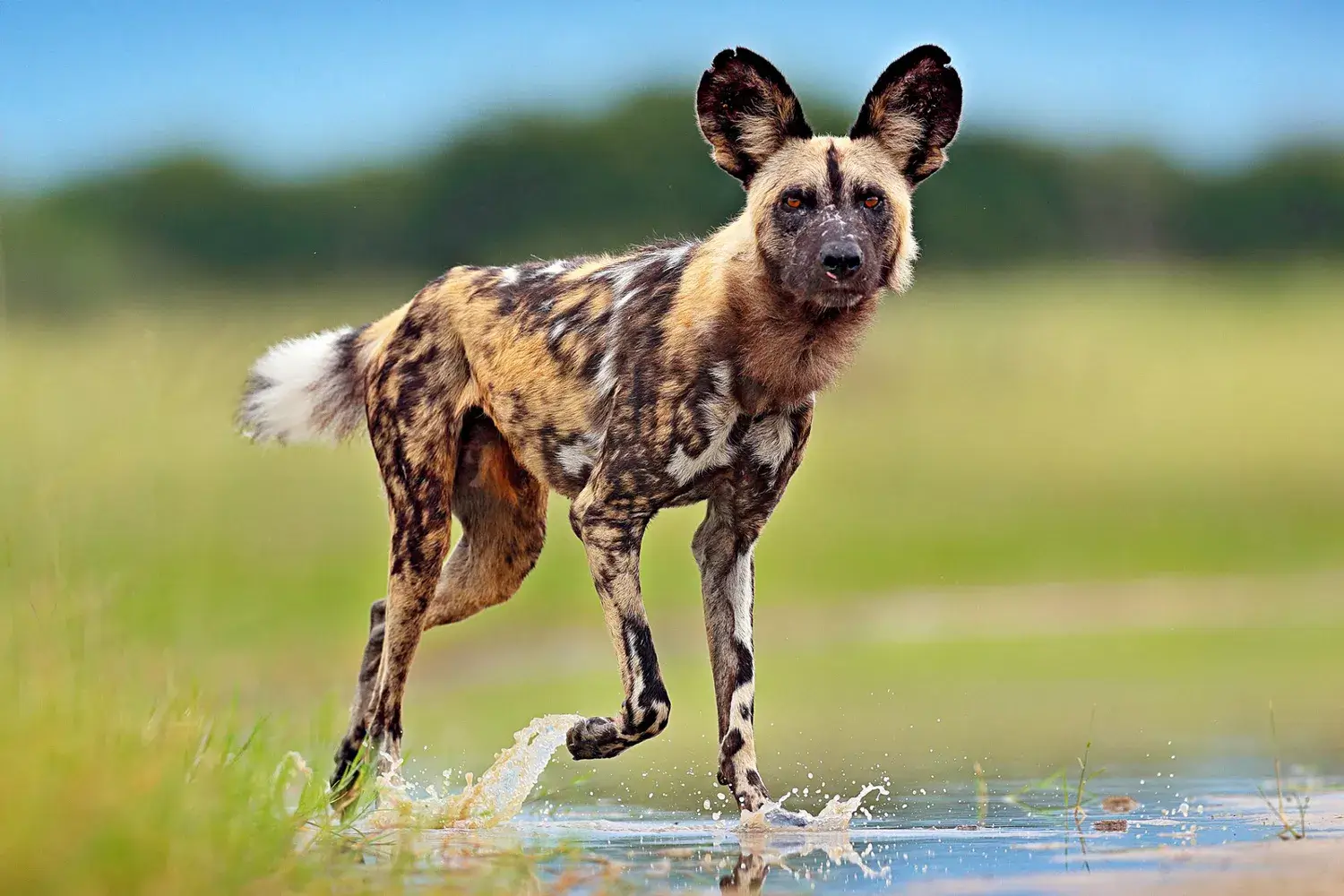
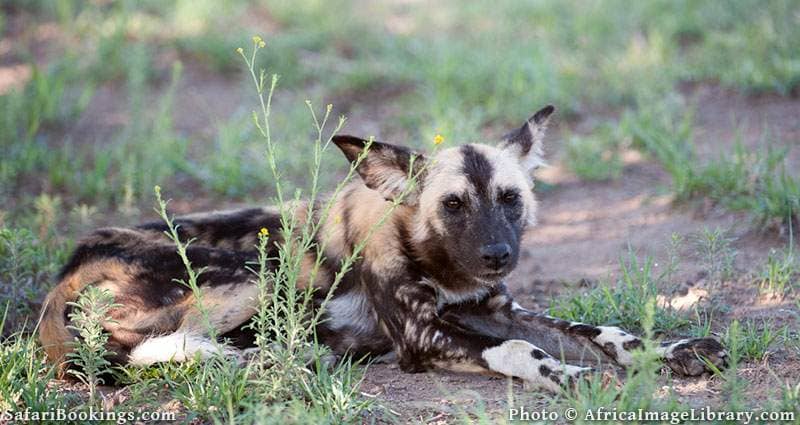
The fur of the African wild dog differs significantly from that of other canids, consisting entirely of stiff bristle-hairs with no underfur. It gradually loses its fur as it ages, with older specimens being almost naked. Colour variation is extreme, and may serve in visual identification, as African wild dogs can recognise each other at distances of 50-100 metres. There is some geographic variation in coat colour, with north-east African specimens tending to be predominantly black with small white and yellow patches, while southern African ones are more brightly coloured, sporting a mix of brown, black and white coats. Much of the species' coat patterning occurs on the trunk and legs. There is little variation in facial markings, with the muzzle being black, gradually shading into brown on the cheeks and forehead. A black line extends up the forehead, turning blackish-brown on the back of the ears.
A few specimens sport a brown teardrop shaped mark below the eyes. The back of the head and neck are either brown or yellow. A white patch occasionally occurs behind the forelegs, with some specimens having completely white forelegs, chests and throats. The tail is usually white at the tip, black in the middle and brown at the base. Some specimens lack the white tip entirely, or may have black fur below the white tip. These coat patterns are asymmetrical, with the left side of the body often having different markings from that of the right. Pups that are old enough to eat solid food are given priority at a kill, even over the dominant pair. An adult dog will look for days for a lost pup or juvenile, calling out in a special vocalization and listening for a reply to bring the lost dog back to the pack. Although once considered a "pest", the African wild dog has become a symbol of pride in Zimbabwe. Thanks to efforts by local communities and NGO's, the wild population in Zimbabwe has almost doubled in recent years.
Behavior
Wild dogs live in packs of six to 20. If the pack numbers fall below six, hunting efficiency is eroded. The dogs have a peculiar rather playful ceremony that bonds them for a common purpose and initiates each hunt. They start circulating among the other pack members, vocalizing and touching until they get excited and are ready to hunt. They start the hunt in an organized, cooperative manner. When prey is targeted, some of the dogs run close to the animal, while others follow behind, taking over when the leader tired. They can run long distances, at speeds up to about 35 miles per hour. Of the large carnivores, wild dogs are the most efficient hunters - targeted prey rarely escapes. They tear the flesh until the animal falls, consuming even if it is still alive. This behavior may prejudice people against them, although in reality it may be no worse than the prolonged kills of other carnivores. Apart from its undeniable bloodiness, the remarkable aspect of the their hunting is the complete lack of aggression toward each other. Wild dogs have a social hierarchy but unlike many other social animals, there is little obvious intimidation. They have elaborate greeting rituals, accompanied by twittering and whining. Their large range of vocalizations includes a short bark of alarm, a rallying howl and a bell-like contact call that can be heard over long distances.
Dogica® collects only technical cookies. No any personal or private information being collected, saved or shared here. 3rd Party cookies could be collected by various installed widgets.
The information contained in or provided through DOGICA® site is intended for general consumer understanding and education only and is not intended to be and is not a substitute for professional advice.
Use of this site and any information contained on or provided through this site is provided on an "as is" basis without any representations, warranties or pay.





























WORLD OF DOG & PUPPY 🐶