10 Irish Dog Breeds: Photo, Characteristics, Temperament Rare Irish Dogs Photos & Info Dogs Originating In Ireland Dog Breeds from Ireland Irish Dog Breeds List
Irish dog breeds were originally developed as working dogs to perform specific tasks for humans. These include terriers, setters, hounds, and spaniels, all originating from the Emerald Isle. These native breeds are primarily hunting dogs classified into three American Kennel Club groups: Terrier, Sporting, and Hound. Today, many Irish breeds continue to work alongside humans, while others are cherished household pets.
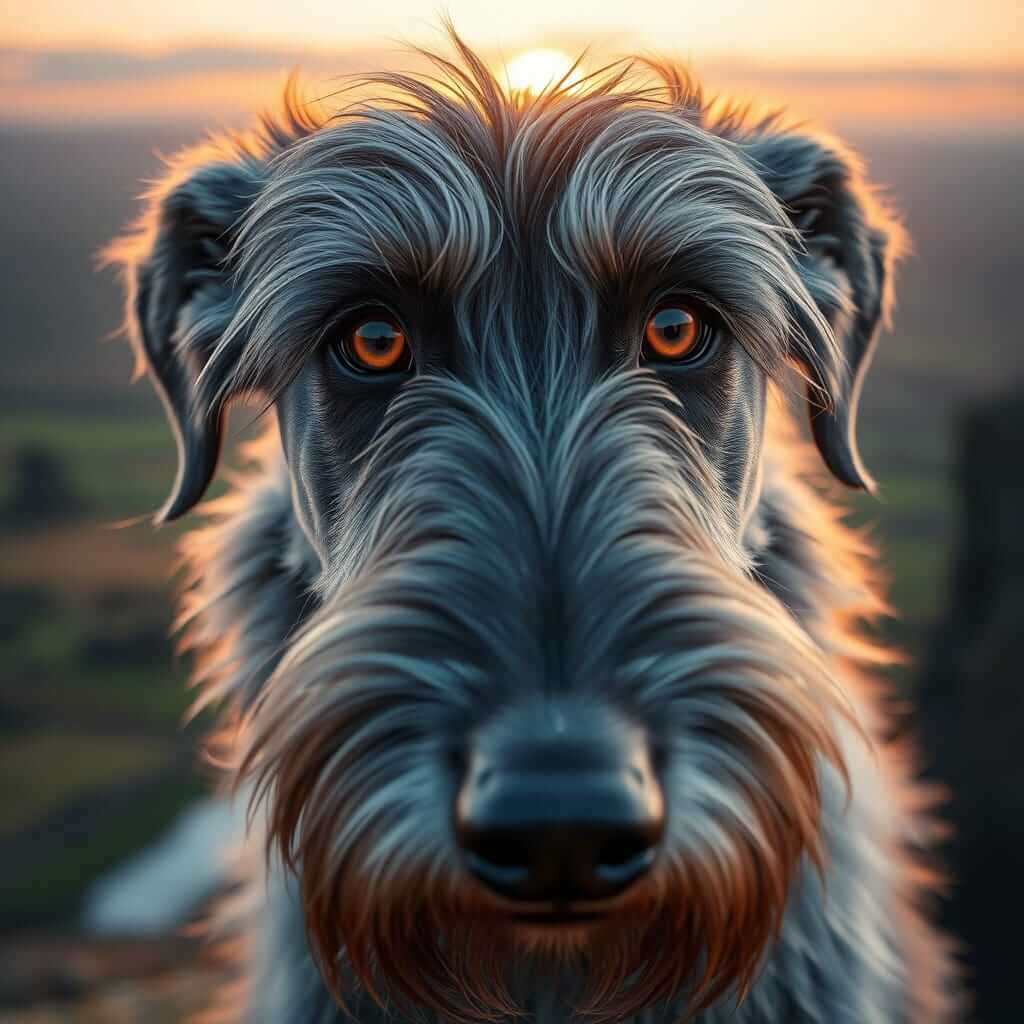
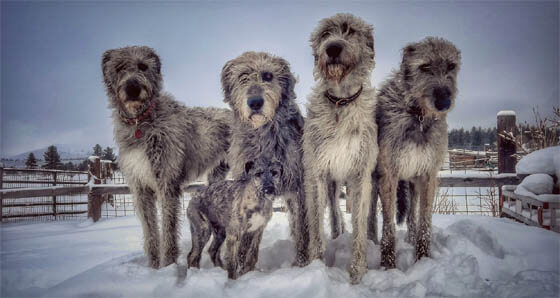
The Irish Wolfhound is a gentle giant, known as the tallest dog breed, combining a commanding, sturdy presence with a calm, loyal temperament. Originally bred for hunting, they are now cherished family pets with high affectionate, low-to-moderate energy levels. They require moderate exercise, have a wiry coat, and typically live only 6–10 years. Irish Wolfhounds are sweet-tempered, patient, kind, thoughtful and very intelligent. Their excellent nature can be trusted with children. Willing and eager to please, they are unconditionally loyal to their owner and family. They tend to greet everyone as a friend, so do not count on them being a watchdog, but may be a deterrent simply due to their size. This giant breed can be clumsy and are slow to mature in both body and mind, taking about two years before they are full grown. However, they grow rapidly and high-quality food is essential. While it is important to take a growing pup for daily walks for their mental well-being, hard exercise should not be forced and may be too taxing for this dog's body when it is young. Teach it not to pull on its leash before it gets too strong. The Irish Wolfhound is relatively easy to train. He responds well to firm, but gentle, consistent, leadership.
The defining characteristic of the Irish wolfhound is its imposing height, it is the tallest breed of dog. But a good wolfhound is more than just a tall dog. It is a sturdy, yet swift dog, capable of running down and killing large animals. It has a general greyhound build, only larger and stockier. The legs are long, the body comparatively narrow, the loin slightly arched, the chest deep and the waist moderately small. Like most sighthounds, the tail is long and carried low. Irish wolfhounds have a heart as big as the rest of them. They are gentle, noble, sensitive and easygoing. Despite the fact that they can run at great speed, most of their actions around the house are in decidedly slow motion, and they are definitely not snap-to-it obedience prospects. They will eventually mind you, just at their own pace! Just under the surface of their gentle exterior does lie the nature of a coursing hunter, so Irish wolfhound owners must be vigilant when outdoors. Like all sighthounds, Irish wolfhounds love to chase animals that are running away from them, and they can take their time responding to your calls to come back. Yet Irish wolfhounds are generally model citizens with other dogs, pets and children. Their great size is usually enough to scare away intruders; this is fortunate, as most Irish wolfhounds are pacifists and not great protection dogs.
The major consideration any prospective Irish wolfhound guardian needs to make is the matter of size. These dogs need room to stretch out and be comfortable; they are the size of another person - a person who takes up even more room because they do not walk upright. They enjoy a quiet life, and as long as you take them out for a good walk or run once a day, they will be content to sprawl around your house. Think beyond your house; where will such a large dog fit in your car? Can you control a dog that large? What if you ever had to pick him up because he was sick or hurt? Remember that everything that goes with a big dog is big: big feed bills, big medicine bills, big boarding bills, so think big! Irish wolfhounds much prefer cold weather to warm and will often seek out a cold hard floor in the summer months. Calluses often form on their elbows because of this, and these can become unsightly and even uncomfortable for the dog. Irish Wolfhound temperament is generally calm, gentle, and easygoing. Wolfhounds will become accustomed to nearly any level of activity, but they should be exercised regularly to limit health concerns and prevent obesity.
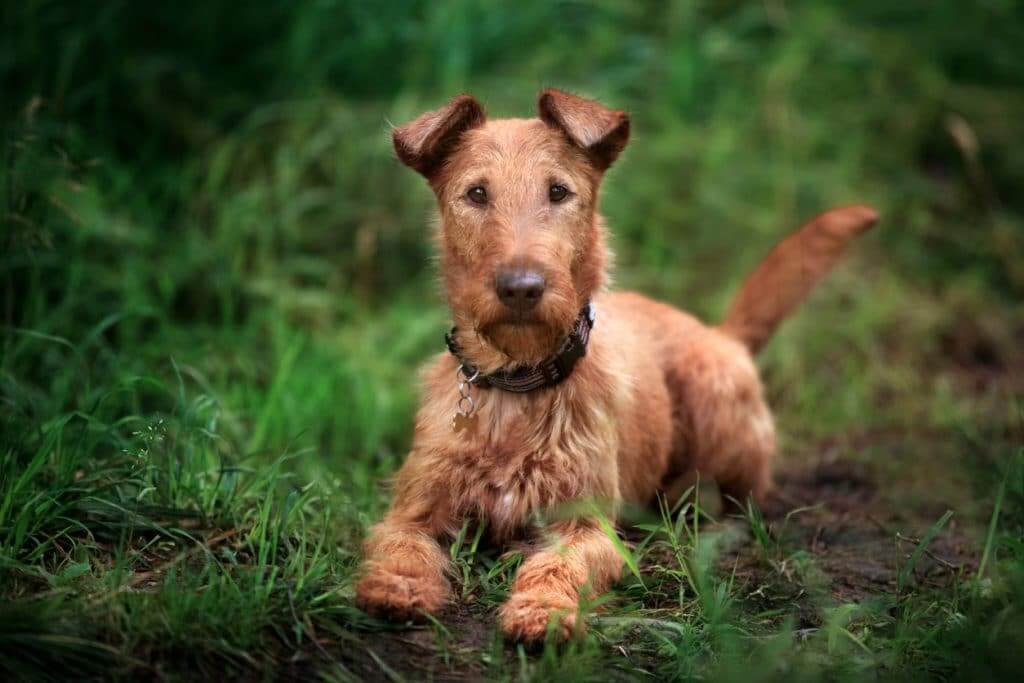
The Irish Terrier is a medium-sized, lively, and intelligent breed known as the "Daredevil" for its fiery red coat and courageous, affectionate temperament. Whilst sometimes confused for Airedale Terriers, the Irish Terrier is generally smaller than the Airedale, with a more rectangular-shape to the head, and distinctive red coat. On the other hand, Airedale Terriers have a larger, more square-shaped head and typically have a black and tan coat. Weighing 25–27 lbs, they are versatile companions that need high activity levels and regular training. They are excellent with families but can be scrappy with other dogs. The Irish Terrier is courageous, energetic and loyal, often affectionately called "daredevils" by their fanciers. Sweet with their families, they are entertaining companions. The Irish Terrier is a good friend for active children, loving a good play. Bold, inquisitive and ready for action and adventure. Intelligent, they are very trainable. They have a strong protective instinct and therefore need dominant owners. If this breed senses an owner has a meek side to them it will become willful, as the dog will believe he needs to be in charge. Can be quite a handful.
Train firmly, starting when the dog is a puppy, providing rules the dog must follow and limits to what he is and is not allowed to do. Be calm, but stern and always consistent. Irish Terrier dogs are energetic, intelligent, and love being involved in family activities. Their smaller size and high-energy personality mesh well with children who understand appropriate play with dogs. As always, make sure all interactions between kids and dogs, no matter the breed, are supervised. However, Irish Terriers may prefer to be the only dog in the household. As terriers, Irish Terriers were bred to hunt small animals such as rodents and foxes. Because of this, they may see cats, small pets such as hamsters, and neighborhood wildlife as something to chase. Make sure to keep your Irish Terrier on a leash or inside a fenced-in space whenever they’re outside to keep everyone safe from this prey drive.
Typically quite curious and alert by nature, Irish Terriers might bark to alert their family of strangers or unusual activities, but they are not known to be excessive barkers. However, Irish Terriers have been known to be talented escape artists. They must have a securely fenced-in yard, as they will jump or dig to get out, particularly if they see something to chase. Providing ample physical and mental stimulation will help prevent unwanted destructive behaviors both in and outside of the home. This breed needs at least 60-90 minutes of exercise every day. Irish Terriers are known for their bold and spirited personalities. They are confident, intelligent, and independent dogs. They are very loyal and make great companions for individuals and families alike. While they can be friendly and sociable, they can also be reserved with strangers, making them good watchdogs. Early socialisation is important to ensure they are comfortable around other animals and new people. They have a strong prey drive and may not get along well with small pets. However, with proper training and socialisation from an early age, it is possible for some of them to learn to coexist peacefully.
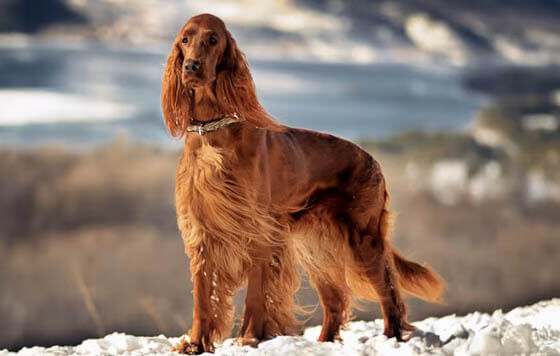
The Irish Setter is a high-energy, affectionate, and intelligent sporting dog known for its striking red coat and friendly demeanor. Originally bred as gundogs, they require vigorous daily exercise, making them ideal companions for active families. They are generally great with children and other dogs but need consistent training due to their playful, sometimes mischievous nature. Irish Setters are energetic, intelligent, affectionate, loving, high-spirited and full of energy. They have no guarding instincts, get along with other pets and are good with children. This breed can be reckless and high-strung if it does not receive the proper amount of mental and physical exercise and may become destructive and hard to manage. Impulsive, with an independent spirit, they are sensitive to the tone of one's voice and will not listen if they sense that they are stronger minded than their owner, however they will also not respond well to harsh discipline.
Owners need to be calm, yet possess an air of natural authority, being firm, confident and consistent, giving the dogs clear rules they must follow and sticking to them. Meek or passive owners or owners who do not provide enough exercise will find them to be difficult to train. Given firm handling and plenty of exercise, these dogs can be a joy to own. Start firm training early in life as it is easier to prevent behavior issues than it is to fix them once they start happening. Do not let this dog jump on humans, even as a small puppy. Teach them to heel on a lead and to let humans pass in and out gate and doorways before them. Relatively easily to housebreak. There are two types, field lines and show lines (bench). Field types are bred for hunting and field trial work and are generally somewhat smaller with shorter coats. The bench type is bred for conformation shows. Both types are energetic and need daily exercise, but field lines have a higher energy level and need even more exercise. Irish setters are the quintessential family dog, with a sweet and playful temperament that makes them ideal companions for owners of any age.
They are highly intelligent and easy to train, whether you want to participate in a sport alongside them or just want them to walk by your side on a leash. They typically get along great with other pets and often make friends (human and otherwise) wherever they go. Irish setters are known for being highly affectionate with their family and open to meeting strangers wherever they go. Irish Setters love people and are relatively high-energy, so children are fine, but toddlers are at risk of being accidentally knocked down. Irish Setters are usually okay with other pets, including cats, as long as proper introductions are made. This is a fun-loving breed that’s game for just about anything their families want to do. They love to go places and do things, so they fit well with an active lifestyle. By the time your Irish Setter is 3 or 4, he will probably settle down, but until then, be prepared to have some puppy-size energy in an adult-size dog.
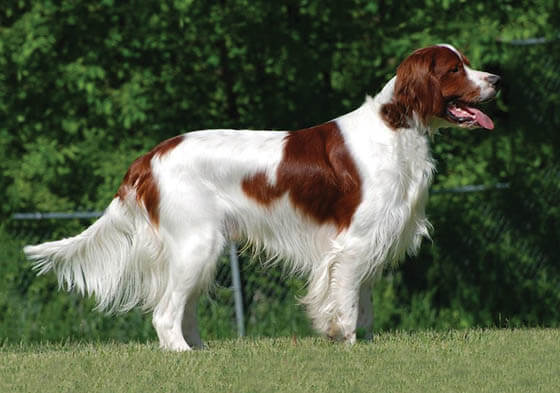
The Irish Red and White Setter is a rare, athletic Irish gundog, recognized for its white coat with deep red patches, high energy, and affectionate, loyal nature. Originally a 16th-century hunting dog, they need significant daily exercise (1–2+ hours) and are ideal for active families or rural settings. Irish Red and White Setters are energetic, intelligent, affectionate, loving, high-spirited and full of energy. They have no guarding instincts, get along with other pets and are good with children. This breed can be reckless and high-strung if it do not receive the proper amount of mental and physical exercise and may become destructive and hard to manage. Impulsive, with an independent spirit, they are sensitive to the tone of one's voice and will not listen if they sense that they are stronger minded than their owner, however they will also not respond well to harsh discipline. Owners need to be calm, yet possess an air of natural authority, being firm, confident and consistent, giving the dogs clear rules they must follow and sticking to them.
Meek or passive owners or owners who do not provide enough exercise will find them to be difficult to train. Given firm handling and plenty of exercise, these dogs can be a joy to own. Irish Red and White Setters are fairly obedient and easy to housebreak. But they're also very independent. Start firm training early in life as it is easier to prevent behavior issues than it is to fix them once they start happening. Do not let this dog jump on humans, even as a small puppy. Teach them to heel on a lead and to let humans pass in and out gate and doorways before them. Relatively easily to housebreak. He is similar to his cousin, the Irish Setter, and can be just as stubborn. The Irish Red and White Setter is enthusiastic and loves to work. Many people describe him as tireless. He needs an active family who will take him on long walks or jogs. He also needs to live inside with his family or he could become a nuisance to the neighbors. If he becomes frustrated and has excess energy, he can easily become destructive. Be sure to give him a job to do to keep him happy.
The Irish Red and White Setter is a very affectionate and good natured dog. He is not just a hunting dog; he is a devoted family companion. He likes children but can be a little too rambunctious for small children. He is a very active sporting dog and requires a lot of daily exercise as well as interactive play with his family. Generally, the Irish Red and White Setter gets along well with other dogs but he does need to be supervised with smaller pets and cats. If he is raised with cats, then he should do very well. However, even if raised with smaller pets such as ferrets, hamsters or rabbits, he still needs to be supervised when they are together. He can be extremely stubborn and training needs to be approached as a fun-filled activity with lots of praise and positive reinforcement. Training needs to begin as soon as he comes home. The Irish Red and White Setter is a high-spirited, fun-loving breed. Field dogs through and through, Irish Red and White Setters are athletic and determined, with natural pointing abilities. It's no wonder hunters have considered the breed a valuable companion for centuries.
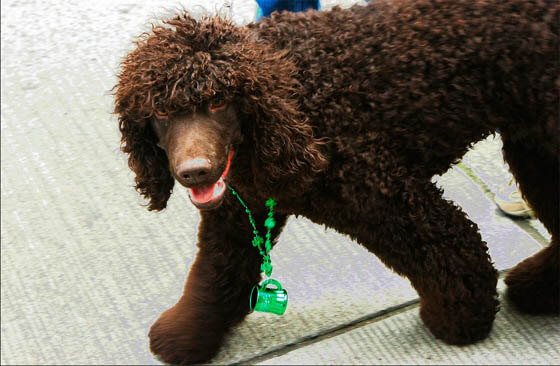
The Irish Water Spaniel is an active, intelligent, and rare sporting breed known as the "clown" of the spaniel family. Standing 21–23 inches tall and weighing 45–65 lbs, these curly-coated liver-colored dogs are exceptional swimmers and hunters, requiring daily, vigorous exercise. They are affectionate with family but often aloof with strangers, acting as good, watchful alert dogs. The Irish Water Spaniel is intelligent, devoted and spirited. Self-assured, eager and willing with a desire to please. Clever and capable of learning a great deal. A loving family dog. With enough mental and physical exercise and owners who convincingly display a natural, firm, confident and consistent leadership over the dog owners will find it to be mild-mannered and docile. Can do well with other pets if properly introduced. Can be reserved with strangers. Should be well-socialized as a puppy and does best with children who know how to be little pack leaders.
The Irish Water Spaniel is a quiet dog, barking only when necessary to warn the family, making a good watchdog; some can act as a guard dog. Hardworking in both the obedience ring and on the hunt, this breed lives for a job to do. An excellent swimmer, he has considerable stamina and drive, and a very good nose. If this breed senses its owners are meek or passive it can become stubborn, mischievous, timid, nervous, suspicious, and/or even overprotective, thinking it needs to start making up its own rules, as it will not feel its owners are strong minded enough to keep the pack stable and safe. It may refuse commands from family members who have not established leadership over it. Requires an owner who understands proper human to canine communication. This breed may drool and slobber. Irish Water Spaniels are alert and intelligent dogs. They can be friendly and affectionate with those they know but are sometimes reserved around strangers. Socializing your Irish Water Spaniel puppy during their first weeks of life is vital for helping them be comfortable around new people. As a sporting breed, Irish Water Spaniels have a moderate to high energy level, and need regular exercise and mental stimulation.
They enjoy having a job to do, whether it's retrieving, participating in dog sports, or simply engaging in active play. Irish Water Spaniels generally get along well with children and other pets, although supervision is always recommended, especially with smaller animals due to the dogs’ hunting instincts. Irish Water Spaniels are not prone to anxiety or fearfulness, but they may exhibit these behaviors if not properly socialized. Irish Water Spaniels are also an energetic breed with a high activity level. They have lots of stamina and enthusiasm for outdoor activities. Known for their curious and inquisitive nature, Irish Water Spaniels enjoy exploring their surroundings and investigating new sights, sounds, and smells in their environment. Interactive toys, puzzle games, and yard games can help satisfy their curiosity and prevent boredom-related behaviors like excessive barking. Some Irish Water Spaniels may also exhibit digging behavior, particularly if they are left alone for long periods. Providing ample opportunities for exercise, interactive play, and enrichment can help prevent any excessive digging.
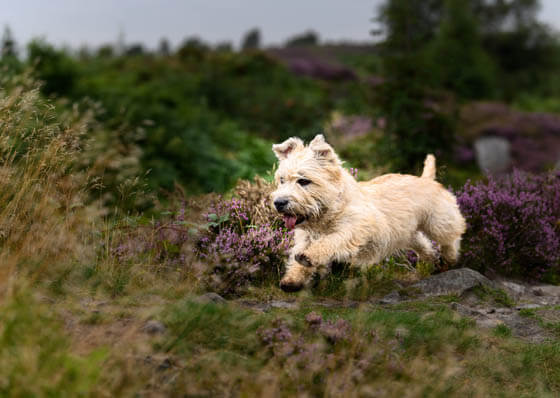
The Glen of Imaal Terrier is a rare, sturdy Irish breed known as a calm, intelligent, and affectionate companion, often called "gentle" compared to other terriers. Originally bred for hunting and farming, these 34–36 pound dogs are active indoors, hardy, and require moderate exercise. They have a double coat needing stripping and are generally low-barking. The Glen of Imaal is a spirited, brave, patient and devoted little dog. Mellow and gentle with the family, it is vigorous and unyielding when hunting, otherwise mild-mannered and calm indoors. It is intelligent, but also a late bloomer, taking longer to mature than the average dog. It is sensitive to the tone of one's voice and will not listen if it senses that it are stronger minded than its owner, however it will also not respond well to harsh discipline. Owners need to be calm, yet possess an air of natural authority. Do not allow this dog to develop Small Dog Syndrome. If it senses the owners are meek or passive it will become stubborn, pushy, and dominating as it will believe it needs to run the home.
If under exercised it will become rambunctious. These loyal dogs make fine family pets. Playful and good with children. Should not be trusted alone with small animals due to their hunting instincts. Use caution around pets such as hamsters, rabbits and mice. In general, the Glen of Imaal Terrier dog breed is known for being active and engaged with their pet parents. Although these dogs have a docile temperament at home, they do require an outlet for physical exertion and mental stimulation. Fortunately, they are game for many different activities, including a walk around the neighborhood, or more specific training for dog sports or competition. It’s not hard to find an activity you and your Glen will enjoy doing together. Their playful energy means Glen of Imaal Terriers can be a good dog for families with children, though interactions between kids and dogs must be supervised.
They adore children. Glen of Imaal Terriers are known for being curious, so caution is recommended in unfamiliar situations. Keep them secure in a fenced yard or on a leash so they do not chase small critters that catch their eye, like squirrels. Unlike a lot of terriers, this breed is typically a quiet companion. In fact, the Glen of Imaal Terrier was specifically bred for this trait, and the breed standard even describes these dogs as silent while working. That being said, a Glen of Imaal Terrier will bark on occasion. The Glen was originally used as a pest exterminator and hunting dog, as well as a working farm dog. Plus, they are an affectionate companion that enjoys both being busy and curling up next to their humans. Glen of Imaal terriers tend to have a sweet temperament with their family, though they can be spirited and stubborn at times. They don’t have quite the energetic and busy personality that some other terrier breeds do, but they still enjoy an active lifestyle.
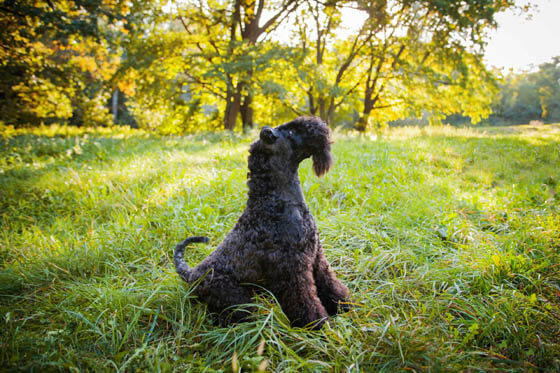
The Kerry Blue Terrier is an intelligent, energetic Irish working dog known for its, soft, non-shedding blue-gray coat and a "game," affectionate personality. Standing 17–19 inches and weighing 22–33 lbs, they make loyal family companions for active households, requiring around 1 hour of daily exercise. The Kerry Blue is animated, playful and comical. It has a reputation of making people laugh. Affectionate with the family, it likes to be with its owners. Alert, determined and rowdy, it enjoys roughhousing. The Kerry is a good watchdog, but will not attack unless it is really provoked. The Kerry is friendly, getting along with strangers and usually gets along with other pets when properly introduced and supervised. If the humans are not 100% pack leader and lack canine communication skills the Kerry can become dog aggressive. This breed is protective and should be extensively socialized, especially with other dogs, or he may be quite a handful.
They rarely bark unnecessarily. Kerry Blues require a confident owner who has a natural air of authority, and need firm obedience training. These dogs are intelligent and can be taught to perform tricks. They have a very good memory. With meek owners they will become willful, testing the owner at every turn. Owners need to be consistent with the rules and more determined than the dog. They have an aptitude for sports such as catch and agility training, but make sure the dog enjoys the challenge. If their lessons are too routine for the Kerry Blue, they will lose interest. The Kerry Blue Terrier is a smart and affectionate breed that will attach closely to their family, according to the breed club. They enjoy hiking, dock diving, and agility. They have a lot of energy and want to play all the time, so they’re the best fit for an active and outdoorsy family. When properly introduced to children, most Kerry Blue Terriers are patient with kids. They can be wary of other dogs if not introduced at a young age, so make sure introductions are always done slowly and positively.
Understanding a Kerry Blue Terrier's behavior requires understanding their history. This Irish dog breed was historically bred to work on farms as a ratter, retriever, and herder. These behaviors can carry over into pet Kerry Blues today. Kerry Blue Terriers may be tempted to chase smaller animals, like neighborhood squirrels or cats. Because of this, always keep your dog within a securely fenced space or on a leash whenever they are outside. They may also bark to excess, especially if they are not receiving enough mental stimulation or exercise. They are very smart and desire to please their pet parent, so training is usually not as difficult as it is with some other breeds. These playful dogs learn best with training games and positive reinforcement methods.
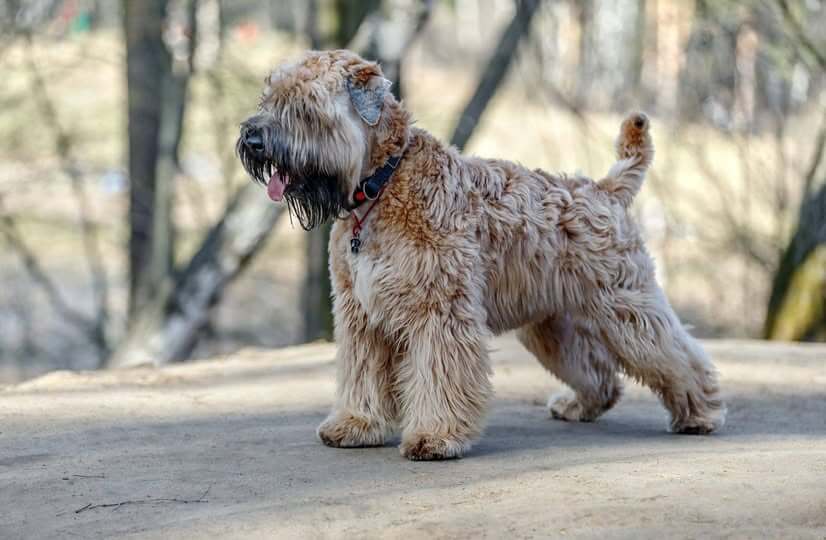
The Soft-Coated Wheaten Terrier is a medium-sized, enthusiastic, and friendly Irish farm dog known for its silky, low-shedding coat and "Wheaten greetin'" (an energetic welcome). They are affectionate family dogs, standing 17–19 inches tall and weighing 30–40 pounds, that thrive on activity but require consistent training and daily grooming to manage their coat. The Soft Coated Wheaten Terrier is strong, agile and well-coordinated. It is a happy, playful, spirited and friendly terrier. Alert, it makes a great watchdog and barks at the arrival of guests. It is usually very loving with children and gets along reasonably well with other dogs. An unsocialized dog with a meek owner who does not know how and when to correct negative behaviors may end up with a dog-aggressive dog. Some of these dogs that were not raised with cats may not get along well with them. All it takes is some fast movement on the part of the cat, and the dog's instincts will take over and he will chase them. The dog needs to be corrected right before it takes off after the cat.
These dogs have a puppy attitude that remains with them throughout their lives. They are sweet-tempered, docile and self-confident. This breed needs to be taught, preferably when young, but older dogs can learn what is and is not acceptable behavior. It is very intelligent, so it will generally grasp quickly what is required of it. It has a straightforward nature and needs to be handled in a straightforward manner. Soft Coated Wheaten Terriers bond closely with their family. They seldom bark unnecessarily. The Soft Coated Wheaten should be well socialized with other dogs while it is a young puppy, but adults can learn what is unacceptable behavior if they have an owner who properly communicates with them. In order to have a well-behaved Wheaten, you must be firm, but calm, consistent and confident with the dog. Meek owners will find the dog will easily take over the home and will be hard to control.
Do not allow this dog to jump on humans. Jumping dogs are not "greeting" the human. Jumping is a respect and a dominancy issue. Most Soft Coated Wheaten Terriers bond quickly with humans and dislike being left alone for long periods. Pet parents can expect their bearded buddy to follow them closely. Due to their breeding history as farm dogs, Soft Coated Wheaten Terriers may bark when new people approach their home or family. Early socialization and consistent training can help correct this behavior, and they are generally quieter than other terrier breeds. While the Soft Coated Wheaten is intelligent and usually wishes to please their humans, they can be strong willed. A Wheaten is easier to teach using training games and positive reinforcement. Early obedience training is crucial to achieve a well-mannered Wheaten Terrier.
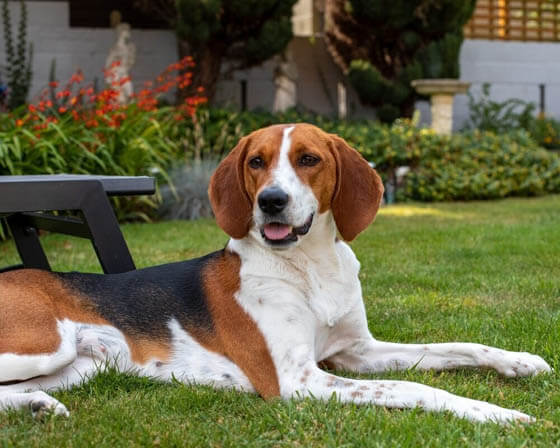
Despite the name, the Kerry Beagle is not actually a Beagle at all. Instead, the Kerry beagle is a medium-sized scent hound that looks like a Beagle but is a different breed altogether. In fact, this is the only scent hound that is only found in Ireland. The Kerry Beagle is an ancient Irish hound breed, known as a medium-to-large, high-energy hunting dog with a strong prey drive, dating back to at least the 1840s. Because this breed is only found in a small area, it’s heavily affected by economic problems in those areas. Therefore, the breed has almost gone extinct numerous times due to economic hardship in Ireland, which affects people’s ability to keep and breed dogs. They are typically 22–24 inches tall, affectionate and gentle with family, and get along well with other dogs. They require substantial daily exercise. The Kerry Beagle is one of the oldest breeds to have originated in Ireland, with pedigrees dating back to the late eighteenth century, but it is not generally considered to be a Beagle.
This breed is more closely related to the hound category than the Beagle and is suspected of making a large contribution to the development of the Coonhound type dogs that later developed in America. While they are aggressive hunters on the field, they tend to be affectionate and gentle in the home, making them an excellent family pet as well. These dogs also make excellent watchdogs, but they are generally to active and vocal to be comfortable in a smaller apartment-like setting. These dogs are aggressive hunters with a strong prey drive which is made even stronger when they are hunting in packs, but they reserve their aggression for their quarry and tend to be affectionate and playful towards other dogs and towards people of all ages. They may be able to be socialized with cats and other animals if socialization starts when they are young, but some of these dogs may end up succumbing to the urge to chase even with proper socialization, particularly if multiple hounds are present.
While interactions between these dogs and small children should always be supervised, this breed does tend to show extra gentleness towards the younger set. They are generally alert and while they are not overly vocal, they are not adverse to giving voice if a threat is detected, making them excellent natural watchdogs, and they tend to be both intelligent and obedient making them very easy to train as well. While hound dogs are notoriously lazy, that is not the case with this breed. They require regular walks and free runs on a daily basis, which can be a bit much for most people to handle. Therefore, you should ensure that you can exercise this dog properly before adopting one. This breed prefers to be with a pack and was bred to live with a large group of dogs. Therefore, some of them are prone to separation anxiety, especially if they are not taught how to be alone from a young age.
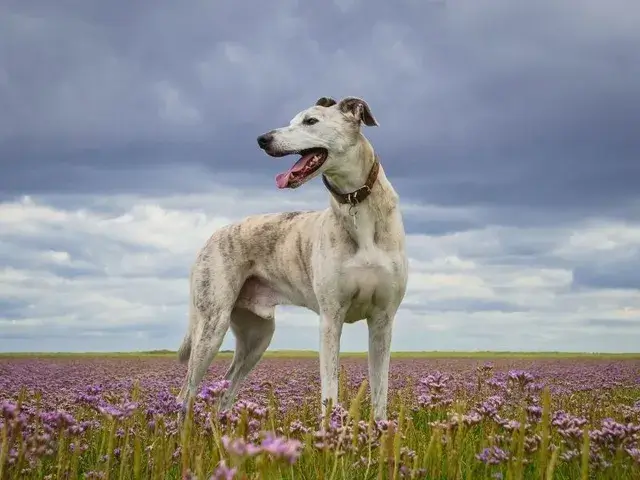
The Irish Lurcher is a versatile, athletic sighthound cross (typically Greyhound or Whippet mixed with Collie or Terrier) prized for hunting and companionship, originating in the British Isles. Lurchers are dogs that are a crossbreed between a sighthound and another breed, usually a working or terrier type. They were originally bred in the United Kingdom for hunting and coursing. Lurchers come in various shapes, sizes, and coat types, depending on their lineage. They can have the sleek and elegant appearance of a sighthound or a mix of characteristics from both parent breeds. Known as "gentle giants" and popular family pets, they are generally calm, affectionate, and affectionate, though they have a high prey drive and need daily running. A Lurcher is a fun-loving, affectionate, lovable dog that thrives on the leadership of his master. These dogs were bred to hunt rabbit and hare in Ireland and Great Britain by Irish gypsies and tinkers in the 1600s. They have inherited fast, agile movements from the sighthound crosses in them. Lurchers have the strong hunting instincts of the sighthounds. This combination also proved to be a good, obedient dog that learns commands fast. Good for outdoor type families, they are usually gentle with people, which makes an amenable companion. Lurchers have an average height ranging from 46 to 76cm and can weigh anywhere from 9 to 40kg, depending on their size and breed combination.
They have a life expectancy of around 12 to 15 years. Lurchers have a versatile temperament, and their traits can vary depending on the breeds involved in their lineage. Generally, they are intelligent, affectionate, and loyal companions. They can be gentle and calm indoors but have a strong prey drive outdoors, making them keen hunters. As sighthound crosses, Lurchers have a strong instinct to chase small animals, so caution should be taken when introducing them to smaller pets such as cats or small rodents. Lurchers are usually good with children and can be sociable with other dogs when properly socialised. Early socialisation is crucial to help them become well-rounded dogs and to manage their prey drive appropriately. Lurchers are active and athletic dogs that require a significant amount of exercise to keep them happy and healthy. They need a minimum of 1 to 2 hours of exercise each day, involving both physical and mental stimulation. Lurchers excel at activities like running, chasing, and playing fetch. As puppies, Lurchers should have controlled exercise to protect their developing joints and bones. Short and frequent play sessions in a safe and secure environment are ideal. Generally, Lurchers can handle more intense exercise once they reach 12 to 18 months of age. It is important to provide a variety of exercise outlets for Lurchers to prevent boredom and satisfy their instinctual needs. Mental stimulation through puzzle toys, obedience training, or scent games can help keep their intelligent minds engaged.
They are typically quiet, gentle dogs which, with the proper exercise, can thrive in apartments as well as in larger homes, but they do have an extremely high prey drive and in some cases may not be able to be trusted around smaller animals. The Lurcher tends to retain the gentle, good-natured quality that you will find in most sighthound breeds, but are also typically fun-loving canines with a great deal of affection for their family. They are typically well-mannered, except for their habit of stealing food that doesn’t belong to them, and they are known for their exceptionally strong prey drive, particularly those with Terrier influence as well as sight-hound. They do tend to do fairly well with children, but how well depends a great deal on the influence of the non-sighthound contribution. Its safest for both child and canine to ensure that all interactions between children and canines are closely supervised. Lurchers are not typically recommended for homes with other small pets such as cats, rodents, or even other smaller dogs, unless they can be socialized early as their prey drive may cause them to give chase to other animals and sometimes even kill them.
Dogica® collects only technical cookies. No any personal or private information being collected, saved or shared here. 3rd Party cookies could be collected by various installed widgets.
The information contained in or provided through DOGICA® site is intended for general consumer understanding and education only and is not intended to be and is not a substitute for professional advice.
Use of this site and any information contained on or provided through this site is provided on an "as is" basis without any representations, warranties or pay.



















WORLD OF DOG & PUPPY 🐶