9 Croatian Dog Breeds Rare Croatian Dog Breeds Popular Croatian Dog Breeds Croatian Dog Breeds Dog Breeds from Croatia Dog Breeds Originating in Croatia Unique Characteristics of Croatian Dog Breeds Most Complete List of Croatian Dog Breeds Top Croatian Dog Breeds Most Popular Croatian Dog Breeds Temperament of Croatian Dog Breeds Behavior of Croatian Dog Breeds Extinct Croatian Dog Breeds What Makes Croatian Dog Breeds Special? What dog breeds are native to Croatia? Which dog breed is Croatia? Indigenous Croatian Dog Breeds Native Croatian Dogs Croatian Dog Breed Photos Croatian Dog Names Island Dogs
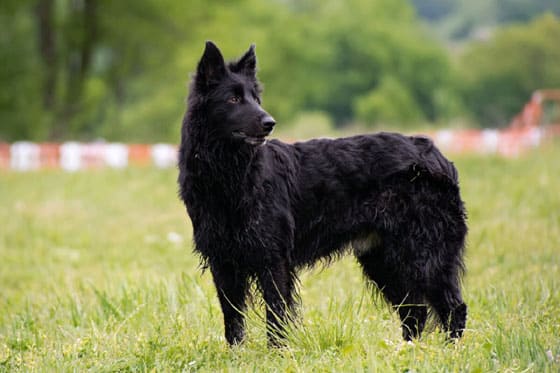
The Croatian Sheepdog is an ancient, highly intelligent, and energetic medium-sized farm dog featuring a distinct solid black coat, erect triangular ears, and a fox-like head. Known for intense loyalty and strong herding drives, they stand 16 to 21 inches tall and weigh 29 to 44 pounds. Croatian Sheepdog - also known as the Hrvatski Ovčar, is an authentic and recognized herding and shepherd dog breed originating from Croatia. The Croatian Sheepdog is a dog breed from Croatia. The Croatian sheepdog is a weatherproof, adaptable breed. They are of low to medium height and the base color is always black, although there may be very small patches of white on its chest or toes. A characteristic is the short hairs on its somewhat fox-like head and legs. The remainder of the coat is longer and wavy or curly. Nowadays, some dogs are even taller, that is probably due to better nutrition and an easier life - they grow to their full genetic potential.
Traditionally the tail is docked very short but, if undocked, it is carried curled over the dog's back. The Croatian Sheepdog is an alert, agile, keen and intelligent dog with enormous energy and with a strong need for human companionship. It is healthy, resistant to disease and not expensive to keep. It possesses a well-developed herding instinct and is an excellent watchdog. It's a caring and modest shepherd's dog, very loyal to their master. The breed also possesses an hereditary predisposition for working cattle. Some farmers affirm that their Croatian Sheepdog knows and will single out every head of cattle by hearing its name. In the past, the dog was often used to drive herds of pigs to oak woods in autumn, and, in one old document, it states that this versatile breed even herded the horses from Dakovo's stables. It is both a driving and a gathering dog. They are hard-working, healthy, and loyal herding dogs that will thrive best in an active home where they are given a lot of exercise and stimulation. Croatian sheepdogs share many of their personality characteristics with others breeds in the herding group, including their voracious appetite for exercise, quick intelligence, and desire for a "job."
The breed thrives on strong leadership from their humans and will be a loyal and gentle companion given the right training and care. The Croatian Sheepdog is an alert, agile, keen and intelligent dog with enormous energy and a strong need for human leadership. It is healthy, resistant to disease and inexpensive to keep. It possesses a well-developed herding instinct and is an excellent watchdog. An instinctive herder, it is wary of strangers. This is a high-energy breed of dog with a very strong work drive that also has a strong need for human companionship. They are loyal to the extreme and will obey the orders of their chosen human without regard to their own personal safety and they are known to develop the ability to anticipate their owner's next move. While a socialized Croatian Sheepdog is generally pleasant with family members of all ages, they can be a bit shy with outsiders. During training, they prefer to be a one-person dog and will often only obey that chosen person but with that person, they are typically an extremely quick study who picks up and retains new information quickly. They are also very intense dogs and they often use their voices to convey their intensity, frequently barking when they are excited. Their suspicion towards strangers and their tendency to bark makes them excellent watchdogs.
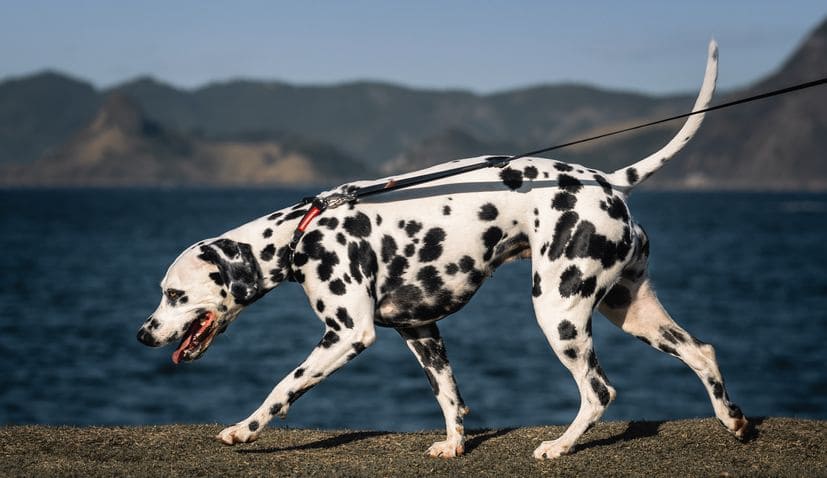
The Dalmatian is an athletic, high-energy dog breed recognized for its distinct white coat with black or liver-brown spots, historically bred as a coach and carriage companion. Dalmatians were bred to run under or alongside horse-drawn carriages and therefore have a vast amount of stamina and energy. They do not like to sit around all day with nothing to do. They are playful, happy, easy going and very dedicated. The Dalmatian needs a lot of leadership along with human companionship in order to be happy. They will not do well left out in the yard all day and have been known to dig crater-size holes when done so. The Dalmatian enjoys playing with children, but if they do not receive enough mental and physical exercise they may become high-strung, and too excitable for a small child. This buildup of energy causes their minds to become unstable and they can become timid without enough socialization. They get along well with other pets, but without proper human to dog alpha communication where the human clearly tells the dog that he is not in charge and fighting is an unwanted behavior, they may become aggressive with strange dogs.
Quite intelligent, but can be willful if they sense their owners are in the slightest bit meek or passive, or if the owner is not properly communicating with the dog. Generally does well with firm, consistent training. The Dalmatian is trainable to a high degree of obedience. They can be trained for defense and are good watchdogs. Dalmatians are bursting with personality – and with an abundance of energy! You just have to make sure to keep that energy harnessed in a positive way. They love to have a job and to be praised, so keeping their body and minds busy is always a great idea. They are very loyal to their family and very intelligent. Dalmatians are intelligent and energetic. They are the perfect pup for anyone with an active lifestyle because they require a lot of exercise and mental stimulation. Because of this, Dalmatians are at their best when they have a job to do. And while that job does not need to be putting out a fire, they will benefit from learning tricks or competing in dog sports. While Dalmatians are friendly and loving toward people they know, they can be aloof and uninterested when meeting new people, especially in adulthood. This is why socializing Dalmatian puppies early in life is so important. Dalmatians are rambunctious, highly energetic, and need a lot of daily exercise.
Dalmatians are independent and headstrong, so training them is a practice in patience. They respond best to positive reinforcement training, so give them lots of praise with healthy treats, toys, and head pats. But these pups are super smart, too, and can pick up on training cues quickly when properly motivated. Dalmatians are energetic, outgoing, and intelligent, making them great companions for active families. They thrive on interaction and need regular physical and mental stimulation to stay happy. While generally good with children, their boisterous nature may require supervision around younger kids. Their strong hunting instinct can lead to a tendency to chase smaller animals, so early training and socialisation are crucial for positive interactions with other pets and people. Dalmatians are loyal and protective, making them excellent watchdogs, but they are also sensitive and respond best to consistent, positive reinforcement during training. Dalmatians are a highly active breed that thrives on regular physical and mental stimulation. On average, they require at least 1.5 to 2 hours of exercise daily to stay happy, healthy, and well-behaved. Activities such as brisk walks, jogging, playing fetch, or engaging in dog sports like agility and obedience training are great ways to meet their needs and reduce the risk of behavioural problems.
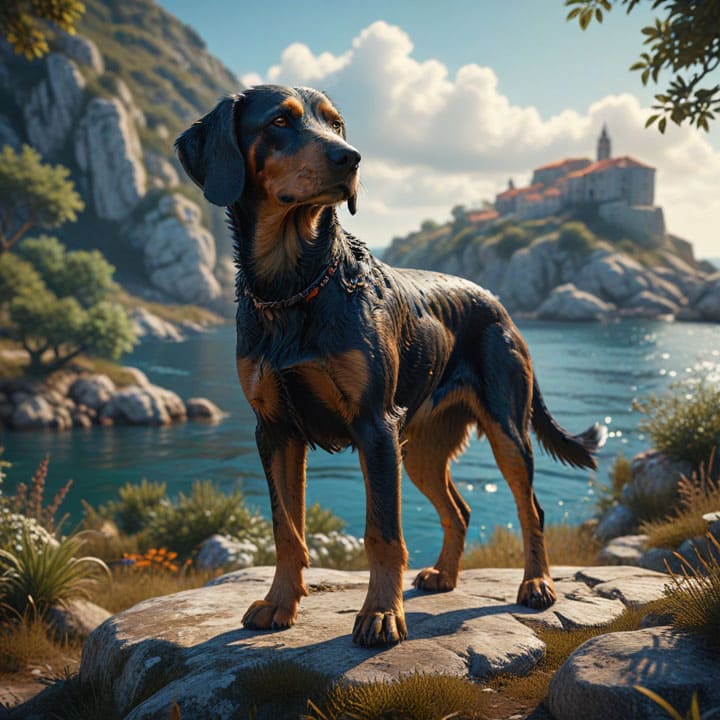
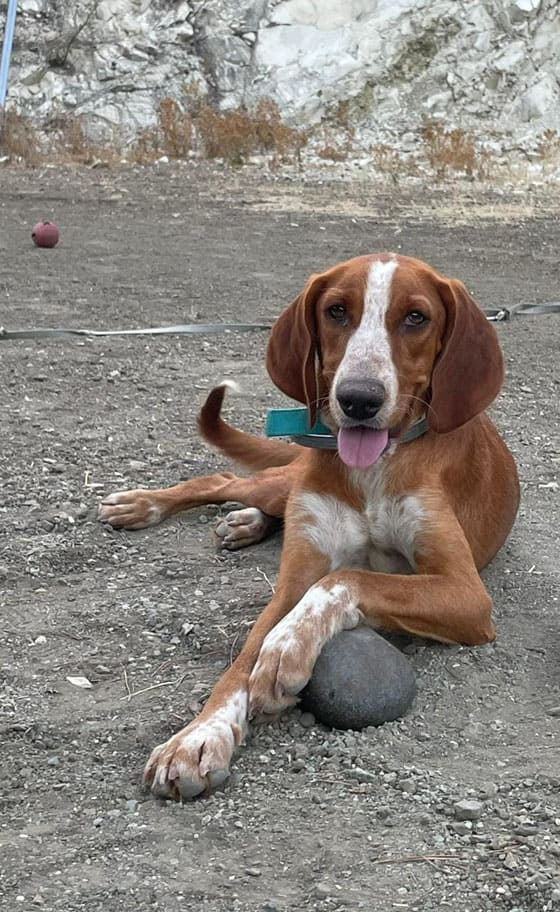
The Posavac Hound (Croatian: posavski gonič) is a medium-sized scenthound native to the Sava River Valley in Croatia. The Posavac Hound is a self-assured, small-game hunting dog with a fine sense of smell. Good with children, he is affectionate with his family. Obedient, lively and a good watchdog. Daily exercise is very important. If these dogs do not receive enough exercise they can become high strung. It is arguable that his character and temperament are the outstanding feature of the Posavac breed. Due to his origins as a working dog, he’s self-assured and loves a good scent trial, but without the self-willed, self-determined nature of some other scent hounds. His natural instinct is to be part of a pack, and, as such, the Posavac looks for leadership. Again this makes him a great fit for a family where the parents are aware of how to set boundaries for the dog and children. The other side of this coin is that in the hands of an inexperienced dog owner who "spoils" the dog and does not set house rules, the Posavac might develop bad habits, such as digging, barking, or chewing. This is not out of malice, but out of frustration because he needs to know what is acceptable and what is not and is bored so making his own fun.
While they are not typically sociable with other animals, they an are affectionate and docile canine with regards to people. They tend to be obedient, as long as their nose does not distract them, but require a great deal of exercise is needed to prevent exasperating and even destructive behaviors from developing. The Posavac Hound was originally a working dog that co-operated with his owner to hunt small game. Unlike some terriers or even other hounds that have a strong sense of self-determination and like to make their own decisions, the Posavac is more malleable. This means the Posavac takes well to training, especially when this is done in a sympathetic manner with reward-based training. The trick is to guide a Posavac hound and teach him by incentivisation – although this doesn’t mean you shouldn’t tell him off for misbehaving. A short sharp "No!" or "Stop!" will instruct a Posavac and steer him away from such behaviour in the future. These dogs are typically very good-natured towards humans and tend to form strong attachments towards their master and human family.
Although all interactions between canines and the younger set should be fully supervised, these dogs are typically easy-going and gentle with children, particularly if they have been raised around children. While they are not particularly gregarious with other dogs they can learn to get along if socialized early, but their strong prey drive may make them unsuited for households with small or fast moving pets. While these dogs are obedient, they also have a tendency to be led by the nose and are known to lose focus during training sessions. They respond best to firm and consistent training and should remain leashed unless they are in working mode. They are also a lively and alert breed with a tendency towards barking, making them an excellent watchdog but a poor apartment dweller. These are fairly active dogs with high exercise requirements and they need at least an hour or more of vigorous activity per day in order to remain happy and healthy. Along with long walks or jogs, this dog is likely to enjoy alternate activities such scent work, swimming, or rally sport training.
They can be prone to getting chills if they are left wet and their feet should be checked for debris after each outdoor excursion. The Posavac Hound is just made for hunt. They are absolutely passionate and enthusiastic on the hunt and their temperament is excellent for this purpose. They have high prey drive, excellent senses, especially the sense of smell is just incredible, they are good problem solvers and they are strongly attached to the owner. But these dogs are not only hunters, as they also make amazing family companions. The Posavac Hound is very often described as docile, loyal and faithful, friendly and playful breed. They are tolerant and gentle towards kids as well, but of course, you should never leave any dog breed with a very young child unsupervised. The nose is both this breed's greatest gift and its most persistent behavioral challenge. Posavaz Hounds are scent-driven to a degree that can override trained recall, learned boundaries, and direct commands from an owner the dog otherwise respects. When a compelling scent trail presents itself, the dog's focus shifts entirely to following it, and the outside world effectively ceases to exist. This is not disobedience in the traditional sense. It is the breed doing exactly what centuries of selection optimized it to do. The practical implication is that off-leash reliability is extremely difficult to achieve and that secure fencing is a necessity rather than a convenience. Vocalization is another core breed trait. These dogs were selected in part for their strong, carrying voices, which allowed hunters to track their progress through thick cover by sound.
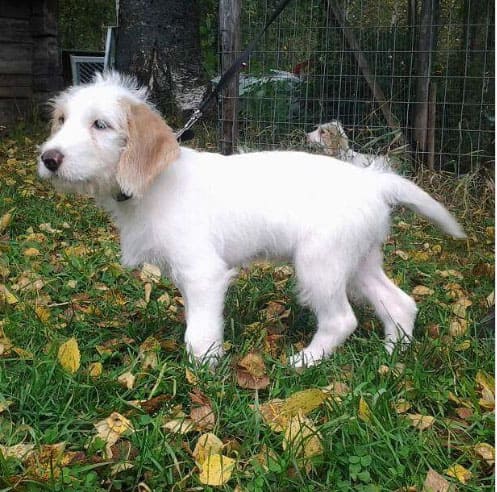
The Istrian Coarse-haired Hound (Istarski oštrodlaki gonič) is a rare, rough-coated scent hound originating from Croatia. The Istrian Coarse-Haired Hound is not currently recognized by the AKC. It is, however, recognized by the UKC and the FCI. This breed is classified in Group 6 with other scent hounds by the FCI – it is also grouped as a scent hound by the UKC. The Istrian Coarse-Haired Hound is a type of scent hound developed in Croatia during the mid-19th century for the purpose of hunting rabbit and fox. It has a rough, weather-resistant coat and a round head with a strong, square muzzle. The ears flop down over the head, and the feet are small and similar to a cat's paws. They are also gentle, devoted, and easy to train. Developed by crossing the French Griffon Vendeen with the Istrian Short-Haired Hound, this breed inherited its hunting abilities from the latter and its wiry coat from the former. The breed first appeared in competition in 1866 in Vienna, though it is still primarily kept as a hunting dog to this day. Tenacious, enthusiastic, and passionate while hunting, though they can be willful, stubborn, and independent, requiring firm, positive training and early socialization. As is true for their ancestors, the Istrian Coarse-Haired Hound is a dedicated hunting dog who has been bred to work hard. Both their physical appearance and their personality reflect this, as they have the temperament of a hunter and an appearance that has not been historically important to breeders and can vary somewhat between individuals. This dog uses its well-developed sense of smell to track down a variety of small game, including rabbits and foxes. They are renowned for their courage and grit when on the hunt.
Primarily kept as a working field dog for hunting hares, foxes, and small game rather than as a casual house pet. High stamina; requires 60+ minutes of vigorous daily exercise and secure fencing. They can be stubborn, and you must be very consistent with training. You must be firm and consistent, and you can be sure that your dog will listen to you. The Istrian Coarse-Haired Hound is an intelligent dog which usually means a dog will be easy to train. However, in the case of this breed, it lends itself to stubbornness or willfulness. This breed is not recommended for inexperienced dog owners and they really need to be used for hunting. These dogs can be tamed with a firm and consistent hand with positive reinforcement training, but you will always need to be an authoritative leader for the dog. Socialization is also extremely important for this dog, especially if he is going to be kept in a home with children or other pets. This dog's primary skill is for hunting but he may also do well in dog sports like agility and competitive obedience.
This hunting dog stands out for its lively and thoughtful temperament. It is generally calm and docile at home, while remaining very alert during outings in nature. Its independent nature is balanced by strong loyalty to its owner. It learns quickly and enjoys performing tracking and searching tasks during hunts. Despite its obedient qualities, it can be reserved with strangers and wary of small animals, due to its hunting instinct. Its sociability within the family is nevertheless appreciable, especially when early socialisation has been established. Opt for training sessions based on positive reinforcement and stimulating exercises to maintain its alertness and behavioural balance, which are essential for a harmonious life. Istrian Hounds are calm and laid-back at home and lively and enthusiastic when hunting. These gentle pups get very attached to their humans but are often wary of strangers. They are loyal and obedient with a powerful, persistent bark. The Istrian Coarse-Haired Hound has a strong desire to hunt and will spend most of its time play hunting, preparing for the real thing. It’s friendly and affectionate but can also be strong-willed and stubborn.
It is alert and makes a great watchdog without being overly barky, and they won't back down from any threats when protecting the home or its family members. It’s calm and well-mannered with the right owner and rarely gets aggressive toward humans. The Istrian Coarse-Haired Hound is extremely intelligent and is a great hunter. It’s capable of learning the complex tasks required when hunting and trapping prey, and it can also learn several tricks. The Istrian Coarse-Haired Hound is a great family pet, and more family members will make it easier to make sure your pet gets enough exercise, which can be difficult for a single owner. It will also watch over the house when you are away and when you sleep. It enjoys playing with children but may not tolerate toddlers pulling its hair, so you might need to separate them until the child gets a little older. Set aside at least 30 minutes each day to help your Istrian Coarse-Haired Hound get the activity they need to stay healthy. Since your dog is a hunter, it will enjoy chasing after balls and frisbees. It will also enjoy long walks and hikes, especially through the woods where it might catch a glimpse of a rabbit or other small game. However, you’ll need to prepare for it to do plenty of pulling on the leash while walking through the woods.
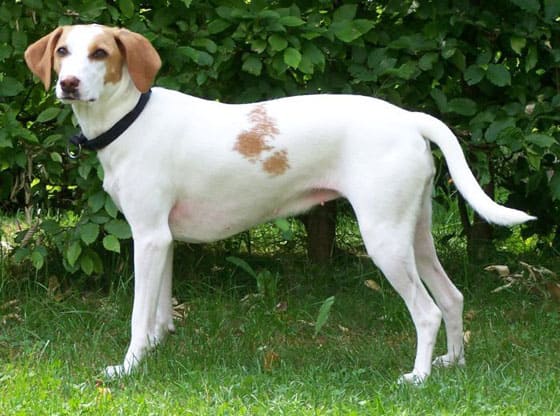
The Istrian Shorthaired Hound (also known as the Istrian Pointer) is a medium-sized scent hound originating from Croatia's Istria region, recognized for hunting hares, rabbits, and foxes. The Istrian Hound comes in two varieties: the longhaired and the shorthaired. Originally from Croatia, this is a very old breed whose exact origins are unknown. Istrian Short-Haired Hounds are calm, docile dogs with exceptional hunting abilities. They are also gentle, devoted, and easy to train. No wonder they have been beloved in their native country for centuries. Istrian Hounds are calm and laid-back at home and lively and enthusiastic when hunting. This dog has always been very popular as a hunting dog in his country of origin, but he has also proven himself as a family dog; indeed, he is a gentle, kind, sociable, and affectionate companion. These gentle pups get very attached to their humans but are often wary of strangers. They are loyal and obedient with a powerful, persistent bark. While they are not the biggest dogs, they are well known to be exceptional hunters, able to track hares, foxes, and rabbits with their quickness, discerning noses, and considerable endurance. In the home, however, they are calm and generally relaxed but that does not necessarily make them the best of pets.
They are still kept almost solely as hunters as they are extremely wary of children, are only moderately good with other dogs, and tend to bark when they are disturbed, uncertain or when strangers are present, limiting their potential living situations. They are usually quite affectionate with their owners or trainers but are far from playful compared to other breeds and still require a fair amount of exercise. With all these traits combined, they are still best reserved for hunters instead of solely owned as companion animals. While many European scent hounds are well-known for having well-rounded personalities, Istrian Shorthaired Hounds tend to be much more wary and reserved in comparison to their regional counterparts. They are generally not great with children, strangers or other dogs, and although not inherently aggressive, will proceed to bark incessantly if they feel threatened, nervous, or uncomfortable unless thoroughly trained and socialized from a very young age and sometimes will anyway.
With their owners, they tend to be much better, as they are loyal, generally calm, and listen well when given orders, even if they're not the most playful or affectionate. They do, however, have quite a presence in the field, quickly showing their tracking ability, determination, and agility when given the chance, making them excellent overall hunters, even if they're not the best candidates for companion animals. This breed is considered a moderately active dog, as it does need a fair amount of exercise, but compared to other hunting breeds, considerably less. It generally does best in homes with more active owners or those with bigger yards it can run around in and burn off energy. While it does not need a ton of daily exercise, it should still receive around 30 to 45 minutes a day minimum or around 14 miles of walking or running. A formidable hunter, the Istrian Shorthaired Hound is mainly used for hare and fox hunting, but also for chasing injured game. He is a passionate dog at work, and he does not fear harsh climates or rough terrain. He is full of energy when he is outside but is rather quiet and calm when he is inside.
The Istrian shorthaired hound is described as a gentle and docile dog. Calm, he is very attached to his owner. He is an excellent small game hunter, who adapts relatively well to family life. On the training side, it will be necessary to show firmness, but never brutality. When it comes to exercise, the Istrian Hound needs to run. You will therefore have to take long daily walks with him so that he spends his energy. Be sure to check your animal's ears after outings in the forest or in the countryside to remove any parasites that may have lodged there. The Istrian Shorthaired Hound is a cheerful and devoted companion with an endearing independent streak. Bred for tracking and flushing game in challenging terrains, these dogs possess a robust work ethic and a keen nose that often guides their adventures. They tend to be gentle and affectionate with their people, though their hound instincts mean they may be inclined to follow a captivating scent. Their expressive eyes and deep bark are characteristic features of the breed, reflecting their alert and engaged nature.
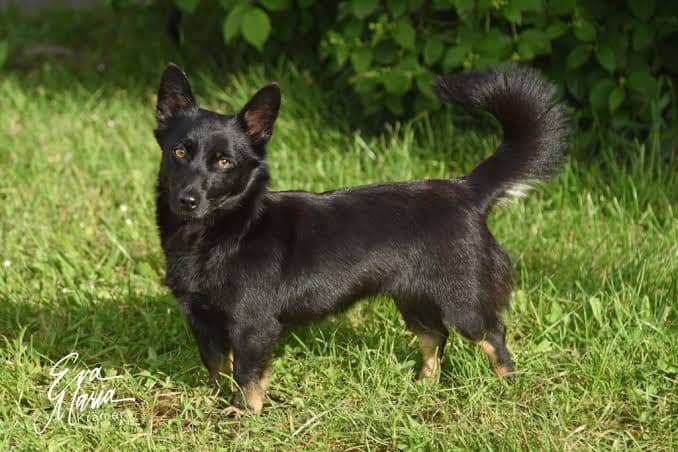
The Small Međimurje Dog (also known as the Međi or Štakoraš / "Ratter") is a small, rectangular working dog native to the Međimurje region of northwestern Croatia. Features a lupoid (wolf-like) head, wedge-shaped skull, erect triangular ears, dark almond-shaped eyes, and a tail that curves upward. Lively, agile, intelligent, obedient, and devoted to its family. It can be cautious or vocal around strangers (acting as a good watchdog), but is generally non-aggressive. Historically a farm and mill dog, its compact size also makes it well-suited for urban and apartment living if given enough mental and physical engagement. Officially recognized as a native breed by the kennel clubs of Croatia, Bosnia and Herzegovina, Serbia, Finland, the Netherlands, and the Czech Republic, though it is not yet recognized by the FCI (Fédération Cynologique Internationale). According to oral tradition, the breed was raised in the Međimurje region for over a hundred years to guard farms, poultry and outbuildings, while also working as a mouser and ratter in cellars and mills.
That dual role – guardian and pest hunter, shaped a small but tenacious and alert dog that today increasingly lives as a family companion rather than purely a working farmyard dog. The međi is described as highly intelligent, curious, cheerful and good-natured, with strong attachment to its family. As a watchful guardian it barks fairly readily at unfamiliar people or animals, though it is not described as aggressive. Because of this alertness, socialising the puppy to visitors and new environments matters, or the warning bark can become excessive. Medi is a very intelligent, curious, cheerful, hearty and good-natured dog with a lively character and good social skills with dogs and even though it was used in the past as a vermin hunter, they can be trained to live with other household pets like cats or other dogs. This is highly adaptable dog and it can happily live on farms, but also in apartments. Most Medimurje dogs in Finland live in apartments and they make wonderful loyal, playful and spirited companions. Medi can also make good active companion for kids, but of course, you should never leave any dog breed with a very young child unsupervise. Since the Medi was used as a farm watchdog in the past, it should not be surprising that this is quite cautious and suspicious breed towards strangers. But they should never be agressive and once you show them that the stranger is your friend, they will accept it. The Medi is definitely not a coach potatoe.
They might be small, but they need daily proper exercise to stay healthy and happy. Daily longer walks, jogs, vigorous playtime or fun training sessions are must with this breed. Thanks to its speed, intelligence and trainability, the Medi can also be a good fit for various dog sports, such as agility or flyball. This dog will always be ready for any kind of adventure and you should be prepared for it when considering the Medimurje dog as a pet. Despite its small size, this is an active working dog – breed club sources put its needs at roughly 60 to 90 minutes of structured daily activity, spread across the day. Living in a flat is possible on that condition, though in densely built neighbourhoods its tendency to bark as a warning makes early, consistent socialisation to sounds and passers-by advisable. The Medji is easy to keep and fairly undemanding as long as his basic needs are met. He has a very level head and an exceptionally stable temperament. He loves to play and to shower his loved ones with affection. The breed is obedient, highly intelligent and easily trained. He can be successful in dog sports such as rally and agility, and is equally skilled at catching rodents. This has always been an adaptable breed and he can do almost any job asked of him, and tends to do so with a curious and excited nature. He has a working aptitude and enjoys being given a job to do!
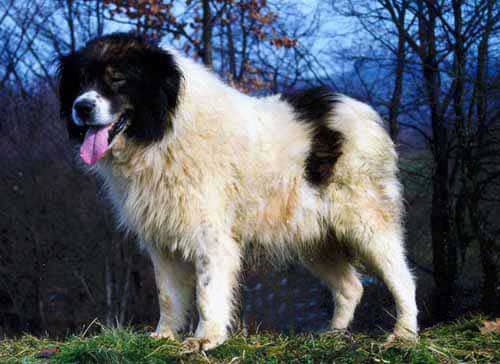
The Tornjak (Bosnian-Herzegovinian and Croatian Shepherd Dog) is an ancient, large Molosser-type livestock guardian dog native to Bosnia and Herzegovina and Croatia. Developed over 1,000 years ago in the mountains of Bosnia, Herzegovina, and Croatia; first documented in 11th-century writings. Modern pure-blood revival efforts began in the 1970s. It is recognized by the United Kennel Club (UKC) and is part of the American Kennel Club (AKC) Foundation Stock Service. This ancient shepherd breed was on the verge of extinction until some dedicated breed fanciers revived it in the 1970s. While it has been preserved, the Tornjak is still an extremely rare dog breed. Owners of these unique canines will find that their relaxed, even-tempered nature is also a striking contrast to their extremely protective instincts. Originally bred to protect sheep, he is alert and protective of his family. He is calm and malleable, generally easy to train and unlikely to be aggressive towards people and other dogs. He may be provoked towards aggression if he feels his family is being threatened in some way. Calm, peaceful, affectionate, and deeply devoted to their human pack. Fearless, self-confident, and territorial, historically used to protect flocks from wolves and bears.
Naturally suspicious of outsiders and unbribable, though not nervously aggressive when properly socialized. Early socialization (ideally before 9 months) is crucial. The Tornjak is used for herding and protection of livestock, a farmyard guard dog. He has a stable temperament. He is friendly, calm, courageous, obedient, intelligent, full of dignity and self-confidence. When working he is fierce in guarding property entrusted to him, cannot be bribed and is suspicious of strangers. He will protect his owners, herd and property with his life. The Tornjak is friendly with people he knows. Devoted to his master and very composed in his presence, he is very affectionate toward people living in his immediate vicinity. Learns quickly and does not forget things easily, gladly performs tasks assigned to him. Strong and hardy, during the snowing winter nights, these dogs lie on the ground and often get covered by snow. He is easy to train. The objective in training this dog is to achieve pack leader status. The Tornjak is an intelligent, highly trainable, and very obedient dog. Full of dignity and self-confidence, this breed's calm demeanor combines with a steady disposition. Tornjaks have friendly personalities and are extremely devoted to their immediate families. These dogs are known to bestow abundant affection on their people, but they're also very wary of strangers - especially anyone the dog believes to be threatening. Owners of this breed should be aware that it is courageous in the face of danger and fiercely protects its flock.
The Tornjak acts with swift and appropriate aggression when warranted, but at home, it is laid-back and relaxed. The Tornjak is protective of livestock thanks to its origins as a guardian breed, but it can become aggressive with other dogs, especially those it does not know. Some Tornjaks may get along with a family cat, though not all will be able to live with cats peacefully. While this breed is certainly not for everyone, it makes an especially devoted companion for the right owners. The Tornjak is overall a friendly, self confident dog. He takes his guard duty seriously and will be suspicious of strangers that approach his property. He is a quick study and relatively easy to train when he has an experienced trainer. The Tornjak cannot be bribed or lured away from his duties as a guard dog for his home or his flock. His family is very important to him and his loyalty will make it difficult to re-home if his family later decides they do not want him. Because of the strong bond he forms with his family, he should not be relegated to the back yard for long periods of time. His strongest desire is to be wherever his family is. If he is left in the backyard, be sure he has plenty of things to keep him occupied. He is friendly to people who come to the property often. When he is being trained, he responds best to positive reinforcement and rewards.
Once a common hunting dog in eastern Slavonia, Voivodina and parts of northern Bosnia, the Slavonian Greyhound was a slightly heavier breed than its Bosnian cousin. Some believe that it was developed by crossing the Posavac Hound with the Staro-Bosanski Hrt, the Pannonian Herder, the Staro-Srpski Hrt, the Croatian Sheepdog and the Hungarian Greyhound, but others also include the Kuvasz and the Viszla into the breed's ancestry. This rugged sighthound was also known as the Panonian Hound, Voivodjanski Hrt, Sremski Hrt, Brodski Gonic and even Zemunski Hrt, depending on the area, leading some authorities to conclude that these were either separate breeds or simply regional sub-types of the greater Panonian Greyhound population. This was a popular hunter of boars, foxes, hares and deer, but also a capable livestock herder and watchdog. Being a strictly working dog, bred only for its resilience and working qualities with little regard to its looks, the Slavonski Hrt was not uniformed in appearance and a few types within the breed existed, from lean medium-sized dogs to taller and heavier examples, as well as coming in a wide range of coat types and colourings.
The breed eventually became extinct and by the mid-20th century, the Slavonian Greyhound and all its varieties were assimilated into the more popular breeds of the regions, namely the Croatian Greyhound, as well as some bloodlines of the Pannonian Sheepdog, Old Bosnian Hound and even the rare hunting variety of the Sylvan, which to this day is said to resemble certain strains old Slavonian sighthounds. Before the 1st World War, the Slavonski Hrt was a name commonly used to describe the eastern type of the Croatian Greyhound, but after WW2, the breed was rarely mentioned as anything more than a working cross and was eventually forgotten. Due to the blood of herders, scenthounds, bird dogs, sighthounds and livestock guardians in its background, the Slavonian Hound was an all-around working dog, prized for its stamina, strenght, intelligence and drive, which were the qualities that made it a very common and popular breed in many different parts of the region. Some fanciers consider the use of the name "greyhound" to be incorrect when describing this old Slavonian breed, since it was quite heavier than most sighthounds. Long-legged, deep-chested and strongly boned, the Slavonski Hrt was a powerful and rugged worker, very agile and fast, although not as valued for its speed as its Bosnian, Croatian and Hungarian cousins, which were all typical lean greyhounds, much faster than dogs of Slavonia. The majority of the dogs had typical hound-ilke drop ears, but erect-eared specimens were also common, especially within the so-called Brodski type. Whether it was short, flat, smooth, long, rough or curly, the coat of the Slavonian Hound was the most valued in white-based colourings, with darker markings of various sizes, but also common in black-n-tan, wheaten, red, grey and black colourings, usually with white markings. The average height was 25 inches, but taller examples existed, depending on their home region.
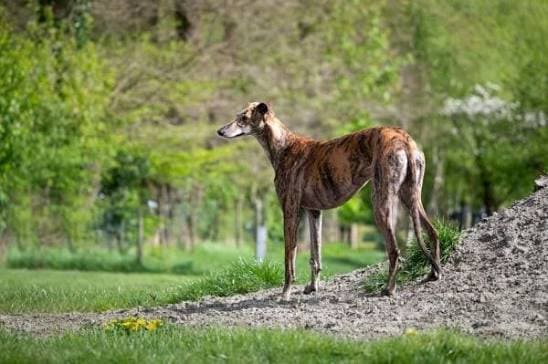
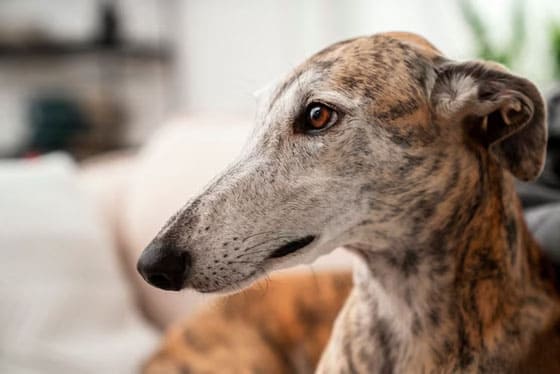
The Old Croatian Sighthound (also known as the Old Bosnian Sighthound) is an extinct breed of sighthound originating from Croatia and Bosnia and Herzegovina. Traced back by some historical accounts to sighthounds kept by the Celts (resembling dogs on 5th-century BC Celtic coins), with regional descriptions appearing in writings by 13th- and 14th-century friars. The breed was never recognized by major kennel clubs. It suffered a steep decline under the former Yugoslavia, which banned coursing with sighthounds and prohibited owning unregistered dogs. In the early 1980s, remaining specimens were found near Orašje and brought to the Zagreb School of Veterinary Medicine to start a breeding program, which ultimately failed. Agile, fast, independent, and affectionate with a strong hunting drive. Traditionally used for coursing and hunting small game (like hares), catching the game and returning it to the hunter. It is a pretty tall dog with height between 50-70 cms, which is 20-28 inch with a typical sighthound body. They almost went extinct during the Croatia's time as part of Yugoslavia, but there is report from 2008 which confirm their existence. It is claimed the Old Croatian Sighthound was descended from sighthounds kept by the Celts, it closely resembled images of dogs on Celtic coins from the 5th century BC, as such it is believed to be closely related to the greyhound, which was introduced to Britain by the Celts.
Descriptions of the breed in the region have been found in the writings of friars from the 13th and 14th centuries AD. One theory suggests that the Old Croatian Greyhound is the primary ancestor of the early Dalmatian, but this belief needs more research, seing how there were quite a few breeds involved in the creation of the popular spotted dog. Although working sight hounds have been around for thousands of years in the Balkans, the Croatian Greyhound is a relatively young breed in comparison to its Serbian and Bosnian cousins, having been developed in the late 1700's and remained somewhat uniform in type until the 20th century, when common crosses with the English Greyhound, Bosnian Greyhound and the modern Dalmatian, as well as hunting dogs from Austria and Germany were made by the hunters in Istria, Slavonia and Dalmatia.
Some believe that the Slavonian Greyhound was a separate breed, closer to the Serbian and Hungarian dogs than to the Croatian Greyhound, but the variety became nearly extinct during the WW2 before the surviving strains were assimilated into the Staro-Hrvatski Hrt population. The Croatian Greyhound is a very agile and fast breed, traditionally used for hunting small game and racing trials. The breed became very rare in the 2nd half of the 20th century and prior to the beginning of Yugoslavian wars, some plans to establish a revival programme were put into motion, but were unfortunately never finalized.
The breed can still be sometimes seen in some parts of present-day Croatia, but the majority of these dogs are working crosses, mostly with the ever-popular English Greyhound and the Istrian Hound. In their desire to save the Staro-Hrvatski Hrt from extinction, some overly zealous fanciers in Croatia are widely perpetuating the myth that the Bosnian Greyhound is in fact the same breed as the Croatian Greyhound, angering many dog enthusiasts in the Balkans and serious canine authorities worldwide. These two breeds are definetely related, but their developments had taken them into different directions over the centuries, with the Croatian breed becoming smaller, lighter and calmer than its old Bosnian ancestor.
The Staro-Hrvatski Hrt is a well-muscled, deep-chested and agile breed, reportedly faster than the Bosnian Greyhound, but not as driven or powerful. A capable hunter, this breed also makes a loving and obedient companion, thanks to its intelligence, gentle nature and calm temperament. The Old Croatian Sighthound was almost identical to the Greyhound although slightly smaller, with dogs standing between 60 and 70 centimetres (24 and 28 in) bitches being 5 to 10 centimetres (2.0 to 3.9 in) shorter. The breed had a short coat and was predominantly white with black, brown, red or yellow patches. Traditionally the breed was kept for coursing, predominantly hunting hare, it would catch the game and return it to the hunter. The breed never received recognition by any kennel club and suffered greatly under the former Yugoslavia. The government of Yugoslavia banned coursing with sighthounds and further prohibited hunters from owning dogs without kennel club registration. In the early 1980s, some remaining specimens were found in Orašje and the surrounding villages, a pair were brought to the Zagreb School of Veterinary Medicine with the hope of starting a breeding program, but ultimately the program failed, it is believed the breed was extinct by 1995.
Dogica® collects only technical cookies. No any personal or private information being collected, saved or shared here. 3rd Party cookies could be collected by various installed widgets.
The information contained in or provided through DOGICA® site is intended for general consumer understanding and education only and is not intended to be and is not a substitute for professional advice.
Use of this site and any information contained on or provided through this site is provided on an "as is" basis without any representations, warranties or pay.















WORLD OF DOG & PUPPY 🐶