71 Cat-Friendly Dog Breeds How to Introduce Dog to Cat? What dog is most cat friendly? What dog breeds are ok with cats? Dog Breeds that are Good to Cats Dog Breeds That Live Well With Cats
Cats and dogs are often viewed as natural enemies, but the truth is that animals of different species often coexist peacefully. Meanwhile, even those of the same species may have spats. The secret to living in peace lies not so much with choosing the correct species as it does with blending the right personalities and introducing them properly.
Everyone knows that dogs and cats are not natural friends, but that does not mean they can not get along. Cats and dogs can coexist peacefully in most households, depending on which dog breed you choose.
Introducing cats to dogs can be challenging because most cats prefer peace and quiet and tend to be solitary creatures and they are exquisitely susceptible to stress. But some dog breeds are more compatible with cats than others, such as dogs in the sporty group, who are naturally friendly and outgoing. These happy-go-lucky dogs are pleased to make friends with anybody they meet, including cats : ) Harmony is possible - with the right Match! But keep in mind: All dogs are different, so there is no guarantee your dog will or won't get along with your cat due to breed alone.
How to Introduce
a Dog to Cat?
Even the best dog breeds for cats can struggle if the introduction feels rushed or stressful. The goal is to build trust and calm curiosity, not fear or competition. Think of it as setting the stage for a long friendship - one calm sniff at a time. If either pet shows ongoing fear or aggression, pause and consult a professional trainer or behaviorist. Pushing too fast can undo weeks of progress. If you wish to share your home with both cats and dogs, look for a dog breed that is typically friendly with felines.
Step 1: Set Up Safe Spaces Before your pets even meet, give each their own territory. Use baby gates, closed doors, or crates to let them smell and hear each other without contact. This creates familiarity without pressure.
Step 2: Swap Scents Exchange bedding or toys between them so each pet learns the other's scent in a positive, neutral setting. Scent recognition helps lower tension when they finally see each other.
Step 3: Controlled First Meeting When it is time for a face-to-face, keep your dog on a leash and your cat free to retreat. Watch both pets’ body language - curiosity is good, tension or hissing means it is time to pause. Keep early meetings short and end them on a good note. A calm "that is enough" and a treat for both pets helps them associate each other with rewards, not stress.
Step 4: Increase Freedom Gradually As both pets relax, lengthen their time together. Supervise until you have seen consistent calmness from both sides.
Step 5: Never Force It Some pets take a few days to adjust - others take months. The timeline does not matter as long as both feel safe.
Basset Hounds are affectionate, low-key, and stubborn scent hounds known for their long ears and calm demeanor. Generally, they are excellent with cats due to their gentle, patient nature and low-energy, laid-back personality. While they can be stubborn to train, they are affectionate, loyal, and rarely aggressive. The Basset Hound is a friendly, low-energy, and scent-driven medium-sized dog known for its long ears, sad expression, and short legs. Originating as pack hunters in France, they are affectionate, loyal family pets that get along well with children and other pets, though they can be stubborn and difficult to train. The Basset Hound is sweet, gentle, devoted, peaceful and naturally well-behaved. It fits into family life well. Its temperament should always be friendly, and never vicious, moody or harsh, and would only become so if the owners lead the dog to believe he is pack leader over humans.
It is mild but not timid, very affectionate with its master and friendly with children. It can be a bit stubborn with meek owners and needs a firm, confident, and consistent owner who displays natural authority over the dog. Dogs need to know the rules of the house and have the humans stick to them. Bassets like to do tricks for food. They have a deep musical bark. Housebreaking is difficult, but they do well with patient, gentle training. With proper training, they are obedient, but when they pick up an interesting smell, it is sometimes hard to get their attention, as they like to follow their noses and may not even hear you calling them back. Only allow your Basset off lead in safe areas. The Basset Hound is a good-natured and low-energy companion. They are generally affectionate and friendly with kids and other pets, especially with proper introductions, socialization, and supervision.
Though these calm dogs are likely happy to sleep in their dog bed all day long, pet parents must be diligent about exercising their Basset Hound to prevent obesity and other health issues. As friendly dogs, some Basset Hounds do not do well when left alone for long periods and can develop separation anxiety. Make sure your Basset has mental enrichment - such as toys or company - such as another dog or a pet sitter, when you are away from home for more than a few hours. Basset Hounds bark a lot. They have a very loud, baying bark, and they use it when they are excited or frustrated. You can reduce their barking through training, but do not expect a silent companion. Basset Hounds also have a keen sense of smell. And because they are low to the ground, they are quick to find dropped food or gobble up anything that smells good from the floor, so it is not uncommon for these dogs to eat things they should not. This puts Basset Hounds at risk for choking, an intestinal blockage, or an upset stomach. Any signs of gastrointestinal problems such as vomiting, diarrhea, and decreased appetite should be evaluated quickly by a veterinarian.
Beagles are small-to-medium, merry scent hounds known for their friendly, curious, and energetic nature, making them excellent family companions. Originally bred for hunting, they are determined, intelligent, and require consistent, patient training. Their compact build, scent-driven curiosity, and high-energy personality necessitate regular, engaging exercise to avoid mischief. Beagles are generally good with cats because they are pack-oriented, sociable, and gentle by nature. While their hunting instinct can lead to chasing, they often coexist happily, especially with early socialization or when introduced as puppies. Their friendly temperament allows them to become playful friends or calm, cuddly companions with felines. The Beagle is loving, sweet and gentle, happy to see everyone, greeting them with a wagging tail. It is sociable, brave and intelligent. The Beagle is excellent with children and generally good with other dogs, but because of its hunting instincts, should not be trusted with non-canine pets, unless socialized with cats and other household animals when young.
Beagles have minds of their own. They are determined and watchful and require patient, firm training. It is important you are this dog's pack leader and that you provide the proper amount of mental and physical exercise, including daily pack walks, to avoid separation anxiety. With enough exercise they will be calm. You can also purchase animal scents and play tracking games with your Beagle to help satisfy its instinct to track. The Beagle does not have a normal sounding bark, but rather a loud bay cry that almost sounds like a short howl. Beagles are curious and have a tendency to follow their noses. If they pick up a scent they may wander off and not even hear you calling them back, or care to listen, as they will be too busy trying to find the critter at the other end. Take care when letting them off leash that you are in a safe area. Beagles make loving, affectionate pets that are generally good with children and other animals at home.
Most Beagle puppies are full of energy, but they tend to slow down as they age and become a bit lazier. That said, Beagles, full-grown or otherwise, still love joining their pet parents for walks, runs, or hikes. They need at least an hour of exercise every day. A Beagle’s temperament and behavior are influenced by their history as hunting dogs. Led by their powerful nose, Beagles will unzip backpacks to steal lunches and counter-surf for snacks. Their sense of smell keeps their nose to the ground, and they will follow it to anything that smells curious to them. Beagle pups are very curious, which means they can easily get into trouble and wander away if left unattended. When outside, they always need to be on a leash or inside a fenced-in yard so they do not walk off in search of an interesting scent. As hound dogs, Beagles are also known for their loud, long bark and howl. They will bark when confronted with new people and strange noises. Beagles are smart, but they but can also have a short attention span when it comes to training. Because they are food-motivated, most Beagles train best before mealtime and will do just about anything for treats.
The Border Collie is a highly intelligent, energetic, and agile herding breed, renowned as a premier working dog, originally from the Anglo-Scottish border. Weighing 28–48 pounds (12–22 kg) and standing 18–22 inches, they require extensive daily exercise and mental stimulation, making them ideal for active owners but often unsuitable for sedentary lifestyles or apartment living. Border Collies can live well with cats, but their strong herding instinct often leads to chasing or high-energy, stressful interactions if not managed. They are generally not aggressive, but their tendency to fixate or "herd" requires early socialization, training, and supervision to ensure a harmonious, safe environment for the cat. The Border Collie is very intelligent and aware of its surroundings. It is able to be trained to a high degree. This is one of the hardest working dogs thriving on praise. Border Collies are represented among the leaders in competitive levels in various sports, excelling in agility skills, obedience, sheepdog trials and Frisbee™. These competitions are right up their alley, and they are commonly used and often win. For those who wish to reach high levels in dog sports, the Border Collie is a gift from heaven. Farmers are also happy with them, as they were originally bred as a farmhand.
The Border Collie is highly energetic with great stamina. Provided they get sufficient activity to keep them occupied and ample exercise, the Border Collie will get along quite happily with other dogs and children, however they may be aggressive with other dogs of the same sex if you are not showing 100% leadership with them. They should not be trusted with small non-canine pets, however there are plenty of Border Collies that live and get along with family cats. This breed can be sensitive and should be very well socialized as a puppy to prevent shyness. To be truly happy, they need a lot of consistent leadership, extensive daily exercise, and a job to occupy their minds. Border Collies will often challenge their owners’ authority when they are adolescents. Dominance levels vary greatly, even within the same litter. You need to be this dog’s firm, confident, consistent pack leader, or he may try and take over. If you allow him to take over, without enough socialization and mental and physical exercise, he can be highly reactive and sound sensitive, making him a poor choice for families with young children.
The Border Collie is a perfectionist with a permanent will to please. This breed lives for serving you day in and day out. It is not an ideal pet for people who do not plan to spend a lot of time with it. These dogs are too intelligent to lie around the house all day with nothing to do. If you are not willing to put many hours a day into keeping these dogs well exercised in both mind and body, then it is recommended you do not adopt a Border Collie. This breed is extremely driven, loyal, and hard-working. Border collies are happiest when they are working or playing, and will only settle down for cuddle time when the workday is done. Therefore, these dogs do best in homes with large, fenced yards, as well as on farms and ranches, rather than apartments. Border collies are very sensitive to noise and will alert you to visitors, passersby, and any other movement. They may also be sensitive to sudden loud noises like fireworks and thunder.
The Boston Terrier is a compact, affectionate, and intelligent breed known as the "American Gentleman," typically weighing 12–25 pounds. Known for their tuxedo-like markings, they are excellent, friendly companions suited for apartment living. They require moderate exercise, have short coats needing minimal grooming, and are generally well-behaved, though they can be stubborn. Boston Terriers are generally good with cats, as they are friendly, playful, and not typically aggressive. While they may playfully chase cats, they usually learn to coexist peacefully, especially if introduced at a young age. Their gentle, social nature often makes them great companions for cat-friendly households. The Boston Terrier is gentle, alert, very intelligent, well-mannered and enthusiastic. Without the proper amount of mental and physical exercise it can become rambunctious and a bit high strung. They are very sensitive to the tone of one's voice. Boston's like to learn and therefore are not difficult to train. Their intelligence ensures they pick things up quickly. If the humans around the dog do not display the leadership that all dogs need, they will become willful as they begin to believe they are running the show and need to tell YOU what to do.
Do not allow the Boston Terrier to develop Small Dog Syndrome, human induced behaviors where the dog believes he is pack leader to humans. This can cause a varying degree of behavior issues. Bostons need a gentle, but firm, confident, consistent pack leader who knows how to display authority over the dog. It is canine instinct to have a strong leader and this little guy is no exception to the rule. Either the human will be that leader, or the dog will. Some owners have reported that their dogs are good watchdogs, barking only when necessary, while other owners have reported their female Boston Terriers do not bark at the door at all. Most reliable with children, especially good with elderly people and very friendly with strangers, the Boston Terrier is playful, very affectionate and likes to be part of the family. Very popular in the United States, due above all to its excellent character, they generally get along well with non-canine pets.
Without proper leadership from humans communicating to the dog what is acceptable behavior and what is not, they can become dominant and may fight with other dogs. These little dogs may be difficult to housebreak. Boston Terriers are full of energy. They love playing with their family and entertaining anyone, and some of their favorite activities include fetch and Frisbee. However, this high energy level needs to be managed in very hot and humid weather, as this can cause breathing difficulties. Bred to be companion dogs, the typical Boston Terrier’s temperament is happy-go-lucky, and they usually do well in multi-pet households with proper training, socialization, and introductions. They usually do well with children too, with supervision. Bostons do best with several short bursts of exercise throughout the day rather than, for example, one long morning walk. Schedule indoor or backyard playtime throughout the day, and make sure your pup receives enough mental stimulation.
The Bulldog (specifically the English Bulldog) is a medium-sized, low-energy, and affectionate breed known for its thick-set, wrinkled body, pushed-in nose, and loyal, courageous temperament. Weighing around 40–50 pounds, they are excellent family pets that thrive in apartments, requiring only moderate daily exercise. They are sensitive to heat and prone to health issues like breathing problems, hip dysplasia, and skin infections. Bulldogs are generally good with cats due to their laid-back, friendly, and tolerant nature. They can coexist peacefully, but success depends on the individual, early socialization, and supervised introductions. While some may play, others may simply ignore cats, making them suitable companions for a feline household. Although the English Bulldog's appearance can be somewhat intimidating, it is among the gentlest of dogs. Just the same it will see off any intruder, and few would risk a close encounter with a dog brave enough to bait a bull. It is described as a very affectionate and dependable animal, gentle with children, but known for its courage and its excellent guarding abilities.
Bullheaded and determined, this breed can be very persistent. They do not give up easily. Bulldogs are very much a people's dog, seeking out human attention and loving every bit it can get!! A lot of human attention is required for the breed's happiness. Some English Bulldogs can be a bit dominating and need an owner who knows how to display strong leadership and understands alpha canine behavior. A Bulldog who understands its place in the human pack is nice to, and reliable with all people. This breed is good with family pets, but some can be combative with strange dogs if they do not see themselves as followers in their pack. When Bulldogs are young, they are full of energy, but slow down as they get older. They snore very loudly, most have drool and slobber tendencies and are messy eaters.
The Cardigan Welsh Corgi is a sturdy, intelligent, and affectionate herding breed known for its long, fox-like tail and large, rounded ears. They are loyal, adaptable family companions. Active and agile, they require regular exercise and mental stimulation to prevent destructiveness, and they make excellent, vocal watchdogs. Cardigan Welsh Corgis can be good with cats, especially when raised with them or properly socialized. As intelligent herding dogs, they are generally friendly, but their instinct to chase or "herd" smaller animals can occur. They typically coexist peacefully, though some individuals may have a high prey drive. The Cardigan Welsh Corgi is highly intelligent and obedient, able and willing to please its owner. Reliable, dedicated and loving, but can be wary of strangers. Socialize well, preferably when young. Corgis are extremely active and devoted little dogs, and are good with considerate children so long as the dog sees himself below humans in the pack order. Protective and sturdy, they make fine guards, and excellent show and obedience dogs.
Good with other non-canine animals, but can be combative with other dogs if the owners do not properly communicate to the dog that aggressiveness is an unwanted behavior. They sometimes attempt to herd people by nipping at their heels, and should be taught not to do this. The Pembroke tends to bark a lot and makes a good watchdog. If you find your dog is barking at you in order to communicate, you need to hush the dog and look into your leadership skills. A dog that is barking at you in that manner is showing signs of dominancy issues.If you can treat your Corgi in such a way that he is mentally sound, he makes a wonderful companion. Cardigan Welsh Corgis are athletic working dogs with stamina to spare. Though small, these dogs have a big bark that makes them excellent watchdogs. And when not on the job, the Cardigan Welsh Corgi is an affectionate companion. Cardigan Welsh Corgis are active, affectionate dogs. Despite having short legs, these canines are quick and agile. And a history of cattle herding has also given the rugged breed a love for the outdoors.
Cardigan Welsh Corgis adore their families and are generally great with other pets and children. They are adaptable- comfortable living in an apartment or on a ranch or somewhere in between, as long as they get the mental and physical exercise they crave. They are highly intelligent and eager to learn, making them responsive to training. With a moderate energy level, they require daily exercise, like a 20–30-minute walk, but nothing too strenuous. Cardis can be a good fit for first-time pet parents. Due to their herding background, Cardigans may exhibit herding behaviors, such as attempting to round up young children or other pets. Pet parents can help curb this behavior by providing their Cardi with ample mental stimulation through training and puzzle toys, and by teaching them that some things - like children and the family cat, are not appropriate to herd. Cardigans are alert dogs, and they tend to bark at perceived environmental threats or changes. They can also be prone to anxiety, mainly when left alone for extended periods.
The Pembroke Welsh Corgi is a small, intelligent, and sturdy herding dog known for its affectionate yet independent personality, typically weighing 24–31 pounds. Originating in Wales, they are highly active, requiring daily exercise, and are prone to back issues, making weight management crucial. Corgis are generally loyal and trainable, with a 12–15 year lifespan. This breed and the Cardigan Welsh corgi are often confused, despite the fact that the two are separate breeds. Pembrokes have slightly smaller builds than Cardigans, their ears are pointier, and they have short stubby tails, as opposed to the long tail of the Cardigan Corgis can be good with cats, but their success depends on training and personality due to their herding instinct. While many coexist peacefully or become friends, corgis may try to herd or chase cats. Early socialization, consistent training ("no chasing"), and providing cats with high, safe spaces are key to fostering a good relationship. The Pembroke Welsh Corgi is highly intelligent, loyal, able and willing to please its owner. Corgis are extremely active and are good with children so long as the dog sees humans as above him in the pack order. Protective and sturdy, they make fine guards, and excellent show and obedience dogs.
Wary of strangers, it should be properly socialized and trained when it is still young. They need their humans to have a determined, consistent loving approach, showing firm but calm leadership with proper human to canine communication to avoid over-protective behaviors as an adult. They sometimes try to herd people by nipping at their heels, although they can and should be trained not to do this. The Pembroke tends to bark a lot and makes a good watchdog. Pembroke Welsh Corgis are friendly and energetic dogs, with a large-dog mentality in a medium-sized body. They are eager to please everyone around them, so they enjoy training and learning new things. Bred as herding dogs, Corgis require significant mental stimulation, such as a job or an activity to engage their brain. Exercise and stimulation will also help decrease their tendency to dig and chew if they’re left alone too long or get bored. Corgis can have an instinct, thanks to their herding background, to try herding kids or small animals. It is important to supervise all interactions between kids and dogs. Despite their short stature, Corgis are athletic dogs who enjoy playing with other pups and people that can match their high energy level. Let them run around inside a fenced space, play fetch, and go on multiple daily walks.
Corgis also excel in herding and agility competitions. If you do not live on a farm and have no animals for your Pembroke to herd, activities such as Treibball - a game where dogs learn to "herd" giant rubber balls would be a great idea. Socialization and training are important to curb herding behavior in Pembroke Welsh Corgi puppies. Training can also help reduce your Corgi’s barking habits, which can be a bit excessive. Pembroke Welsh corgis are very intelligent, active, and loyal. Their short legs also give them the ability to sploot (lie on their stomach with their back legs extended out), which is very cute. They make great pets because of their upbeat personality and their love for their family. Because of their high energy level, though, they need to be able to enjoy plenty of physical activity daily. Otherwise, they could develop problematic behaviors. These dogs tend to be good with other dogs and cats that are part of their household, especially if they were raised together. However, they can be territorial around other dogs and cats, as the breed was developed to drive off strange dogs around the flocks. This might lead to aggression at the dog park or against animals that enter your yard.
Collies are intelligent, loyal, and graceful herding dogs known for their devotion to family and striking appearance, famously recognized in "Lassie." They come in two coat varieties - the long-haired Rough and short-haired Smooth. They are highly trainable, active, and well-suited for families, typically weighing 40–75 lbs and living 10–14 years. Collies can be good with cats, but their success often depends on early socialization, training, and managing their strong herding instincts. While generally gentle, they may chase or "herd" cats, making it crucial to teach them boundaries and provide cats with safe, high places to escape. The Collie is a highly intelligent dog. Sensitive, mild-mannered, sweet, easy to train and loyal, it is usually good with other pets and friendly with other dogs. They are natural herders; puppies may try and herd humans, and need to be taught not to do this. Faithful, playful, docile and protective of their family members and good with children, Collies have an uncanny sense of direction. They are good-natured, friendly dogs. They are energetic outdoors. Socialize them well to prevent them from becoming wary of strangers. They are not aggressive, but they do tend to be suspicious of people they sense unstable vibes from. Daily pack walks are important.
Without a firm, but calm, confident and consistent owner who sets the rules and sticks to them, they can become willful, stubborn and indolent. This breed should be trained gently, but with an air of authority or he will refuse to cooperate. A clean breed, the Collie is relatively easy to housebreak. Some owners report that rough Collies do not like the water due to how heavy their coats get when wet. We have seen clips on the Internet of rough Collies swimming, however, so while a lot may not, it's never an absolute. Some smooth Collies have become successful at water rescue. Collies are well-known for their herding capabilities. They are high-energy if outdoors and working, but will relax once back inside. Due to their high intelligence and energy needs, Collies could potentially become destructive and vocal if they don’t have enough mental and physical stimulation. They may even bark excessively if they are left alone for long periods of time. Collies are best suited to have physical activity and mental stimulation for at least an hour a day.
They do well with agility classes, obedience training, herding, or as therapy dogs. Collies typically don’t like to dig, but they do like to explore outdoors with and without their humans. Collies are not commonly known as aggressive dogs, although they may nip at ankles and heels when excited - this may be reminiscent of their herding days. It is important to train your Collie not to nip at people, even during play. Collies are loyal and affectionate, with few negative behavioral traits. They rarely show issues of anxiety or fear and have well-rounded personalities. They are family-oriented and will bond with the entire family. They may become protective of their family around strangers or other animals, but they don’t often growl or bite. Typically, a Collie will alert their humans by barking with intensity. Collies can also be independent and curious, so caution must be used when letting them off leash. Always make sure your Collie is in a fenced area or otherwise contained to prevent injury or loss.
The Cavalier King Charles Spaniel is a small, affectionate, and gentle toy breed known for its silky coat, long floppy ears, and friendly demeanor. Originating in the UK, they are excellent family pets that thrive on companionship, requiring moderate daily exercise and regular grooming. They weigh 13–18 pounds, are highly adaptable to apartment living, and are generally good with children and other pets. Cavalier King Charles Spaniels are generally excellent with cats, known for their gentle, affectionate, and non-aggressive nature. Their sociable temperament allows them to coexist peacefully, often curling up with feline companions rather than chasing them. Early socialization and gradual introductions are recommended for the best results. The Cavalier King Charles Spaniel is an eager, affectionate and happy dog, always seeming to be wagging its tail.
Outgoing and sportive, these fearless lively little dogs are eager and willing to please. They are intelligent enough to understand what you want and therefore are usually easy to train and respond well to gentle obedience training. They are said to be naturally well behaved and get along well with other dogs and non-canine pets. Cavaliers love people, enjoy companionship, and need rules to follow and limits to what they are allowed to do. They are not suited to kennel life and should not be left alone all day. If you do need to leave them, be sure to take them for a pack walk before you leave to put them in a natural rest mode. Do to their hunting background they have an instinct to chase. Do not allow this sweet dog to develop Small Dog Syndrome, human-induced behaviors where the dog thinks he is pack leader to humans. This can cause a varying degree of behavior problems, which are not Cavalier traits, but are brought on by the way they are being treated. They are recommended with older considerate children, simply because most small dogs are treated in such a way they start to believe they rule the home. In addition to being the dog's leader, socialize well to avoid them being reserved with strangers.
The Cavalier King Charles Spaniel is a pleasant companion dog. They have remarkable eyesight and sense of smell and can be used in short hunts in open country. They do well in competitive obedience. The Cavalier King Charles Spaniel’s temperament is friendly and loyal. They make great family dogs and are known to be tolerant, patient, and good with other pets and young children. Although Cavaliers were bred to be lap dogs, they are descendants of the sporting family and enjoy moderate exercise and outdoor activities. They can do well with both active, athletic families and with less active, homebody types who still prioritize their dog’s well-being with daily walks and playtime. Cavalier King Charles Spaniels need human interaction and companionship to thrive and should not be left alone for long periods of time. They are exceptionally friendly, good with both families and strangers, and can do well in many different living situations.However, it is not a good idea to let your Cavalier off-leash. A new smell might pique their interest and tempt them to run after it, causing your dog to possibly become lost or hurt. A fenced yard is recommended for a Cavalier King Charles Spaniel.
The Curly-Coated Retriever is a rare, intelligent, and confident hunting dog, recognized as one of the oldest retriever breeds. Known for a tight, waterproof, black or liver-colored curly coat, they require minimal grooming but high daily exercise. They are affectionate with family but can be independent, often excelling in agility and water sports. Curly-Coated Retrievers can be good with cats, especially when introduced at a young age and properly socialized. While they are generally affectionate and, and even-tempered family dogs, their high energy and potential prey drive mean supervision is recommended, as they may be tempted to chase smaller animals. The Curly-Coated Retriever is easy to get along with, loyal and eager to please. Proud and confident, very intelligent and trainable, be sure to thoroughly obedience train your dog starting from puppyhood.
They have been used in competitive obedience and agility, but are not as predictable as some other breeds. This is not a breed for everyone. They do not fully mature until they are about three years old and can be willful with meek owners. Make sure you are the dog's firm, but confident, consistent pack leader to bring out the best in its temperament. Proper canine to human communication is essential. The Curly-Coated Retriever is affectionate, loving and excellent with children. The more mental and physical exercise you give it, the calmer it will be. Socialize them well with people and other pets at an early age. Without proper balance in its life, it can be reserved or timid with strangers. This breed loves to swim. They make good therapy dogs.
Curly-Coated Retrievers make an ideal partner for an active, outdoor-oriented person who also wants a loyal family companion. They make good watch and even guard dogs if they see the family is threatened. Curly-Coated Retrievers are extremely affectionate with their family members and do well with children who know how to interact with pets correctly. Curlies are not as outgoing and friendly as some other retrievers, like the Golden or Labrador, and they might be reserved around new people at first. Curly-Coated Retriever dogs are high energy and need an outlet to unleash this energy, such as playing outdoors, going on a long walk or run, or swimming. They need about two hours of exercise every day. This also means Curlies can be destructive if they are left alone for several hours with no attention or entertainment, such as interactive toys. This breed tends to be independent and less needy compared to others in the retriever family. Curly-Coated Retrievers need lots of attention and frequent exercise. For these reasons, a Curly should be part of an active family, preferably one that can provide plenty of outdoor space for them to run and play.
The English Springer Spaniel is a friendly, high-energy, medium-sized sporting dog, weighing 40–55 lbs and living 12–14 years. Originally bred for hunting, they are intelligent, obedient, and excellent family companions needing significant daily exercise. Known for their liver/white or black/white coat, they require regular grooming. English Springer Spaniels can generally coexist well with cats, often being gentle and social, but their high prey drive may lead to chasing. Early socialization and supervision are crucial, as they may treat cats as birds to be flushed. They are usually playful, but their high energy can overwhelm some cats. English Springers are even-tempered, gentle, friendly, and sociable dogs that make great child companions. Intelligent, skillful, willing and obedient and a quick learner. Brave, playful, energetic, pleasant and cheerful, their tails are seemingly always in motion.
They are affectionate, good natured and sincere; this dog loves everyone. Springers do best when they are with people who can provide them with some kind of consistent structure where the rules are made clear. Negative issues can arise with meek owners and/or owners who do not provide daily mental and physical exercise. This can cause frustration in the dog and they may become destructive and start to bark a lot if left alone. If a Springer does not see the owners as strong authority figures they will begin to believe it is their job to take over the leadership role. If you allow this to happen the dog can become a biter in an attempt to keep the humans in line. Adolescent Springers need a lot of authoritative guidance. They are sensitive to the tone of one's voice and will not listen if they sense that they are stronger minded than their owner, however they will also not respond well to harsh discipline.
Owners need to be calm, yet possess an air of natural authority. At this age they can be extra high-energy, testing and challenging the leadership position. English Springer Spaniels are affectionate, energetic, and known for their "Velcro dog" nature, always wanting to be with their humans. They require a lot of exercise and mental stimulation; a minimum of 60 minutes of spirited exercise daily is suggested. English springer spaniels were selected as fairly close-working hunting partners and have a strong desire to be with people and to be working. Energetic and lively dogs, they have a fair amount of intelligence and are reasonably easy to train. Most spaniels have a retrieving urge, and the English springer spaniel is no exception. This urge can lead to chewing problems if left alone for long periods of time.Socialise English springer spaniels to other dogs and people right from the start, even though most are fairly outgoing and friendly. Most English springer spaniels do not do well in kennels or sedentary lifestyles. Digging can be a problem with bored dogs.
The German Shepherd is a highly intelligent, versatile, and loyal working dog, commonly used as police, service, and family protection dogs. Ranging from 22–26 inches tall and 77–85 pounds, they are strong, energetic, and require substantial exercise (over 2 hours daily) and consistent training to thrive. Often used as working dogs, German Shepherds are courageous, keen, alert and fearless. Cheerful, obedient and eager to learn. Tranquil, confident, serious and clever. GSDs are extremely faithful, and brave. German Shepherds can coexist well with cats, particularly if raised together or properly trained, though their high prey drive requires careful supervision. While many live happily together, some German Shepherds may chase or act aggressively toward cats. Success depends on individual dog temperament and slow, structured introductions. They will not think twice about giving their lives for their human pack. They have a high learning ability. German Shepherds love to be close to their families, but can be wary of strangers. This breed needs his people and should not be left isolated for long periods of time. They only bark when they feel it is necessary. Often used as police dogs, the German Shepherd has a very strong protective instinct, and is extremely loyal to its handler.
Socialize this breed well starting at puppyhood. Aggression and attacks on people are due to poor handling and training. Problems arise when an owner allows the dog to believe he is pack leader over humans and/or does not give the dog the mental and physical daily exercise it needs to be stable. This breed needs owners who are naturally authoritative over the dog in a calm, but firm, confident and consistent way. A stable, well-adjusted, and trained dog is for the most part generally good with other pets and excellent with children in the family. They must be firmly trained in obedience from an early age. German Shepherds with passive owners and/or whose instincts are not being met can become timid, skittish and may be prone to fear biting and develop a guarding issue. They should be trained and socialized from an early age. German Shepherds will not listen if they sense that they are stronger minded than their owner, however they will also not respond well to harsh discipline. Owners need to have an air of natural authority to their demeanor.
Do not treat this dog as if he were human. Learn canine instincts and treat the dog accordingly. Because of their historical roots, German Shepherds have a strong drive and should be kept on a leash or inside a fenced-in yard at all times when outside. Otherwise, they may dart after a squirrel, rabbit, or another dog. German Shepherds are intelligent, curious, and motivated dogs who thrive when given a job to do. Whether it’s obedience training, scent work, or agility, their focus, natural prey drive, and work ethic help them excel. At home, German Shepherds are deeply devoted companions who see themselves as part of the family. They tend to form strong bonds with their people, often with one person in particular and crave meaningful interaction with their humans. Many people are surprised by a GSD’s affection at home, as they’re typically skeptical of strangers and can be overprotective if not well socialized.
The Golden Retriever is a popular, medium-large Scottish dog breed known for its friendly, gentle, and highly trainable nature. Golden Retrievers are generally excellent with cats. Their gentle, empathetic, and tolerant nature makes them one of the best dog breeds for households with felines. While they usually coexist peacefully, proper supervision and slow, calm introductions are crucial to ensure a harmonious relationship, especially in the first few weeks. These are lovable, well-mannered, intelligent dogs with a great charm. They are easily trained, and always patient and gentle with children. Charming, devoted and self-assured, they are a popular family dog. Energetic and loving, Golden Retrievers enjoy pleasing their masters, so obedience training can be very rewarding. They excel in competitions. Friendly with everyone, including other dogs, the Golden Retriever has very little, if any, guarding instincts. While unlikely to attack, Goldens make good watchdogs, loudly signaling a stranger's approach. This breed needs to be around people who display leadership to be happy. The Golden Retriever may become destructive and/or high-strung, over-exuberant and distractible if he is lacking in daily mental and physical exercise.
Be sure to remain this dog’s firm, but calm, confident, consistent pack leader to avoid behavioral issues. Some of the Golden's talents are hunting, tracking, retrieving, narcotics detection, agility, competitive obedience and performing tricks. These dogs also love to swim. Golden Retrievers generally have a sweet-natured temperament; they are often friendly dogs that get along with children, other pets, and even strangers. They enjoy being the center of attention and being petted. In fact, Goldens will often nudge you gently so that you continue to pet them. Unsupervised Golden Retrievers tend to eat things they shouldn’t, especially when they are puppies. They may try to eat socks, shoes, furniture, or get into the trash. To keep your Golden Retriever safe and prevent digestive issues or gastrointestinal obstructions, keep a watchful eye on them - especially during puppyhood. Cute Golden Retrievers have a lot of energy and require lots of physical exercise and mental stimulation to be happy and healthy. They are considered a quiet breed because they bark infrequently, and they’re not known for digging up yards.
The Irish Setter is a large, high-energy gundog known for its silky chestnut or mahogany coat, affectionate temperament, and "clownish" personality. Standing 25-27 inches tall and weighing 60-70 pounds, these active, intelligent dogs require over two hours of daily exercise, making them ideal for active families. Irish Setters can be good with cats, particularly when raised together or properly socialized, thanks to their generally friendly and sociable nature. However, their high energy can sometimes overwhelm cats, and their hunting instincts require careful supervision and training to ensure they do not chase them. Irish Setters are energetic, intelligent, affectionate, loving, high-spirited and full of energy. They have no guarding instincts, get along with other pets and are good with children. This breed can be reckless and high-strung if it does not receive the proper amount of mental and physical exercise and may become destructive and hard to manage. Impulsive, with an independent spirit, they are sensitive to the tone of one's voice and will not listen if they sense that they are stronger minded than their owner, however they will also not respond well to harsh discipline.
Owners need to be calm, yet possess an air of natural authority, being firm, confident and consistent, giving the dogs clear rules they must follow and sticking to them. Meek or passive owners or owners who do not provide enough exercise will find them to be difficult to train. Given firm handling and plenty of exercise, these dogs can be a joy to own. Start firm training early in life as it is easier to prevent behavior issues than it is to fix them once they start happening. Do not let this dog jump on humans, even as a small puppy. Teach them to heel on a lead and to let humans pass in and out gate and doorways before them. Relatively easily to housebreak. There are two types, field lines and show lines (bench). Field types are bred for hunting and field trial work and are generally somewhat smaller with shorter coats. The bench type is bred for conformation shows. Both types are energetic and need daily exercise, but field lines have a higher energy level and need even more exercise. The dominancy level in this breed varies even within the same litter. If you are not the type of person who can display a natural air of calm, but firm authority, then be sure to choose a pup that is more submissive.
The temperament of both show and field lines vary widely, depending upon how the owners treat the dog and how much and what type of exercise they provide. The Irish Setter is used for all types of hunting. It is extremely swift, with an excellent sense of smell and is hardy over any terrain and in any climate, working well even in wetlands. Irish Setters love people and are relatively high-energy, so children are fine, but toddlers are at risk of being accidentally knocked down,” Foote says. Irish Setters are usually okay with other pets, including cats, as long as proper introductions are made. Overall, Foote says, this is a fun-loving breed that’s game for just about anything their families want to do. “They love to go places and do things, so they fit well with an active lifestyle. While they typically only bark when necessary, Irish Setters can be chewers or develop other destructive habits, especially if left to their own devices for too long. Remember, this breed wants to spend time with family and has quite a bit of energy to burn off and if you are not helping them find appropriate ways to be engaged, they may find their own outlets. Generally, though, they are friendly, social, and happy to make new friends.
The Labrador Retriever is a friendly, active, and highly intelligent medium-to-large breed, consistently ranking among the most popular family pets. Known for their love of water, retrieving, and high energy, they require significant daily exercise and stimulation to prevent destructive behavior. They are ideal for active families, are generally gentle with children, and have an average lifespan of 10-12 years. Labrador Retrievers are generally good with cats, known for their friendly, sociable, and gentle nature. While their high energy and potential prey drive require careful, supervised introductions, Labs often coexist happily with cats. They are typically not jealous and often tolerate energetic play or feline dominance well. One of the most popular breeds in the USA, the Labrador Retriever is loyal, loving, affectionate and patient, making a great family dog. Highly intelligent, good-natured, very willing and eager to please, it is among the top choices for service dog work. Labs love to play, especially in water, never wanting to pass up the opportunity for a good swim.
These lively dogs have an excellent, reliable temperament and are friendly, superb with children and equable with other dogs. They crave human leadership and need to feel as though they are part of the family. Labs are easily trained. Some may be reserved with strangers unless very well socialized, preferably while they are still puppies. Adult Labs are very strong; train them while they are puppies to heel on the leash, and not to bolt out doorways and gateways before the humans. These dogs are watchdogs, not guard dogs, although some have been known to guard. They can become destructive if the humans are not 100% pack leader and/or if they do not receive enough mental and physical exercise, and left too much to their own devices. Show lines are generally heavier and easier going than field lines. Field lines tend to be very energetic and will easily become high strung without enough exercise. Labs bred from English lines (English Labs) are more calm and laid back than Labradors bred from American lines. English Labs mature quicker than the American type. The Labrador Retriever temperament is part of what makes them such a popular pet.
They are typically affectionate toward children, other pets, and even strangers. Though Labradors get along with nearly anyone, their high energy and strong tails can be dangerous for toddlers and other young children who can get accidentally knocked over. Always supervise playtime between kids and dogs of any breed. Labrador Retrievers are prone to eating things that they should not, especially as puppies. They may try to eat socks, shoes, furniture, and other items, or get into the trash. Pet parents must keep a watchful eye on Lab puppies and dedicate time to train them on what they can and cannot eat. These friendly dogs also love to play and remain highly energetic throughout most of their lives. They need lots of exercise and attention to make them happy.
The Maltese is a small, affectionate toy breed weighing 6–9 lbs (3-4 kg) with a long, silky white coat that requires daily grooming and does not shed. Known for being playful and gentle, they live 12–15 years and are intelligent, though they can be picky eaters. Maltese are believed to be the oldest toy dog breed, with artwork depicting similar small white dogs as far back as 500 B.C. They were beloved by the Ancient Greeks as well as the Ancient Romans as companions. They are great apartment dogs, needing minimal exercise. Yes, Maltese dogs are generally good with cats because of their gentle, playful, and low-prey-drive nature. They often coexist peacefully or become close companions due to their sociable temperament. Proper, gradual introductions and supervision are still necessary to manage territorial behaviors and ensure safety. While every pup is an individual, the typical Maltese dog’s temperament is affectionate and friendly. They make good family dogs but interactions between them and young children must be supervised, as rambunctious children may accidentally hurt this tiny dog. A family with older children who understand how to interact with a dog may be better suited for a Maltese. Maltese dogs form close bonds to their family and prefer to always be by your side.
This breed can develop separation anxiety when left alone for too long. Like all dogs, Maltese do well with daily activity, but they do not require vigorous exercise to maintain their physical or mental health. They will enjoy taking a walk around the neighborhood, playing in the backyard or living room, and learning new ticks. A Maltese that’s allowed to grow bored or become lonely may turn to unwanted behaviors such as excessive barking. Maltese are smart dogs that can pick up training cues quickly when positive reinforcement is used. Keep training sessions short and fun, like a game, to keep your dog’s attention. Be mindful of how many treats you are feeding your Maltese during training sessions, as calories can quickly add up for these tiny dogs. You can use praise and toys as positive reinforcement as well. The Maltese is spirited, lively and playful. Gentle, loving, trusting and devoted to its master. Highly intelligent. Good at learning tricks. Bold and quick to sound the alarm in case of suspicious noises. It is a classic companion dog: graceful and lovable. It does well with other non-canine animals and other dogs. Maltese love to play outdoors. Some like to jump in puddles. May be difficult to housebreak. If you feed them table scraps, they can become picky eaters.
The Maltese seems to understand its place in history as an ancient symbol of luxury and its role as a comforting lapdog. With an exuberant and loving personality, Maltese have a bit of "diva" in them and can train their humans quite well - something made easier by their big dark eyes and black button nose. Who can resist spoiling these adorable dogs? While pampered, they are still spunky and love to be active and engaged with their families. They love to strut their stuff when they are out on the town. They’re also not afraid to make their opinions known and make wonderful alert dogs. For their small size, Maltese seem to have boundless energy. Fortunately, that same small size makes it easy to give them the exercise they need with simple walks. Most Maltese prefer indoor play to being outside, so playing with their people is often enough to satisfy their exercise needs and build the human-canine bond.
The Newfoundland is a giant, sweet-tempered working dog known as a "gentle giant" and superb water rescuer. Weighing 100–150 lbs, they are devoted family companions, patient with children, and highly intelligent. They require significant grooming for their thick, shedding double coat and are known for drooling. Newfoundlands are generally excellent with cats, often acting as "gentle giants" due to their calm, sweet, and patient temperament. While they usually coexist peacefully, their massive size can be intimidating, and they may accidentally overwhelm cats. Early socialization and supervised introductions are recommended to ensure a harmonious relationship. The Newfoundland is a dog with an outstanding, sweet temperament, courageous, generous, peaceable and intelligent. A calm, patient dog that is mild with guests and obedient with its master. They are very devoted, loyal and trustworthy. Its huge body tends to move rather slowly. They rarely bark, but are protective and brave when they need to be.
When an intruder is caught they are more likely to hold them at bay, either by trapping them in a corner or placing themselves in between the burglar and the family rather than an all-out attack. They are smart enough to know who is a threat to the pack and who is not. Very sociable and gentle. Any dog, other animal, child, or visitor who has no evil intention will receive a friendly welcome. The Newfoundland usually gets along with other dogs, but should be socialize well with them, giving a correction at any sign of aggressiveness to insure this behavior. Generally good with other animals. Patient, playful and loving with children. Enjoys the outdoors, but also needs to be with their family. The Newfoundland tends to be very messy when drinking water and often drinks a lot. They do drool, especially after getting a drink, but generally are not one of the worst offenders compared to some other giant breeds. They love to swim, and will lie in water if they get the chance. This breed may be slightly difficult to train. Training must be conducted in a calm and balanced manner. In order to achieve a well balanced dog one must be calm, but firm, confident and consistent with the dog. Give the dog rules he must follow and stick to them, along with a daily pack walk where the dog must heel beside or behind you. No pulling ahead. Teach the dog to enter and exit door and gateways after the human.
A Newfoundland dog’s personality makes the breed an outstanding family pet. They have a sweet disposition and gentle nature, so Newfies get along well with children, small pets, and other dogs. But just like with all dogs, supervise all interactions between small kids and Newfoundlands. Newfies are gentle, but they are big and might accidentally knock over a young child. Newfoundlands are calm dogs that do not need an excessive amount of exercise, but this does not mean no exercise. Take your Newfoundland on daily walks, occasional hikes, or for a swim to provide mental stimulation and prevent obesity. Because Newfoundland dogs are so loving, some may develop separation anxiety when left alone. You can help a dog with separation anxiety by providing them with enough exercise and mental stimulation when you are together and by leaving interactive toys with your Newfie when you are gone.
The Papillon is a small, intelligent, and energetic toy breed known for its large, butterfly-like ears and friendly, confident personality. Weighing only 5–10 pounds, they are excellent, athletic companions suited for apartments or homes. They are highly trainable, long-lived (14–16 years), and require moderate grooming. Papillons are generally considered very good with cats, often coexisting peacefully due to their friendly, sociable, and confident nature. Their similar size allows them to play together well, though their high energy can sometimes overwhelm cats. Proper socialization and supervision are recommended to ensure a harmonious relationship. The Papillon is sometimes called the butterfly dog, because the ears look like butterfly wings. It is a friendly, intelligent dog that is tougher than it looks, and loves outdoor exercise. It is a playful, lively, amusing, animated and charming little dog. Affectionate, gentle, patient, and proud, it loves to cuddle and enjoys a good romp outdoors. They are steady, obedient and are not yappers. Papillons can be trained to perform small tricks. Good with cats when they are socialized with them.
They can also be difficult to housebreak, but are, in general, easy to train otherwise. If you allow this dog to become pack leader to humans, it may become very possessive of its owner and resent outsiders. Papillons are an intelligent breed that love to spend time with their family and give kisses, according to the breed club. They do not have a reputation for being nervous and often love to meet new people, especially when socialized from puppyhood. Papillons live well with other dogs, cats, kids, adults, and seniors alike. But know that very young or very rambunctious children can easily (though accidentally!) injure small dog breeds like the Papillon, so make sure to supervise their interactions. While they enjoy a good cuddle, Papillons are no couch potatoes. They are active, playful, and need daily exercise and mental stimulation. The good news is that their petite size makes this task easy, indoors or outdoors; Papillons are happy to play with toys inside the home, go for leash walks, or run around in a fenced-in yard. Papillons are companion dogs at heart and are eager to please their humans. However, some Papillons may develop separation anxiety. This can result in undesired behaviors, such as excessive barking or destructive activities, like chewing your furniture.
Crate training your dog can help with mild separation anxiety, as can leaving your pup with enrichment toys whenever you are away from home. A comprehensive behavioral modification plan is usually necessary for severe cases of separation anxiety. Papillons are delightful little dogs that make great part-time lap dogs and part-time exercise buddies. They also make excellent companions for many types of households, including those living in apartments. This is a great breed for a first-time dog owner, as well as those who want to travel with their pet, as these little dogs can fit into a carrier that will go under an airplane seat. This breed is usually good for households that have more than one pet, and papillon dogs get along well with cats if you have socialized them. However, be careful to ensure papillons will be safe around larger dogs who might view them as prey or accidentally injure them during play.
The Pekingese is an ancient, affectionate, and dignified toy breed originating from China, typically weighing under 14 pounds and living 12-15 years. Known for their long, double coat and flat-faced (brachycephalic) appearance, they are loyal companions, often independent and stubborn. They are well-suited for apartment living but require significant grooming. Pekingese are generally good with cats, especially if they are raised together or socialized early. Due to their low prey drive and laid-back nature, they often coexist peacefully or even become friends with cats. However, their stubborn, sometimes possessive, and independent personality means they can be picky, preferring the company of their owners. The Pekingese is an affectionate companion that is loyal to a select group of people.
They are generally confident and opinionated, but a happy Pekingese is pretty laid-back at home. But because they are so loving toward their family, some Pekingese can develop separation anxiety when their favorite humans are not around. Pekingese are alert dogs and have a strong bark for such a small pup. They might use this insistent bark when they think something is a threat - even if it is just a neighbor grabbing their mail. Exposing a Pekingese to lots of new people, animals, and experiences from an early age can help reduce their tendency to bark at novel exposures. The Pekingese is a smart dog, which makes them very trainable. But how enthusiastic they are about following your signals can vary, they might just not see the point in sitting on cue. These strong-willed dogs will learn best with training games and positive reinforcement. A Pekingese is an independent and alert toy dog and a charming lapdog companion, but this breed is stronger and braver than its compact appearance might suggest.
Among the favorite characteristics of the Pekingese is their friendly, social, and affectionate personality and the fact that they can appear so dignified, "opinionated," and walk with a seemingly effortless rolling gait. However, this dog has an assertive side to their personality. Pekingese are little dogs with big personalities. Known as an independent, headstrong, and confident breed, Pekingese know just how to charm their ways into their family’s hearts. Pekingese have never forgotten their noble beginnings. These dogs are dignified, self-important, and intelligent. Pekingese are not known for being big barkers. However, their stubborn, willful natures can make Pekingese hard to train. Their quiet natures make them popular as apartment dogs. These little pups can also learn to use indoor potty pads. Pekingese might be small in size, but these dogs have big hearts. Consummate lapdogs, "Pekes" are loyal and affectionate with their owners. The breed tolerates gentle children but tends to develop a strong bond with a single person. They are suspicious of strangers, including unfamiliar dogs, but proper introductions can help them feel more at ease.
The Pomeranian is a tiny (3–7 lbs), alert toy breed known for its thick double coat, foxy face, and confident "big dog" personality. Originally from larger Spitz-type dogs, these intelligent companions are affectionate, active, and long-lived (12–16 years). They are ideal for city living but need regular grooming to manage their dense fur. Yes, Pomeranians can be good with cats and often coexist peacefully, especially if introduced early or socialized properly. Because of their small size and friendly nature, Poms frequently form close friendships with cats, though they may occasionally chase them. Slow, supervised introductions are crucial for fostering a positive, safe relationship. The Pomeranian is a proud, lively little dog. It is intelligent, eager to learn, very loyal to its handler and family. The Pom is a wonderful companion and show dog.
The breed's docile temper and affectionate nature endear it to many. It is alert, inquisitive and active: one of the most independent of the toy breeds, it needs a firm, gentle hand. Its liveliness and spirit make it well-liked by persons who do not usually care for toy dogs. Pomeranians may be picky eaters. If they are properly introduced they usually get along with other dogs and household animals without any problems. Poms make good little watchdogs. Teach this dog early that it may bark a couple of times when the doorbell rings or when there are visitors, but then to keep quiet. Be very consistent about this. Poms have a delightful nature and do not cling to their handlers. This happy pup is good at learning tricks. Pomeranians need to see their owners as boss or they will become very demanding.
Pomeranians are intelligent dogs with large personalities. Their intelligence means they enjoy learning and do well with training and mentally stimulating activities for dogs. But Pomeranians like their independence, and because of this, they prefer to walk on the ground instead of being carried. Despite being high-energy, their small frame ensures that they can get plenty of exercise running around the home and with short neighborhood walks. While Pomeranians can make great companions for a lot of homes, potential pet parents must learn about positive reinforcement training and socialization to ensure they develop into well-adapted dogs. Do not expect to adopt a Pomeranian puppy and have them grow into a friendly and well-mannered dog without investing in training and socialization. Socialization is a vital part of a Pomeranian puppy’s development, as it is with every dog. Without proper socialization and training, behaviors such as excessive barking, reactive behavior, separation anxiety, and hyperactivity can emerge.
The Japanese Chin is a small, aristocratic toy breed, typically weighing 4–11 lbs, known for its cat-like, affectionate, and charming personality. Ideal for apartment living, they are moderately active, require weekly grooming for their silky coats, and are generally polite but sensitive companions. Japanese Chins are generally excellent with cats. The Japanese Chin is a toy dog breed who's as affectionate as they are elegant. They thrive on companionship and are relatively easy to care for - even their silky coats require just moderate grooming. These pups are perfect for anyone seeking a charming, low-maintenance lap dog. They are often described as having feline-like personalities - reserved, fastidious, and fond of climbing to high, elevated vantage points. Their gentle, non-aggressive nature allows them to coexist peacefully, making them suitable companions for a household with cats. Japanese Chin are very affectionate to their family members, though they can be reserved around people they do not know. It’s important to enroll your Japanese Chin puppy in socialization classes at an early age (before they are 12–16 weeks old) so they can grow accustomed to new people, other dogs, and novel experiences.
Though they are generally good with children, interactions between kids and Japanese Chin should always be supervised. This breed is so small that they can accidentally be injured during play. While Japanese Chin were bred to be palace companions, don’t assume they are content sitting on the couch all day. These pups have a moderate amount of energy and need a short walk every day, as well as playtime in a fenced space. Thirty minutes of exercise a day is enough to keep this breed happy. Japanese Chin can display separation anxiety, as these people-oriented pups prefer to be around their family members. It’s important to train them at an early age so they are not anxious when left alone. This can be done through crate training. Chin are not known to bark a lot, but they will let their family know when there’s a stranger nearby or if they hear an unknown sound. They also do not tend to dig. The Japanese chin is known for being even-tempered, loyal, and affectionate.
They can also be fond of curling up on your lap. And, thanks to their small size, they do well living in an apartment. Japanese chin are renowned for their climbing abilities, and this is one of the reasons they are often described as being "cat-like." It is not unusual to find them perched on a high and cozy vantage point within the home - just like a cat. This dog is also a fastidious self-groomer and can even learn to use a litter box. A noble companion with vocals only a parent could love is a great way to describe the personality of the Japanese Chin (aka the Japanese Spaniel). These dogs are relaxed and loving, and can be quite attached to their pet parent - all things that make them both perfect and overqualified for the position of lapdog. They don’t need a job to do; they just need to be with their people - especially when singing a duet with their person. Yes, these pups are singers, not barkers. They sing when the moment moves them, so make sure your karaoke machine is ready to roll. Born performers, they’re also known for doing the "Chin spin" dance when they get excited. If you have not seen it, you should look that up. It is adorable.
The Tibetan Spaniel, or "Tibbie," is an ancient, intelligent, and confident small companion breed (9–15 lbs) originating from Tibetan monasteries as watchdogs. Known for their "little lion" mane, silky double coat, and active, curious nature, they are excellent family pets that love to perch on high vantage points. They are long-lived (15+ years), affectionate, yet possess an independent streak. Tibetan Spaniels are generally excellent with cats and often form close bonds with them, as they have a friendly, calm, and "cat-like" temperament themselves. Due to their gentle nature and lack of high prey drive, they coexist well, especially when introduced properly. They enjoy lounging on high furniture and grooming, much like cats. The Tibetan Spaniel is cheerful, happy, charming, very clever and trusting. This breed is a fine family companion, very independent and a good watchdog. It is not yappy, yet will bark at intruders and odd noises. It can move fairly quickly.
This breed gets along with dogs and other animals. Tibetan Spaniels can be slightly difficult to train. If you allow this dog to be pack leader over humans, he can become overprotective, may not be trustworthy with children and reserved with strangers. He may become stubborn and sometimes dog aggressive. Tibetan Spaniels have a happy attitude, and they love outings or playing games with their family. But they are fine dozing on the couch with you, too. Although well-socialized Tibbies are friendly with animals and other dogs, you might find they’re more reserved with strangers. Tibbies can adapt to almost any lifestyle. They’re known as sensitive dogs that sense and respond to their family’s moods and feelings. Daily exercise needs are minimal for Tibbies, but they will appreciate short on-leash walks and outdoor outings. As mentioned, Tibetan Spaniels were originally bred as guardians, so they love to keep watch and will bark at anything out of the ordinary, even if it’s just the delivery person. Tibbies have an independent streak, so training takes patience.
They are eager to please, though, so it’s important to start training Tibetan Spaniel puppies early. Like all dogs, use positive reinforcement training techniques with lots of treats and praise. Tibetan Spaniels were originally bred as guardians, so they love to keep watch and will bark at anything out of the ordinary, even if it’s just the delivery person. Though small in stature, Tibetan Spaniels rise to the roles of watchdogs and devoted, faithful companions. Tibetan Spaniels are assertive, intelligent, and self-confident. They have independent spirits and value their roles as watchdogs but also form close bonds with their owners and make friendly, playful companions. Tibetan Spaniels can be aloof with strangers. Thanks to centuries of working as watchdogs, Tibetan Spaniels have keen senses of hearing and sight. They bark as a warning that a stranger is approaching but do not bark without reason and are quiet enough for apartment living. The breed is adaptable to most lifestyles, including homes with other pets. Tibetan Spaniels are sensitive companion animals that want to be with their owners and will be unhappy when left alone for too long.
Poodles are highly intelligent, active, and hypoallergenic dogs known for their distinctive curly coats and three size varieties: Standard, Miniature, and Toy. Originally bred as water retrievers in Germany, they are affectionate, trainable family companions with a 10–18 year lifespan. They require regular grooming to maintain their non-shedding coat. Poodles generally get along well with cats, especially when raised together, as they are intelligent, gentle-tempered, and social animals. While all three sizes (Standard, Miniature, Toy) can coexist peacefully, it is crucial to manage them initially because some poodles have a high prey drive and can be boisterous, potentially chasing smaller animals. The Standard Poodle is proud, graceful, noble, good-natured, enjoyable and cheerful. This highly intelligent dog is one of the most trainable breeds. Some can be trained to hunt.
The Standard Poodle is generally lower energy and often calmer than the smaller varieties of Poodles, but will become high strung if you do not give it the proper amount and type of exercise. It is sensitive to the tone of one's voice and will not listen if it senses that it is stronger minded than its owner, however it will also not respond well to harsh discipline. The poodle is an extremely smart, energetic, and friendly dog known for their signature curly coat and three size varieties: toy, miniature, and standard. Under the poodle's frilly, low-shedding coat is a powerful athlete and an overall wonderful companion. These dogs typically get along with people very well and can be trained in a variety of tasks, including work as service and therapy dogs. Poodles tend to have a friendly and outgoing personality. High energy and intelligence also influence their temperament, and they prefer to have an active lifestyle. They generally are good with kids and even open to meeting strangers if socialized properly.
Over time, they have become widely loved for their playful, gentle, and highly sociable natures. Poodles are like people - there are no two are exactly alike. With that said, a friendly poodle is the rule rather than the exception. You can expect your curly-haired pup to be an all-around delight - the average poodle is playful, protective, and easy to please. In fact, poodles are among the smartest dogs in the animal kingdom. Give them a Rubik’s cube, and you will find it solved by the end of the day. Unlike Great Danes , who are not particularly eager to please their owner, your average poodle craves a mental or physical task. And because they are eager to please their wonderful owner, they are a treat to train. After all, they do not take home the dog show crown based on looks alone! Bored Poodles can get destructive if they are not physically and mentally stimulated. Beyond their intelligence, the Poodle temperament is lively, faithful, comic, athletic, and friendly.
Pugs are small, charming, and mischievous companion dogs known for their wrinkled faces, flat muzzles, and curly tails. Originating in China and standing about 10–13 inches tall, they are sturdy, affectionate, and low-maintenance in grooming but prone to serious health issues due to their brachycephalic nature. Pugs are generally excellent with cats, as the American Kennel Club lists them as a cat-friendly breed. Due to their friendly, laid-back, and low-prey-drive nature, they often co-exist peacefully or even become best friends, sharing sleeping spots. However, their high energy and playfulness can sometimes annoy cats, so slow, supervised introductions are recommended. The Pug is keen, with a happy-go-lucky attitude. Animated, peppy and spirited, it is loyal, loving and affectionate with its family. Playful, lively and rambunctious, it is sure to keep you laughing. Highly intelligent, it bores easily without variety in its training. These dogs can be a bit willful if they sense they are stronger minded than the humans around them. Pugs are sensitive to the tone of your voice, so harsh punishment is unnecessary.
They need an owner who is calm, yet firm, confident and consistent with the rules. This dog is neither excitable nor dull. They are good watchdogs, very devoted and are not yappers. Pugs get along well with other dogs and pets, and they behave impeccably with both children and visitors. Be sure to be your Pug's pack leader. Pugs are generally very friendly and easily excited. The typical Pug temperament is eager to please, and the breed loves spending a lot of time with humans. They are a loving breed and enjoy cuddling and being close to their people. Without mental stimulation, Pugs can become mischievous and develop problematic behaviors or find destructive activities to keep them busy. Just be sure to schedule your outdoor playtime around peak sun hours to avoid the risk of your Pug overheating. Pugs are not the lively socialites that some of the toy breeds are.
The Shetland Sheepdog, or "Sheltie," is a small, highly intelligent, and agile herding breed (13–16 inches, 15–25 lbs) originating from Scotland. Known for being affectionate, obedient, and vocal, they are excellent family pets that require regular mental stimulation and at least an hour of daily exercise. Shetland Sheepdogs (Shelties) are generally very good with cats, as they are affectionate, gentle, and highly trainable. While their herding instinct might cause them to chase in play, they are rarely aggressive, often coexisting peacefully or becoming playful friends. Early socialization is key to ensuring a positive relationship. The Shetland Sheepdog is loyal, willing and eager to please, making a wonderful companion dog. Docile and alert with a pleasant temperament. Loving, loyal and affectionate with its family, this breed needs people. Socialize it well starting at puppyhood. It is a good guard and watchdog. Sensitive to the tone of your voice, these dogs will not listen if they sense you do not mean what you say, and will also not listen if you are too harsh.
They need their owners to be calm, but firm. They must be raised in a home where the humans are confident, consistent, pack leaders. Very intelligent, lively and trainable, the Shetland Sheepdog is one of the smartest breeds. With intelligence comes the need to occupy their minds. They like to be kept busy. The Sheltie is above all an intelligent herder, capable both of commanding large cattle and holding small sheep in check. The herding instinct is still very strong in many of them. They love to chase things. Teach this dog not to chase cars. A Sheltie should not be allowed to run free near a road as it may decide to chase a car or something else it sees across the road, running a high risk of getting hit by a car. Because of its beauty and kindness, the Sheltie has become a popular companion dog. Do not allow this dog to believe he needs to run your home, or many behavior problems will start to develop. They can become suspicious with strangers, especially with children.
They may not allow themselves to be touched by strangers and will display noisy persistent barking, as they tell the humans to leave them alone. This can lead to guarding, snapping and even biting. They may hide behind something, barking persistently when company arrives. The dog needs to be told this is not an acceptable behavior. Shelties are working dogs that require ample physical and mental stimulation. Because they love to please, training a Sheltie can be fun for everybody. These pups have been known to excel in obedience and agility. Shelties are a popular family dog because of their gentle and eager-to-please personalities. However, they are working dogs and prefer to be kept busy over lying around the house. Shetland Sheepdogs tend to be quite vocal and will bark—not only to alert, but also when they are excited. True to their herding nature, Shelties will chase anything that moves. Keeping them on a leash or inside a fenced yard is crucial with this breed, which will dart after squirrels, rabbits, and even cars.
The Yorkshire Terrier ("Yorkie") is a small, energetic toy breed (usually 5–7 lbs) known for its long, silky blue-and-tan coat, bold terrier personality, and long lifespan of 14–16+ years. Intelligent yet stubborn. Dignified but industrious. Originally bred for catching rats, they make affectionate, confident, and yappy lapdogs. They require high-maintenance grooming and are well-suited for apartment living, but need consistent training to manage their stubbornness and protective nature. Yes, Yorkshire Terriers can be good with cats, particularly when raised together or introduced properly at a young age. Due to their similar small size, they often coexist peacefully or become friends, although the terrier's energetic, sometimes bossy nature can annoy cats. Careful supervision is recommended to manage chasing. The Yorkie’s temperament is brave and bossy. They are typically affectionate with family and strangers alike, though every dog is an individual. Yorkie puppies need to be socialized from the moment you bring them home. This will help your dog be the friendliest and most confident they can be when out in the world.
Despite the Yorkie’s small stature, their oversized personality means they think of themselves as much larger than they are, and they can be excessive barkers. Despite their diminutive size, most Yorkies have a big personality. They generally have an affectionate yet feisty temperament. They love to snuggle, but they also can be very active, playful, and vigilant. Also, these dogs are vocal and act like watchdogs. They bark a lot, and are always ready to let you know when they see something that they think you should know about. Of course, it is not just their looks but their perky personalities that make Yorkshire terriers such beloved companions. Expect a small dog that will talk back, lay down, and snuggle up. Spending time with their owner is their chief concern, so don’t hold back when giving your time and affection to this pint-sized but powerful dog breed.
Yorkshire terriers strut around with a well-earned swagger, their innate confidence making them unafraid to approach strangers or even larger dogs. Because of their courageousness, Yorkies are one of the dog breeds that are the best watch dogs. They may not be very threatening, but they’re more than happy to bark at whoever (or whatever) seems to be approaching their turf. Of course, these little pipsqueaks are more than tough cookies. They’re also smart, kind, and adventurous, eager to follow you on your next journey, whether it’s across the country or to the grocery store. They are not about to drag you around the block, but you can still expect zoomy, excitable energy from your Yorkie. Yorkshire terriers need about 30 minutes of exercise a day, but they’re usually happy to get their workout running between the rooms of your home or following you around the backyard. Yorkies love to be at the heart of the action. These natural attention seekers are self-assured, playful, and have stacks of personality – which can make them an extremely rewarding dog to own.
The Bichon Frise is a small, cheerful, and affectionate companion dog known for its fluffy white, hypoallergenic-friendly coat and playful personality. Typically weighing 3–6 kg and standing under a foot tall, they are ideal apartment pets with a lifespan of 12–15 years. Bichon Frises are generally excellent with cats due to their gentle, sociable, and affectionate nature. Gentle and sociable, not dominant. Low prey drive, loves indoor life. Thrives on positive attention and calm playThey are rarely aggressive and often view cats as playmates or companions rather than prey. However, their high energy and desire to play can sometimes overwhelm older or more aloof cats. The Bichon is a fluffy, little white dog that loves human company. It has an independent spirit, is intelligent, affectionate, bold and lively. This charming, gentle dog is not a yapper. It has a self-assured, happy temperament that is easy to live with. These bright little dogs are easy to train and just plain old love everyone. They need people to be happy. They are naturally sociable and are happiest when they are part of a family that takes them everywhere. This sociable trait also means that they are fine in the company of other dogs and pets and are excellent with children.
Used as watchdogs and to perform tricks, this breed is competitive and obedient. Like a lot of smaller breeds, the Bichon may be difficult to housebreak. The Bichon Frise needs rules to follow, and limits to what they are and are not allowed to do. They also need a daily pack walk. Do not allow this little dog to develop Small Dog Syndrome, a human induced behavior where the dog feels he is pack leader to humans. This can cause varying degrees of a wide variety of behavior problems. including, but not limited to, obsessive barking, guarding, separation anxiety, snapping, and even biting. These are not Bichon traits, but rather behaviors brought on by the way the dog is treated. If you begin to be your dog’s pack leader, and are consistently self-assured, calm and assertive toward the dog, providing daily pack walks, the Bichon will be a very stable-minded, trustworthy dog. They require high grooming maintenance and daily exercise. Bichons Frise are energetic dogs, but they are also very adaptable to their surroundings. These traits are what make Bichons good with small children. And because they are very social with humans and other pets, Bichons fit right into most families and make ideal lap dogs. Smart and social Bichons Frise warm up to new people and animals quickly. At home, Bichons are gentle, playful, and loving dogs.
They love to play and need lots of attention and affection to be happy. If they are bored or lonely, Bichons may turn to undesirable behaviors like excessive barking or chewing in an effort to entertain themselves. Schedule regular playtime with your dog, and make sure they have plenty of interactive toys to play with on their own, too. The Bichon Frise is highly trainable, smart, and learns quickly. Bichons are similar to poodles in terms of their powder-puff coat, which consists of a silky but curly outer coat and soft undercoat. They are white, white and buff, cream, apricot or gray. The bichon frisé is considered a great all-around pet that is a playful yet gentle dog. Bichons get along well with other pets. They are generally considered very good with kids. In one survey, they ranked high on snapping at children, but caution is in order anytime dogs and small children are together. In the same survey, they were found easy to housebreak and train but some owners disagree with the easy housebreaking label. Bichons are active dogs, but because they are small, they don't need too much room to romp and are suitable for apartment living. Bichons are not known for barking, which is a real plus for city dwellers, but do not count on them to guard your home, either.
The Boxer is a medium-to-large, high-energy, and muscular working breed originating from Germany, known for its playful, loyal, and protective nature. They are excellent family dogs that, despite their athletic build, are known to be gentle with children, though they require early training to manage their exuberance and potential stubbornness. Boxers can be good with cats if socialized early, as they are generally friendly and energetic, making them playful companions for younger cats. However, their high prey drive and boisterous play style can lead to chasing or rough handling, requiring careful supervision and training to ensure a peaceful, safe, and friendly coexistence. The Boxer is happy, high-spirited, playful, curious and energetic. Highly intelligent, eager and quick to learn, the Boxer is a good dog for competitive obedience. It is constantly on the move and bonds very closely with the family. Loyal and affectionate, Boxers are known for the way they get along so well with children. A well brought-up and properly socialized Boxer will also get along with his own kind and other household pets such as cats.
Animals such as rodents, ducks, chickens and other farm birds may be too tempting, however, they can be taught to "leave it" but it is still not recommended they be left alone with them. It has been said that the name Boxer came from the way the Boxer likes to use his front paws for just about everything. If you have ever watched a Boxer go about his business you may have noticed the way he paws at his toys, food bowl and you for that matter, in a very playful cat-like way. While participating the sport of Schutzhund, Boxers are known to jump up and use their front paws as if they are boxing. They are very clownish and playful. The Boxer's nature is to protect you, your family, and your home. Known visitors will be welcomed. They are always keen to work and play. Boxers need lots of human leadership. Teach the Boxer not to be boisterous and especially not to jump up at people. This breed is noted for courage and makes a great guard dogs. Boxers have a wide use in military and police work. An excellent watchdog, the Boxer will restrain an intruder in the same way a Bulldog does.
They are extremely athletic, sometimes even in their old age. This dog needs to go on a daily pack walk. Daily mental and physical exercise is paramount. Without it, the Boxer will become high strung. This breed requires a dominant owner. Training should start young and be firm and consistent. Boxers are happy, playful dogs with a lot of energy. They are known to jump and paw when they play, so teaching them to stay down is beneficial. Because of their tendency to jump, Boxers may not be the best breed for families with young children unless they are well trained to keep all four paws on the ground. Because of their history as hunting dogs, Boxers have a prey drive and can be tempted to chase after birds and small mammals. They should be kept on a leash or inside a fenced-in space whenever they’re outside, and introductions to smaller pets like cats must be done properly and slowly.
The Havanese is a small, affectionate, and intelligent Cuban toy breed weighing 7–13 pounds, popular for apartment living and known for a long, silky coat that requires regular grooming. They are highly trainable, playful, and thrive on human companionship, often suffering from separation anxiety if left alone. Havanese are generally excellent with cats due to their friendly, social, and non-aggressive nature. Their low prey drive and small size make them ideal feline companions, often resulting in playful bonds and shared nap times. Proper, gradual introductions are still recommended for a smooth adjustment period. Havanese are natural companion dogs, gentle and responsive. They become very attached to their human families and are excellent with children. Very affectionate and playful with a high degree of intelligence, these cheerful dogs are very sociable and will get along with everyone including people, dogs, cats and other pets.
They are easy to obedience train. This curious dog loves to observe what is going on. It is sensitive to the tone of one's voice and will not listen if it senses that it is stronger minded than its owner, however it will also not respond well to harsh discipline. Owners need to be calm, yet possess an air of natural authority. The Havanese has a long reputation of being a circus dog, probably because it learns quickly and enjoys doing things for people. Few tend to bark a lot, as they can be taught not to do this, it is not their nature to bark a lot. It is best to teach them not to bark unnecessarily while they are still young to prevent it from becoming a habit. Havanese are good watch dogs, making sure to alert you when a visitor arrives, but will quickly welcome the guest once it sees you welcome them. Some dogs that have not been properly socialized may exhibit a degree of shyness around strangers, but this is not characteristic of the breed. Havanese dogs are loving and intelligent pups with bright, outgoing personalities. The Havanese bonds quickly with humans and dislikes being left alone, so pet parents can expect to be followed closely by this shiny-coated shadow. Some Havanese dogs may develop separation anxiety and may not tolerate being left alone in their crate all day.
If they are taught not to bark excessively, these little pooches do well as apartment dogs. Havanese are exceptionally intelligent, which makes them relatively easy to train. These playful dogs will learn best when training games and positive reinforcement methods are used. Havanese are affectionate and happy dogs. They do not make good kennel dogs and prefer being with their owners. They are active dogs and enjoy learning tricks and playing games with their owners. Havanese dogs have a delightful temperament that makes them excellent family pets and therapy dogs. They are known for their playful and gentle nature, always eager to please their loved ones. They are intelligent and trainable, making them suitable for various activities such as obedience, agility, and even tricks. Havanese dogs are highly sociable and get along well with children, other dogs, and even cats. They thrive on human companionship and can suffer from separation anxiety if left alone for long periods. Early socialisation is important to help them become well-rounded and confident dogs.
Cocker Spaniels are affectionate, intelligent, and energetic small-to-medium-sized dogs. Known for their silky coats and long ears, they thrive on family activity, needing about 1 hour of daily exercise. They are gentle with children but require daily grooming. Cocker Spaniels are generally good with cats, especially when raised together or introduced properly, due to their friendly and gentle nature. However, their high energy and hunting background can lead to chasing behavior, which requires training to ensure a peaceful, shared home. Proper socialization is key for compatibility. The English Cocker Spaniel is an intelligent, sturdy and robust dog. Lively, perky and lovable, pleasant, gentle, playful and affectionate, they are excellent with children. They are average barkers, and are willing and happy to listen to their owners. A superior companion dog. Generally an outgoing breed, taking to strangers easily, some individuals can be reserved without enough socialization. This breed can do well with family cats. There are two types, field lines and show lines (bench).
Field types are bred for hunting and field trial work. The bench type is bred for conformation shows. Both types are energetic and need daily exercise, but field lines have a higher energy level, and need even more exercise. The dominancy level in this breed varies widely even within the same litter. They are sensitive to the tone of one's voice and will not listen if they sense they are stronger-minded than their owner, however they will also not respond well to harsh discipline. If you are not the type of person who can display a natural air of calm, but firm authority, then be sure to choose a pup that is more submissive. The temperament of both show and field lines vary widely, depending upon how the owners treat the dog and how much and what type of exercise they provide. Those individuals that are not taken for daily walks, allowed to believe they are alpha over humans and/or that are treated like little humans with four legs end up with a varying degree of behavior and/or temperament issues. Those individuals that are given consistent structure, calm, stern authority, with rules made clear and daily walks where the dog is made to heel beside or behind the human have the best temperaments. Cocker spaniels are known for being gentle, easy-going and affectionate yet lively.
They are generally considered good with children. They tend to be non-aggressive toward other animals and people, but that also means they are not particularly good watchdogs. One note of caution is warranted. At one time, cocker spaniels became so popular they were overbred, which resulted in some high-strung dogs and dogs with health problems. When it comes to housebreaking and obedience training, reports are mixed. Some sources say that cocker spaniels rank average when it comes to ease of training. Others say these dogs are very obedient, but others say they can be stubborn, particularly about housebreaking. While Cocker Spaniels are sporting dogs, they do not require high levels of exercise to stave off excess energy. They typically enjoy playing with toys, fetching a ball, or walking with their family members a few times a day as forms of exercise. At home, these sweet-tempered pups love being close to their people and make great family dogs. Cocker Spaniels offer a friendly personality, both with people and with other animals. They can be good apartment dogs thanks to their temperament, size, and manageable energy level. Cockers love to be close to their people, and they are known to follow their pet parents around the house.
The Bernese Mountain Dog is a large, sturdy Swiss farm dog known for its affectionate, loyal, and gentle temperament. Recognized by a thick tri-color coat (black, rust, white), they are intelligent working dogs that excel at carting and herding. Berners are great family pets but have a short lifespan of 7–10 years. Yes, Bernese Mountain Dogs (Berners) are generally excellent with cats due to their gentle, easygoing, and loyal nature. They typically possess a low prey drive, which aids in peaceful coexistence. These large, fluffy dogs tend to be friendly and confident, which can be a perfect match for an assertive cat. Initially, your cat may be wary of a Bernese Mountain Dog due to their larger size, so cautious introductions are key. However, they do not have a strong prey drive, so it’s certainly easier to train them to live with cats than other big dog breeds. While often friendly, proper socialization and slow introductions are crucial, especially as Berners can be enthusiastic and large.
In general, the Bernese Mountain Dog is an affectionate and intelligent dog. They are eager to please, which makes them good with training. They may be a little shy around people they do not know, but the Bernese Mountain Dog tends to be patient with children and other pets. That said, interactions between kids and dogs of all breeds should always be supervised. And while Bernese Mountain Dogs were bred as working farm dogs, today most prefer to lie on the couch all day. The Bernese Mountain Dog is relatively adaptable to change and minor stressors, but these sweet pups may be shy in new settings. When properly socialized to dogs, cats, and people as puppies, a Berner is more adaptable and less likely to develop anxiety as an adult. Many Bernese Mountain Dogs dislike being left alone, and some may develop separation anxiety. The Bernese Mountain Dog is exceptionally intelligent and eager to please, making them a highly trainable pup. Training is most successful when based on positive reinforcement with lots of treats for good behavior. Due to their large size and impeccable strength, training a Bernese Mountain Dog to walk nicely on a leash and not jump up on people is crucial.
The Bernese mountain dog is alert and good-natured. Coming from a working background, they enjoy the challenge of learning new things. They should be obedience trained because of their large size at an early age to make them pleasant household companions. Their natural instincts to guard and work on the farm still carry over in the breed today. The Bernese makes a good watchdog, and is even better at herding and draft work. Draft work is demonstrated in field trails for Bernese mountain dogs and popular with owners today. The dogs are judged on ability to both pull and have control over a cart. As a family pet, the Bernese will enjoy some physical work and a job to do. They are eager to please! Because of the eventual size of the breed, a Bernese needs both obedience and household manners taught at a young age. As a breed, however, they are slow to mature both physically and mentally and should not be pushed into training too rapidly. Although they are large, they are "soft" dogs and do not do well with harsh correction.
The Portuguese Water Dog (PWD) is an intelligent, energetic, and hypoallergenic working breed known for its curly or wavy hair and love for water. Originally aiding Portuguese fishermen, these athletic dogs, weighing 35–55 pounds, require significant daily exercise and mental stimulation. They are affectionate family pets, typically living 11–13 years. Portuguese Water Dogs (PWDs) are generally good with cats, especially when raised with them from a young age. Their playful, social nature allows them to cohabitate, but they can be high-energy and boisterous, which may overwhelm some cats. Proper, slow introductions are recommended to ensure a harmonious relationship. The Portuguese Water Dog is a loyal, lively, water-loving dog. Animated, amusing, spirited and fun to be around, it often makes people laugh. This breed is affectionate with its family. They have great stamina, and with enough exercise will be calm. They are excellent with children and usually get along with other dogs and pets without any problems. They need to get to know cats so that the company of them will also cause no problems. They are even- and pleasant-tempered.
Brave, keenly aware, highly intelligent and trainable, keen to work and quick to learn and understand instructions. Training these dogs is not difficult if you understand how to properly communicate with the canine animal. They are very sensitive to the tone of your voice and owners need to be calm, but show a consistent authority. Bear in mind that this extremely intelligent dog will take liberties if it feels it is stronger minded than its owners. Make sure you are consistent, firm and confident in the way you handle the dog. This breed may out-think its owner! Willing and eager to please, this is a faithful, obedient dog. They make good watchdogs. They have a very good sense of smell. Suitable for agility skill trials and numerous other dog sports.
Portuguese Water Dog puppies are notorious chewers. Be sure to provide them with things they are allowed to chew on. Portuguese Water Dogs are intelligent and loyal companions that make wonderful additions to families of all sizes, though they require proper training, socialization, and exercise to manage their high energy levels and curious natures. A Portuguese Water Dog can make a great family pet that can be around children and other animals. However, proper introductions are a must to keep everybody in the household safe. Since these water-loving dogs were bred to be the right-hand pups of Portuguese fishermen, they love to work and learn new things. They need jobs - whether that is learning new tricks, agility training, or fetching balls and Frisbees - to keep them happy. Athletic and clever, Portuguese Water Dogs are ideal for households that enjoy exercise and outdoor activities like hiking, walking, jogging, and swimming.
The Russian Toy is a tiny, elegant, and lively breed originally developed in Russia as a ratter and watchdog. Known for their loyalty, they are affectionate with family but can be reserved with strangers, often acting as alert, vocal watchdogs. They thrive in apartments due to their small size, weigh under 6.5 pounds, and come in smooth or long-haired varieties. Yes, Russian Toys can be good with cats when properly socialized, often coexisting well due to their friendly, non-aggressive nature. However, as terriers with a high prey drive, they may try to chase cats, requiring supervised introductions. They are generally compatible with other household pets and friendly cats. Lively and merry, the Russian Toy breed has a sharp intelligence and seeks to please. Russian Toys are superb dogs for folks of all stripes. They love to cuddle and be near their human companions.
Intelligent, affectionate, and outgoing, the Russian Toy is a people-oriented breed that forms close family bonds. These easy-going dogs interact well with both children and elderly people. Of course, all dogs should be supervised around kids to ensure safety. The breed thrives on human companionship and does not do well if left alone, as it often suffers from separation anxiety. In general, the Russian Toy is a cheerful little rascal that loves to scamper about the yard and play. But at the same time, they are also happy to lounge around the house all day. The Russian Toy Terrier is a delightful, pint-sized breed that brings elegance, intelligence, and affection into the lives of their owners. Known for their lively and loving nature, these dogs form strong bonds with their families and thrive on human companionship. Despite their small size, Russian Toy Terriers are confident and alert, often displaying a personality much larger than their stature. While they may be initially reserved with strangers, they quickly warm up to new people, making them both loyal companions and friendly pets. Early socialisation is crucial for this breed to ensure they grow into well-rounded dogs, comfortable in various situations. Their intelligence and eagerness to please make them highly trainable, responding best to positive reinforcement methods.
These feisty little pups are also highly affectionate and thrive on human companionship. Russian Toys love to be close to their people - whether you are in the kitchen or working in the yard, they will never be far behind. They like to have your lap all to themselves but will share willingly, especially if it is chilly outside Despite their small size, Russian Toys are fearless and love a challenge. They’re known for their energetic and playful personalities, but they are also quick learners who enjoy practicing new tricks. This breed is well-suited for individuals, couples, or families with older children, although their delicate frame makes them less ideal for households with very young children. With their long history of being cherished as companions, Russian Toy Terriers continue to captivate dog lovers with their charm, grace, and endearing personality. If you are searching for a loyal, elegant, and affectionate small breed, the Russian Toy Terrier might just be your perfect match! The Russian Toy is considered a "velcro dog" because they are highly affectionate, loyal, and thrive on being close to their owners, often following them around. They are known for their clingy nature, strong bonds with family, and desire to cuddle in a lap, sometimes disliking personal space.
Greyhounds are ancient, large, and gentle sighthounds known as the world's fastest dog breed (up to 44 mph), yet they are famously "40-mph couch potatoes" who love lounging. With an average lifespan of 10–15 years, these affectionate, low-maintenance, and quiet dogs are ideal for homes seeking a calm, loving companion that requires relatively low exercise, such as two 20-minute walks daily. Greyhounds can live happily with cats, but it depends on the individual dog's prey drive and training. While many are not inherently cat-friendly due to their racing background, many rescue organizations test them to find "cat-workable" hounds. Proper introductions, muzzling at first, and supervised interaction are essential for safety. The Greyhound is brave and devoted. Intelligent, laid-back, charming and loving, its character is often undervalued because of its reserved behavior toward strangers and even its master. Greyhounds are sensitive to the tone of one's voice and will not listen if they sense that they are stronger minded than their owner, however they will also not respond well to harsh discipline. Owners need to be calm, yet possess an air of natural authority. Socialize well to prevent timidity. As a rule, they are gentle and even-tempered - both racing lines and show lines.
Most Greyhounds have a definite prey drive. It is instinctive for these dogs to chase anything that moves quickly. They are extremely fast and some will kill cats and other domestic animals, although this is not the majority (only about 20% of ex-racers are too "keen" on chasing prey to ever be safe with small animals). About 10% are immediately okay due to low prey instinct, and the rest can be trained to leave cats and other small pets in the home alone. They seldom present difficulties with other dogs and are normally good with children, though they do not usually like roughhouse play, and would not be a good choice for young children who are looking for a playmate. Indoors, these dogs are calm and sociable to a point where they can even be considered lazy. They bond strongly with their own people, have tremendous stamina, and do not bark much. The greyhound has a very gentle and quiet disposition. As it was necessary for the greyhound to hunt and run in groups, aggressiveness toward other dogs has almost been completely eliminated from the breed.
The dog does have a strong prey drive, however, and may not be suitable for homes with small pets such as rabbits. The greyhound is often tolerant of children and, being non-aggressive, will usually walk away from annoyance rather than snap or growl. In spite of his great athletic ability, the greyhound is quite happy to spend most of the day sleeping. The dog does not have a lot of endurance and actually requires less exercise time than most dogs. Greyhounds tend to have higher energy levels and prefer to keep an active lifestyle, physically and mentally. That means that their families need to routinely provide them with high-energy activities and exercise outlets. Training this breed can sometimes be difficult, as they are bred for independent pursuit for hunting and prefer to make decisions rather than be told what to do. Patience while in the training phase is important. While Greyhounds can be shy with strangers, they are very affectionate with family members. Their independent nature can sometimes give them an aloof, cat-like demeanor, but most are willing to befriend anyone who presents them with a treat. Despite being bred for high-energy activities, Greyhounds are typically very calm dogs at home and tend to not get overly excited about new people or environments.
The Barbet is a rare, medium-sized French water dog known for its,, intelligent, friendly, and loyal temperament. Recognizable by its thick, curly coat, beard, and webbed paws, it excels as a companion and sporting dog. They are low-shedding but require high-maintenance grooming to prevent matting. They are active, loving water-based play and requiring daily exercise. Barbets are generally good with cats, especially when introduced at a young age or properly socialized, making them suitable companions for a multi-pet household. As friendly, gentle, and non-aggressive dogs, they often coexist happily, though their hunting background may trigger a desire to chase fast-moving small animals. This dog is very friendly, outgoing, and loves to learn. The Barbet is known for a friendly and affectionate temperament, making the dog breed an excellent companion for many families. They are typically gentle, playful, and intelligent dogs that enjoy being involved in family activities. Barbet have a moderate energy level, and require regular exercise to stay healthy and happy.
They thrive when given tasks or activities that engage their minds, such as obedience training and interactive toys. Barbet are calm and friendly dogs, and they generally get along well with other pets and children, thanks to their patient and tolerant demeanor. They are intelligent and curious dogs, exploring their surroundings with occasional barking to alert or express excitement. Keeping your Barbet well-exercised and entertained will reduce the chance of your dog engaging in undesirable behaviors like excessive barking or digging. Barbet dogs respond best to positive reinforcement training methods, such as being offered praise and treats for following your cues. Keep training sessions consistent and fun to help them learn. Barbet puppies need proper socialization to be confident and adaptable as they grow and navigate the world. Talk to your Barbet breeder about how they have approached socialization, and ask your vet for age-appropriate activities for your puppy. With these strategies, you can foster a well-behaved and confident companion.
Fun Activities for Barbet: Swimming and water retrieving, Hunting and retrieving exercises, Lure coursing, Agility courses, Nose work, Dock diving, Frisbee or flying disc games, Obedience training, Hiking or trail running, Interactive puzzle toys. Intelligent and obedient, the Barbet makes an excellent companion and family pet. Nicknamed “Mud Dog,” they enjoy playing in muddy, swampy areas. Owners of this breed have described them as quirky, goofy, clownish, and loving. Barbets make excellent companions and family pets. These loyal dogs become very attached to their owners and are good with children. As intelligent, obedient dogs that love to learn, Barbets may become bored without stimulation. Fortunately, this breed enjoys all kinds of activities. And when adequately exercised, Barbets can even make good apartment dogs.
The Shih Tzu is a small, affectionate, and lively toy breed weighing 9–16 pounds, originally bred as a royal companion in China. Known for their long, silky coats and distinct, expressive faces, they are excellent, friendly apartment pets. They are generally healthy, living 13–15 years, but need consistent training and grooming. Shih Tzus are generally very good with cats due to their affectionate, gentle nature and low prey drive. While they usually coexist peacefully, success depends on individual personalities, as some Shih Tzus may be jealous or overly playful, requiring gradual, supervised introductions and safe spaces for both pets. The Shih Tzu is an alert, lively, little dog. It is happy and hardy, and packed with character. The gentle, loyal Shih Tzu makes friends easily and responds well to consistent, patient training. It makes a very alert watchdog. It is courageous and clever. Playful and spunky, this affectionate little dog likes to be with people and is generally good with other pets. Some can be difficult to housebreak.
The Shih Tzu needs all of the humans in the house to be pack leaders, with the rules of the house made consistently clear. Shih Tzu are small in size but have big personalities. They make loyal, loving companions for families with children and other animals. Shih Tzu are playful, smart, and want to please their pet parents. Shih Tzu dogs are quite adaptable and can range from a sedentary lifestyle cuddling indoors to a more adventurous walk in the park. No matter what you do, they just want to be with their people. They have a sweet disposition and need love and attention. Shih Tzu make wonderful companions due to their small stature, loyalty, and calm spirit. Shih tzu are renowned for their perky, happy temperaments. They are lively and friendly. Shih tzu tend to get along well with people of all ages and with other dogs as well as other pets of different species. Rarely you will find a snippy shih tzu, but most are very sweet. With their short muzzles, shih tzu are not big chewers, but they do enjoy digging and some indulge in nuisance barking.
They have a big desire to be with people, whether that is sitting on your lap or taking a hike through the park. The shih tzu tends to require a large amount of personal attention each day. They thrive on human company and can easily become spoiled. They enjoy training and learning tricks, making them the center of attention. Shih tzu should be socialized to children early on, but they enjoy people of all ages. Do not count on your shih tzu to guard the house, he would probably welcome a burglar with open paws. The Shih Tzu has a friendly, sweet, and playful nature. They adapt well to humans and other pets in your home because they are very social. The Shih Tzu temperament is appreciated by dog owners looking for warm companion dogs who love to stay by their side. Mentally they can be bright, curious, alert, and active. Shih Tzus don't need a lot of space which makes them ideal for pet owners with living spaces of all sizes. Make sure they have enough space to play so they’re happy.
The Great Dane is a "gentle giant" breed known for its immense size, affectionate nature, and short, low-maintenance coat. Standing over 30 inches tall, they make devoted family companions, requiring regular exercise but generally acting as low-key housemates. They have short lifespans (7–10 years) and are prone to bloat. Great Danes are generally good with cats because they typically have a low prey drive and gentle, affectionate personalities. When introduced properly or raised together, they often form close bonds, with the dog respecting the cat. However, due to their massive size, supervision is crucial to prevent accidental injuries, and their compatibility depends heavily on the individual dog's personality. The Great Dane has a good disposition, often called a "gentle giant." Charming and affectionate, it is playful and patient with children. It loves everyone and needs to be around people.
The Great Dane does not bark much and only becomes aggressive when the circumstances require it. It is reliable, trustworthy and dependable. Courageous and loyal, it is a good watchdog. The Great Dane does not stay little for long and consistent training and rules should start right from puppyhood. This giant dog should be taught not to jump or lean on people. The objective in training this dog is to achieve pack leader status. All dogs are individuals with their own personality, but Great Danes tend to be very gentle and quiet companions. Though they won’t have the rambunctious energy of many other breeds, Great Dane dogs can be moderately playful and do require enough space for play and exercise.
Expect to take your Great Dane on long walks at least twice a day to provide adequate physical activity. While the Great Dane dog breed was originally known as a boar hunter and guardian of estates, the Great Danes of today can be timid and anxious without appropriate socialization. It is important to expose your Great Dane puppy to lots of new stimuli, such as other people and pets, within the first four months of life. This will help your dog grow to be confident and fear-free in different situations. Great Danes that are not well-socialized may suffer from anxiety or be excessively fearful in new situations. These behavior traits can be avoided with early safe exposure to new things and positive experiences. While the breed can be strong-willed during training, they are very intelligent dogs and can learn quickly. Always use positive reinforcement training methods for the best results. They are moderately playful, affectionate and good with children. They will guard their home. Great Danes generally get along with other animals, particularly if raised with them, but some individuals in the breed can be aggressive with dogs they do not know.
The French Bulldog is a small, muscular companion dog known for its "bat ears," affectionate personality, and low-maintenance short coat. Originating from England and developed in France, these dogs thrive in apartments, need moderate exercise, and are generally good with families. The dog shares the non-sporting group with the Boston terrier and the bulldog, two breeds for which the French bulldog is most often mistaken. They are prone to overheating and require special care due to their brachycephalic (short-faced) nature. French Bulldogs are generally good with cats, especially when raised together or introduced properly. Due to their small size, friendly demeanor, and low-to-moderate energy levels, they often coexist peacefully, though they can have a high prey drive and may chase, so supervision is needed. The French Bulldog is a pleasant, easy-care companion who is playful, alert and affectionate. It is enthusiastic and lively, without being yappy and loud. Curious, sweet and absolutely hilarious, it has a very comical personality and loves to clown around. It is bright and easygoing. The Frenchie gets along fairly well with strangers and other animals and enjoys being with its owner. It plays well with other dogs.
Those Frenchies that are allowed to believe they are alpha may become dog aggressive. This breed needs leadership and will not thrive without it. The Frenchie cannot be owned and ignored. When it senses an owner is meek or passive toward it, it will become very stubborn and even snappish. The French bulldog is an even-tempered house dog that thrives on attention. In fact, he demands it! This dog is ideal for a single-person household, as he may compete for your attention with other members of the family. The French bulldog does not bark a lot, only when he finds real cause for excitement. A French bulldog is able to be happy in any housing. This breed is suitable for city life, because no large yard is required. He is not meant to be a jogging companion, but he is always willing to go for a brisk walk. The French bulldog does not require a lot of food, and his short coat is easy to keep clean. Facial wrinkles should be cleaned regularly.
The Frenchie snorts and snores, but somehow it's part of his appeal. He prefers to spend his time in the house, receiving all your attention. French bulldogs are very affectionate, family-oriented dogs who do best when spending plenty of time with their family. Your Frenchie will crave your company and won't do well if left alone for long periods each day. This is a breed that loves to be around their humans, including children.They can be the perfect house pet: playful clowns who lack an enormous amount of energy, so at the end of the day, your Frenchie will be happy to cuddle with you on the couch for some quality time. Their small size means they can do well in smaller homes and apartments, especially because they are quiet, usually only barking when someone arrives at the door. But, again, they do not tolerate being left alone for too long, so if you work long hours or travel frequently, this isn't the right breed for you.
Saint Bernards are giant, affectionate, and gentle-natured working dogs, originally bred for rescue in the Swiss Alps. Weighing 120–180 pounds, they are known as "nanny dogs" for their patience with children, but require early training due to their massive size and potential stubbornness. They are ideal family pets with low-to-moderate exercise needs but require grooming and suffer from drooling. Saint Bernards, often called gentle giants, are exceptionally loyal and affectionate with their family. Their inherent love for people, willingness to please, and work ethic make them excellent in roles such as search-and-rescue and service dogs. Saint Bernards are generally very good with cats due to their low prey drive and gentle, affectionate, and laid-back nature. They often coexist peacefully and can become close friends, especially when introduced at a young age or properly socialized. Their massive size means careful, supervised introductions are necessary. Saint Bernards are extremely gentle, friendly and very tolerant of children.
They are slow moving, patient, obedient, extremely loyal, eager and willing to please. Be sure to socialize this breed very well at a young age with people and other animals. It is highly intelligent and easy to train; however, training should begin early, while the dog is still a manageable size. Teach this dog not to jump on humans starting at puppyhood. Bear in mind that an unruly dog of this size presents a problem for even a strong adult if it is to be exercised in public areas on a leash, so take control right from the start, teaching the dog to heel. The Saint Bernard is a good watchdog. Even its size is a good deterrent. They drool after they drink or eat. Despite their large size, they’re only moderately energetic and don’t need an excessive amount of exercise. Saint Bernards have a mellow demeanor that can make them a wonderful addition to the family. They have a reputation for being especially gentle around children that know how to properly interact with dogs.
As people-orientated dogs, Saint Bernards can develop separation anxiety if they are left alone for long periods of time. A Saint Bernard puppy is energetic and playful. But as they grow older, they become calmer. Most Saint Bernards have a low prey drive and do well around other animals when socialized from a young age. The breed isn’t known to bark a lot, but they do like to dig. This digging behavior is indicative of their past training as search and rescue dogs. To protect your property, make sure to supervise your Saint Bernard whenever they are outside. This breed is very smart and learns quickly, so they do well in socialization classes, puppy training classes, and obedience training. Obedience classes teach a Saint Bernard to follow cues so you can train them to be calm around children, not to jump up on people, and not to counter-surf for food. Saint Bernards are kind, loving, and have a strong desire to please their families, making them relatively easy to train with positive reinforcement. If a Saint Bernard is being considered as a search and rescue dog, special training is needed.
The Chinese Crested is a small (10–13 lb), affectionate, and playful toy breed known for two varieties: the Hairless (skin with tufts) and the Powderpuff (full silky coat). They are loyal, intelligent companions that thrive on human interaction, making them great lap dogs, though they require regular skin care or grooming. Yes, Chinese Crested dogs are generally excellent with cats. Their small size, gentle demeanor, and social nature make them ideal companions for feline friends, often coexisting peacefully when introduced properly. They are not typically aggressive and enjoy having a companion, frequently playing together or snuggling up to sleep. Chinese Cresteds are happy and alert dogs. They tend to be friendly toward everyone, even people they are just meeting. That said, socializing your Chinese Crested puppy early and consistently is important for her to be comfortable in new situations. Not many breeds turn more heads than this one thanks to its eye-catching appearance. About half of Chinese crested dogs are actually "powderpuffs," a variation of the breed that has fur throughout their bodies.
The Chinese Crested is a dog with some rather cat-like quirks, the breed is known to perch on the back of couches, much like felines do. But they are also eager to please their people and form strong bonds with those they love. Cresteds crave attention, and they might get a little needy if they do not get enough affection. The most popular of the hairless breeds, the Chinese Crested is still very rare. These dogs are alert, charming, agile and lovable. Though affectionate and playful with children, children should be taught not to be rough with this breed as it is friendly, but it does not have the protective hair that other breeds have and can get injured easily. It is an entertaining and amusing companion. Do not baby this breed or you might cause it to be timid. Socialize your dog well, starting when it is a small puppy, exposing it to loud noises and outside activity. This intelligent dog has the ability to perform tricks. They are generally good with other pets. They are not barkers. Chinese Crested Dogs like to climb and dig holes. They tend to become very attached to their owners.
The Chinese Crested is considered a ultimate "Velcro dog". They are affectionate, loyal companions that frequently follow their owners from room to room, often acting as a "shadow". These dogs thrive on human interaction and, due to their deep attachment, can be prone to separation anxiety if left alone too often. The Chinese crested is also a bright, affectionate little dog with a cheerful personality. These compact canines are surprisingly energetic and quite trainable, giving them a winning personality to go with their unique looks. These little dogs are known for being smart, cheerful, and friendly. Their playful personalities are helpful when it comes to getting their exercise in, though this dog does not require as much physical activity as sporting or hunting breeds of similar size. Your Chinese crested dog will likely be satisfied with a decent walk and a few play sessions each day. Since this breed is highly intelligent, it also excels with training and enjoys participating in day-to-day household life. Its small size and moderate exercise requirements make the Chinese crested an excellent choice for apartment living.
The Shiba Inu is a small-to-medium, ancient Japanese hunting breed known for its fox-like appearance, confident, independent personality, and high-pitched "Shiba scream" when upset. They are athletic, intelligent, and clean, with a thick double coat that sheds heavily, requiring regular grooming. Yes, Shiba Inus can get along well with cats, but it often requires early socialization, proper training, and managed introductions. Because of their high prey drive, some Shibas may chase cats, making it essential to provide high hiding spots for the cat and supervise all interactions. The Shiba is alert, confident, courageous and bold. It is loving, kind, trainable and brave. It is clean and most try to avoid puddles and are relatively easy to housebreak. They bark little and bond closely with their handler. Playful and delightful, a well-adjusted Shiba is good with kids, other dogs and cats. Active, lively, agile and fast. Socialize this breed well as a puppy, as they can be reserved with strangers. If the Shiba is not completely convinced that its handler can handle the pack leader position and regards itself as stronger minded it will become a bit stubborn as it will believe it needs to make up its own rules. Proper human to canine communication is essential.
A natural hunting dog, the Shiba should not be trusted alone with small pets such as rabbits, guinea pigs, rodents and small birds. Be careful when taking them off leash as they like to chase, especially if they do not regard their owners as a strong pack leader. Adapts well to traveling. Make sure you are this dog's firm, confident, consistent leader, providing daily pack walks to avoid behavior issues. Shibas have a mind of their own. They are alert, active, friendly, spirited and have a strong self-reliant streak. In fact, like Basenjis, they are often considered to have the temperament of cats – being generally aloof and independent – so it is best not to expect a lot of affection. They will bond strongly to owners, however, and enjoy regular play time with you. Shibas are also happy to be around family members but are quite reserved around guests or strangers. Shiba Inus are known for their unique and spirited temperament. They are confident, intelligent, and independent dogs. While they are loyal and loving towards their families, Shiba Inus can be reserved and aloof with strangers.
Early and thorough socialisation is crucial to help them become more relaxed and friendly in various situations. Shiba Inus have a strong prey drive and may chase small animals, so proper training and supervision are necessary. They are generally not recommended for homes with small pets such as cats or rodents. Shiba Inu dogs have strong, confident personalities and exhibit a mellow friendliness around their friends and family. But when it comes to strangers, they may suddenly seem aloof, cue the cat-like indifference. These good-natured pups have an independent streak, so it is best to keep them on a leash—there are too many fascinating sights and sounds in the world to catch their attention. Shiba Inu can be a bit selfish when it comes to sharing their things (relatable), so make sure they learn good manners early on. Socialization and training are a must with the breed, and you should start when your Shiba puppy is young. When Shibas are feeling grumpy - maybe they are not happy you denied them that third treat, they will let you know about their displeasure loudly. But Shina Inu do not bark. They have a unique vocalization, affectionately called the "Shiba Inu scream." Used more often than a true bark, it is a high-pitched whine, kind of like the noise a cat makes crossed with the sound of a human baby crying. This is all the more reason to socialize and train your Shiba Inu early, training will help minimize any temper tantrums.
The Alaskan Klee Kai is a small, energetic, and intelligent spitz-type dog designed to look like a miniature Alaskan Husky. Known as affectionate family companions, they are often aloof with strangers and make excellent, vocal watchdogs. They require regular exercise and mental stimulation but are adaptable to various living situations. The Alaskan klee kai is an intelligent, high-activity dog. However, they are not "hyper." Unlike other husky breeds, they are highly trainable and make good watchdogs. Also unlike their cousins, they are suspicious of strangers. They require their owner's attention and are most likely found at their owner's side. They "talk back" and howl, but are not excessive barkers. Occasionally, a klee kai will be people-shy. This temperament is considered undesirable and dogs with this temperament are neutered. The breed does, in fact, have huskies in its ancestry mixed with other breeds to diminish its size.
These dogs come in three sizes: toy, miniature, and standard. With their high energy, intelligence, and alert nature, the Alaskan klee kai can be challenging compared to some other dogs their size. Still, they are generally very loyal and bond closely with their families. Energetic and alert, Alaskan klee kai have a playful personality and tend to love their humans, though they can be wary of strangers. Like Siberian huskies, they require plenty of daily exercise and play. Additionally, these dogs are vocal and like to bark, so they might not be the best choice for those living in close quarters. Klee kai need a moderate amount of exercise. Because of their intelligence, they can become escape artists. If unhappy, the klee kai can escape through fences. Klee kai have a sense of humor and may play tricks on their owner. They excel in the sport of dog agility. Klee Kai live to please the people they love, and these pups have a friendly, sweet temperament. But that may not extend to the clumsy hands of small children, so always teach kids how to properly interact with dogs, and supervise all interactions between children and animals.
Much like Huskies, Klee Kai are high-energy dogs and need regular playtime to keep them from getting bored. If they do grow bored, Alaskan Klee Kai will complain about it and loudly. Alaskan Klee Kai can get along with other dogs, especially when socialized from a young age. But if you have smaller pets at home, Klee Kai might think of them as something to chase after. These pups can also be nervous around strangers unless properly socialized. At home, Klee Kai will happily join their humans on a long walk or for a backyard playtime session. And when all that energy is spent, Klee Kai dogs make the perfect cuddle companions for movie night. Alaskan Klee Kai are smart dogs who are eager and willing to learn. Be gentle and patient during training, and always use positive reinforcement to get the best results from your dog.
The American Eskimo Dog is an intelligent, energetic, and highly trainable spitz-type breed known for its striking white double coat, alert expression, and "trick dog" history. Available in toy, miniature, and standard sizes (6–35 lbs), they are affectionate family companions that require significant mental stimulation and regular grooming to manage shedding. American Eskimo Dogs (Eskies) can be good with cats, particularly when raised together or properly socialized. They are generally friendly, but their high energy and natural instinct to chase may lead to playful chasing of cats. Providing enough exercise is crucial to prevent them from annoyingly bothering quieter household cats. The American Eskimo is an affectionate, loving dog. Hardy and playful, they are excellent with children. Charming and alert. Because of the dog's high intelligence and its willingness to please, it is easy to train and often ranks among the top scorers in obedience trials. American Eskimos like to work. All dogs need to be socialized as puppies, and this includes American Eskimo Dogs.
When socialized early, most Eskies are patient with children who are taught how to interact with small- to medium-size dogs. Eskies are friendly and attentive, especially toward their pet parents. Some individuals have a lot of energy that needs to be expended through daily walks, playtime, and training. The American Eskimo Dog needs mental and physical stimulation to maintain interest and stay out of trouble. An under-exercised or under-challenged Eskie may become destructive in the home or yard, or begin barking excessively. Some Eskies will develop separation anxiety if left alone too often or for too long. The American Eskimo is a family dog. Eskies are very loyal and need to be around their owners. They are highly intelligent, but can be stubborn.
They make good watchdogs, but are prone to excessive barking. They must be socialized with people or they can become overly wary of strangers. With proper socialization along with a proper introduction, Eskies warm up to strangers and accept them good-naturedly. An Eskie only needs a moderate amount of exercise, but needs plenty of things to do, or it will find something to do. Like all intelligent dogs, they can become bored and may dig or chew in an effort to entertain themselves. These dogs are smart and capable of Houdini-like escapes if not properly confined. This alert breed can range from friendly and easygoing to overly alert and reserved with strangers. While many American Eskimo dogs can be excellent family dogs, others struggle with the bustle of family life. American Eskimo dogs keep their owners on their toes with high-energy antics. This breed is a perfect balance of brains and beauty for the right owner.
The American Hairless Terrier (AHT) is a small-to-medium, intelligent, and energetic companion dog known for its hairless skin (though a coated variety exists). Originating in Louisiana in 1972, they are affectionate, 12-16 inches tall, and live 14-16 years. American Hairless Terriers (AHTs) can live well with cats, particularly when raised with them, but they often have a high prey drive that may lead to chasing. While they are affectionate companions, their terrier instinct means they may view smaller pets as prey, though they usually coexist peacefully with cats or dogs of similar size. American Hairless Terriers are intelligent, alert, playful and loving dogs. Very inquisitive and lively. This affectionate dog makes an excellent companion for anyone. They are good with children, especially if they are raised with them from puppyhood.
The American Hairless Terrier, unlike other dog breeds, will break out in a sweat when hot or scared. They are fairly territorial, and like all dogs, need a human who understands how to be his leader. For the most part friendly with strangers. AHTs make good watchdogs. They are not good swimmers and need to be closely monitored. These dogs are quick and very playful. The temperament of these dogs is pure terrier. They have the lively, feisty, fearless nature found in the best of terriers. Ratting cannot be recommended, due to the increased vulnerability brought on by the lack of a protective coat. This breed seems to train easily and are eager to please. American Hairless Terriers are known to be intelligent and full of energy. While they are content being indoor lap dogs, they still require regular exercise.
They are very trainable, so keeping their mind occupied with obedience and trick training is a good place to start. These dogs generally get along well with children. But it is still important to supervise young children at all times with any dog, regardless of breed, and to teach kids how to appropriately interact with small pets like the American Hairless Terrier. Like all terrier dog breeds, American Hairless Terriers are known to be affectionate, playful, and inquisitive. Regular walks and indoor playtime will keep them happy. Also like all terriers, these dogs can be watchful and bark to alert their family to visitors or strange noises. Proper training, exercise, and mental stimulation can help reduce excess barking. Energetic, alert, curious and intelligent. Generally neither aggressiveness or extremely shy. They have retained a strong hunting instinct but because their lack of coat precludes hunting to a great degree, they are more suited to other activities and sports. Given early socialization and training, they excel as companions, displaying great affection for their owners and family.
The Biewer Terrier (pronounced "beaver") is a small, lively toy breed originating from Germany in 1984 as a tricolor Yorkshire Terrier offshoot. Known for a charming, "light-hearted" personality, they typically weigh 4–8 pounds, stand 7–11 inches tall, and live 12–16 years. They are affectionate companions, generally good with children and other dogs. Biewer Terriers are generally excellent with cats, known for their friendly, affectionate, and social personalities. They often get along with other household pets and lack the intense, tenacious prey drive of many other terrier breeds, making them safe companions for felines when properly introduced. Biewer Terriers seem oblivious of their small size. They are very eager for adventure. This little dog is highly energetic, brave, loyal and clever. With owners who take the time to understand how to treat a small dog, the Biewer Terrier is a wonderful companion! They are affectionate with their masters, but if humans are not this dog's pack leader, they can become suspicious of strangers and aggressive to strange dogs and small animals.
They can also become yappy, as the dog does their best to tell you what THEY want YOU to do. They have a true terrier heritage and need someone who understands how to be their leader. They are often only recommended for older, considerate children, simply because they are so small, most people allow them to get away with behaviors no dog should display. This changes the dog’s temperament, as the dog starts to take over the house (Small Dog Syndrome). Biewer Terriers who become demanding and dependant appearing to need a lot of human attention and/or developing jealous behaviors, snapping if surprised, frightened or over-teased, have owners who need to rethink how they are treating the dog. Owners who do not instinctually meet the dogs needs can also find them to become over-protective and become neurotic.
Biewer Terriers are easy to train, although they can sometimes be stubborn if owners do not give the dog proper boundaries. They can be difficult to housebreak. The Biewer Terrier is an excellent watchdog. When owners display pack leadership to the Biewer, they are very sweet and loving and can be trusted with children. The problems only arise when owners, because of the dog’s cute little size, allow them to take over the house. The human will not even realize it, however know that, if you see any of the negative behaviors listed above, it's time to look into your pack leader skills. These are truly sweet little dogs that need owners who understand how to give them gentle leadership. If you own a Biewer that does not display any of the negative behaviors, high-five for being a good pack leader! Biewer Terriers are affectionate and social dogs that thrive on human interaction. According to the breed standard, Biewers have a "fun-loving, childlike attitude" and are a friendly dog breed. This makes them great for families and individuals alike. They are typically a good fit in homes with children and other pets, especially when socialized from an early age. While they are energetic, they do not have extremely high energy levels and do not need lots of rigorous exercise. One walk every day, plus some playtime, will keep a Biewer satisfied.
The Alabai, or Central Asian Shepherd Dog, is an ancient, massive livestock guardian breed known for its independence, strength, and protective nature. Weighing up to 176 lbs, they are loyal to their family but need experienced handlers for consistent training. They require large, fenced spaces and are best suited for rural environments. Alabais (Central Asian Shepherds) can live peacefully with cats if raised with them from a young age and properly socialized, often treating household cats as part of their "flock" to protect. However, their high prey drive and large size mean they may chase outdoor or unfamiliar cats, requiring strict supervision. The Central Asian Ovtcharka is a calm, fearless flock guardian. Independent, they stand their ground and do not back down. They are good with all members of their own family, however, they should be supervised with children. Outside the home they may try to dominate other dogs and are wary of strangers; they are guardians and will act as such. They like to bark at night and this may present a problem if you have close neighbors. Socialization is a must for the Central Asians, unless they are being used as flock guards. They get along with cats and other non-canine animals and other dogs, as long as the dog is not a threat to their charge. The CAS lived its life with the Family of Turkmen thus they are family dogs that want and seek interaction with daily life.
This flock guardian is not for everyone. They need an owner who understands the flock guard type and the temperament that comes along with it. This is not a breed for the timid or meek owner. The objective in training this dog is to achieve pack leader status. Central Asian Shepherd Dogs are hard workers dedicated to their family. This family can include other dogs, with proper introductions, and children. The breed can also do well with farm animals such as cows and horses, and they prefer having a fenced space to roam within. Though they are not clingy dogs likely to follow you from room to room, Central Asian Shepherd Dogs are not loners. The breed has worked alongside humans for centuries and still prefer to be by their side. Some of the attributes that make Central Asian Shepherd Dogs excellent working guardians don’t translate well to family dog life. For example, loud barking is great for warning predators, but not so great for you or your neighbors
They might also be wary around strangers, though consistent lifelong socialization and training can help them be more accepting. But despite their reluctance to welcome new people and animals, Central Asian Shepherd Dogs don’t prefer to be solitary. In fact, too much time left alone can bring out unwanted behaviors, such as excessive barking and digging. Like the size and coat, the temperament of the alabai dog varies. Still, you can expect some typical traits from these livestock guardians. By nature, the Alabai dog personality is very loyal and affectionate to its loved ones. When spending time with their family, they are the literal definition of a gentle giant. These dogs also do well with other pets, including cats, and have strong instincts to protect everyone in their family. However, they tend to become dominant dogs that try to gain leadership of the pack. The alabai dog is a large, protective, and territorial breed used for guarding livestock for thousands of years. Naturally, they are more prone to aggression than other dog breeds. Since the alabai dog was bred and used for protecting livestock for thousands of years, they have an independent personality. While this trait makes them excel at livestock guarding, it can make training more difficult.
The Bolognese is a small, intelligent, and affectionate Italian toy breed known for its long, fluffy white coat and calm, companionable personality. Closely related to the Bichon Frise, they bond strongly with owners and require significant attention, often experiencing separation anxiety. These low-energy dogs thrive in apartments and require moderate daily exercise. Bolognese dogs are generally very good with cats. Due to their gentle, docile, and sociable nature, they often get along well with other pets, particularly when socialized early. They are playful but not typically aggressive, making them good companions for felines. Very serious, generally not very high energy. Enterprising, docile, enjoying his masters, the Bolognese is slightly more reserved and shy than its cousin, the Bichon Frise. Bolognese enjoy companionship of people and form a close relationship with their owners. Vivacious, playful and happy, Bolognese get along very well with other animals. This willing little dog is quite responsive to obedience training.
Outdoors he's rough-and-tumble, indoors he is quiet and happy. They are friendly with strangers. Get them accustomed to people and noises at an early age. Because of this breed’s size, they are prone to Small Dog Syndrome, human induced behaviors where the dog believes he is pack leader to humans. This causes many behavior problems, including separation anxiety and being timid. He may howl mournfully when his owner is busy and cannot pay attention to him, as instinctually the pack leader is allowed to leave the followers, however the followers are not allowed to leave the pack leader. The Bolognese is recommended for older children, simply because the majority of small dog owners do not display the proper leadership, giving them rules to follow and limits as to what they can and cannot do. Also, because of their size, a lot of owners believe they can get enough exercise just running around the house.
However, walking your dog means more to a dog than just physical exercise. It is mental and instinctual. Be sure to take your dog for daily pack walks. Bolognese dogs generally exhibit a balanced personality without tipping to extremes like being hyperactive or overly timid. The breed is known to be calm but alert, affectionate but reserved. When well-socialized and trained, Bolognese dogs are adaptable companions for children and seniors. While they may not play for hours on end like some small dog breeds, they’ll be happy to have fun for awhile and then cuddle on just about any occasion. What’s most important to a Bolognese is that they have human companionship. In contrast to some small-breed dogs that are known to be very vocal, the Bolognese dog personality is not especially talkative. However, Bolognese dogs are very alert and will not hesitate to bark at an unfamiliar sound or person. The Bolognese is happy to show (and receive!) affection from members of the household, but the breed can be a bit shy around strangers if socialization is not part of their early training.
The Brussels Griffon is a small (8–10 lb), intelligent toy breed known for its "human-like" face, bearded expression, and "Velcro" personality. Originating in Belgium, they are highly affectionate, energetic, and suited for apartment living, but they need intense human companionship and regular exercise. They are generally healthy but prone to breathing issues due to their flat faces. Brussels Griffons are generally good with cats and can coexist peacefully, especially when introduced early and socialized properly. Their playful, friendly nature often allows them to form friendships with cats, though they can be boisterous, so they may need supervision to ensure they respect the cat's space. The Griffon is an intelligent cheerful dog with a terrier-like disposition. With lots of personality, it makes a fine companion dog and is good with other dogs and cats. Affectionate, charming, lively and curious, they love everyone. The Griffon cannot live outside in a kennel. If you feed them table scraps, they may become greedy or picky eaters. May be difficult to housebreak.
They make good watchdogs and can be taught to perform tricks. Because of this dog’s almost human looking facial expression, they have not only been nicknamed "monkey face," but are prone to being treated as if they are not dogs, but little humans. This causes something called Small Dog Syndrome. The dog begins to believe IT is the ruler of the home, and IT tells ITS humans what they can and cannot do. When a human allows a dog to take over the home, it causes varying degrees of behavior problems, including, but not limited to, willfulness, demanding, obsessive barking, guarding, separation anxiety, snapping and even biting. They may become untrustworthy with children and sometimes even adults. Without enough mental and physical exercise, they will become high-strung, moody and sensitive. These are NOT Griffon traits, but behaviors brought on by the lack of a firm, confident, consistent pack leader, who provides rules they must follow and limits as to what they are and are not allowed to do along with the right amount and type of exercise. Brussels Griffons are big personalities in small packages.
Known for their childlike expressions and intelligence, this breed will keep you entertained. These dogs are best suited for pet parents who prioritize companionship and are prepared to spend a lot of time with their dog. They are considered "Velcro dogs" and do not like to be left alone for extended periods of time. They will flourish in settings where they can be a central part of the family. Brussels Griffons have a medium energy level and will do fine with up to 30 minutes of moderate activity or neighborhood walks per day. They are happy to get up and go, or to take more of a lounging role - as long as they are with their loving pet parent, they are happy. Brussels Griffons typically do well in families with children, other dogs, or cats, but they can be sensitive, so supervision is recommended. Similarly, Brussels Griffon dogs can be nervous around strangers or in new situations. However, early and consistent socialization can help them feel more confident and comfortable. In general, they are fun-loving, happy dogs. But expect them to bark when someone knocks at the door.
The Coton de Tulear is a small, affectionate companion breed from Madagascar known for its cotton-like coat, "joie de vivre" personality, and "Royal Dog of Madagascar" title. These hypoallergenic, smart dogs typically weigh 8–15 pounds, live 14–16 years, and require daily brushing to manage their long hair. Coton de Tulears are generally excellent with cats. Known for their gentle, social, and happy-go-lucky nature, they rarely exhibit high prey drives, making them ideal companions for feline household members. Proper, gradual socialization and supervised introductions are recommended to ensure a peaceful, friendly coexistence. This is a typical Bichon-type dog. It is very friendly, gentle, affectionate and alert. Cotons are very sociable dogs that get along well with children, other dogs and animals. It is very attached to its home and master, wanting always to be in their presence and trying its best to please. The Coton makes a great watchdog. Full of tricks and surprises to fulfill his master's every wish. One of their most endearing traits is a tendency to jump and walk on their hind legs. Their teasing expressions enhance any home willing to spend a few moments a day in the necessary play and grooming routines. The Coton learns quite quickly, but can be a little bit stubborn without the proper leadership. They are intelligent and eager to work. The Coton de Tulear has a wonderful temperament, making them a delightful addition to any family.
They are known for their affectionate and friendly nature, always eager to shower their loved ones with love and attention. These dogs thrive on human companionship and make excellent family pets, as they tend to get along well with children and other animals. Their gentle and playful demeanour brings joy and laughter to every household. However, early socialisation is crucial to ensure they develop into well-rounded and confident dogs. Coton de Tulear dogs are friendly, fun-loving fluff balls of energy that thrive on affection. They generally get along great with children and other pets, especially when introductions are done properly and are easily trained. While they need daily playtime and walks around the neighborhood, they are not particularly hyper dogs that require constant stimulation. But what they do need is near-constant attention. In fact, a Coton de Tulear can develop separation anxiety if her pet parents leave her alone for more than a few hours at a time. In general, Cotons are clown-like dogs who love to play with their pet parents.
These little Madagascan dogs are friendly and adaptable, but they do tend to bark at strange noises or surprising movements. With proper training and early socialization, however, your Coton de Tulear puppy will learn that every passing person is not something to be concerned about. Cotons are people-pleasers, making them a relatively easy dog to train. But they won’t do well in military-style drills; their curious minds need variety and fun. Keep training sessions positive, short, and like a game. They make loyal companions and will prefer spending as much time with you as possible, whether lying at your feet while you work, going on drives with you, or following you from room to room. And when you are busy, they will take a nap and wait for you to have the time to dedicate to them. These dogs also can have quite a lively and playful temperament but don’t tend to bark much, though they will bark to alert you to sounds, intruders, the doorbell, or anything else that they think you should know about. Your coton might even learn the non-barking vocalizations that are best for getting your attention and letting you know what they want. They’re also known for tilting their head when you speak to them - this is known as the coton head tilt.
The English Toy Spaniel is a small, affectionate, and royal-favored companion breed (8–14 pounds, 9–10 inches) known for its domed head and short muzzle. They are excellent, quiet apartment dogs with moderate energy, needing daily walks and moderate grooming. They are generally loving, though they can be independent. English Toy Spaniels are generally excellent with cats, especially when properly socialized. Their gentle, docile, and affectionate nature allows them to coexist peacefully with felines. They are not usually high-energy, reducing the likelihood of chasing, making them calm companions for a cat-friendly household. The English Toy Spaniel is gentle, happy, playful, loving and sweet. The breed is intelligent and naturally well-behaved. These dogs will be quiet and laid-back if treated gently, but firmly. They are friendly with other dogs. They will be good with all children if both owners and children are clear pack leaders toward the dog. It is an average barker, and is an okay watchdog.
They are, however, considered exclusively a companion dog. Some are known to be picky eaters. The English Toy Spaniel needs to be with people who can provide them with a determined, consistent, loving approach. Do not allow this sweet dog to develop Small Dog Syndrome, human induced behaviors where the dog is led to believe they rule the home. This can cause a wide, varying degree of behavior issues including, but not limited to, acting timid, demanding, willfulness and possible obsessive barking. If you allow things to escalate even higher they may begin to guard objects and/or become untrustworthy with childrenor strange adults. The typical English Toy Spaniel personality is sweet, loving, and playful. The breed is a delight for those that know them, but that they tend to be much more selective in those they allow into their friendship circle, as opposed to their Cavalier King Charles Spaniel cousins, who tend to love everyone.
English Toy Spaniels often fit into any home and thrive on human contact. While they are generally not high-energy, they enjoy frequent interaction with their family, and need regular attention and affection from their pet parents. With proper socialization and introductions, they are gentle with other dogs, cats, and children. The English Toy Spaniel generally has a calm and affectionate nature, but they can have some behavioral considerations to keep in mind. They are not typically anxious or fearful, but English Toy Spaniels can develop separation anxiety. While crate training and offering interactive toys when you’re gone can help dogs with separation anxiety or prevent it from developing, severe cases may need help from a certified behaviorist. English Toy Spaniels tend to be curious and enjoy exploring their environment, but they are not known for excessive barking or digging. Some may bark to alert their pet parents of visitors, but they are generally quiet dogs. Early socialization is important for this breed to ensure they are comfortable around new people and animals.
The Russian Tsvetnaya Bolonka is a small, rare companion dog from the Bichon family, originally bred in 1950s Soviet Russia as an ideal, affectionate, and intelligent apartment dog. Weighing 3-4 kg (6-9 lbs), they are known for their curly, colorful coats (no white), lively personality, and low-shedding nature, making them excellent family pets. Russian Tsvetnaya Bolonka is generally considered excellent with cats. They are friendly, non-aggressive, and sociable dogs that often get along well with other pets, including cats and small animals. The Russian Tsvetnaya Bolonka (plural form is Bolonki) is a happy and playful toy breed dog. He has a loving and affectionate demeanor. He should never appear fragile or fine boned, but rather he should be sturdy and moderately boned. He is content to sit quietly on someone's lap which is exactly what he was bred to do. The Russian Tsvetnaya Bolonka can try to be the boss, it is important that you are the defined pack leader to ensure that he knows his place in the family. This will ensure that he is a well-adjusted member of the family and not a snappy, annoying little dog. Early socialization is key for ensuring a harmonious relationship.
The Russian Tsvetnaya Bolonka, often simply referred to as the Bolonka, is a delightful toy breed originating from Russia. Known for their small size and charming appearance, Bolonkas are characterized by their fluffy, long, and wavy coats that come in a variety of colors. These affectionate dogs are renowned for their gentle and friendly disposition, making them excellent companions and lap dogs. Bolonkas thrive on human interaction and are known for forming strong bonds with their families. Despite their diminutive stature, they have a lively and spirited personality, and they are quick learners, making them relatively easy to train. With their endearing nature and adaptability to apartment living, the Russian Tsvetnaya Bolonka has become a beloved breed for those seeking a loving and loyal canine companion. Bolonki are sturdy, happy, playful little dogs with an affectionate and loving temperament that is ideal for their role in life. They are intelligent, outgoing, trusting and energetic dogs that will also be content to sit quietly on a lap for as long as it is allowed. They need gentle, firm obedience training. The Russian Tsvetnaya Bolonka is intelligent, friendly and mild mannered.
He should never be shy or show aggression toward other dogs or people. He also gets along well with cats and other small pets. An overly spoiled Russian Tsvetnaya Bolonka can become territorial and snappy with new people. They can become aggressive toward anyone who comes near their person. He was bred specifically to be a companion dog to sit on the laps of nobility. He loves meeting new people and shows affection towards anyone. Because of his small size, he should never be left alone in the yard as birds of prey will see him as prey. Many times the Russian Tsvetnaya Bolonka has been trained to a litter box rather than having to go outside, making him a full-time indoor dog. He sees all new people as possible playmates. He likes to greet people and without proper training, can become obnoxious when meeting people. Just like with a large breed, training is important to ensure that you have a well mannered companion.
The Finnish Lapphund is a medium-sized, intelligent, and friendly reindeer-herding breed from Finland, known for its thick, weather-resistant double coat and curled tail. The Finnish Lapphund is little known to the rest of the world but well loved in Finland, Norway, and Sweden. Used primarily for herding reindeer, the Finnish Lapphund is a medium size dog with a long thick double coat that requires weekly brushing to maintain. This breed is not aggressive but can be protective of its herd and family and will not back down if challenged. They are highly affectionate family dogs (rated 5/5) with a 12-15 year lifespan, moderate energy levels, and a tendency to be vocal. Finnish Lapphunds are generally very good with cats, especially when raised with them or introduced properly. Due to their friendly, non-aggressive, and intelligent nature, they often co-exist peacefully, although their herding instinct might lead them to chase running cats initially, requiring supervision. Bred to herd reindeer, the courageous Finnish Lapphund is active, alert, and loud.
Expect a vocal dog that needs exercise, whether it be neighborhood walks or running an agility course, every day. As companions, Lappies are smart and gentle dogs. Their need for attention is high, and they can get along with people of all ages when socialized as a puppy. Just remember: Interactions between children and all dogs should be supervised. Finnish Lapphunds are noisy herders, and you don’t necessarily remove this working dog trait by removing Lappies from their work. Training can help limit their barking, but it’s best to anticipate a highly communicative dog and to plan accordingly. The Lappy may not be the best dog for apartment-dwellers. Reindeer are not the only animals Lappies are interested in rounding up, which is why all outside exercise should occur either on a leash or within a securely fenced area to keep them from running after squirrels, rabbits. Finally, Finnish Lapphunds are dogs that crave companionship. Bored and lonely Lappies are more likely to engage in unwanted behaviors like excessive barking, chewing, and digging. The Finnish Lapphund is an intelligent dog who is naturally submissive to people and eager to please.
As such, this breed does not tolerate being left alone for long and will develop negative habits, such as chewing or barking. The Finnish Lapphund's "pack" mentality demands that he feels like part of the family, so they require a good deal of interaction with people. Because of this, the Finnish Lapphund is friendly towards strangers and gentle with children and other pet, especially if raised with them at a young age. The Finnish Lapphund's intelligence makes him a quick learner, but this breed can also be strong-willed and independent. He needs to stay engaged mentally, which can be achieved through exercise. The Lappie needs a moderate amount of exercise, such as daily walks or a game of ball in the yard. The Finnish Lapphund should not be left alone in the yard, but all yards should also be fenced in because this breed has a strong tendency towards wanderlust, especially if there's a nearby squirrel, rabbit, cat, or other animals.
The Lagotto Romagnolo is an ancient Italian, small-to-medium-sized curly-coated retriever (17–19 inches, 24–35 lbs) renowned as a specialized truffle hunter. Known as "water dogs," they are affectionate, highly intelligent, and active, making excellent family pets that require significant mental stimulation and grooming. Lagotto Romagnolo dogs can be very good with cats, especially when socialized with them early. Their temperament is generally affectionate, social, and friendly with other animals. However, because they are working dogs, some may have a high prey drive and may chase cats if not properly trained or introduced. The Lagotto is a working dog. It has a natural gift for searching and its very good nose has made this breed very efficient in searching for truffles. While on the search he is not usually distracted by the scent of wild animals or other dogs. The Lagotto is loyal, keen, affectionate, very attached to his owner and easy to train. It gets on well with other dogs and other pets if sufficiently socialized. It is an excellent family companion and a very good warning dog. The Lagotto is a good pet and loves people, but in addition to needing plenty of exercise, it needs to use its brain.
This intelligent dog needs a job to do, something to keep its mind occupied. Tracking, games of searching for people in the woods or searching for mushrooms are some ideas. Obedience is also something they like and are good at, and agility is a favorite! If you’re not interested in competition, you can always play hide-and-seek at home. With its laid back, playful and affectionate nature, the Lagotto is almost a walking teddy bear that loves to please. It’s also good with other animals, pets and young children - especially when trained well. The Lagotto is super smart, obedient and highly social as well. Its alertness and heightened intelligence make it a great guard dog that tends to bark only when necessary. However, it may bark more if left alone too long. That is because it does not like being cooped up by itself – so if you get too busy to provide adequate exercise and mental stimulation, you should consider another breed. While Lagotto Romagnolos have become popular truffle hunting dogs, they were originally bred for duck hunting - hence their signature curly coats, and their instincts for swimming and retrieving still remain in modern generations.
This breed enjoys stimulation and exercise each day, but your Lagotto will also be happy to relax around the house with family members when not being active. These dogs are affectionate toward their family, but they also require consistent training: Since they have plenty of energy and intelligence to pair with it, Lagottos may entertain themselves by getting into mischief around the house if not offered more vigorous activity than daily walks. Thankfully, this breed can be trained easily with the right guidance. Lagotti are active but not hyper. This breed is an avid problem-solver and eager to please the people they love. They enjoy learning new things and being active, and one of their favorite pastimes is going for a swim. Lagotti Romagnoli do great in a family environment and do not necessarily need to be digging up truffles to be happy. But they do need to keep their smart minds sharp with lots of mental stimulation. This breed requires robust companionship, be it with a human or other dogs. The curious pups tend to bark, and they love to dig. Keeping your Lagotto dog well-exercised can help curb these undesirable behaviors.
The Löwchen ("Little Lion Dog") is a small, rare, and affectionate companion breed originating in Europe, weighing 12-18 lbs and standing 12-14 inches. Known for a cheerful, intelligent demeanor and a distinctive lion-like haircut (shaved hindquarters), they have a long, wavy coat that is low-shedding. They are highly trainable, lively, and thrive in apartments. Löwchen are generally considered good with cats, as they are affectionate and sociable, often coexisting peacefully with other pets. Their playful, friendly nature makes them suitable for multi-pet households, particularly if they are socialized early or raised with the cat. The Löwchen is a cheerful, lively, affectionate dog. Sociable and intelligent, it is eager to learn. These dogs are fearless, but gentle and sensitive. Löwchen usually learn quickly and present little difficulty in their training. Playful, they are good with children and usually will do okay with other dogs as well as non-canine pets. Its lion-cut coat makes it look fragile and rather undignified, although this is definitely not the case.
The Löwchen is a robust, even tough, dog that can be strong-willed and arrogant if the owner does not display proper leadership toward the dog. Without this leadership, males, in particular, are quite willing to challenge other large household dogs for leadership. A lot of times they will usually be "top dog" even though they are not the biggest dog in the house. If necessary it will defend its house with intense barking. They are not hyperactive, but some may bark or dig a lot. At just 15 pounds, this breed is the epitome of a small dog with a big personality. They’re intelligent, silly, and bred to be an accommodating companion. If you are looking for a laid-back dog breed, Löwchen dogs are a great choice. Although these dogs may bark to draw attention to new visitors, once they meet a person or animal, they relax into their friendly temperament. This amicable personality dates all the way back to the Löwchen's early days as a chamber dog.
If you are running around the castle, you have got to get along with pretty much everybody, noting that Löwchens do well with kids, groups of people, and other animals. The Löwchen is an easygoing breed. Although puppies can be hyper, adult Löwchen are calm dogs that are happy to lounge with their family. This, Beban-Lawless says, makes them great dogs for older pet parents. Löwchens need moderate exercise to stay fit and healthy, but they are not usually up for long hikes or big adventures. Pet parents should take their Löwchens for short walks at least twice daily. Löwchens are relatively relaxed dogs but will dutifully alert you to visitors. However, they will not run over and jump on anyone, Beban-Lawless says. A simple greeting will satisfy their curiosity. They may start out a little aloof, but once you are in, you are in. To prevent excessive barking, it is important to train Löwchen puppies at a young age using positive reinforcement.
The Petit Brabançon is a small, smooth-coated Belgian toy dog known for its "monkey-like" expression, affectionate nature, and, sometimes, stubborn personality. Weighing only 8–14 lbs, they are ideal apartment companions but need moderate daily exercise and companionship, as they tend to form intense bonds with one owner. Petit Brabançon (Brabant Griffon) is generally considered good with cats, especially when they are raised together or properly socialized from a young age. The Petit Brabancon is one variety of the Brussels Griffon breeds. The Brussels Griffons were originally bred and developed in the nineteenth century from the Smousje, a small ratting dog found throughout Belgium. These dogs were used to catch rodents in Belgian homes and stables, earning them the nickname of Griffon d’Ecurie, or Stable Griffon.
Originally, they were larger than the dogs we see today. Although these little dogs had been around the area of Belgium for centuries, their ancestry also included that of the Affenpinscher. Petit Brabançons adapt well to various living environments, including apartments. However, they thrive best in homes where they can be close to their human companions. Petit Brabançons are known for their friendly and sociable nature. They generally get along well with children and other pets, making them great family companions. Petit Brabançons are intelligent and eager to please, making them relatively easy to train. They respond best to positive reinforcement and require patience and kindness during training sessions. Petit Brabançons are delightful, lively dogs known for their affectionate and playful nature.
They form strong bonds with their owners and thrive on attention and love. These dogs need a present and attentive owner to ensure their well-being and happiness. Although adaptable, Petit Brabançons benefit from an outdoor environment where they can explore and expend their energy. Access to a yard or frequent trips to parks allows them to satisfy their curiosity and enjoy physical activities. The Petit Brabançon is an intelligent and trainable breed, responding well to positive reinforcement and engaging training sessions. Given their curiosity, a GPS collar is recommended to prevent losses or escapes during outdoor activities. Petit Brabançons are good listeners and eager to please. Early socialization ensures they develop confidence and good behavior around others. With proper training, they become obedient and well-mannered companions.
The Tibetan Terrier is an ancient, medium-sized, intelligent companion dog (not a true terrier) weighing 18–30 lbs, originally kept by Tibetan monks as lucky companions. Known for their dense double coat and flat "snowshoe" feet, they are devoted, affectionate family pets, though high-maintenance in grooming and requiring moderate to high exercise. Tibetan Terriers generally get along well with cats, particularly when raised together or introduced properly, as they are not true terriers and lack a high prey drive. They are affectionate and adaptable, often coexisting peacefully with other household pets. Early socialization is key to ensuring a friendly relationship. A brave, intelligent, dedicated, medium-sized dog. Sweet, loving and gentle, the Tibetan Terrier is lively, mild and fun, with great agility as well as endurance. Be sure you are this dog's pack leader. Dogs that are allowed to run the show, believing they are alpha to humans will become willful and may begin to bark more than you wish them to, as they try and control things, telling you what THEY want YOU to do.
This breed's bark is deep like a rising siren. While they do make a good watchdog, Tibetans that bark a lot need to be told enough is enough. After it first alerts you, tell your dog to quiet down. You can handle things from here. If the dog believes he is your leader, rather than the other way around, he will get upset when you leave him. Instinctually, pack leaders are allowed to leave the followers, however followers are not allowed to leave the pack leader. Will do well with children so long as the entire family is pack leader. As soon as the dog begins to question the order, he may not be trustworthy with young kids and may become reserved with strangers as he tries to assess this role among humans. He may also try to dominate other dogs. Tibetans that have firm, confident, consistent pack leaders and that get enough mental and physical exercise will be wonderful, trustworthy family companions.
In the United States, Tibetan Terriers' bloodlines vary in terms of height and coat. Check with the breeder about any particular litter's genealogy. Tibetan Terriers are devoted family members and extremely affectionate to those who care for them. Because of their history as monastery guardians, they may be suspicious of new people and might bark at strangers. Tibetan Terriers need at least an hour of exercise every day, this could be a long walk, hike, or running around the backyard. They can be good with young children and other dogs when introductions are supervised and done properly. Enrolling your Tibetan Terrier puppy in socialization classes before they’re 16 weeks old can help them become comfortable around children, other dogs, and new people. Tibetan Terriers were bred to be companion pets and are devoted to their family members. Because of this, they may develop separation anxiety when left alone. It’s important to crate train puppies at an early age and provide interactive toys when they’re left alone to help keep them occupied. Tibetan Terriers can bark at things they deem a threat, including neighbors walking by or a delivery person ringing the doorbell. Early socialization and positive reinforcement can help keep your pup from barking excessively.
The Chihuahua is the world's smallest dog breed, weighing only 2–6 pounds, yet possessing a large, confident personality. Originating in Mexico, these long-lived (12–18+ years) companions are known for their distinctive apple-shaped heads, large ears, and loyalty. They are ideal for apartments but require warmth, consistent training, and socialization. Chihuahuas can be good with cats and often coexist peacefully or become friends, largely due to their similar size. While they may play or share a bed, successful relationships depend heavily on individual personalities, proper introductions, and training, as some can be territorial or jealous. The Chihuahua is a good companion dog. Courageous, extremely lively, proud and adventurous, they enjoy affection. Brave, cheerful and agile, Chihuahuas can be strong-willed without proper human leadership. They are loyal and become attached to their owners. Some like to lick their owner's faces. Socialize them well. For some, they may be slightly difficult to train, but they are intelligent, learn quickly, and respond well to proper, firm but gentle (positive reinforcement) training.
May be difficult to housebreak. Do not let the Chihuahua get away with things you would not allow a large dog to do (Small Dog Syndrome), such as jumping up on humans. While it may be cute for a 5-pound tiny dog to put his paws on your leg when you come home from work, it is allowing a dominant behavior. If you allow this little dog to be your pack leader it will develop many behavior issues such as jealousy, aggression with other dogs and sometimes with humans, and will become undeniably suspicious of people except for its owner. When strangers are present, it will begin to follow its owner's every move, keeping as close as possible. A Chihuahua that is pack leader of its humans may snap at children. This breed is generally not recommended for children, not because it is not good with them, but because most people treat the Chihuahua differently than they would a large dog, causing it to become untrustworthy. Because of its size, this breed tends to be babied and things we humans clearly see as bad behavior for a large dog are looked over as cute with a small dog.
Chihuahuas can be a dedicated lap dog, a sassy ball of energy, or both. In fact, the official breed standard describes Chis as having a "saucy expression." Chihuahuas are loyal, playful, energetic dogs who often think they are larger than they actually are. They range from being bold and curious to being quite shy and timid, but they are typically bright and loving with their family. They can have some social anxiety around new people and animals and are known to bark at others when introduced. They are great around children and other pets if introduced properly in a controlled environment. But due to their small size, it’s important that children are monitored closely when playing with these dogs to avoid accidental injury. The Chihuahua's small size makes them easy to take everywhere, which can be a blessing and a curse. Because these dogs are often carried around and go lots of places, they can easily develop separation anxiety. Having a safe space for your Chihuahua at home, such as a small dog crate, and giving them plenty of toys can be helpful to avoid this stress. Though small in stature, Chihuahuas are high-energy dogs and require lots of playtime and activity. Daily exercise with walks and indoor playtime helps maintain their physical and mental health.
The Bergamasco Shepherd is an ancient Italian herding breed recognized for its unique, felted "dreadlock" coat, which acts as protection against harsh weather. They are intelligent, loyal, and patient dogs, often serving as devoted family guardians. These medium-sized, low-shedding dogs require minimal grooming and are ideal for owners seeking a rustic, independent, and calm partner. The Bergamasco Shepherd is generally good with cats, particularly if they are raised with them from a young age. Because of their background as calm and patient herd guardians, they are known to coexist peacefully with other pets. Strong, sound and brave, the Bergamasco is above all very intelligent and balanced. The intelligence of the dog has been refined for natural selection. Being alone with hundreds of sheep to look after and having to sort out different and unexpected problems caused the Bergamasco's intelligence to develop steadily. The Bergamasco is a peaceful dog. Puppies play together nicely.
Attentive and reserved, it participates constantly in everything that goes on around it and, even when it appears to be asleep, its eyes will be following you, because it always wants to know where you are and what you are up to. Although not instinctively aggressive, the Bergamasco is an excellent watchdog because it doesn't like strangers invading its world. Its relationship with children is something special. Their presence awakens its most profound and primitive instincts, first as a wolf and then as a sheepdog. Patient, tolerant, attentive and protective, it seeks their company, encouraging their games and establishing true friendship with them. The Bergamasco is both a watchdog and guard and will alert when people come to the home, however, the Bergamasco is not aggressive as long as there is no serious threat to the family. The Bergamasco is great with all children and has been used as a therapy dog for handicapped children.
Bergamascos are usually okay with other dogs as long as they don't challenge them or appear as a threat. They will usually do okay with cats, but it is best if they were brought up together while the dog is still a puppy. The Bergamasco sees each individual that comes to the house as a separate person. As to whether to Bergamasco is friendly with strangers, all depends on the feel of that person and what the dog senses. The Bergamasco is not a dog for everyone, but with the right owner, is a true pleasure to own. Bergamascos need an owner who displays an air of authority over the dog. Not harsh, but calm and firm, setting rules the dog must follow and being consistent about them. This is not a dog for the meek or passive owner. He does best with natural leadership. The Bergamasco sheepdog is a wonderful companion to have around the house. They have a gentle, attentive personality that is not aggressive in any way. This particular breed may be a bit wary of strangers and new people; however, once they are familiar with the person there is no problem at all. The Bergamasco is not a very active dog, which is surprising for a herder, and does not have any specific exercise needs. They are eager to please, and can be trained to some extent. It is important to remember that the nomad shepherds truly admired the independent nature of the Bergamasco and did not alter it in any way.
The Puli is an ancient Hungarian herding breed, instantly recognizable by its unique, dense, corded coat that looks like dreadlocks, giving them a "mop-like" appearance. These compact, agile dogs are highly intelligent, loyal, and energetic, often described as loyal family companions that require significant grooming and mental stimulation. Pulis can be good with cats, especially if they are raised together or properly socialized early. As a herding breed, they may try to chase or "herd" cats, but this behavior can generally be managed with training and by providing the cat with escape routes. The Puli is a lively, cheerful little dog that is very loyal. It is an excellent family pet and will adapt to most surroundings and circumstances. Its innate intelligence makes it easy to train. If the Puli senses its owners are not as strong minded as itself, it will become willful with a mind of its own, as it will believe it needs to make up its own rules of the home.
Pulik do very well in obedience and agility as well as in the show ring. Though wary of strangers, they are never aggressive, but may well give a vocal warning if they feel their owner is being threatened. Pulik are not recommended for small children who may tease or be rough with them. Children need to be taught how to be pack leaders. It is important that you learn how to properly communicate with your dog. The Puli’s history as a herder and guardian has a big impact on the breed’s temperament. The Puli dog breed is active, intelligent, and playful. Because of their herding instincts, they may try to round up children or small animals, and they can bark excessively if they are allowed to grow bored. Pulik are smart and eager to please their family. This combination makes training easier than in some other breeds, although some Puli dogs can be more independently minded.
The Puli is a loyal, smart herding dog that traces its origins to Hungary, there, it's a popular working dog. In the United States, people may recognize the breed by its unique corded coat and affectionate personality. Though bred to work, Pulik are now known as homebodies that delight in spending time with their families. They are affectionate, faithful companions, but their herding instincts remain intact. Pulik may herd other animals and children, but always with a gentle touch. Pulik are adaptable enough to thrive in many different living situations. Their natural suspicion of strangers makes them excellent guard dogs. These charming dogs are wonderful family companions. Pulis (or pulik) are friendly, energetic, and mischievous. They love to have fun but are also great at reading your mood and know when you need a snuggle. They are active and playful well into their senior years.
Doodle dogs are popular hybrid breeds - typically a Poodle mixed with another breed like a Golden Retriever or Labrador - known for being intelligent, affectionate, and active, with low-to-non-shedding coats. They generally weigh 20–80 pounds, live 10–15 years, and require regular grooming. Doodles are generally family-friendly but need significant daily exercise and mental stimulation to prevent destructive behavior. Many Doodles (like Goldendoodles or Labradoodles) are good with cats due to their friendly, intelligent, and non-aggressive nature. While often affectionate, they can be energetic, so early socialization and slow introductions are key to preventing them from chasing or over-exciting the cats.
The Anatolian Shepherd is an ancient, giant livestock guardian breed from Turkey. Standing up to 29 inches tall and weighing 80 to 150 pounds, these powerful, independent dogs were bred to protect flocks from wolves and bears. Anatolian Shepherds can be gentle and protective with children in their own family, but their massive size and strong guarding instincts make them a poor fit for households with very small or mobile children. Bearded Collies are generally good with children, making playful and affectionate family pets, though their high energy and natural herding instincts mean they are often a better match for older kids. They are fiercely loyal, deeply territorial, and require extensive early socialization. The Anatolian Shepherd is a headstrong dog that was bred to protect livestock. They infrequently will be seen with the brindle coat, and are usually fawn or apricot in coloring. You can expect to pay a premium for this coloring of Anatolian, and their size can make them look somewhat intimidating. Anatolians are known to be protectors and are dedicated to their families.
They are reserved with strangers, making them ideal guardians. Because they are headstrong, you will need to brush up on your training skills if you plan to own one of these dominant pups. The Anatolian Shepherd is a flock guardian with a superior sense of sight and hearing. It is not a herding dog. It is very loyal, alert and capable of great speed and endurance. It is intelligent, alert and easy to train, but is not a dog for beginners. It needs a handler who naturally radiates leadership. Independent, calm, unwavering and brave, but not aggressive, they tend to bark at night and if they are living indoors with you, you need to correct this behavior if it is unwanted. Since the Anatolian Shepherd is a born flock guard it will be very watchful and can become possessive if not kept in its rightful place below the humans. If it sees itself above the family it may act affectionate with them but very suspicious of strangers to a point where it is a problem.
This is an issue that is particularly worrisome after the dog reaches adulthood. This is why it is very important that the dog sees the humans as boss. This proud dog is demanding of itself, and can be stubborn and dominant if it sees itself as a leader of the home. The Anatolian shepherd generally has an independent and watchful temperament. These dogs do not display overly affectionate personalities, and are not cuddly. But they are loyal to their families, some even expressing possessive behavior. Some Anatolian shepherds can be prone to barking, especially if they detect a threat.
The Bearded Collie (or "Beardie") is an active, medium-sized herding dog from Scotland known for its shaggy coat and cheerful personality. Of course we kick off our list of bearded dog breeds with the pooch that not only sports the growth but bears the name. This laddie was bred for herding, hails from Scotland and is one of the oldest breeds in Britain. His long, coarse outer coat repels wind, snow and rain while his handsome beard just looks super cool. The Bearded Collie is perhaps the founder of the beardie dog breeds - after all, that signature trademark beard is right there in this dog breed's name! In fact, sometimes the Bearded Collie is simply called "the beardie," which in this case is a term of endearment by enthusiasts. They were bred to be independent thinkers - canine leaders who could herd without help from their shepherd, who might realistically be hours away from their sheep dog partner and busy tending to another part of the farm. The Bearded Collie is known for being Intelligent, energetic, playful, affectionate, alert, confident, outgoing. It is very active and needs plenty of daily exercise. It is great with children and families. Early socialization and consistent training are key to bringing out its best qualities.
The Bearded Collie has an air of cheerful, happy-go-lucky, tail-wagging humor. It is affectionate, playful and lively, and can make a perfect companion for children. They love to be with their people. An unexercised Beardie that is left alone without anything to do will not be happy, and you may not be happy with what it does while you are gone. If you must leave your Beardie, be sure to take it for a long jog or walk prior to leaving. Known for its "bounce," the Beardie is exuberant and high-energy, without enough daily mental and physical exercise it may get itself into mischief. It is very trainable for many activities. An owner who displays a natural authority is a must as Beardies think a lot and will be headstrong if he sees you as meek. One needs to be calm, but firm, confident and consistent when dealing with this dog. Set the rules you wish the dog to follow and stick to them.
Bearded Collies are social butterflies. They thrive in homes where they are included in daily life - from walks and games to nap time. Beardies form deep bonds with their people and are especially gentle with children. Their natural herding instinct may lead to nipping at heels during play, but with training, they become polite and well-mannered. These dogs are emotionally sensitive, harsh training or long hours alone can leave them anxious. With the right environment, their joyful nature makes them a delight to live with. Bearded Collies are clever and quick learners, though their enthusiasm can sometimes lead to a cheeky or independent streak. They respond best to positive reinforcement, especially praise and play-based rewards. As herding dogs, Bearded Collies were bred to work, which means they have lots of energy to burn.
The Boykin Spaniel is a medium-sized, energetic, and loyal sporting dog from South Carolina, known for its love of water and hunting, but also as a friendly family pet that's eager to please, loves kids and other dogs, and needs plenty of exercise to prevent boredom. Boykin Spaniels are generally good with kids and make affectionate, playful family companions. They have distinctive liver-brown coats, floppy ears, and are highly trainable, making them adaptable companions for active owners who enjoy outdoor activities like hiking and swimming. Another spaniel native to the United States, the Boykin is the official dog of South Carolina, and has a rich history in the state. These are bird dogs, known for their brown coat, athletic physique, and webbed-toes. They were developed to retrieve fowl from swamps, lakes, and rivers. If you live near a lake or the ocean, this water-loving breed could be a good match. The Boykin is known for being gentle, friendly, and enthusiastic. They respond well to positive training methods, tend to be very sociable, and love being active. If they get enough exercise and enrichment, they're usually mellow and snuggly.
The typical Boykin spaniel is friendly and eager to please. He is a born hunter, but also makes a lively, friendly companion in the home. They are outgoing toward people and children, although early socialization is recommended. The Boykin is full of energy and will need a yard to play in or at least a brisk daily walk. The Boykin is easily trained, and should have basic obedience training at an early age. They are fantastic swimmers and are fast learners who enjoy having a job to do. This breed is full of enthusiasm for hunting and is suited for a family that enjoys regular hunting or camping trips. Like many of the sporting breeds, Boykin spaniels make the transition from hunting companion to family pet easily. Stamina even in hot weather and eagerness to please make this a favorite among hunters in the field, but the Boykin is just as enjoyable at home. His compact size allows a family on the go to include their Boykin on many outings.
The Brittany is commonly called a Brittany Spaniel, but the AKC dropped the word "spaniel" from the breed's name in 1982 because this dog shares more traits in common with pointers. Brittany Spaniels are generally good and affectionate with children, though their high energy requires close supervision. The Brittany spaniel is a medium-sized sporting breed developed in France with a dense white and orange coat. Bred as a stylish bird-hunting dog the Brittany is an agile gundog enjoyed on both sides of the Atlantic. Bird dog lovers and families alike appreciate the "softness" of the Brittany's face and their high-set ears, as well as their high energy level and eagerness to please. The Brittany is an energetic, intelligent, and versatile sporting dog, originally from France, known for being a great hunting companion and active family pet, requiring significant exercise and mental stimulation; they are affectionate, friendly with kids/pets, but need socialization and secure fencing due to their high energy and escape artistry. They typically have orange/white or liver/white coats, a compact build, and come in American (larger) and French (closer to original) types. The Brittany is a friendly, bright dog who is full of energy. His sweet disposition is good for children and he usually does not mind some roughhousing. Eager to please, Brittanys enjoy being taught basic obedience and they are quick learners.
They are best suited to a home with an active owner who will take time to train and hunt with the dog. The Brittany should at least have a fenced yard to run in. They can be restless and may be prone to excessive barking or roaming. Early obedience, socialization and daily exercise are a must. The Brittany is a high-energy dog who will need daily exercise. This breed is best suited to an active family, one that will channel the dog's desire to hunt and exercise. Homes with a fenced yard or lots of land are best. As with many energetic breeds, if left on its own too often the Brittany may become bored and can be prone to barking, roaming, or other destructive behavior. If you have got endless energy, this breed is the dog for you! Brittanys are fast learners and even faster runners. Bred to work closer to hunters than the larger pointers, Brittanys love to be engaged with their person and are very task-oriented. If you do not give your Brittany something to do, they will exhibit hyperactive and even neurotic behavior. You will tire out long before a Brittany does, so combine lots of physical activity with a good amount of mental enrichment. Incorporating lots of mental enrichment activities into your Brittany's daily routine will help you manage their endless amount of energy.
The Rough Collie is a graceful, intelligent, and famously loyal herding dog originating from Scotland and Northern England. The Rough Collie is a devoted, smart, and gentle herding breed, famous for starring as (Lassie). They stand 22 to 26 inches tall, weigh 50 to 75 pounds, and feature a long, thick double coat. Rough collie is a traditional shepherd and herding dog that was originally bred in Scotland to move and control sheep. Rough collies can do well in the country or the city, but they need companionship and daily runs or long walks. Although they are a little less active than border collies, rough collies do need at least forty-five to sixty minutes of outdoor activity every day. Surprisingly, once he is back inside, he is very calm and happy to sit and lounge with his owner. As part of the herding classification, the rough collie personality is known to most as smart, quick to learn, and very in tune to people. Collies respond well to consistent, reward-based training, and they tend to enjoy the attention that comes with performing, whether doing tricks or competing in agility, obedience or herding events. Many collies make great therapy dogs as well, due to their calmness indoors and medium height.
Rough collies, like the one featured in Lassie, can at times be very vocal. When rough collie dogs are bored, their bark is a clear sign that they need attention. They also have a tendency to nip at peoples' heels in play, another indication of their herding background. It is important to train your rough collie to not nip, especially around children, as it may frighten little ones. Due to the rough collie's high intelligence level, he is easy to house train and learns tricks quickly. However, switch up training activities occasionally to prevent boredom. They are very smart, so you should get creative with their training! Rough Collies are highly intelligent and devoted companions, but their herding instincts and sensitivity can sometimes lead to unwanted behaviors without clear guidance and training. Intelligent and famously loyal, Rough Collies have a gentle, calm nature. They are affectionate, without being clingy, and form strong bonds with their humans, often choosing one to be attached to the most. They are typically patient with kiddos and seem to have a greater sense of intuition than some other breeds.
They can read human emotions and often know instinctively how to act around their human family. They can be a little shy with strangers but will soon welcome pats and attention from all. Devoted, gentle, intelligent, and sensitive. Famously good with families and children. Vocal. Collies are alert watchdogs and can be quick to bark, so early training helps. These are gentle, loyal dogs that bond deeply with their families and are especially good with children. They are also highly intelligent and quick to learn, which makes them a joy to train and naturals at obedience, agility, herding, and therapy work. They are natural herders, puppies may try and herd humans, and need to be taught not to do this. Faithful, playful, docile and protective of their family members and good with children, Collies have an uncanny sense of direction. They are good-natured, friendly dogs.
The Doberman Pinscher is a loyal, intelligent, and energetic large-breed dog, standing 24–28 inches tall and weighing 60–100 pounds. Originally bred for protection, they are versatile working dogs that thrive on mental/physical stimulation. Known for being sleek, affectionate family members, they require consistent training and active, daily exercise. Doberman Pinschers are very keen, super energetic with tremendous strength and stamina. Dobes like to be with their people and are not suited to kennel or backyard life, they need human interaction and leadership. Doberman Pinschers can be wonderful, affectionate, and loyal family dogs when properly socialized and trained. Loyal, tolerant, dedicated and affectionate with the family. Determined, bold and assertive while working, they are very adaptable, highly skilled and versatile. They are intelligent and very easy to train. They are an outstanding watch and guard dog and do not need additional protection training. This breed is not for everyone. The Doberman needs an owner who is willing and able to display a natural authority over the dog. All family members must be firm, confident and consistent, setting rules and sticking to them. Learn to handle the dog properly, as Dobermans can become stubborn and willful if allowed to have their own way. Everything must be on the human’s terms.
The dog is the follower, and the humans are the leaders. The dog will appreciate knowing his place in his pack and feel secure about it. He should be thoroughly socialized when young to prevent skittishness. Mental stimulation and a lot of daily exercise are important in order to produce a happy, stable-minded Dobe. The Doberman needs to be consistently and thoroughly trained. Dobes can be good family dogs if the alpha role belongs to the human and if they receive enough exercise, are well trained and are socialized with children. Although the Doberman has the reputation of being a very aggressive dog, this is just not the case. For example, Dobes make great therapy dogs. Issues arise when they reside with owners who do not display the proper leadership or do not provide enough exercise. The Doberman Pinscher temperament is energetic, alert, and loyal. These dogs do well in an active home where they can use their intelligence. Exercise and space for free play are necessities.
The largest of the setter breeds, there is no mistaking the Gordon setter. With its large bone structure and distinctive black-and-tan coat, the Gordon stands out. This dog can trace its roots back to northern Scotland where Alexander the Fourth, Duke of Gordon developed a hunting dog capable of traversing the hilly Scottish countryside. Gordon Setters are generally good and gentle with children, though their high energy level and bouncy nature as puppies mean they can occasionally knock over very small children. The dog's large stature served it well in inclement weather, and the breed was further optimized for stamina over speed. The United Kennel Club first recognized the breed in 1872, calling it the black and tan setter. In 1924, its name changed to the Gordon setter. The breed possesses a family-friendly disposition, but it does have a strong protective instinct. Early socialization and training are key to encouraging a friendly and obedient nature. The Gordon Setter is a large, intelligent, and energetic Scottish hunting dog known for its black-and-tan coat, loyal and affectionate nature, and high exercise needs, requiring at least two hours of daily activity like running or fetching to prevent boredom and destructive behaviors, they form strong family bonds but need consistent training and grooming for their long, silky fur.
The Gordon Setter is distinguished both for its loyalty and obedience. It is a polite, sweet-tempered, devoted dog, making an enjoyable companion that is excellent with children. Intelligent and willing, it is a skilled hunter that is seldom wrong about a scent. Brave, cheerful and affectionate, This breed needs lots of exercise or it may become high-strung. Very loyal to the family, it can be distant with strangers. Generally good with other pets but may try to dominate if it is lacking in human leadership. Proper human to canine communication is essential. This breed likes to roam, so it is a good idea to have a fenced-in yard. Puppies may be clumsy. Train early with good leadership before bad habits set in, while not impossible, it is easier to prevent negative behaviors than it is to fix them. Training these dogs is certainly not difficult, provided the owners are firm, but calm. If they sense the owners are meek or passive they will become stubborn. This dog should be introduced to all situations (people, animals and things) as a young pup to produce a well-balanced dog.
The Keeshond is a medium-sized, affectionate, and highly intelligent spitz-type dog, known as the "Smiling Dutchman" for its friendly expression and "spectacles" markings. Otherwise known as the "Smiling Dutchman" due to their sunny disposition and friendly appearance. Originally Dutch barge dogs, they are devoted family companions, excellent with children, and known to be "Velcro dogs" that prefer staying close to their owners. Keeshonds are generally excellent with children, often described as gentle, affectionate, and playful family pets. They are patient with kids and enjoy being involved in family activities. Their intelligent and loving nature makes them a popular, safe choice for families. While these dogs were originally bred to watch over the barges traveling along Holland's many canals and rivers, you are more likely to find a keeshond today cuddled up on the couch. Still, there is no doubt that modern keeshonds have retained their ancestors' loud, stern barks and watchful eyes, which often have black markings that resemble spectacles. The bark is not the only distinguishing feature of keeshonds.
This breed is well-known for its dense, long, fluffy coat that has three layers: a thick double topcoat, a wooly undercoat, and a long outer coat. Even with layers upon layers of hair, keeshonds are surprisingly low-maintenance in terms of grooming. They are also known as friendly companions despite their guarding instincts. Like other spitz breeds (e.g., Siberian husky, Icelandic sheepdog, and American Eskimo dog), keeshonds are intelligent dogs with a fluffy coat. Despite their loud barks and excellent watchdog skills, they have extremely loving, loyal personalities. They form close bonds with their people and get along with kids, other pets, and strangers alike. In fact, keeshonds present such a friendly temperament to strangers that they are not recommended as actual guard dogs - though their bark may scare away potential intruders.
The Redbone Coonhound is an American breed of hunting dog. Redbone Coonhounds are generally good with kids, known for being affectionate, gentle, and patient family companions. As a coonhound, the Redbone is primarily a hunter of small game that hide in trees, such as raccoons, opossums, and squirrels, but is also capable of handling big game like bears and cougars. The Redbone Coonhound is a versatile hunting breed known for their friendly demeanor. Equal parts affectionate and energetic, Redbones have a striking red coat and expressive eyes that make them hard to say no to. Like other coonhounds, the Redbone has boundless energy that requires plenty of exercise and mental stimulation. Rich, mahogany coats and impressive tracking and hunting skills aside, Redbone Coonhounds are humble, mellow scenthounds. They are also super adaptable and will happily absorb commands when trained early. Keep them exercised and entertained and your Redbone will be content.
The Nova Scotia duck tolling retriever is the smallest of the retrievers. They're a beautiful, compact dog with a dense double coat that's golden red to dark copper red on the body with white markings on the face, chest, and paws. The tolling retriever requires weekly brushing most of the year and daily brushing during the shedding season because of their double coat. Nova Scotia Duck Tolling Retrievers (Tollers) are generally good and affectionate with children, especially when properly socialized This retriever was bred in Nova Scotia. They have a curious nature and quick movements to catch waterfowl. The term "tolling" refers to drawing waterfowl toward the hunter in the style of a fox, which the breed is known for. Nova Scotia duck tolling retrievers joined the AKC sporting group in 2003. The Nova Scotia Duck Tolling Retriever (Toller) is an intelligent, energetic, medium-sized sporting dog from Canada, known for its unique ability to "toll" or lure waterfowl by playing along the shore to draw them to hunters, then retrieving them from the water. These affectionate, loyal dogs have striking red/orange coats, webbed feet, and high energy, requiring significant exercise, firm but gentle training, and mental stimulation to prevent boredom and mischievous behavior like their characteristic excited "scream". Sensible and very devoted to its family. These dogs are intelligent, easy to obedience train and good with children. They make great companion dogs as long as they get enough exercise to fulfill their energetic needs.
Keep in mind that you do not need a purebred dog or a puppy in order to become a multi-species pet household. Most dog breeds can live calmly with a cat if they are socialized as puppies and are trained to leave the cat alone. Your local animal shelter is probably filled with dogs who would love to share your home with a couple of cats, and many shelters have cat-testing programs to determine which dogs will do best with felines. The volunteers are usually well-informed as to which dogs would get along with cats and which would not, so please consider adopting one of these animals in need to complete your pet family.
Dogica® collects only technical cookies. No any personal or private information being collected, saved or shared here. 3rd Party cookies could be collected by various installed widgets.
The information contained in or provided through DOGICA® site is intended for general consumer understanding and education only and is not intended to be and is not a substitute for professional advice.
Use of this site and any information contained on or provided through this site is provided on an "as is" basis without any representations, warranties or pay.


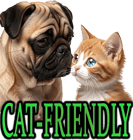


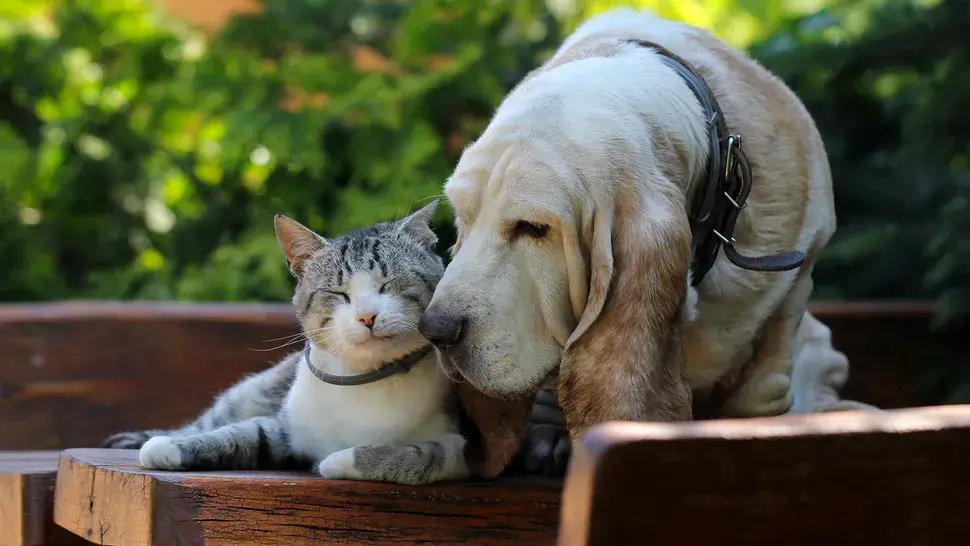
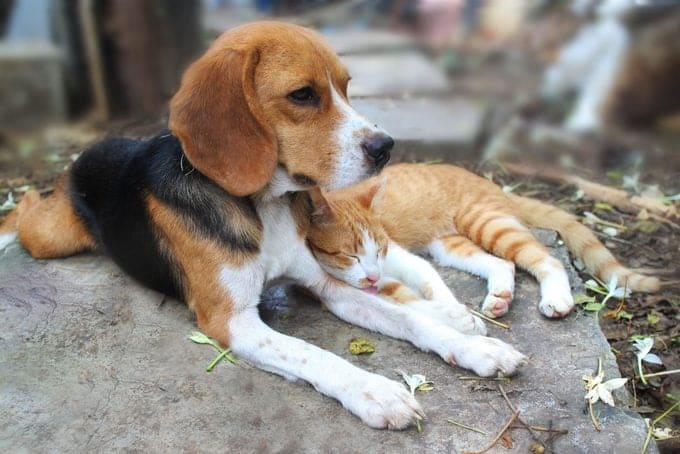
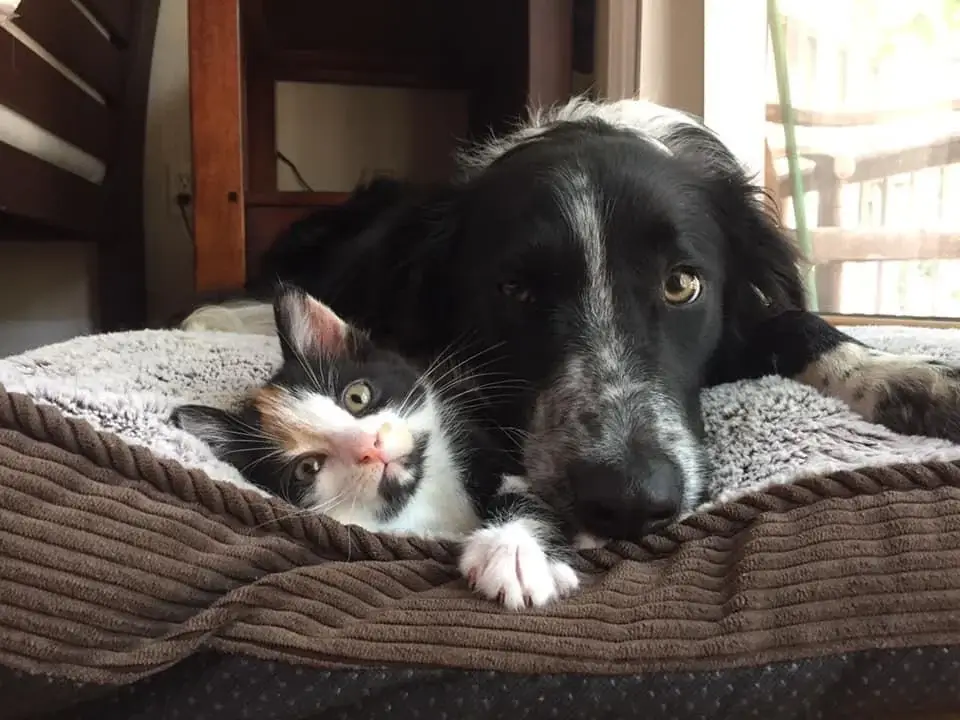
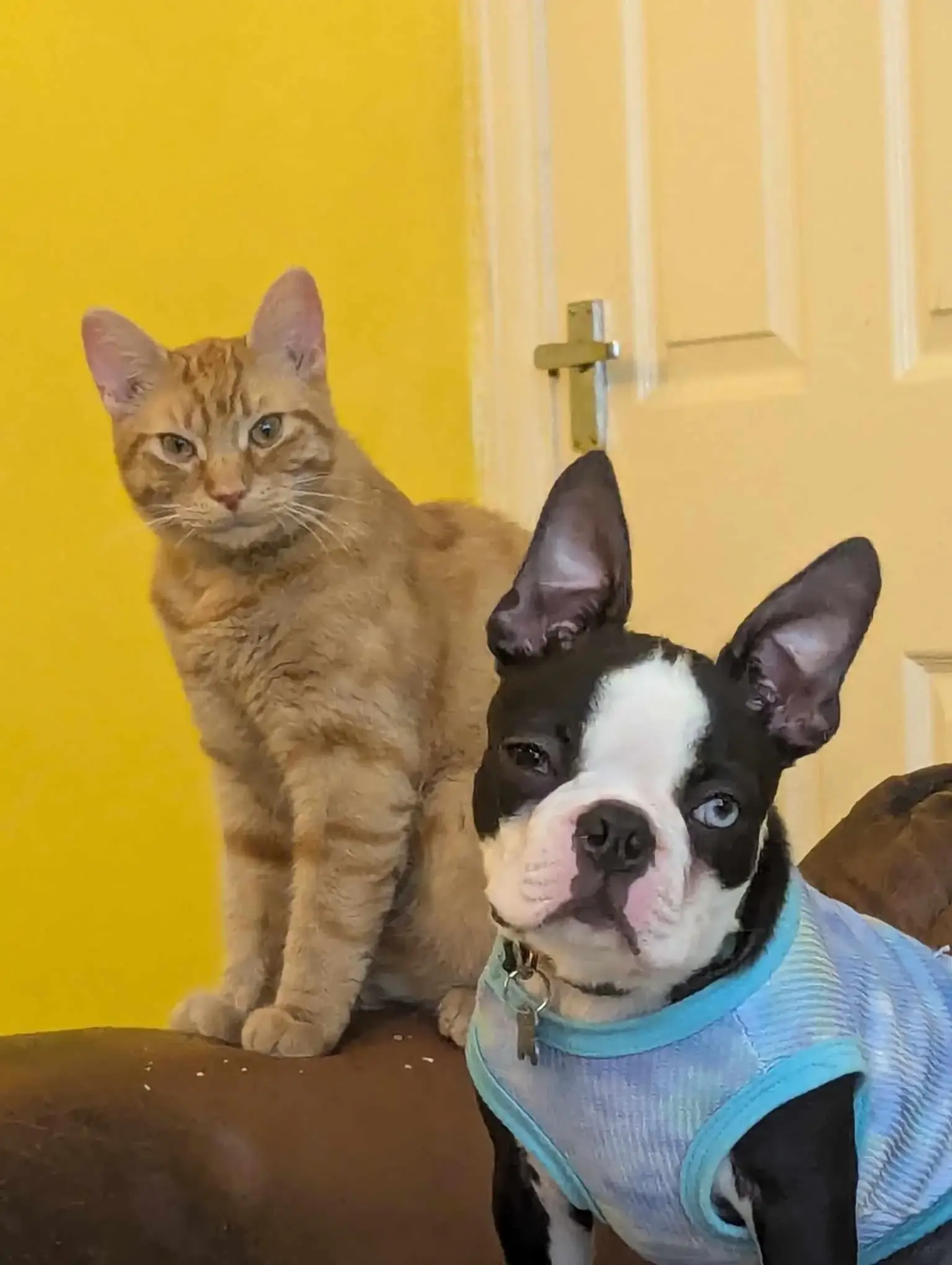
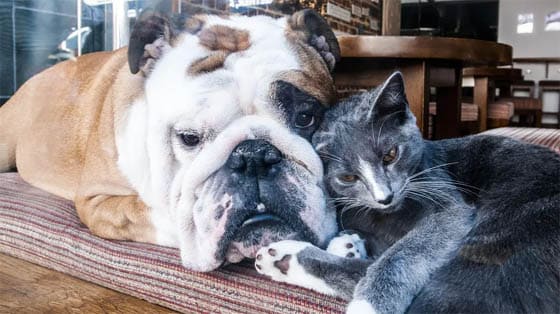

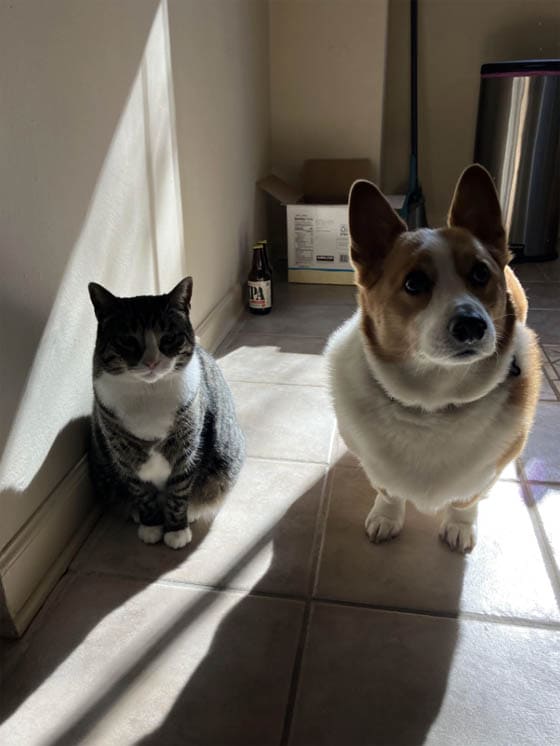
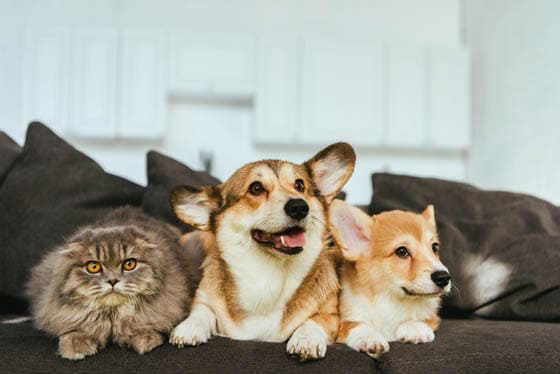
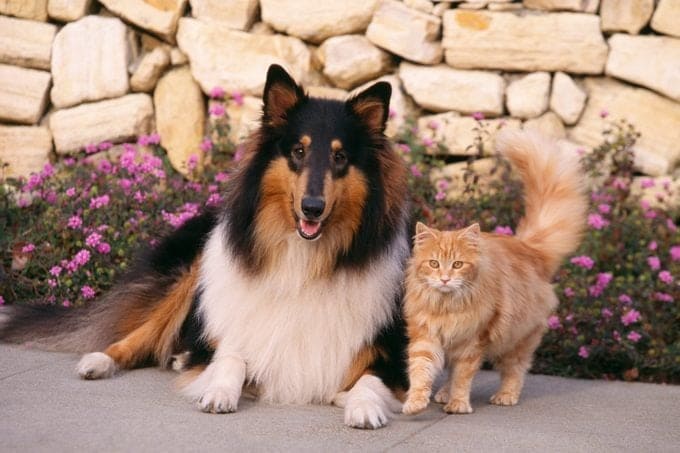
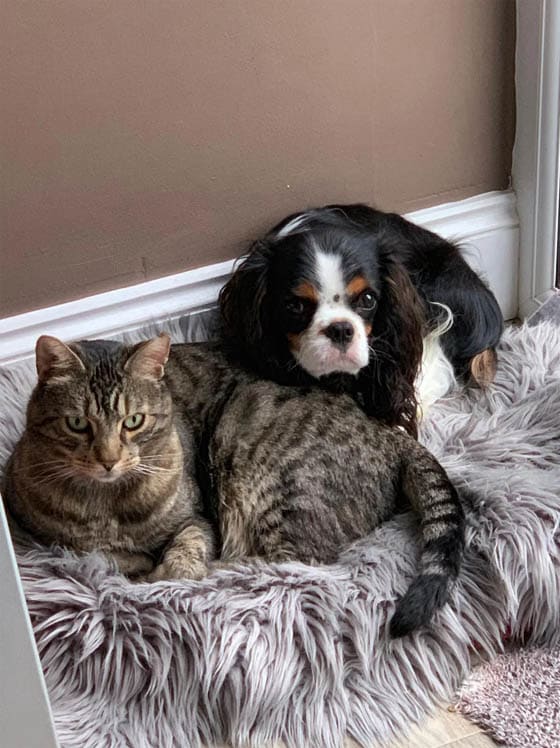
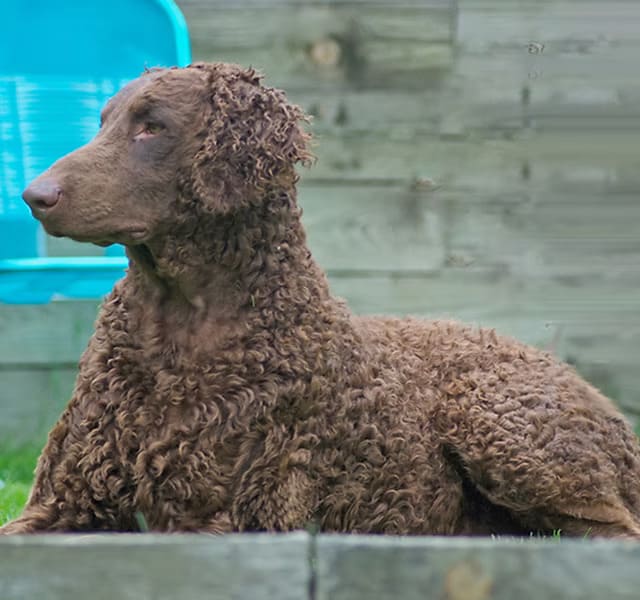

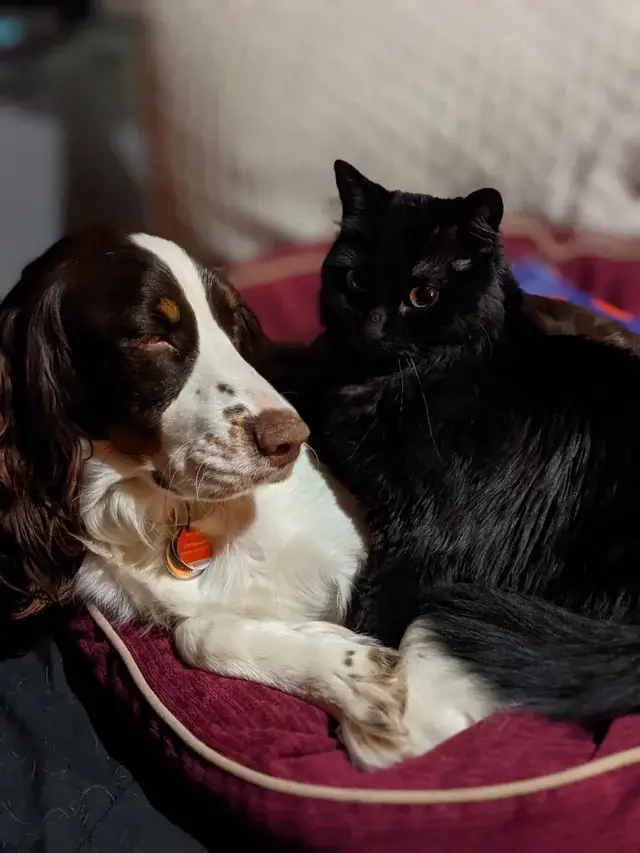
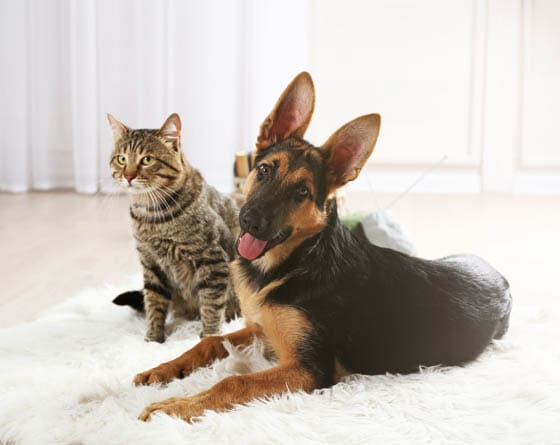
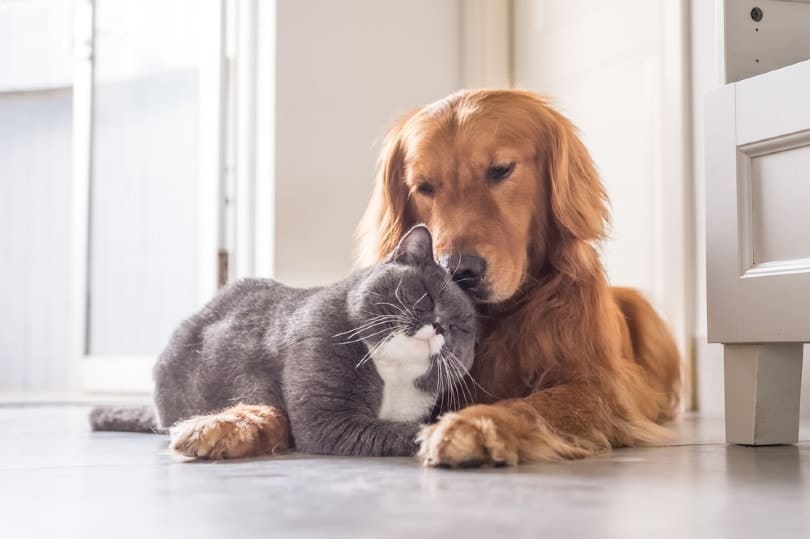
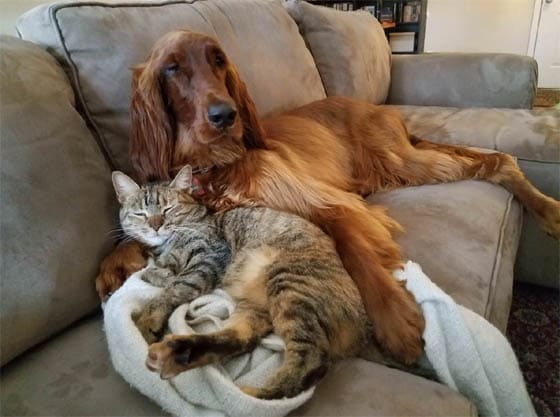
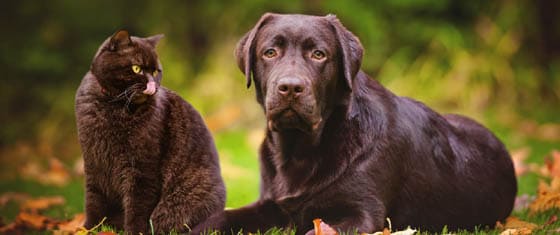
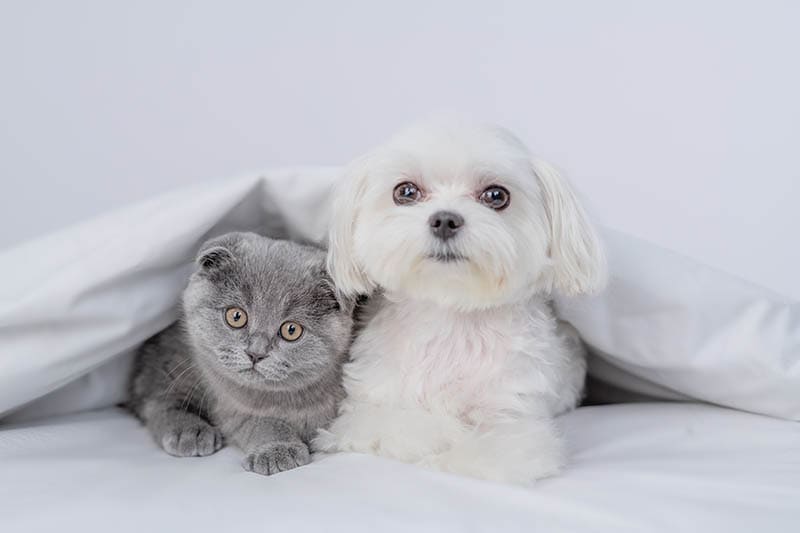
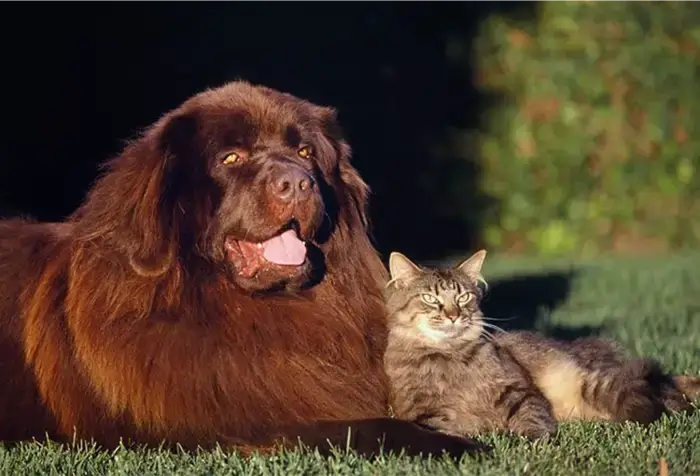
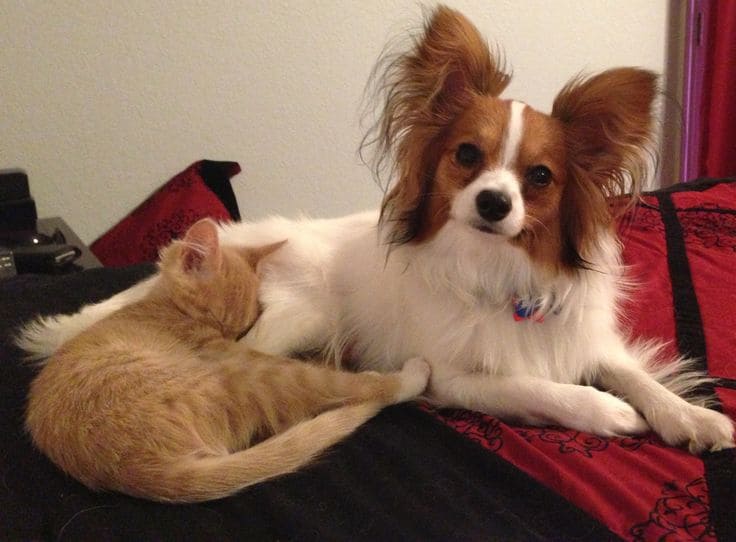
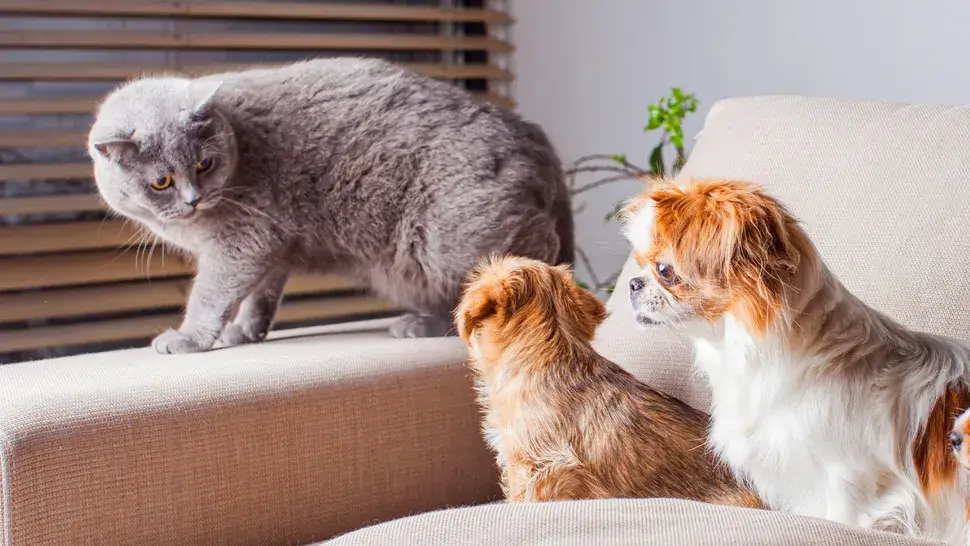
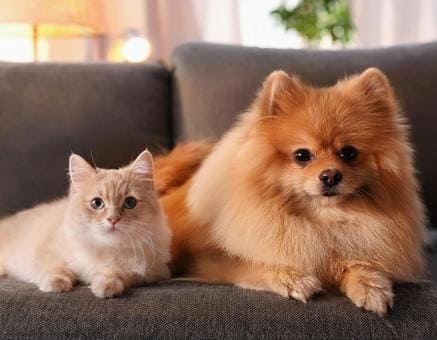
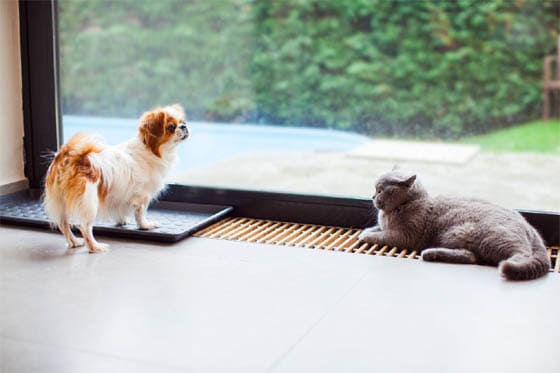
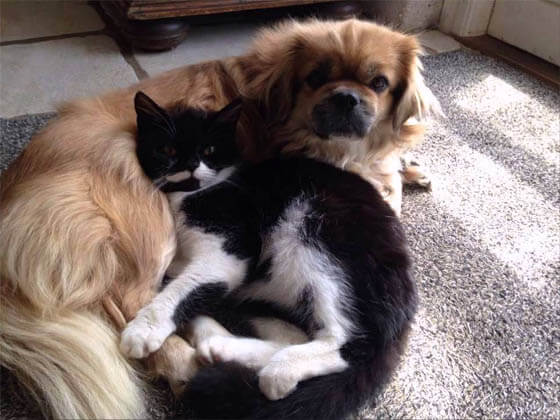
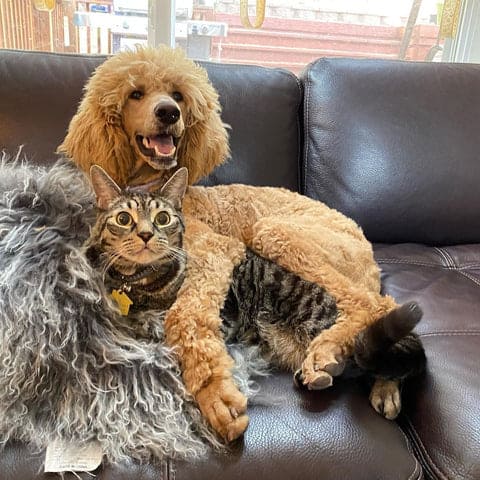
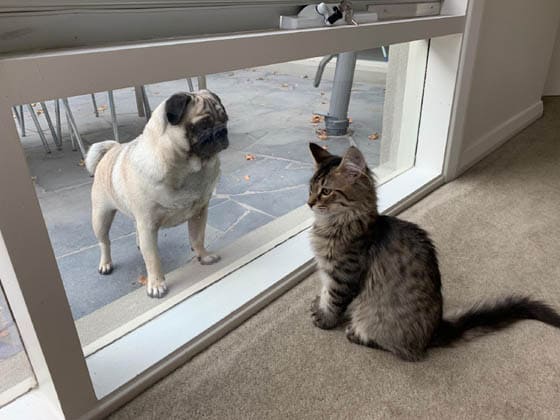
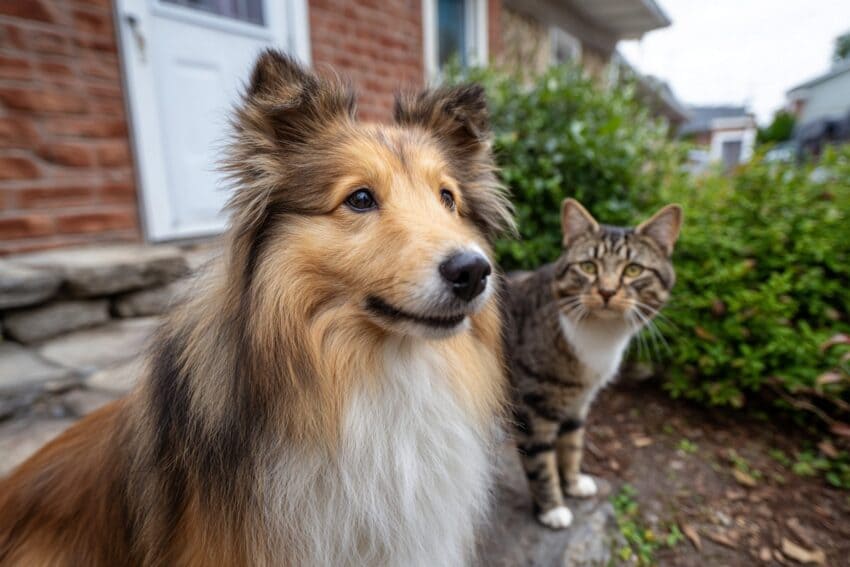
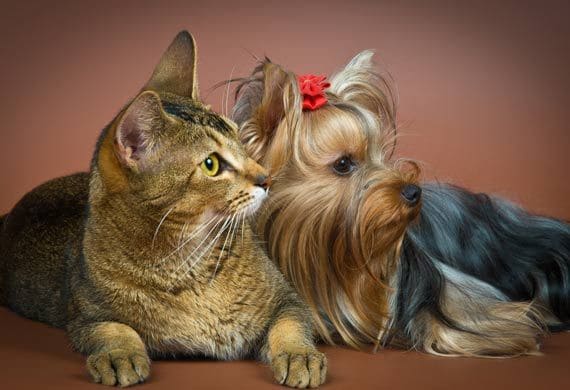
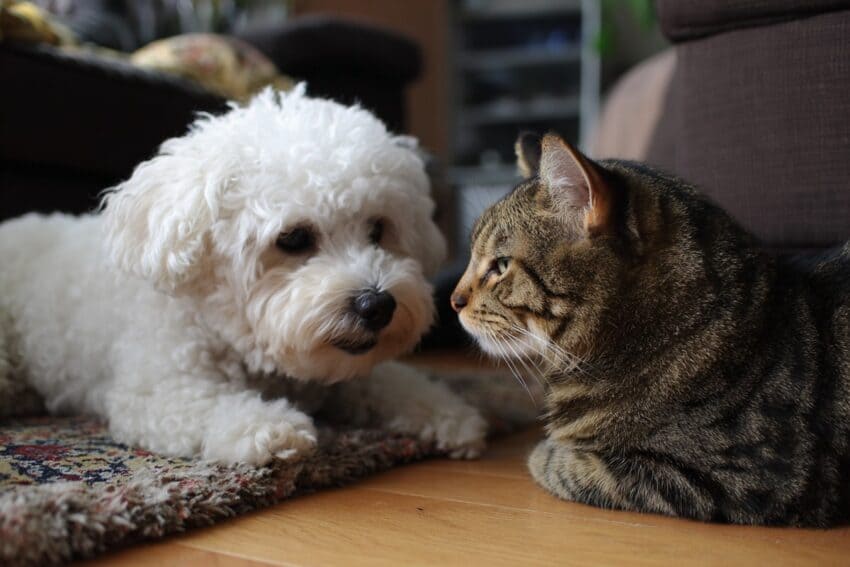
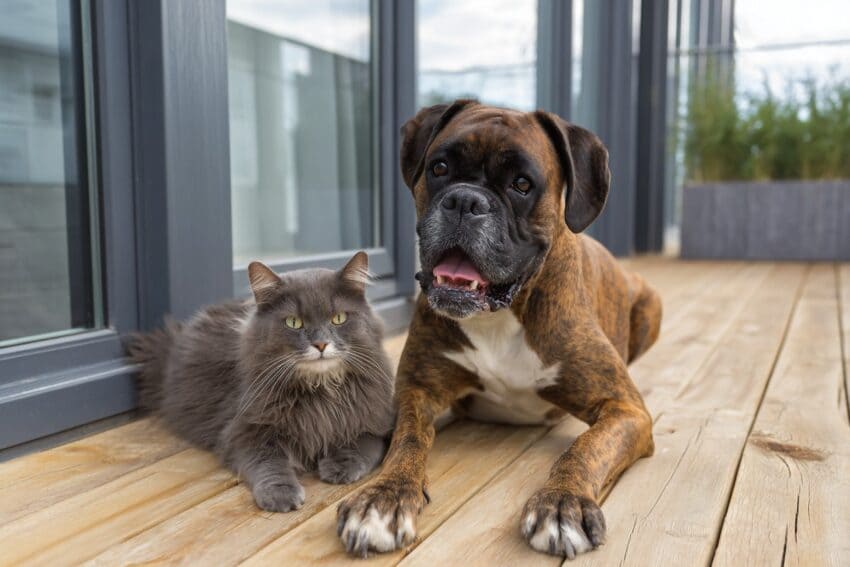
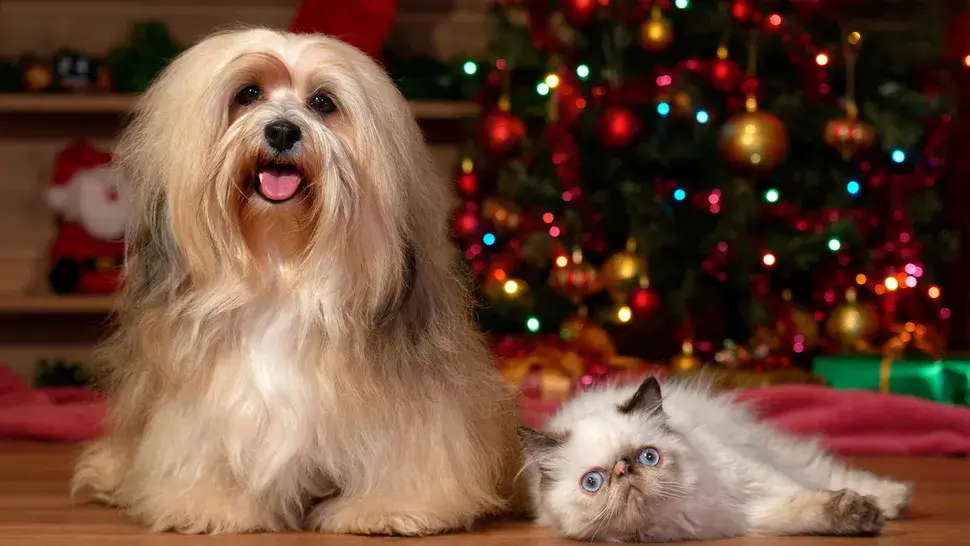
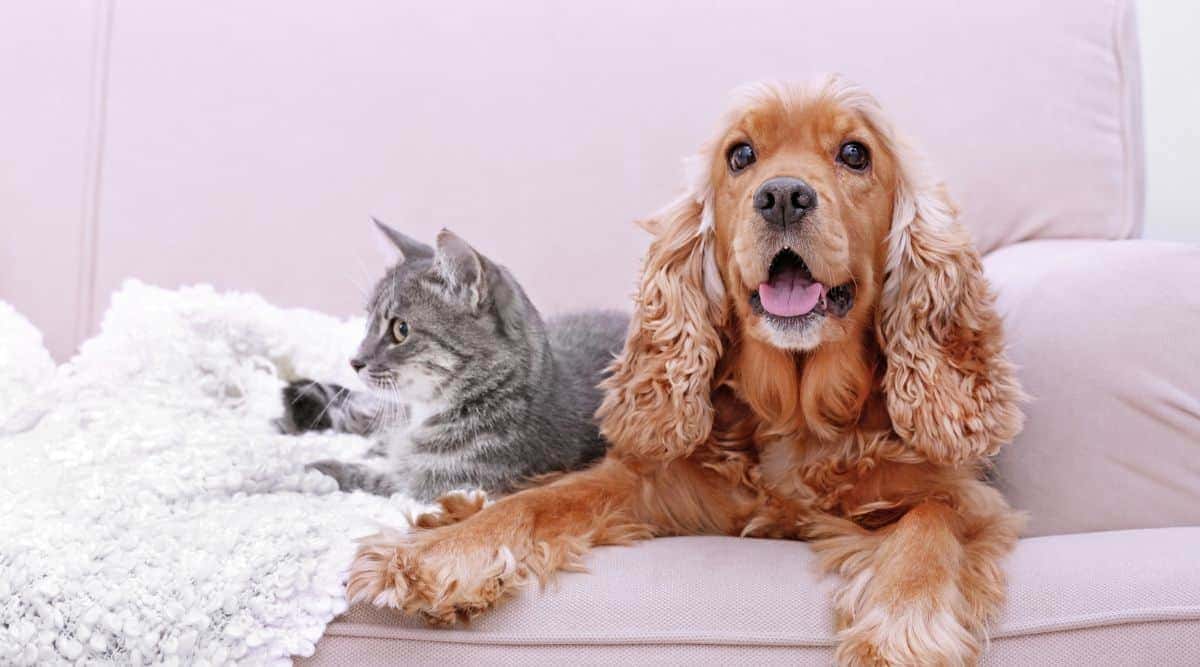
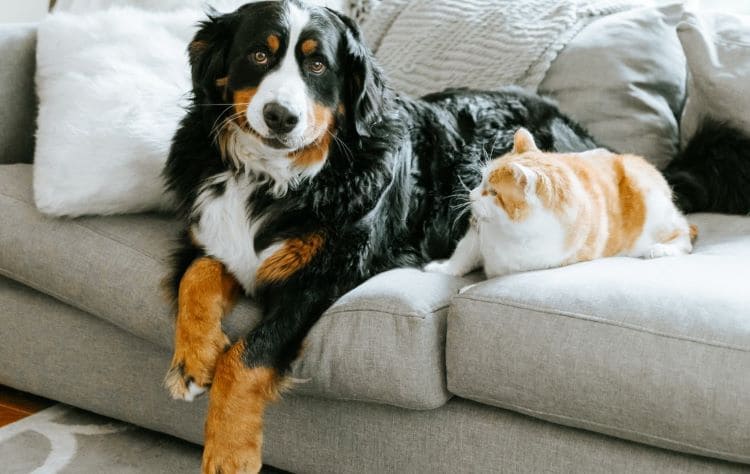
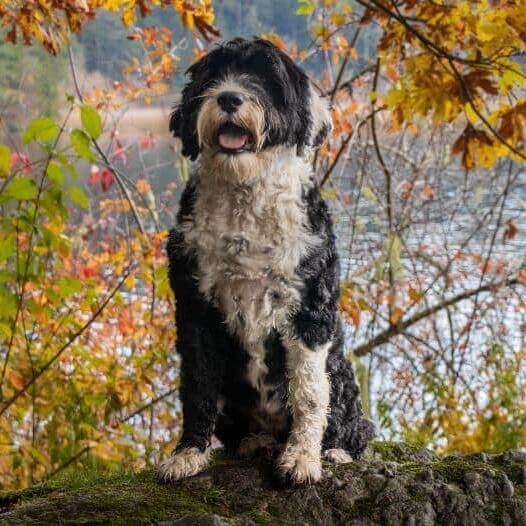
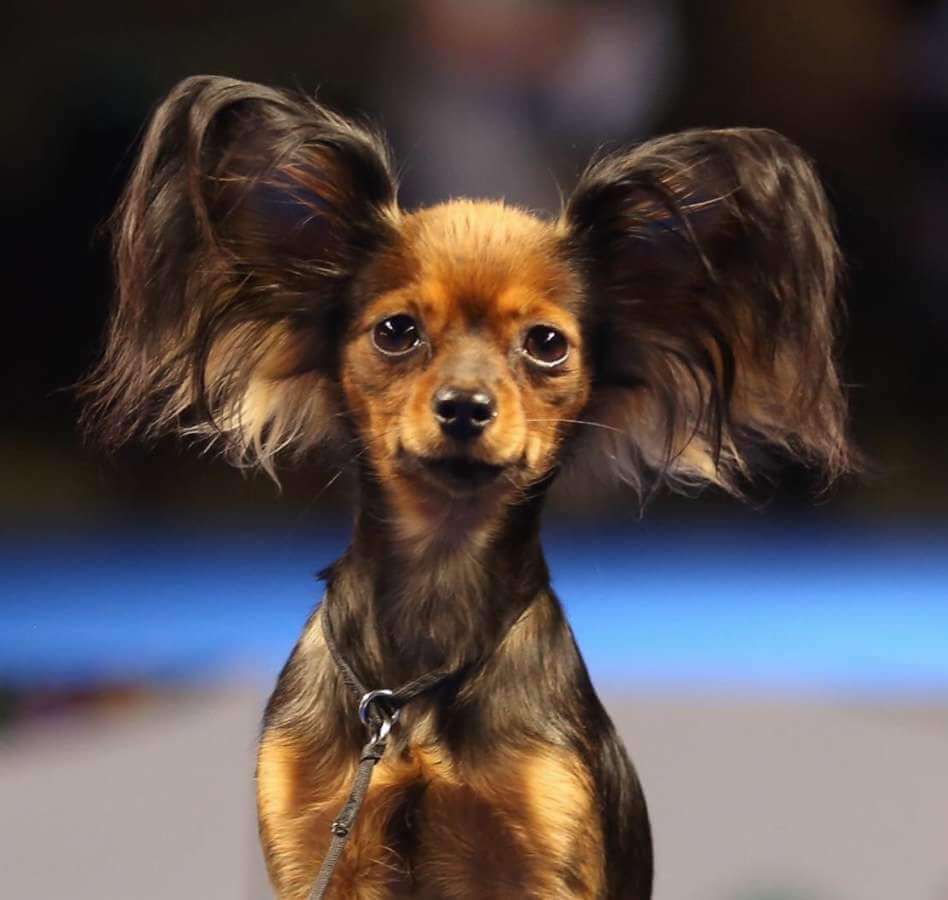
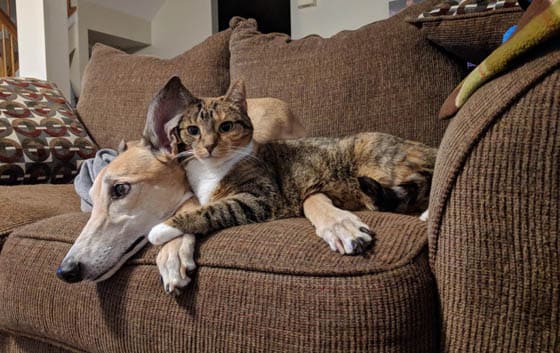
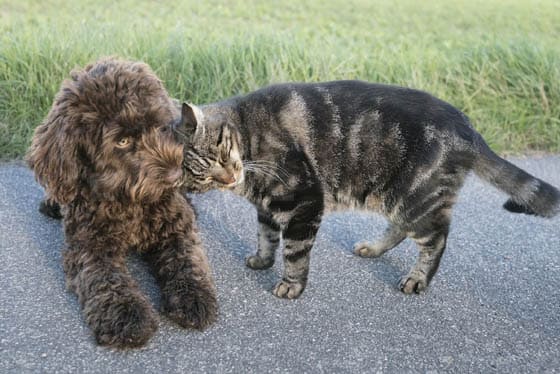
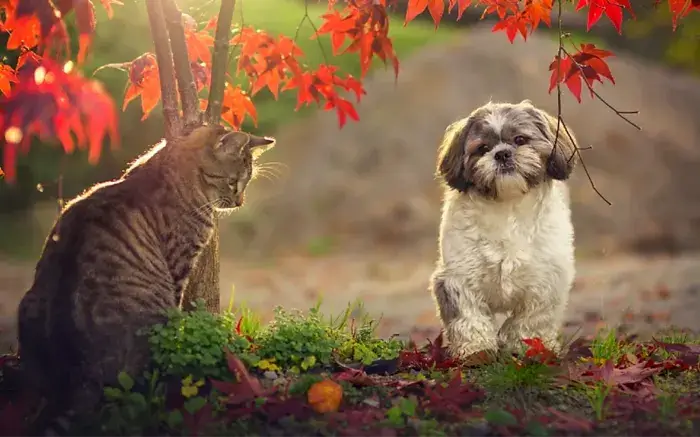
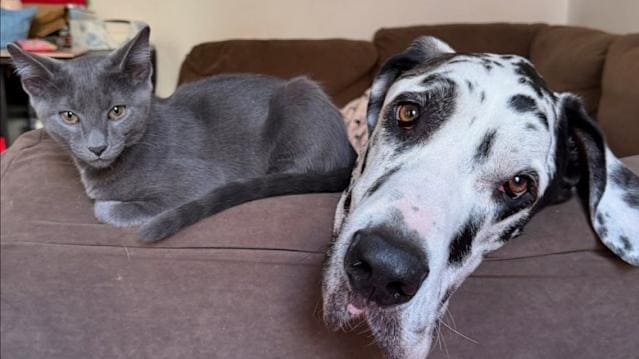
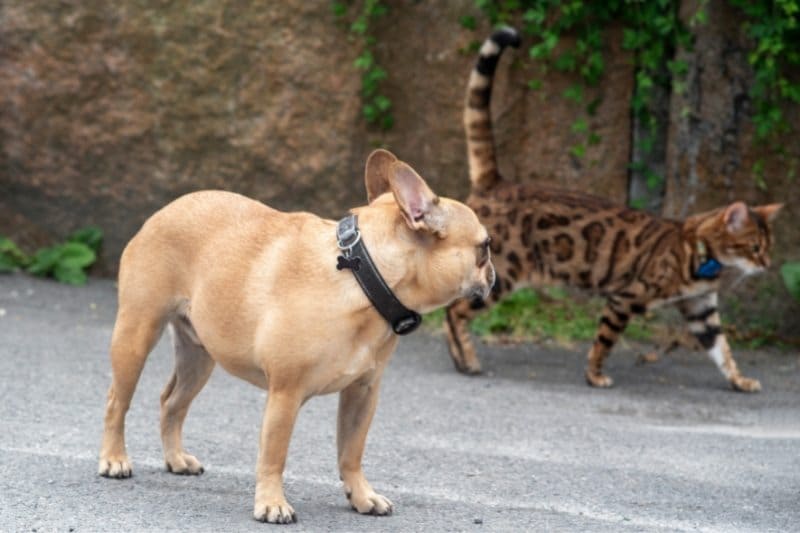
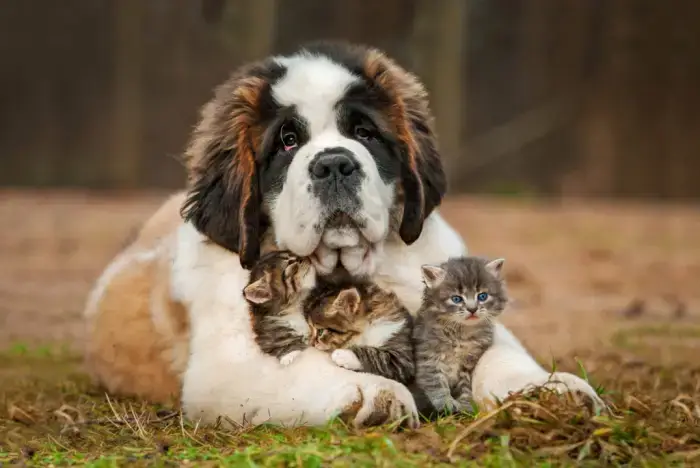
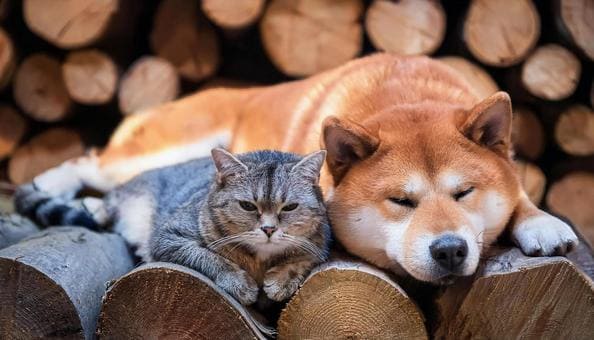
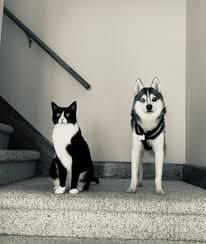
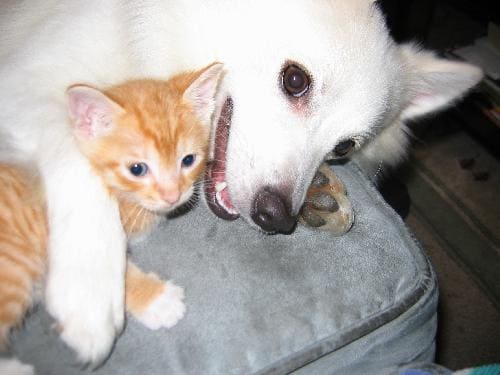
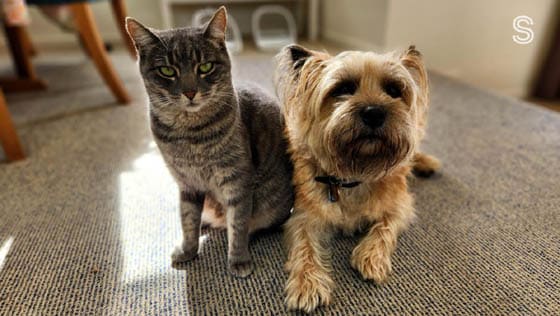
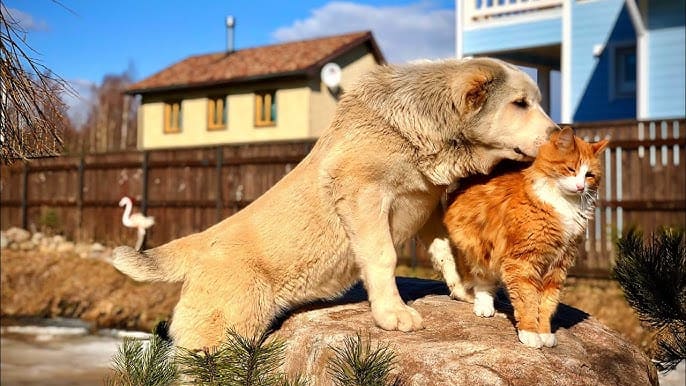
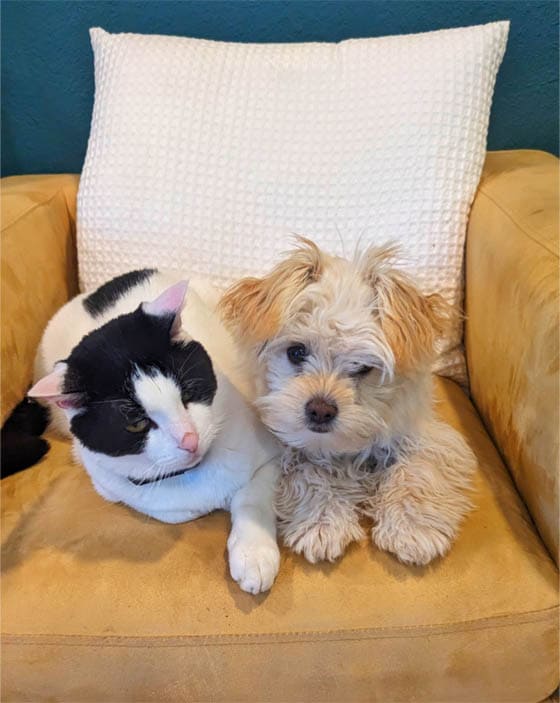
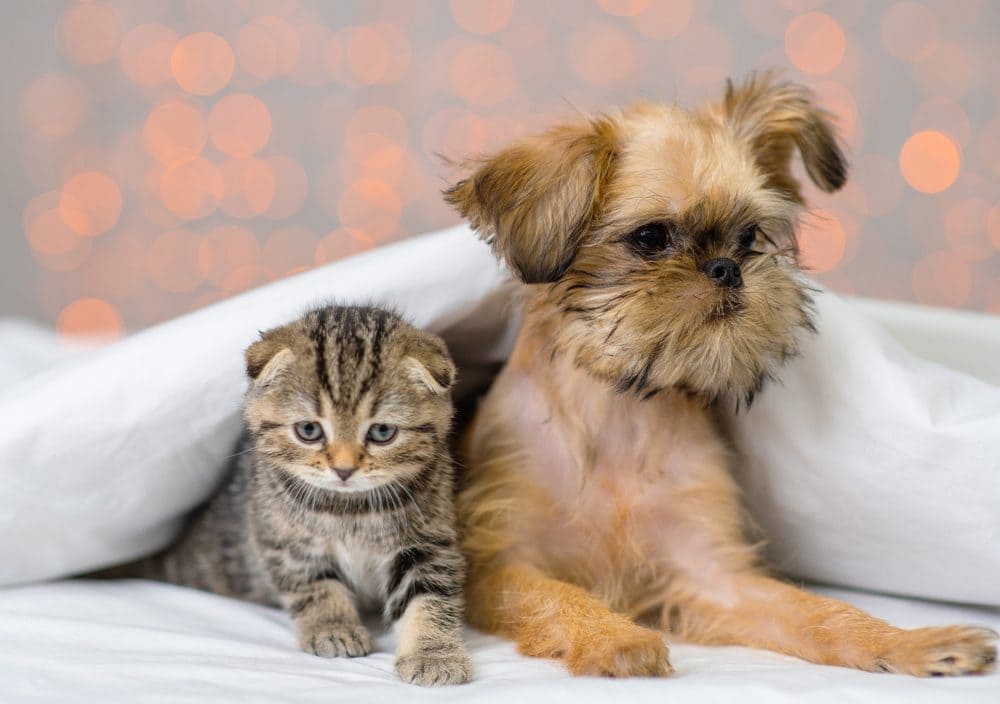
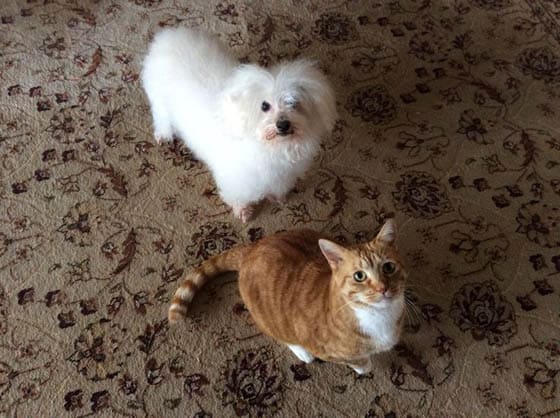
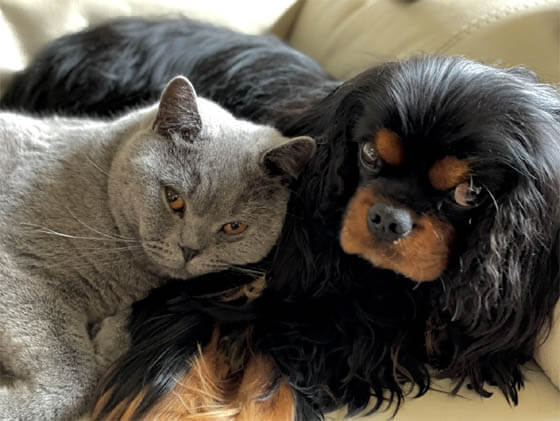
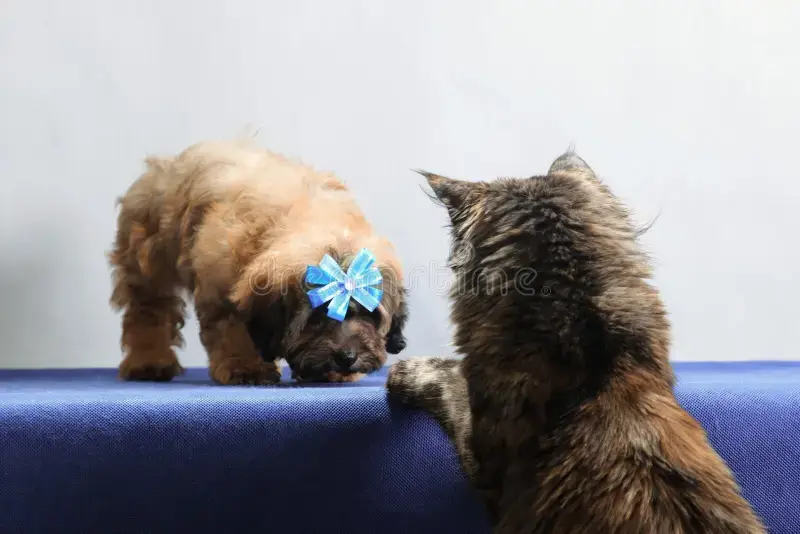
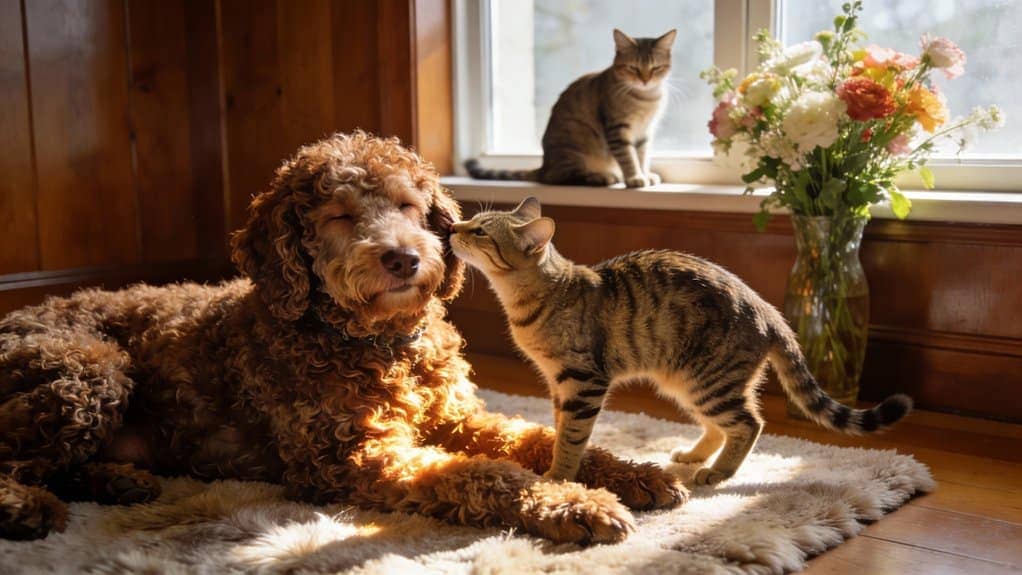
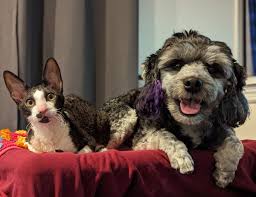
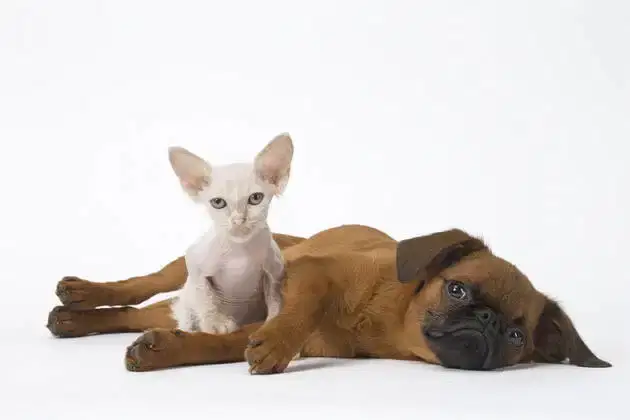
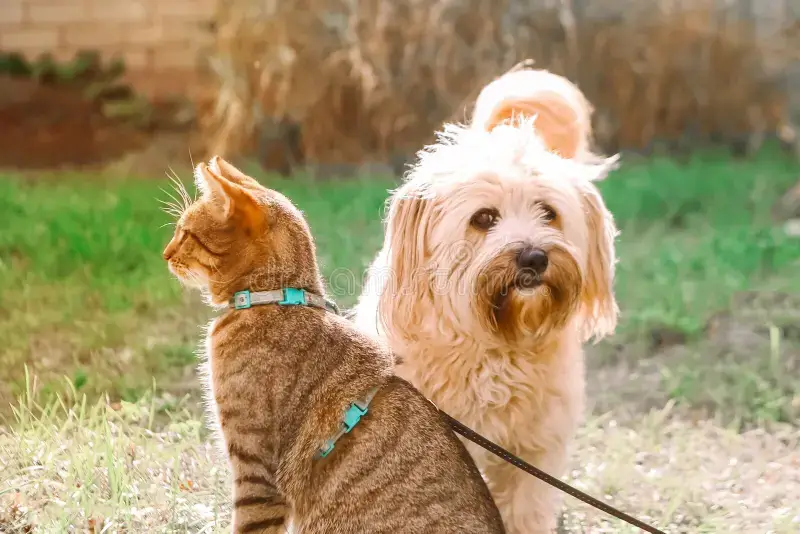
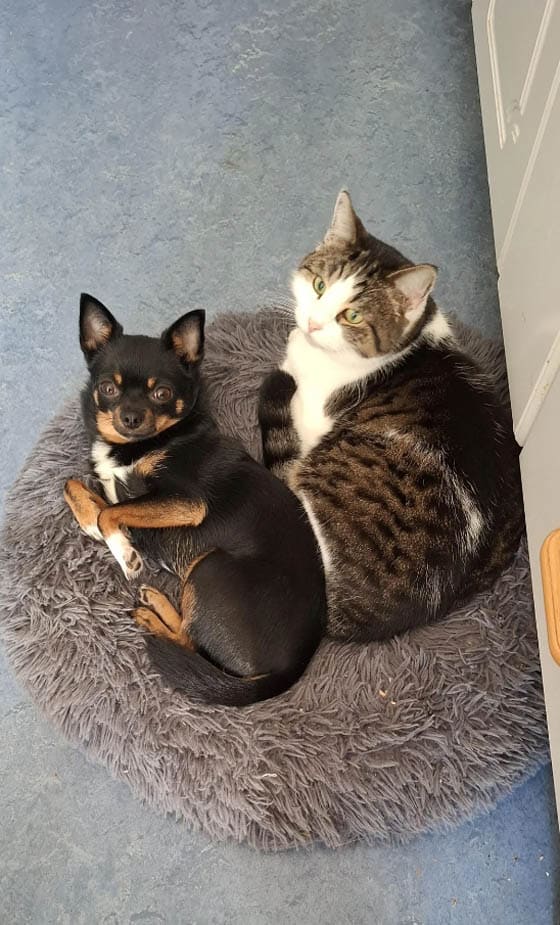
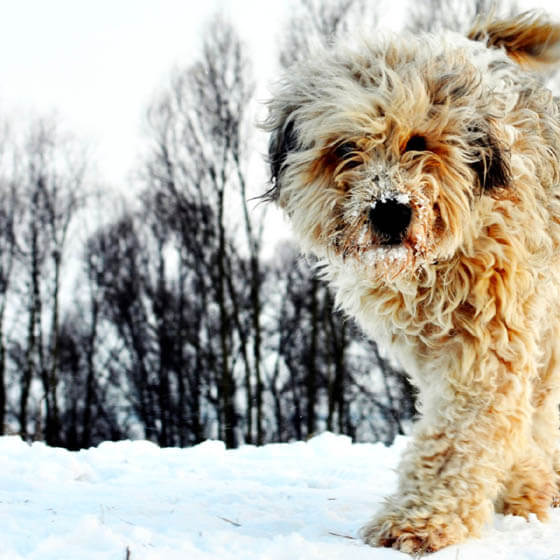
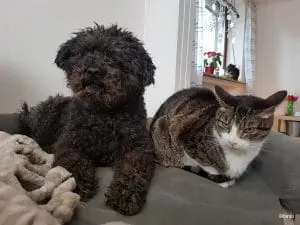
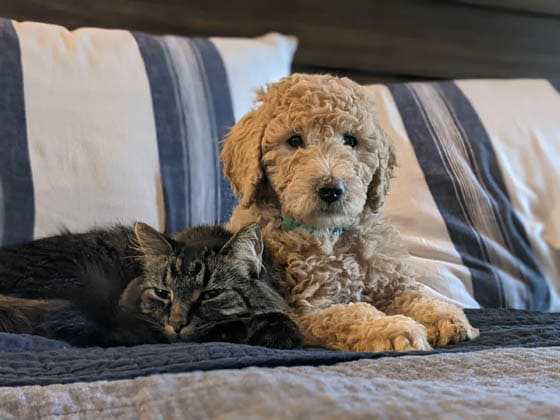
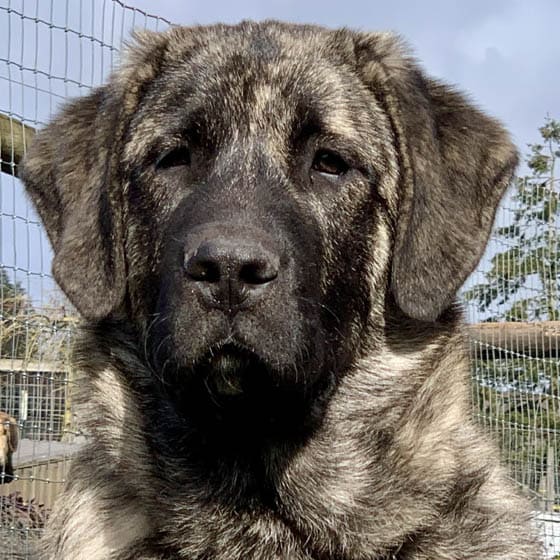
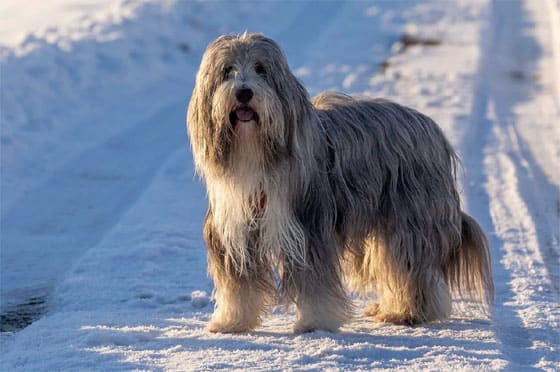
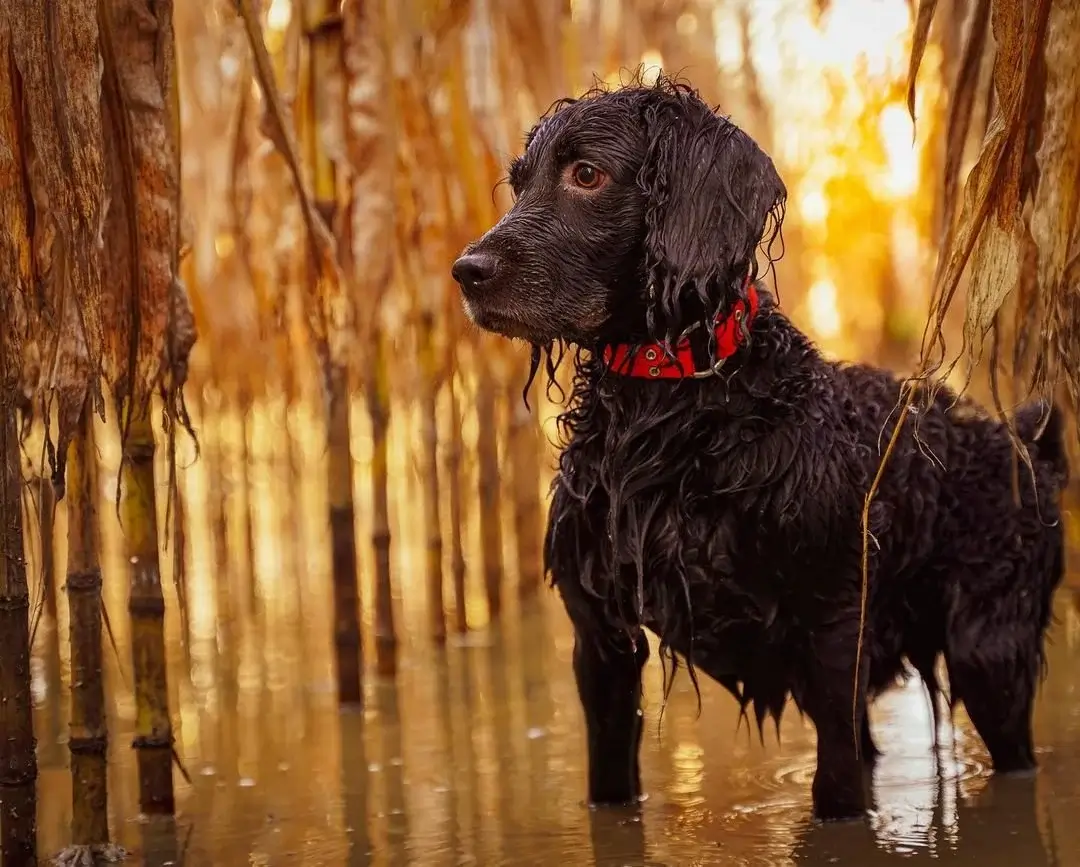
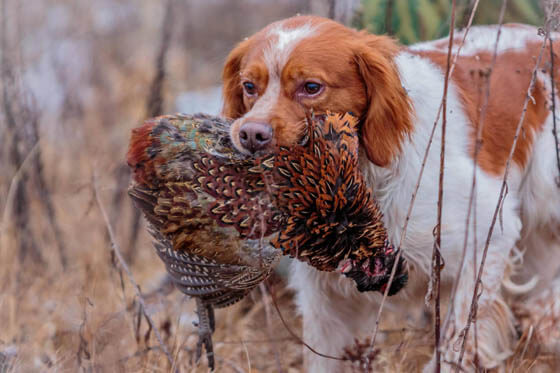
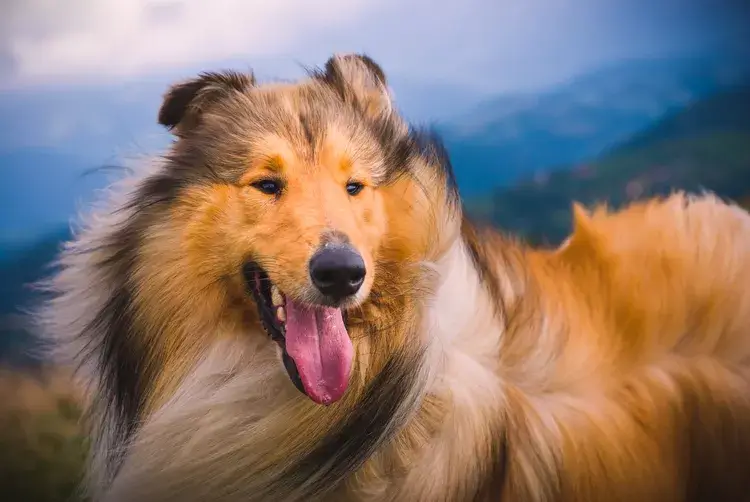
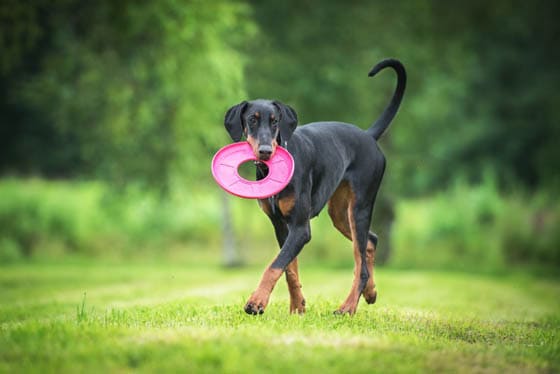
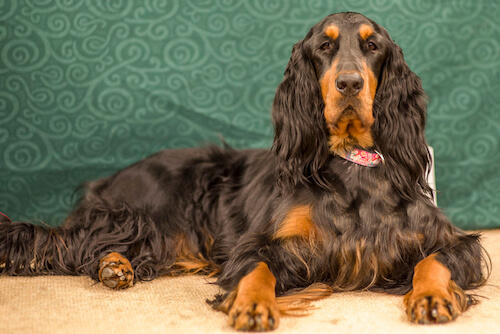
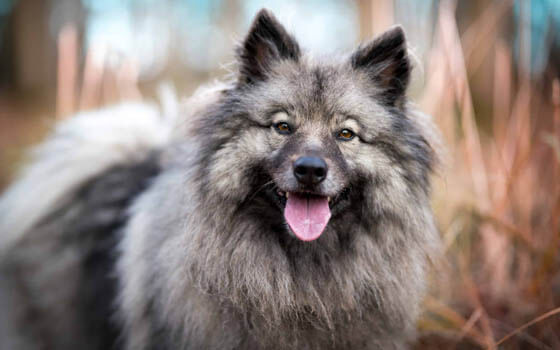
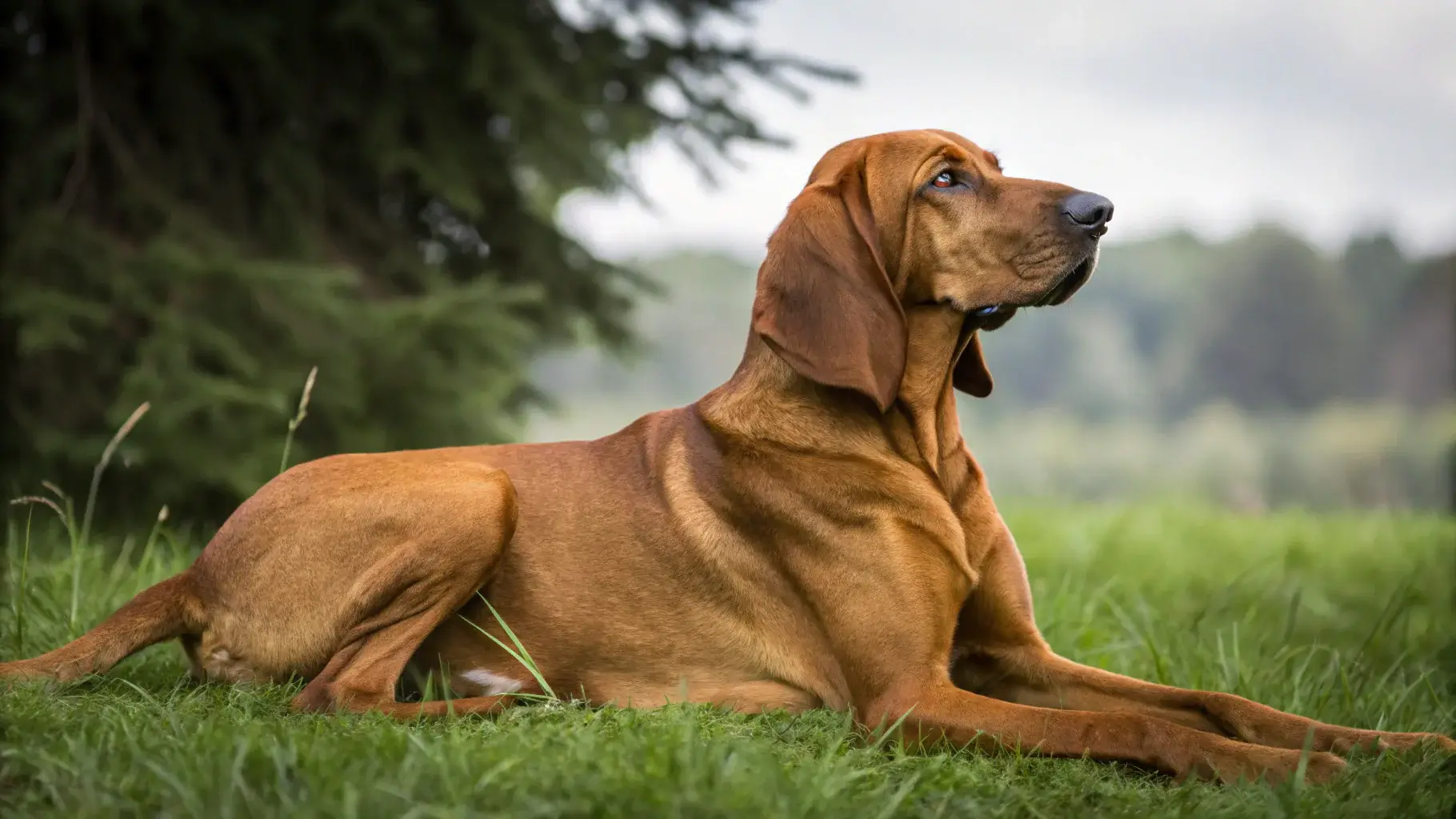
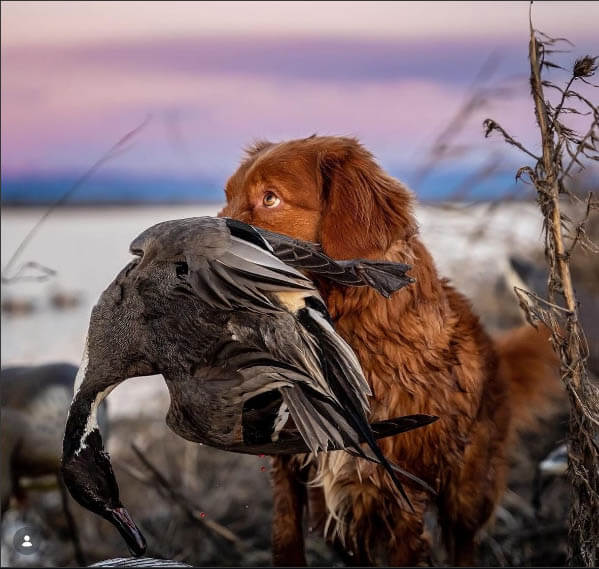
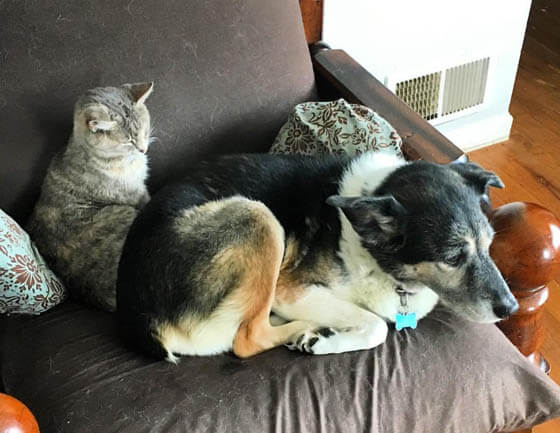











WORLD OF DOG & PUPPY 🐶