5 Austrian Dog Breeds Rare Austrian Dog Breeds Popular Austrian Dog Breeds Austrian Dog Breeds Dog Breeds from Austria Dog Breeds Originating in Austria Unique Characteristics of Austrian Dog Breeds Most Complete List of Austrian Dog Breeds Hunting Austrian Dog Breeds Top Austrian Dog Breeds Most Popular Austrian Dog Breeds Temperament of Austrian Dog Breeds Behavior of Austrian Dog Breeds Extinct Austrian Dog Breeds What Makes Austrian Dog Breeds Special? What dog breeds are native to Austria? Which dog breed is Austrian? Indigenous Austrian Dog Breeds Native Austrian Dogs Austrian Dog Breed Photos Czechh Dog Names
The Tyrolean Hound (also known as the Tiroler Bracke) is a medium-sized scent hound bred for rugged mountain terrain and cold-weather hunting in Austria. The Tyrolean Hound thrives in an environment where it can exercise regularly. A house with a garden is ideal, but it can adapt to a flat if its exercise needs are met. This dog copes well with cold thanks to its dense undercoat. It especially enjoys outings in the forest and mountains. Allow for at least one hour of daily exercise, ideally split into two walks. The Tyrolean Hound generally gets along well with children and other animals if properly socialised. It needs firm but gentle training from an early age. The ideal owner for a Tyrolean Hound is an active person, who enjoys outdoor activities and can provide enough physical and mental exercise. A hunter or hiking enthusiast will be especially appreciated by this energetic and enduring dog. While they are most revered for their hunting abilities, Tyrolean Hounds also make great companions. In the home, they are relaxed and easy-going animals that generally do well with children. Compared to other hunting breeds, they are not as quick to accept strangers, but most negative or neutral reactions result in them being aloof and rarely, if ever, aggressive.
They are inherently used to being solo hunters and although they do well with their families, usually take regular socialization early on to have the best results with other dogs. The Tyrolean Hound may not be as ideal in temperament as a breed like some Bohemian and German Pointers, but they are still considered a well-behaved breed that does well both in the field and in the home. When at work, there is little that will get in between the Tyrolean Hound and its quarry. A passionate hunter, this dog will give its all to the task at hand, acting with courage and nobility. They are fast and efficient, tracking even the mildest of scents with ease. Austrian hunters respect the breed for its ability to hunt in hot and cold weather in a number of settings, including in woodland and on mountains. Content to work alone, they are a good choice for the part-time hunter who may not have the resources to house a large pack of dogs. Even when not hunting, the Tyrolean Hound is a high-spirited hound that lives life to the full and enjoys spending time in human company.
While on the hunt, they are energetic and determined, using their superb scenting abilities to track down everything from foxes and hare to deer with both endurance and zeal. In the home, they are a loving, affectionate breed that forms strong bonds with their family, especially those who take the time and effort to train them. Because they were largely used as solo hunters instead of pack hunters, they do take some socialization to get along well with other dogs. With strangers, they are generally aloof but may resort to barking, which makes them good watch dogs, but they do not tend to get aggressive, so their use as a guard dog is extremely limited. They are generally known to be good with children, but proper training and socialization should occur if they are to be around children regardless.
They do still have a decent prey drive as well and will need to be raised with non-canine animals if they are to peacefully co-exist later in life. As they are a highly-intelligent breed, they can tend to be a bit stubborn and are only moderately easy to train but once they've received thorough training, are quite responsive. They do much better in homes with big yards, nearby fields, or nearby dog parks in which they can run freely to expend some energy off-leash. It's safe to say this breed needs to be run or walked at least 16 miles a week and should received at least 45 minutes of exercise daily. Undeniably smart and tuned-in, the Tyrolean Hound can become a highly trained animal. Frustratingly, their independence can hold them back at times, as they like to question authority and will not follow every instruction given to them unquestioningly. A lively dog, their exuberance can also get in the way of their training, and they need a firm hand to overcome this potential issue. At times stubborn, trainers will get the best out of the Tyrolean Hound by introducing a training regime early in life and via the use of positive reinforcement methods. In the correct hands, this responsive breed can learn quickly.
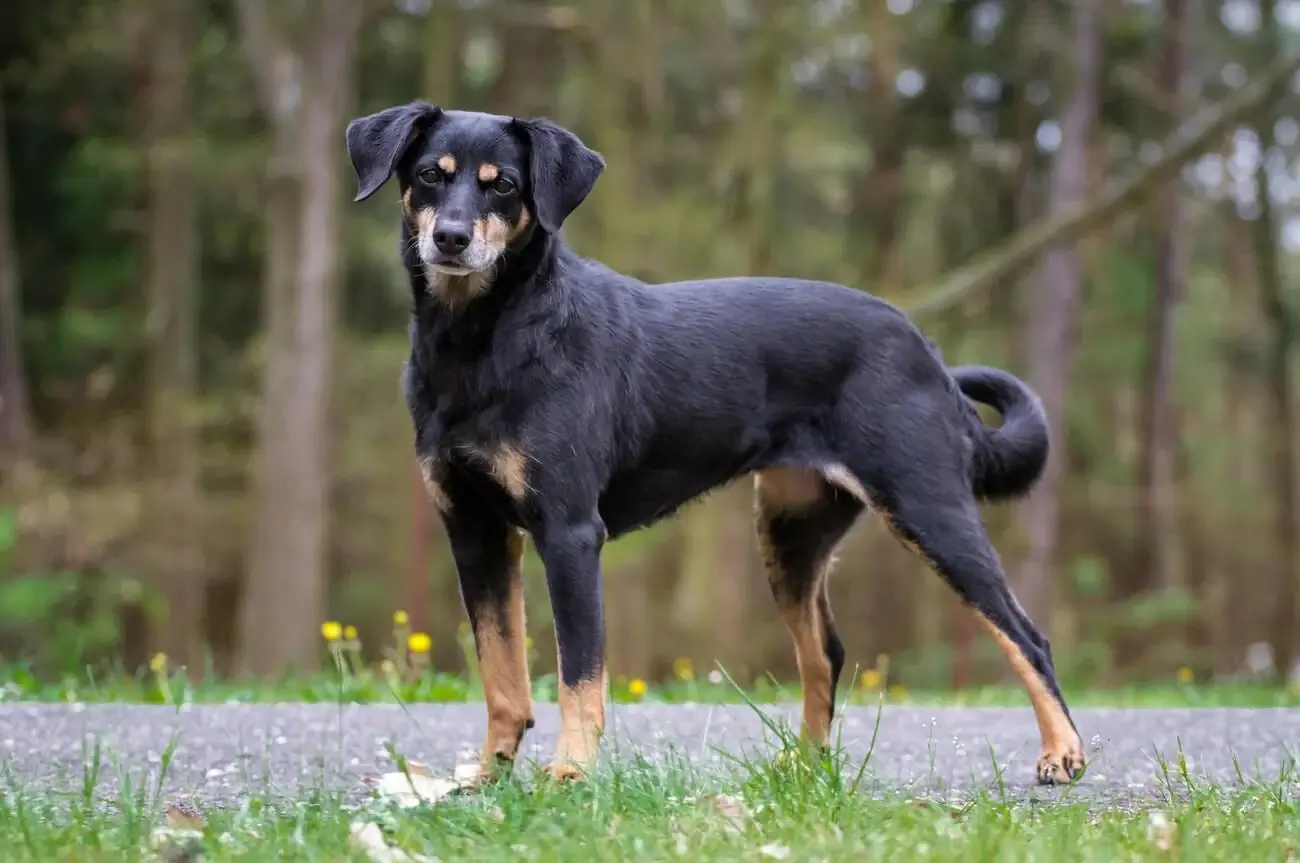
The Austrian Pinscher (also known as the Österreichischer Kurzhaarpinscher) is a sturdy, medium-sized working dog that originated in Austria as a traditional farm, ratter, and guard dog. The Austrian Pinscher is a lively and intelligent dog with a strong guarding and protective instinct. It shows great affection and friendliness toward its family, while initially being rather wary of strangers. Its bright and playful nature makes it a pleasant companion that enjoys being kept busy and forms a close bond with its people. At the same time, it possesses a certain independence that requires consistent yet loving training. With its attentive and watchful nature, the Austrian Pinscher is an excellent choice as a reliable farm and family dog that delights with its cheerful demeanor and spirited temperament. The Austrian Pinscher is a lively and intelligent dog that needs plenty of exercise and mental stimulation. Its energy level is high, making it particularly suited for active people who can provide sufficient activity. Due to its bright and eager-to-learn nature, it can be trained well but requires consistent and empathetic handling. With the right motivation and clear rules, it shows itself to be attentive and cooperative, making it a pleasant companion. However, its independence requires patient and confident guidance to ensure it reliably follows its owner's lead.
He is not an ideal choice for apartment living or super busy parents. Do not expect your Austrian Pinscher to be a fierce hunter even though he at one time was used as a ratter. He is better suited as a guard dog since he is assertive and strongly devoted to his family. He is suspicious of strangers and will sound the alarm. Usually, he is easy to train but does need a consistent trainer to keep him from slacking off and becoming unruly. This is considered to still be a working breed, but the Austrian Pinscher is not really an ambitious hunter. He is still an excellent guard dog because he is naturally suspicious of all strangers. Expect him to become devoted to his family and he will sound the alarm if anyone unknown approaches his property. The Austrian Pinscher is great for rural or suburban homes; however, he should not be considered if you live in an apartment or a home with a small yard.
He also needs a family that is devoted to him and willing to spend the time needed for socialization, training and playtime. He is the type of dog that can easily become destructive if he is left alone for too long. Since he is a natural watchdog and guard dog, he does have a natural propensity to bark. Curbing this desire may be his owner's biggest challenge. While his prey drive is not high, he should still be watched closely around smaller pets in the home. He needs larger areas to run and play. When he is kept in small areas, he can become extremely destructive and very vocal. Expect to spend at least 45 minutes a day with your Austrian Pinscher. He will enjoy long walks, hiking, dog sports or even just playing catch in the backyard. The Austrian Pinscher has endurance and can be hard to wear out, so if you are able to spend extra time during the day with him you should do so.
Austrian Pinscher was originally bred as farm dog, but nowadays, they are mostly kept as loving companions. They are very clever dogs with affectionate nature. They are also very loyal and protective, which makes them great watchdogs. They are also amazing as a vermin killer for your garden, so if you have problems with moles or rats, get an Austrian Pinscher and the problem is gone. A wonderful watch dog, the ever-alert Austrian Pinscher will never miss a beat and is always ‘on duty’. You can rest assured that your home is being protected at all times when there is an Austrian Pinscher around. While the Austrian Pinscher will be more likely to bark to scare away an intruder rather than actually causing them any harm, they have been known to become physical if pressed. The suspicion of strangers that is innate in the breed can be a double-edged sword, however, as the Austrian Pinscher is known to be suspicious of any new people outside of its inner circle. Barking can be excessive in some Austrian Pinschers and needs to be trained out of them from a young age, particularly if living in close proximity to neighbours.
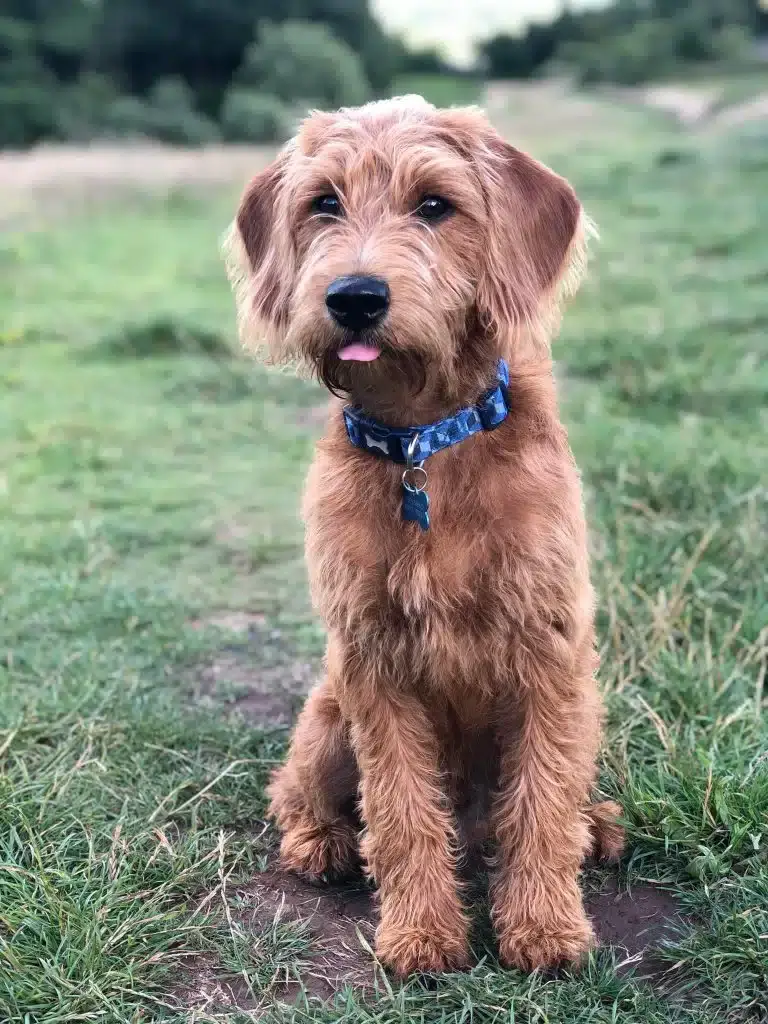
The Styrian Coarse-haired Hound (Steirische Rauhhaarbracke or Peintinger Bracke) is a medium-sized scenthound developed in the 1870s in the Austrian province of Styria by Karl Peintinger. Passionate, tough, determined, and independent-minded, while forming strong, affectionate bonds with its owner or hunter. Can be stubborn and independent, making it best for experienced handlers who can provide firm, consistent guidance and strong recall training. This hunting dog displays a strong and determined temperament. Very attached to its owner, it develops a strong bond with the whole family. Naturally determined and enthusiastic, it shows sustained energy during hunting tasks. Despite its slightly independent nature, it remains affectionate at home and enjoys the presence of children. However, its wariness of strangers and strong prey drive make it less sociable with other small animals.
This dog’s passion is for hunting and this is reflected in their personality. They devote themselves to the job they are given, not stopping until they have achieved the goal set to them. Their undeniable tenacity means that they have got themselves a reputation for tirelessly pursuing their prey, even in the face of hunger, thirst and poor weather. Despite the fact that this breed is primarily a working dog, the Styrian Coarse-Haired Hound will show their owner both affection and loyalty. They can make a loving family pet in the right circumstances. They get on best with older children and are unlikely to tolerate very young kids. While they can live alongside other dogs it would be unfair to expect them to accept small animals, such as cats and rabbits, as they will see these pets as prey and have a strong urge to chase them.
A dog that is happy to act as the family lookout, they will always alert their owner of any new arrival and show a natural suspicion towards strangers. They love to bark and howl, so any intruder will be greeted with a very noisy reception! They would not typically be used as a guard dog, however, and would not be suited to this role. The Styrian Coarse-Haired Hound likes to be the dominant one in the relationship and needs to be taught from a young age who is the boss. They benefit from steady and consistent training methods and from having one dedicated trainer. While they are generally eager to please, they can be stubborn in certain circumstances so would benefit from plenty of positive reinforcement. It is vitally important that this dog be socialised from day one if they are to interact well with all family members.
They should be exposed to a variety of people and situations, both inside and outside of the home. These dogs are extremely intelligent. Over the last 150 years, most breeders have been very selective with the dogs they use so as to not just continue maintaining a very sharp dog but to increase the dog's intelligence. They are keen to hunt; properly trained, they are one of the best hunting dog breeds in the world. The first thing you will notice is this dog's super-serious look. Despite this somewhat dour countenance, the Styrian Coarse-haired Hound is an affable dog. They can tolerate gleeful children and are playful. They tend to be aloof to strangers, however, and that behavior along with their look will probably keep strangers from getting too close. There seems to be no end to the energy of a Styrian Coarse-haired Hound. They can chase down their prey in the cold and windy thin air of central European mountains. When not hunting in treacherous terrain, it is mandatory that they get at least a few hours of daily exercise. A Styrian Coarse Haired Hound is not a friendly dog and dislikes being near other dogs, although they will tolerate dogs with whom they are raised. If there is not a clear leader in the house, these dogs may quickly become overbearing. They are having a strong sense of independence and may be obstinate, making training challenging at times.
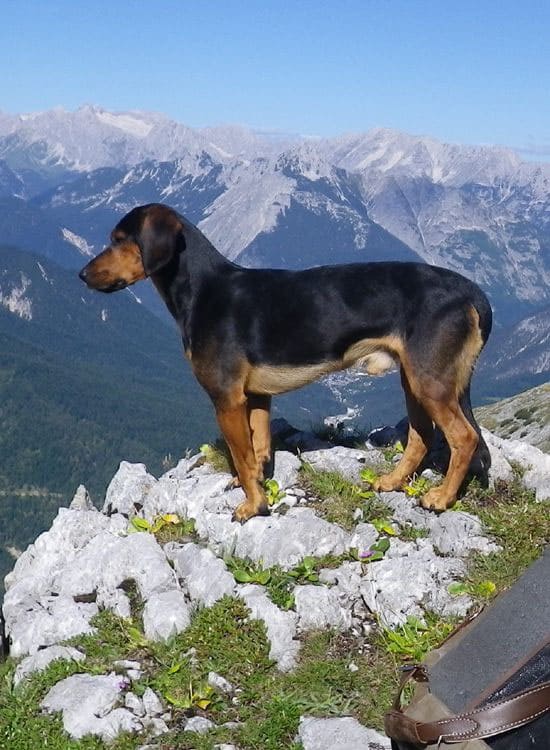
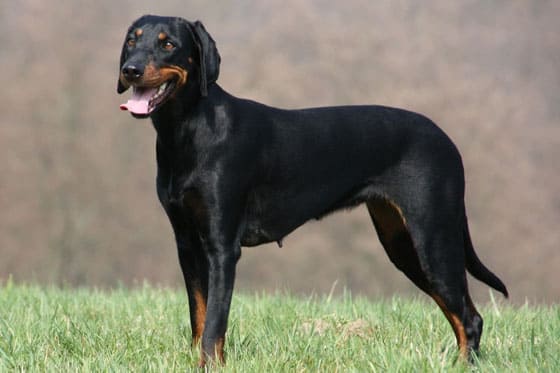
The Brandlbracke (also known as the Austrian Black and Tan Hound or Vieräugl) is a medium-sized scenthound native to Austria. The Brandlbracke is an Austrian scenthound bred to track wounded game in mountainous terrain, and it is recognisable by its black and tan coat and the light patches above its eyes known as four eyes. These dogs were originally bred as scenthounds, with their primary task being to track down wounded game in challenging, mountainous terrain. This breed is renowned for its excellent sense of smell, adaptability, and strong hunting instincts. With its characteristic black-and-brown coat and tan markings, including unique "four eyes" (two light patches above the eyes), the Brandlbracke is a striking sight. This article will cover every aspect of this fascinating breed, from history and temperament to health and lifestyle. Officially registered in Austria at the end of the 19th century, the breed was recognised internationally by the Fédération Cynologique Internationale (FCI) in 1954. This ensured that the breed could preserve and promote its unique characteristics and qualities internationally.
The Brandlbracke was and is mainly used for hunting hares and deer. Thanks to their exceptionally keen sense of smell and ability to track for long periods, they are beloved companion and working dogs among hunters. The Austrian Black and Tan Hound stands out for its friendly and balanced temperament. It is considered extremely intelligent and industrious, making it an excellent hunting dog. It shows remarkable endurance and a keen sense of smell, which is why it is particularly valued for blood tracking work. Despite its hunting enthusiasm, it is affectionate and gentle with people, making it also suitable as a family dog. It builds a close bond with its primary handler and shows itself to be loyal and eager to learn. Its sensitive nature requires empathetic but consistent training, as it can react sensitively to harsh treatment.
With its friendly disposition and strong social behavior, it usually gets along well with other dogs, especially when socialized early. His stamina is inexhaustible and he will run for miles if not reigned in. He is not a dog suitable for apartment living and does require plenty of daily exercise to keep him happy. Expect him to be a very vocal and happy dog. He does not generally meet a stranger but he may be a little reserved around those he does not know. The Austrian Black and Tan Hound should never exhibit signs of aggression and is a great companion for children. The Austrian Black and Tan Hound is an easygoing, fun-loving dog and he loves playing games or going for long runs. He generally gets along well with people but can be somewhat unsure of strangers, although he should never exhibit shyness or aggression. Being a typical hound, he can be vocal and is not well suited for apartment life. He does require a lot of daily physical exercise and also will benefit from training games that make him think. The Austrian Black and Tan Hound is typically easy to train and very eager to please.
He does well with other dogs and is not generally a dominant dog. Even though he is not a dominant dog, he does need a defined leader within the home. Children make excellent playmates. Since he is a scent hound, the Austrian Black and Tan Hound does have a high prey drive and should be monitored closely when he is around small pets such as cats, ferrets and rabbits. The Austrian Black And Tan Hound is about as good-natured as dogs come. They are smart pups that are happiest running off their energy and exploring their world. Their background has made them independent, so you must keep an eye on him lest he goes after a rabbit or other small animal. He’s a playful pooch that will enjoy the time outside with you.
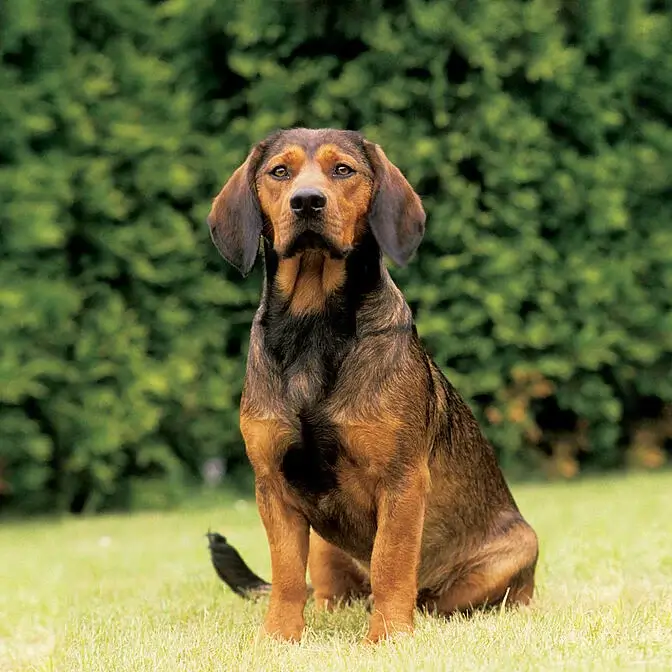
The Alpine Dachsbracke is a sturdy, short-legged scent hound originating from Austria. Originally bred for tracking wounded deer, boar, hare, and fox in rugged Alpine terrain, it is an agile and tenacious working dog. Intelligent and friendly with a fearless personality. A robust, weather resistant working dog used by the mountain huntsman, the Alpine Dachsbracke is used as a tracking hound for wounded deer and as scenthound for hare and fox. Although short, the more hardy the dog, the more tracking is in his blood. Not for nothing, it is mainly kept by hunters. But as it is also friendly with other dogs and children, it can easily find its place in the family. Just like the wounded game in the depths of the forest. The Alpine Dachsbracke is a robust, hardy and action-oriented tracking hound, most often used by hunters to track wounded wild boar or deer, but also capable of tracking foxes and hares. He is patient with other dogs and pets, but hunting is in his blood. So he is a working dog first and a pet second.
Given their acumen for hunting, the Dachsbracke have a strong prey drive and love to chase smaller dogs, other household pets, or backyard visitors. They are quite smart, and a bit obstinate if they want to be. But the breed is generally sociable, good-natured, and friendly. They enjoy hanging out with other dogs, and can adapt to apartment life if they are given sufficient exercise. But if they feel bored or confined, they may deconstruct shoes or other possessions as a form of entertainment. The Alpine Dachsbracke is a breed that not only has an impressive appearance but also possesses an interesting and unique character. They are loyal companions and devoted friends to their owners. Let’s take a look at the main traits of these remarkable dogs. Alpine hounds are known for their intelligence and excellent memory. They learn quickly and respond well to commands, making training relatively easy for them. They are very loyal to their owners and always ready to show their love and devotion.
The Alpine hound is a breed with high energy levels. They are very active and enjoy physical exercise. They need plenty of physical activity, so long walks or sports activities are ideal for them. Dogs of this breed have friendly and open personalities. They possess strong social skills and get along well with other dogs and animals. They also communicate well with children, making them excellent family pets. The Alpine hound has strong hunting instincts, which their ancestors used to pursue game. They have an excellent sense of smell and can work in the field with great enthusiasm. However, despite this, they can also be great companion dogs. Hounds are known for their calm and balanced nature.
They are not prone to aggression or unpredictable behavior. They exhibit good self-control and can behave well in various situations.The character of the Alpine Dachsbracke makes them a wonderful choice for active families or those who want a loving and devoted pet. They easily adapt to different living conditions and excel in their role as faithful companions and partners. All these factors make the Alpine Dachsbracke a breed that brings joy and happiness to its owners. The Alpine Dachshund is used primarily as a tracking hunting dog. Its task is to search for game (deer, rabbit, fox, wild boar) that has been shot. It can also be trained to work on water or for retrieving. It is a very brave, determined and fearless dog. Nothing will deter him from his goal. He is an independent and strong-willed dog. However, at home he is patient, calm and lovable, and typically gets on well with other pets and children. It is mainly recommended for hunters, as it is a very hard-working dog, requiring a lot of exercise and is very robust. When he has nothing to do, he can get bored and it is important that he gets plenty of exercise and uses his excellent sense of smell. When he has nothing to do, he likes to rest, but when there is work to be done and he smells it, he will immediately start working. For him, hunting and tracking is recreation, and playing at home is less exciting and distracting. Because he has a strong hunting instinct, he must be kept on a lead at all times when being walked.
Dogica® collects only technical cookies. No any personal or private information being collected, saved or shared here. 3rd Party cookies could be collected by various installed widgets.
The information contained in or provided through DOGICA® site is intended for general consumer understanding and education only and is not intended to be and is not a substitute for professional advice.
Use of this site and any information contained on or provided through this site is provided on an "as is" basis without any representations, warranties or pay.













WORLD OF DOG & PUPPY 🐶