19 Australian Dog Breeds Rare Australian Dog Breeds Popular Australian Dog Breeds Dog Breeds from Australia What Makes Australian Dog Breeds Special? What dog breeds are native to Australia? Which dog breed is Australian? Indigenous Australian Dog Breeds Wild Australian Dog Breeds Australian Native Dogs
The exploration of unique dog breeds often leads us to Australia, a country whose vast, varied landscapes have forged some of the planet’s most resilient and specialized canines. Australia has developed several incredible working dogs tailored for harsh conditions, characterized by high intelligence, stamina, and versatility.
Many of these breeds originated in the rugged outback, where their development was guided by a demanding climate and the need for resilient companions. Australian dog breeds have a fascinating history. Their origins date to the outback when settlers first called the country home. Many have dazzling eyes, others have the silkiest coats ever, and all of them make wonderful companions.
Although many of them lead lives of leisure today, the majority of Australian dog breeds were developed with careers in mind - most on this list were hardworking dogs that herded and protected livestock, assisted in hunting wild game or served as relentless ratters and mousers. When the first British penal colony was established in Australia in 1788, the settlers brought with them herds of sheep and cattle, and within a few decades, livestock numbered in the millions. And thus, the first domestic dogs in Australia were various herding breeds brought by British settlers.
Over time, cattle and sheep herders bred dogs selectively to develop the best herding and droving traits - in some cases, breeding them with wild dingoes, Australia’s only indigenous canine. Smaller terrier breeds were also used as workers, as they'd protect their homes from rodents and the many poisonous snakes native to Australia. Most Australian dog breeds still harbor their good work ethic and are happiest when they have a job to do, so get ready to provide some physical and mental stimulation.
What Makes Australian
Dog Breeds Special?
Sporty, agile and, let's face it, beautiful to watch, Australian dog breeds stand out from the crowd. There is something distinctive about dog breeds in Australia, mainly because of how these pups were selected. Even though dog breeding in Australia is more recent than in other parts of the world (like the UK and Europe), the first colonial settlers quickly started developing dogs adapted to our unique land. That is why many Australian dogs share these characteristics:
Hard-working
Dogs in Australia were not thought of as companions for the first couple of centuries. In the beginning, people that migrated here needed dogs to work on the land in different capacities. Because of it, all native Australian dogs were initially developed as working dogs to help with cattle, hunting, and guarding.
Tough
Australian weather can be extreme, so dogs developed here were bred to handle tough conditions. Aussie pups do better than other breeds in extreme heat and cold, all while keeping activity levels high and excelling at their job.
Medium to large
Of course, this isn’t a hard-and-fast rule, but most Australian dog breeds are not petite. Since these dogs were created to work, their size depended on their job. Herding cattle and helping to hunt is easier with medium to large dogs, so that’s why most of our breeds are that size.
Very active
These dogs were initially working aids, so it’s no wonder they have incredibly high energy levels. This is great for life on farms, but it might prove difficult if you plan on getting an Australian breed as a pet. Get ready for tons of walking, running, and playing!
Smart and independent
When the first British and Irish settlers starting developing farms in Australia, there was significantly more land than people or dogs. That is why Australian dog breeds needed to be smart and work independently: most of the time their handler was not near as they handled cattle! As a result, Australian breeds are quick to make decisions and generally trust their own judgement better. If you want to adopt one of these as a pet, you will have to work around this tendency!
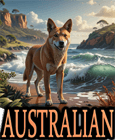
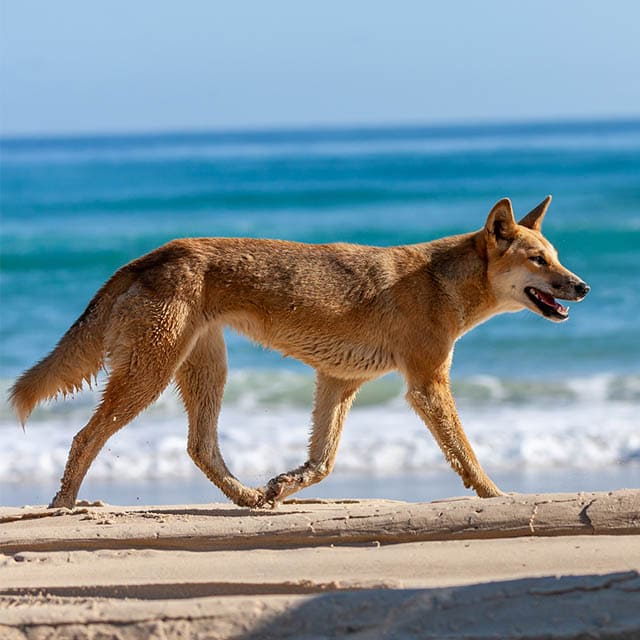
The Dingo (Canis dingo) is Australia’s native wild dog, an ancient, medium-sized, and highly intelligent carnivore introduced roughly 3,500-4,000 years ago. The dingo (Canis lupus dingo) is an ancient free-roaming wild dog native to Australia and parts of Southeast Asia, classified taxonomically as a distinct lineage of canine rather than a standard domestic dog breed. Known for being lean and agile, dingoes have erect ears, bushy tails, and coats ranging from sandy-yellow to red-ginger or black-and-tan, typically with white feet. They are apex predators that rarely bark, preferring to howl. Though not commonly kept as pets, Dingoes can make loving, loyal companions if brought into the home at a very young age and consistently trained. Dingoes get attached to their environments and if kept as pets to their people at a young age. Once they have bonded, they do not like to be alone, and it's difficult to relocate or rehome them as adults. These wild dogs rarely bark, but they do howl (and very melodically, at that). They have a curious nature and are generally not aggressive toward strangers. However, they typically do not accept people that are outside their "pack."
Throughout their first year of life, Dingoes need persistent socialization to get comfortable with different people and situations. The Dingo is first and foremost a wild animal. Some have been kept as companions although this is highly controversial. The legality of owning a Dingo as a pet varies from state to state within Australia. Previously the Australian National Kennel Council had a written breed standard for the Dingo. However, it appears to have been removed from their classifications. This is the primal form of canine family in Australia, similar to the wolves, coyotes, or jackals found in North America. In other words: this is not a pet you have in your family, it is an actual wild dog. The dingo's habitat covers most of Australia, but they are absent in the southeast and Tasmania. As Australia's largest terrestrial predator, dingoes prey on mammals up to the size of the large red kangaroo, in addition to birds, reptiles, fish, crabs, frogs, insects, and seeds. The Dingo is a breed that has never been fully domesticated. It is almost never kept as a companion.
This is partly due to its remote isolation, but also through lack of human intervention. Untrained Dingoes are unsuitable child companions and cannot easily be obedience trained. Obedience training is best accomplished by kindness, patience, and a firm but gentle hand. Dingoes can be kept as pets if they are taken from the litter before 6 weeks of age. At this young age they can be tamed, but once over 10 weeks they should not be taken out of the wild. If properly trained and cared for the Dingo can make a very nice, unique pet. They are said to be able to perform agility and general obedience. The Dingo has some unusual traits - a great tree climber and at times a bit aloof, but these are interesting traits and are in the same category as the Dingo’s nearest cousins, the New Guinea Singing Dog and the Finnish Spitz, but displaying the same characteristics. They do not have the same degree of tooth crowding and shortening of the jaw that distinguish dog breeds from their ancestor, the Indian Plains Wolf. Also like the wolf, the female Dingo has only one breeding cycle each year.
The Australian Cattle Dog is a smart, tough, and high-energy working dog bred in the 19th century to herd livestock across vast, rough Australian terrains. The Australian Cattle Dog (ACD) - also known as the Blue Heeler, Red Heeler, or Queensland Heeler - is a tough, highly intelligent, and tireless working dog. When you think of a dog that's gathering up sheep, it is likely this pup you are imagining. You can consider this breed the go-to choice for herding. The Australian cattle dog is resilient to extreme conditions, and made vital contributions to the growth of the continent's beef industry. Interestingly, this breed is born with a white coat that turns blue-gray or red later on and varies with mottling or speckled patterns. The Australian cattle dog loves keeping up with their active human family members. Even better if you have a huge backyard or a farm for them to roam! Because of their high stamina and intelligence, they will become bored easily and get into mischief if they are not exercised and stimulated properly.
It is recommended that owners participate with their dog in some work, sport, or regular exercise to keep them mentally and physically fit. The Australian Cattle Dog is a loyal, brave, hardworking, herding breed. One of the most intelligent breeds, it is not the kind of dog to lie around the living room all day or live happily in the backyard with only a 15-minute walk. It needs much more exercise than that and something to occupy its mind daily or it will become bored, leading to serious behavior problems. It needs action in its life and will do best with a job. This alert dog is excellent in the obedience ring and will excel in agility and herding trials. Can be obedience trained to a very high level. Australian Cattle Dogs have a strong sense of adventure and they think they are invincible. Be prepared for your dog to incur a lot of injuries. Fortunately, he is truly tough, but living with him and wondering how he will hurt himself next can be nervewracking. Get used to it.
To control and direct wild cattle in the harsh Australian brush takes a lot of strength and perseverance, and the Cattle Dogs of today still possess the attitude and stamina that ranchers prize them for. In the home, this distinctive personality can be both a blessing and a drawback. The Cattle Dog requires lots of daily exercise and mental stimulation to keep him busy. He was bred to herd cattle from dusk til dawn through wilderness, making him a great partner for jogging, biking or kayaking. He is very smart, and will easily figure out tasks such as opening cupboards or dumping the trash if left to his own devices. This intelligence and problem solving makes him a great candidate for dog sports such as agility, obedience, tracking and, of course, herding. He enjoys learning and working with the people he loves, and is very eager to please.
The Australian Kelpie is an intelligent, tireless, and highly energetic herding dog developed in the 19th century to manage livestock in the rugged Australian outback. The Australian Kelpie, or simply Kelpie, is an Australian sheepdog capable of mustering and droving with little or no guidance. It is a medium-sized dog and comes in a variety of colours. The Kelpie has been exported throughout the world and is used to muster livestock, primarily sheep, cattle and goats A purebred black Australian Kelpie is a specific color variation within the breed, which typically features a solid black coat without tan markings and is generally considered the standard color for a "pure" Kelpie, as opposed to other variations like black and tan. While other colors like red, chocolate, fawn, blue, and cream also exist, a solid black dog without tan is considered a pure and traditional color for the breed, according to the Casterton Kelpie Association. Does your idea of a great weekend include hiking, going for long runs, and exploring the great outdoors? If so, the Australian kelpie might be your new best bud.
These active, energetic, and alert doggos are not only capable of physical work, but they thrive from it. He says the breed is thought to be the mix of dogs from Scotland that have Collie-like physical attributes. Because of their high stamina and intelligence, it is recommended for Australian kelpie owners to provide them with routine long walks or fast jogs every day to keep them physically and mentally active. The Australian kelpie has a friendly, affectionate personality that makes them a suitable family dog. The breed can be loving and even cuddly with children and typically gets along well with other pets. However, they might need to be discouraged from excessive herding of family members. They are highly trainable, eager to please, and loyal. The Australian kelpie can be the ultimate companion for those who understand the breed’s special needs. A compact, robust, enthusiastic and tireless working dog. Excellent at herding, the Australian Kelpie is the most popular and successful working dog. Kelpies are devoted one-man dogs but far too work-oriented and energetic for a couch dog or apartment existence. Their easy trainability and keenness on the job make them a fundamental component of the Australian workforce.
They are ready to respond immediately to any signal given by their masters, even from a great distance. They are good with children when they are raised with them from puppyhood or properly socialized. Kelpies will try to herd other dogs, pets and animals whether they want to be herded or not. This workaholic will work until it drops. They are independent and in business for themselves rather than for pleasing a handler. As far as temperament goes, the cheeky Australian Kelpie has oodles of personality and a wicked sense of humour. Sounds very Australian indeed! They are versatile working dogs, highly intelligent, alert and capable of learning a great deal, but they’re also independent thinkers. The Kelpie is a breed with an exceptionally high IQ and may get into mischief if left to their own devices. They require plenty of exercise, and may become bored if cooped up for long periods of time. Keep a Kelpie occupied and engaged, and they will thrive. Their greatest joy is tender loving care, whilst their greatest disappointment is inactivity and lack of attention. Kelpies are "velcro" dogs, so wherever their humans are, that is where they are… whether it’s going for walks or on the lounge watching television.
The Australian Stumpy Tail Cattle Dog is a, high-energy, and intelligent, working breed, standing 43–50cm tall and weighing 15–20kg, known for its natural bobtail, speckled red or blue coat, and intense loyalty. Originating in Australia for herding, they require significant daily exercise and mental stimulation. They are generally healthy (12-15 year lifespan) but need early training to manage their alert, sometimes reserved, and dominant nature. The Stumpy may be the epitome of a working dog, but they also require some work from their pet parents. Even the breed club is quick to note that the dogs aren’t the right fit for every family. Stumpy families will need to provide their dog with a job, though it does not have to be in an official capacity. Australian Stumpy Tail Cattle Dogs have chart-topping smarts and stamina, so daily physical exercise and mental stimulation is an absolute must. While Stumpies are not always outwardly affectionate, they are loyal, obedient companions.
The breed club describes them as "Velcro dogs" because they prefer to be close to their people. Strangers, however, are another story. While every Stumpy is different, most need time to warm up to people they do not know. Socializing your Stumpy puppy can help make them more comfortable around new people. The Australian Stumpy Tail Cattle Dog Society of the United States notes that the Stumpy is a distinct breed and not an Australian Cattle Dog with a docked tail. Developed in the 1830s and 1840s in Queensland and New South Wales, they are considered one of Australia's earliest native dog breeds. Early settlers crossed imported British herding dogs (like the Smithfield) with the native Australian Dingo to create a tough dog capable of handling stubborn cattle in extreme heat and rough outback conditions. If you are looking for a fiercely loyal and independent mate, the Stumpy might be for you. They are not lapdogs, and they won't follow you around for cuddles, but they will guard your home, stick by your side on a hike, and thrive when given a job to do. They can be aloof with strangers but bond closely with their family. These dogs are sharp, focused, and built for work. With the right training, they will pick things up fast, but they are not pushovers. They do best with confident owners who offer structure, routine, and mental stimulation.
These dogs are working machines. If they do not get enough activity, they will find their own jobs, like digging holes, herding your kids, or chewing the fence. Minimum 60-90 minutes of exercise per day. Love running, hiking, herding games, and agility. Thrive with structured activities and problem-solving tasks. Not suited to sedentary households. These dogs are built for wide open spaces. They are best suited to homes with large yards or rural properties where they can run and explore freely. They are not a great match for apartments or indoor-only lifestyles. This is not your average companion dog. They are loyal to their family but may not be naturally affectionate. With proper training and socialisation, they can live peacefully with other pets, but they will always prefer a job over downtime.
Australian Terriers are energetic and loving small-sized balls of fun. They are friendly, intelligent, tough and adaptable little dogs who love to please their owners and make great family pets. Like most terrier breeds, the Aussie Terrier tends to be bossy and will nudge or bark at you until they get what they want. Courageous, protective and alert, they are natural watch dogs. Among the smallest of the working terriers, Australian Terriers were bred out of a need for a sturdy and courageous working dog, adaptable to Australia’s harsh climate. Aussies were bred to be fearless, all-purpose exterminators for small mammals and snakes. The history of the Australian terrier dates to the 19th century when British settlers brought several breeds to the land. The Australian terrier results from interbreeding the Dandie Dinmont terrier, Skye terrier, and Manchester terrier.
Aside from controlling and killing rats and snakes, their roles included watchdog, shepherd and companion dog. Australian Terrier dogs are bold pups with high energy levels.Australian Terriers are feisty, energetic little dogs with upbeat and affectionate personalities. Their short coats are waterproof and do not shed much. They have either a blue-and-tan, sandy, or all-red color. Australian Terriers make great family pets. Initially bred for guarding livestock, they have an alert temperament and loyal disposition. Their medium energy level keeps them active, but they quickly adapt to their home's energy. Australian Terriers have an average lifespan of twelve to fifteen years. Affectionate, small, sturdy, and self-confident Australian terriers are also known for a few physically defining attributes. As Aramendi explains, these dogs have long torsos, distinctive coats around the neck and forequarters, and a topknot of soft, silky hair that contrasts in texture with an otherwise rough coat. Their spunky, independent, and smart personality does not disappoint either. Australian Terriers are known for their spirited, confident, and affectionate nature. Despite their small size, they have a bold and fearless personality, often thinking of themselves as much larger than they are.
These little dogs are incredibly loyal and bond closely with their families, making them excellent companions. Australian Terriers are intelligent and eager to please, but they can also be a bit stubborn and independent, so early training and socialisation are important. They are generally good with children and other pets, though their strong prey drive means they may be inclined to chase smaller animals. Small dog, big personality. That pretty much sums up the Aussie Terrier. These dogs are full of life, curiosity, and courage. They love human company, are excellent with children, and are known for forming close bonds with their people. They’re alert watchdogs without being yappy and are usually friendly with guests once properly introduced. If you are after a dog that brings energy, loyalty, and fun to your home, the Aussie Terrier delivers. Australian Terriers are clever and eager to please, which makes training enjoyable. They are confident dogs, so early guidance and clear boundaries are essential. These spirited little dogs are surprisingly active. They may not need hours of exercise, but they do need regular movement and mental stimulation. 30–45 minutes of daily activity.
The Australian Staghound - historically known as the Kangaroo Dog or "roo dog", is a powerful working and hunting type rather than a standardized, kennel-club-recognized breed. This fun-lovin' pup is full of energy and needs lots of space (like a backyard) to run it all out. Because of this, you likely should not have one if you are in a cramped city apartment. They are beautiful and strong dogs, perfect for guarding and herding cattle because of their speed and great vision. They, however, are not recommended for families with young children. The Staghound is very calm around the home. It craves the attention of humans and is very affectionate with its owner. Although this dog is primarily used for coursing quarry, the American Staghound makes a wonderful companion. In recent years there appears to be more interest in the Staghound as a pet. It is good with children, but its size can pose a problem with the young. Most Staghounds are wonderful watchdogs due to their excellent vision, but they are not guardians or protective. Staghounds are very fast but are not hyperactive.
To some people the Staghound even appears to be a bit lazy around the home once mature. The coursing instinct in the American Staghound is unsurpassed, so anything that runs may be considered quarry. In the field this dog is courageous, tenacious and very determined to course anything from a rabbit to a deer. The Staghound is pack oriented so it may accept other dogs he knows, but pets such as cats are a challenge that may not ever be overcome, however other Staghounds live happily with cats. Staghounds throughout history have been bred for one purpose, TO HUNT! The Australian Staghound is a calm, gentle, and deeply loyal companion indoors, but possesses an intense, high-speed hunting drive outside. Mature Australian Staghounds are remarkably quiet, relaxed, and sometimes even lazy inside the house, often preferring to lounge or sleep near their owners. They form strong bonds with their human families and crave human attention, displaying fierce familial loyalty. Despite being bred to hunt large game like boars and kangaroos, they are generally too friendly toward people to make effective guard dogs, though their size and alertness can make them good watchdogs. As running hounds (historically mixes of Greyhounds and Deerhounds), they retain a powerful instinct to chase moving objects and wildlife.
Unfenced areas or off-leash walking require extreme caution. When properly socialized, they get along well with kids, though their large size means they can accidentally knock over smaller children during play. American Staghounds are exceptional, highly capable hunting dogs bred specifically for speed, endurance, and coursing fast or dangerous game. Staghounds are very agile and energetic when out on a hunt but are typically not hyperactive as adults. Some owners even suggest that their Staghound is a bit lazy around the house. This type of dog requires daily exercise to be mentally and physically stimulated. Its active hunting genetics also gives it a predisposition to love running, and it will be happiest living in a yarded house where it can run freely. The Staghound is a fantastic companion for a person who runs, hikes or rides a bike often - it will have no trouble keeping up. Just be sure not to over-exercise the dog when it is under 12 months old, as this can harm its developing bones.
The Tenterfield Terrier is a small, energetic, and agile working dog originating from Australia and named after the town of Tenterfield in New South Wales. This small pup is believed to mix the miniature fox terrier and other small terrier breeds. With a smooth, tricolor coat that's a combination of white, black, and tan, these pups are loving, loyal, and full of energy. Originally from the South of England, the Tenterfield terrier was brought over to Australia in the 19th century by European Settlers. They were initially bred to chase rats and other small animals away from homes and properties. The Tenterfield Terrier is a strong, active, agile working terrier of great versatility and of pleasing proportion. Bright, happy and confident, with an eagerness to learn, showing great loyalty to its owner. Fearless, lively, clever, independent, bold, keen, and very intelligent with an alert expression. Like all terriers, it takes loving patience to train them.
They respond well to a positive reinforcement method of training; yelling and hitting will not get a good response from this loving breed. They are friendly and love to cuddle in your lap. They are spunky little dogs with a nature that is both curious and courageous and while they are active and require a great deal of exercise, they are often affectionate and calmer in the home. These small canines are active and bright with a curious and confident nature. They are always ready to learn and do new things and although they tend to become stubborn and recalcitrant with harsh training methods, they are very responsive to training that is based on positive reinforcement. They tend to be loyal and affectionate towards their families and while interactions between canines and the younger set should always be properly supervised, Tenterfield Terriers are known to be particularly good Terriers for children.
They may require a great deal of socialization to be amicable with other dogs and they have a strong prey drive which may result in the chasing of cats and other smaller animals. This breed also tends to very alert, making them suitable watchdogs, and with enough exercise do well in smaller spaces, but they are also prone to barking and separation anxiety, making them a less appropriate choice for people who are out of the home for extended periods of time. This is an active little canine that requires at least an hour to an hour and a half of vigorous activity each day in order to be at their happiest and healthiest. While they are willing and eager to join you on walks, jogs, swims, hikes, and even bike rides, they are also well-suited to a number of other canine sports, including agility training, lure coursing, and earthdog trials. Like other Terriers, some Tenterfield Terriers have been known to be difficult to house train, and while they are courageous they can also be easy to startle, often leading to unexplained cringing.
Miniature Fox Terriers are courageous and energetic small-sized dogs that are popular with Australian families and on farms where they work as vermin catchers. They are affectionate and confident, animated, entertaining and playful. Both a lapdog and a watchdog, they love to be pampered, love an adventure and roughhousing, and love to bark at strangers. The Miniature Fox Terrier’s ancestors, most likely small Smooth Fox Terriers and Manchester Terriers, were brought to Australia by early settlers from England. Mini Foxies were first bred in Australia some time in the mid to late 19th century and have subsequently been bred here for generations. The breed developed along similar lines as the American Toy Fox Terrier. Its breeders were seeking a light, fast dog that would retain the characteristics of the Fox Terrier, while more suited to hunting smaller pests such as rabbits and rodents.
Smaller puppies from early litters were further bred and later crossed with other small breeds such as English Toy Terrier and Italian Greyhound. If you own one of these sweet guys or gals, you will need to stay active! They require a lot of exercise to stay healthy, both physically and emotionally. Loyal, inquisitive, fearless, active and adaptable, Miniature Fox Terriers have an almost dual personality: at the first sign of suspicion, danger or alarm, the demure, pampered lapdog turns instantly into a fearless watchdog, tenacious vermin killer and intrepid hunter. They are good with children who are old enough to distinguish between a dog and a plush toy, and generally get along with other pets. However, like all terriers, the Mini Fox Terrier cannot distinguish between pet rodents or pet reptiles and vermin, and should not be left alone with such animals. Miniature Fox Terriers are known for their affectionate, playful demeanor. They form strong bonds with their families and love to be involved in daily activities. Early socialization is important to help them interact well with other pets and people.
Though intelligent and eager to learn, they can also be independent and occasionally stubborn. Positive reinforcement, patience, and consistency are essential in their training journey. Intelligence is a key trait of Mini Foxies. These dogs are quick learners and enjoy mental stimulation through training and interactive play. Their alertness and sharp instincts make them responsive to commands and adaptable to different environments. Their intelligence, couple with their natural curiosity, can lead to a mischievous streak, but with proper training and socialisation, they become well-behaved and obedient companions. Miniature Fox Terriers are known for forming strong bonds with their human family. They thrive on attention and affection, and their loyalty is unwavering. This affectionate nature extends to their interactions with children, making them great family pets. Their sociable temperature also means they usually get along well with other dogs and pets when introduced properly. Despite their high energy levels, they can also be content with lounging beside their owners, enjoying moments of calm companionship.
The Australian Koolie is a high-energy, intelligent, medium-sized herding dog from Australia, known for its strong work ethic and stamina. These dogs are loyal and devoted but are not recommended for novice owners due to their need for significant exercise and mental stimulation. They have a varied coat that can be merle or solid, and they are a healthy breed, although merle-colored dogs with two merle genes have a higher risk of blindness or deafness. The Koolie is first and foremost a working breed, bred for stamina, endurance and to be biddable. Like all working breeds the Koolies natural trait is to herd anything that moves, this includes sheep, cattle, goats, horses, buffalo and fowl. Koolies are known to naturally back - jump on the back of sheep as well as cattle. Today we see the traditional working duties of the Koolie enlarged to include service, sports and human companionship, Koolies are not generally dog-aggressive and tolerate other species when introduced at a young age or handled by experienced owners, Koolies are devoted to the young, but there are always exceptions to the rule, never leave any child unattended with the dog.
Australian Koolies have been worked on stock in Australia since the early 1800s. In order to keep up with the demands of the grazier and stockman the Koolie needed to have stamina for 14-hour days, ability to move from one type of job to another, be it driving cattle on the long mile, backing sheep in the race, or loading 10,000 head on a truck, the Koolie had to do it all. Its adaptability allowed it to be steady and calm around ewe and lamb yet still know when to use force, with bark or bite on scrub and gully bulls and steers, weathers or rams. The Koolie needed to be agile and quick, able to jump, dodge, race, hold, block and drive and do it well, and the Koolie has met these needs and continues to meet the need of their handlers. Not all Koolie pups are born with the strong natural traits of a worker and these pups are perfect for Service such as human assistance, SAR, Alert and bomb detection dogs as well as Sports like agility, endurance, utility and tracking, non-stock working Koolies still retain the stamina, ability and agility, many Koolies have been late bloomers, displaying their natural instincts as late as two years old.
This breed must have mental stimulation, it will never do well in a small backyard with nothing to do. This breed tends to be calmer than some other herding dogs. Generally, the Koolie is not prone to hyperactivity or nervousness. Upon command, it will stop its work and rest. This hardworking, obedient Aussie forms a strong bond with its owner. However, it may be wary of strangers – aggressive behaviour is not in its nature. Some Koolies exhibit protective instincts and display some territorial behaviour, making them suitable as watchdogs. Australian Koolies are patient and dedicated. These dogs are equally committed to their work and their owners, offering stamina and skill along with devotion and loyalty. Often mistaken as being shy or timid, Koolies can seem reserved around strangers. The breed is not aggressive but can demonstrate dominance. Their natural herding instincts can make Koolies eager to control animals and children. These bundles of energy do best in active homes where owners understand their need for regular, high-intensity physical activity.
Bull Arab dog breed originally created by crossing English Bull Terrier (50%), German Shorthaired Pointer (25%) and Greyhound (25%). Bull Arabs are intelligent, confident and athletic dogs with a strong working heritage. They often form close bonds with their families and can be calm and affectionate at home when their physical and mental needs are met. However, they were specifically developed to track and pursue large game, so many retain considerable independence, persistence and prey drive. Early socialisation is particularly important. Positive exposure to different people, animals, environments and everyday experiences can help a Bull Arab develop into a confident, manageable adult. Because individual temperament and breeding lines vary considerably, prospective owners should assess the individual dog rather than assume all Bull Arabs will behave the same way. Without enough exercise, training and enrichment, some may become restless, vocal, destructive or difficult to manage. Their size and strength mean secure fencing, reliable lead manners and good impulse control are important. Though this breed is relatively uncommon, they are still beloved by their owners.
The Bull Arab was initially bred to hunt feral pigs in Australia. And it's believed they are the result of putting many strong, sturdy breeds together, like greyhounds, mastiffs, Great Danes and bull terriers. They are strong medium-size dogs with a calm temperament and are also highly intelligent. Bull Arabs are high-energy working dogs that need substantial daily exercise and mental stimulation. Most healthy adults benefit from around one to two hours of activity each day, including long walks, running or hiking in safe areas, active play and mentally challenging activities such as scent work, tracking and obedience training. They are intelligent and capable learners but can also be independent, particularly when distracted by scents or moving animals. Reward-based training using food, play and praise generally works best. Short, varied sessions can help maintain their attention, while recall, lead manners, impulse control and "leave it" are especially useful skills for a powerful dog with strong prey drive.
Off-lead exercise should generally take place in securely enclosed areas unless the individual dog has highly reliable recall and the environment is appropriate. Early, ongoing socialisation is also important. Strong, active and high energy, the Bull Arab requires a confident owner and specific training, especially to curb his hunting instincts if you are not using him as a hunting dog. Without adequate daily exercise, the Bull Arab can suffer from pent-up energy, which can lead to undesired behavioural issues such as chewing, excessive barking, and destruction of property. As such, the Bull Arab is not suited for apartment living. They need room to run and play, so the more space they have, the better. Training is a must with this breed. Ideally, a Bull Arab will learn initial socialization from his mother and littermates. Once weaned, the dog requires an owner who will dedicate the time necessary to train this confident, strong dog and manage his breeding instincts; without proper training, the Bull Arab’s aggressive hunting instincts can make him a danger to other pets, livestock, and small animals around his home.
The right owner for a Bull Arab will not let the dog dominate them, and will exhibit patience, leadership, and confidence when training him. Respect and trust must be earned from a Bull Arab; therefore, a firm owner with experience or a professional dog trainer is often the best type of owner for this breed. Understand that in bringing a Bull Arab into your home, you need to dedicate yourself to lifelong obedience training for the dog.
The Silky Terrier is a small, spunky toy terrier with a signature long, glossy blue and tan coat and a fearless "big dog" personality. Silky Terrier dogs are loyal companions to their family members and are full of affection and energy. This breed needs at least one hour of exercise daily to be happy, such as a long walk or maneuvering through an agility course. Silky Terriers are loving to their family members, and they are good around other pets and children if your pup is socialized properly at a young age. Enrolling Silky puppies in socialization classes before 16 weeks of age can help them become comfortable around children, other dogs, and new people. It can also minimize their desire to bark if they meet a new person or dog as they grow older. Silky Terriers have a reputation for barking to alert their family or to seek attention. Working to stop excessive barking is an important part of training your Silky Terrier puppy.
Though they are small and silky dogs, this breed has a typical terrier tendency to chase small animals - such as neighborhood squirrels or rabbits - thanks to the prey drive inherited from their parent breeds. This means your Silky always needs to be on a leash or inside a fenced area when they are outside. This loving, little terrier is very intelligent, courageous and alert. Affectionate, spunky, cheerful and sociable, it likes to be close to its master. It is full of energy and needs a good amount of exercise in order to be calm. Curious and keen, it is an enthusiastic digger. Active, smart and quick. Despite its size, this docile dog makes a good watchdog. This is a sturdy breed that adjusts well to traveling. This dog is a fantastic addition to an active family with older children, but may not be as appropriate for younger children or apartments as they can become excessively vocal and may become anxious and snappy around fast-moving and intrusive toddlers. Even with their abundance of hair, due to their low shed rate and the human-like structure of the hair, this dog is generally considered to be hypoallergenic.
This breed is active and energetic, preferring to spend their time with their families, playing, walking, or just sleeping on someone’s lap after wearing themselves out. If left alone for long periods of time they can become anxious and destructive and have been known to bark themselves hoarse. Although the Silky Terrier is small, they may not be appropriate for apartment dwellers due to their active nature and their tendency to bark frequently. This breed is wary of strangers and is known to bark at almost any provocation, and it is extremely difficult to train them out of this behavior. Their terrier nature also means that they still retain the urge to chase and the ability to dig, so they should never be left in the yard unsupervised, and any fences should be secured. Although Silkies do well with older children, they are known to be a little snappy with the younger ones, and their smaller size puts them at risk for injury due to clumsy or rough treatment.
Australian Kangaroo dog known for its energetic temperament and breeding focuses on the working ability of dogs. The first Australian dog breed ever created, was the Australian Kangaroo dog, today known as a Staghound. Other names these dogs go by is roo dog. The speed and fantastic eyesight of this sighthound are awesome. These "roo" dogs are found in rural communities and are suited to the warmer parts of the country. Scenting abilities are the reason this dog is well known. Their keen senses and quick reflexes make them exceptional at tracking and hunting, often assisting farmers in managing wildlife populations. The Australian Kangaroo Dog is a specialized Australian sighthound type bred since the early 19th century to outrun, catch, and hold kangaroos. Hunting native kangaroos with sighthounds is now illegal in Australia, but these dogs are still occasionally bred for rural pest control (like feral pigs) or kept on large regional stations. At an estimated speed of 40 kph, the faster dog would position itself close behind and to the side of the kangaroo and grab the base of its tail on the upward leap. In this way, the kangaroo would fall head-long into the ground. The second dog would then leap upon the kangaroo from behind and break its neck. Because so many brave dogs were maimed or killed by the kangaroos, those dogs which survived were bred with. Consequently, the Kangaroo Dog was developed with the instinct vital for its survival and that of our early settler. The Kangaroo dog is not completely extinct, though it is rare and no longer common.
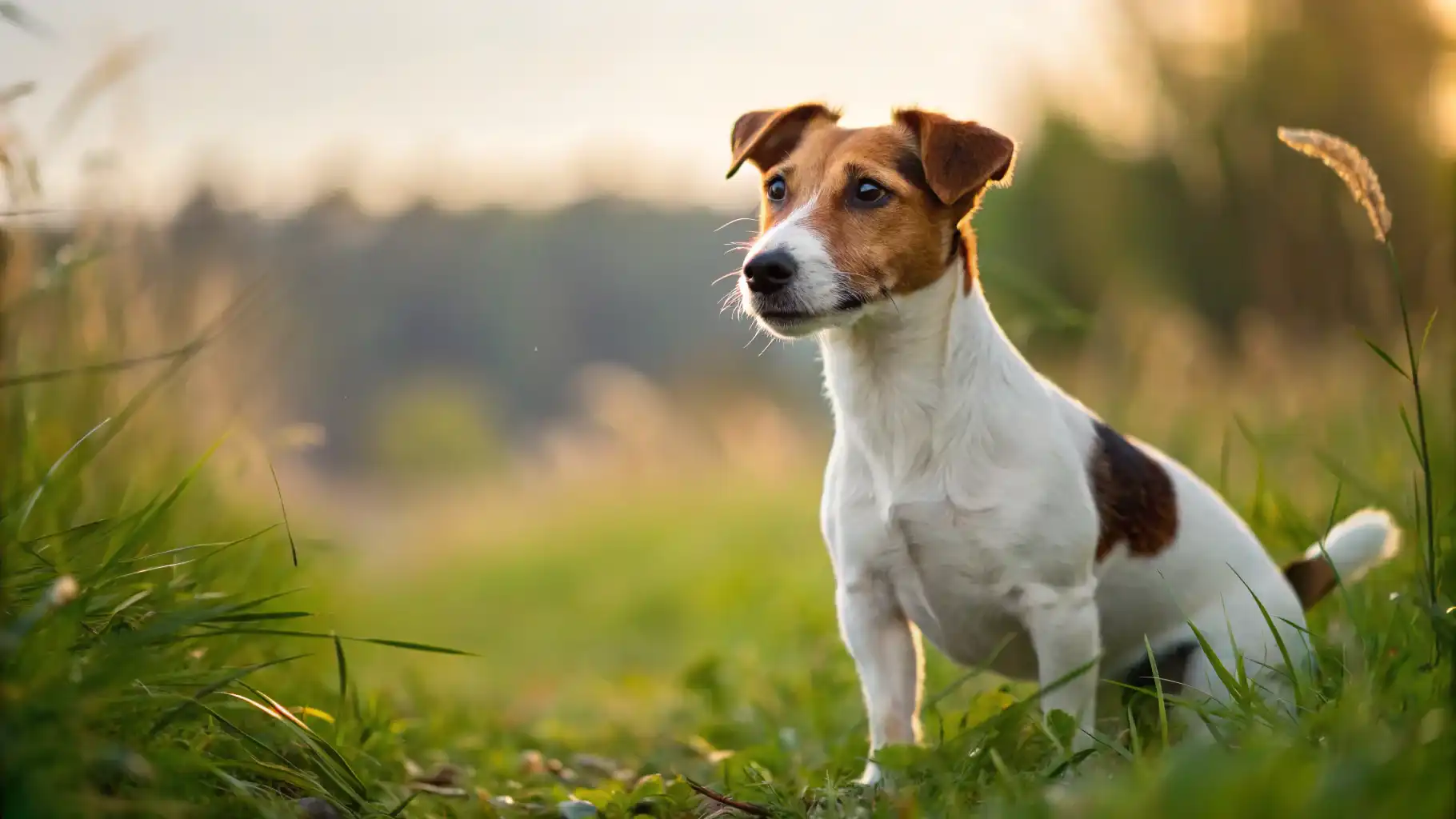
Jack Russel terriers are considered dog breeds of shared origin. This dog breed originated in the United Kingdom but developed mostly in Australia. Jack Russels have strong personalities and are both courageous and energetic. Thanks to its well-developed senses, intelligence and predisposition to work, Jack Russel terriers usually respond very well to positive training. They tend to perform very well in tracking activities, such as truffle searches. They are excellent companion dogs, very loyal to their tutors and have a very balanced temperament. Like with all dogs, however, they need to be socialized from when they are puppies. Given their active nature, they require regular exercise and thrive in environments where they are challenged both physically and mentally. The Jack Russell Terrier, together with the Parson Russell Terrier and Russell Terrier, is one of the three breeds that descended from the Reverend John Russell fox terrier breeding program in 1819.
Though sharing a similar temperament, coat types, and general appearance with its relatives, the Jack Russell Terrier does differ in size and shape. In general, the Jack Russell Terrier is shorter in height than a Parson Russell Terrier, has a rectangular body and shorter legs, but is taller than a Russell Terrier. The Jack Russell Terrier is recognized by the Fédération Cynologique Internationale (FCI), the Kennel Club (KC), and the Jack Russell Terrier Club of America (JRTCA), but not by the American Kennel Club (AKC) after a change in recognition for the Parson Russell Terrier in 2003, following a breed standard revision in 2004. Jack Russell Terriers are highly energetic and require significant daily exercise and mental stimulation to stay healthy and happy. They have a strong prey drive, which means they might not be suitable for households with smaller pets. This breed is intelligent and trainable but requires consistent training with positive reinforcement to manage their willful nature. The Jack Russell Terrier is a cheerful, merry, devoted and loving dog. It is spirited and obedient, yet absolutely fearless. Careful and amusing, he enjoys games and playing with toys. Stable Jacks are friendly and generally kind to children.
Children should be taught not to tease or hit the dog. They are intelligent, and if you let them take an inch, they can become willful and determined to take a mile. It is paramount that you are this dog’s pack leader. He needs to be given rules to follow, and limitations as to what he is and is not allowed to do. Jack Russells are often used as snake detector dogs. The breed’s white coat was designed to avoid confusion with foxes during hunts. Smart, loyal, and eager to please, Jack Russell terriers possess the best qualities of beloved working dogs, and then some. They’re particularly happy when set to a task or invited to explore new territory. If you can, give your Jack Russell a little off-leash time so they can embrace their curious nature. You might be pleasantly surprised by how active and agile this breed is, making them your perfect partner for outdoor activities.
This is a designer breed, which mixes the Beagle and the King Charles Spaniel. It became popular through crossbreeding in the late 20th century. Popular in Australia on account of their friendly and caring temperament, they have short rounded muzzles. Variable markings and coat colors make for an attractive dog. Beagliers are tricolored and have a coat which is soft and smooth. Beagliers are small to middle-sized dogs weighing between 4.5 to 11.5 kgs and height of around 40 cm. Affectionate, caring and friendly, they are confident and intelligent. They are good pack dogs. Their easy-going nature makes them suitable for families and individuals alike, providing companionship and joy. They are generally sociable and people-oriented and can make excellent family companions, although individuals vary depending on the traits they inherit from each parent breed.
Beagliers are generally affectionate, playful and sociable dogs that enjoy being closely involved in family life. Many inherit the Cavalier King Charles Spaniel’s people-oriented nature together with some of the Beagle’s curiosity and enthusiasm for exploring. Individual temperament can vary, however, particularly because the Beaglier is a crossbreed. They often form close bonds with their owners and may find long periods alone difficult. Some Beagliers can become bored or develop separation-related behaviours if regularly left without sufficient companionship or stimulation. They can also be quite vocal, using barking or howling to alert their owners, seek attention or express excitement, boredom or anxiety. Beagliers are moderately energetic dogs that generally benefit from around 45–60 minutes of daily exercise, although individual needs vary. Walks, play and opportunities to sniff and explore can help meet their physical and mental needs, while scent games and food puzzles provide particularly useful enrichment for dogs that inherit a strong Beagle-like nose. They are intelligent and often food-motivated, but some can become easily distracted by interesting scents.
Patient, consistent, positive reinforcement-based training generally works best. Recall should be taught from an early age, but off-lead exercise is safest in securely fenced areas because some Beagliers may follow a scent and wander away. The Beaglier is known for its affectionate and gentle disposition. They inherit the Cavalier's love for cuddling and the Beagle’s playful spirit. This makes them excellent companions for children and adults alike. They’re social butterflies who thrive on interaction with their human families. While they enjoy playtime, Beagliers are also content to relax on the couch. They are less driven by scent than purebred Beagles, which means they’re less likely to wander off on a scent trail. Early socialization helps them get along well with other pets and strangers. However, they can be a bit stubborn at times. Patience and positive reinforcement go a long way in training. Overall, their friendly and adaptable nature makes them a joy to have around.
Cavoodle is a popular designer crossbreed between a Cavalier King Charles Spaniel and a Toy or Miniature Poodle. While technically a mixed breed, the Cavoodle - you know it as a Cavapoo in the United States, was first bred in Australia and is one of the few dogs on our list that was not developed as a working dog, these pups prefer the life of leisure! A cross between a Cavalier King Charles spaniel and a poodle, these cuties have become increasingly popular over the last decade. The are small dogs that look like teddy bears and come in gold, cream, black and brown. They are affectionate and gentle, and they make great family pets. And because of their toy size, the Cavoodle is well suited to city life and is the perfect pup for a novice owner.
They also have hypoallergenic coats with minimal shedding. There is no breed standard for these mixed-breed dogs but if you decide to welcome one into your home, be sure to work with a reputable breeder. Cavoodles are very lively and affectionate little dogs. They can be easy trained using positive reinforcement, repetition, routine, and, as with all things pet-related, patience! It is also important to provide plenty of stimulation to prevent boredom in this breed. Cavoodles crave constant love and attention, they enjoy being surrounded by plenty of people or animals so they never feel lonely. This need for constant companionship may predispose them to a condition called separation anxiety. Cavoodles are also very curious critters that are acutely aware of their surroundings. They enjoy playing the role of an adept watch dog and may be prone to barking at strangers and other perceived threats.
Provided they are properly socialised, they will let their guard down once strangers are assessed to be friendly. Cavoodles are known for their affectionate, intelligent, and easy-going nature. They are companion-focused dogs that enjoy being close to their people and typically thrive in homes where they are included in daily life. Their temperament is generally gentle, social, and adaptable, which is why they suit a wide range of households. Cavoodles need a low to moderate amount of daily exercise. They enjoy activity, but they are not considered high-energy dogs. Adaptable by nature, they’re just as happy joining in on adventures as they are relaxing at home with their people. Cavoodles are intelligent and responsive, which makes them relatively easy to train. They pick up routines quickly and tend to do well with positive reinforcement methods such as praise and rewards. Short, consistent training sessions usually work best.
The other most popular mix of Doodle, the Labradoodle comes in many more colors than the Goldendoodle. Depending on if a parent was a White, Chocolate, Black, etc Labrador, the fur colors and sizes can vary greatly. A labradoodle is a crossbreed dog originating from Australia created by crossing a Labrador Retriever and a Standard or Miniature Poodle. Labradoodles were intended to be a good choice for people allergic to canine dander. This is where your all-black Doodle mixes come from. Labradoodle and Goldendoodles share a great deal of similarities, and are sometimes hard to tell apart. There are a few small differences in the two, however. Labradoodles typically have very short, tight curls in their fur, due to the shortness of the Labrador's fur compared to a Golden's. While it is possible to brush the fur out to a degree, their fur must be washed more often than a Goldendoodles depending on the firmness of the fur.
Many Labradoodle's have fur likened to a sheep s wool, but mat more easily due to the nature of their fur. You can see Sloane the Labradoodle here, both before and after a groom. Note the shorter fur especially around the eyes and ears.
Both of them will usually take on the body shape of the Poodle, with longer legs and a more pronounced snout, but Labradoodles can sometimes be a bit heavier and stockier than their counterparts. Both still come in many different sizes, all dependant on the parents. They have a willingness to please, and obey cues well, but occasionally get over excited when around other dogs or being rewarded. Labradoodles love saying hello physically, whether it is a slap with a paw, a jump, or a heavy lean into your legs for attention, and can bond with either whole families or one individual. The high-energy, attention-seeking, intelligent Labradoodle requires frequent exercise, interaction, and play.
Labradoodles adore company and relish time spent with their humans, but hate being left alone for long periods of time. Crate training your puppy and giving them interactive toys when you are gone may prevent a Labradoodle from developing separation anxiety. These dogs are not known to be excessive barkers, but the right amount of training and exercise is required to ensure they learn to behave appropriately. Labradoodles are very loving and affectionate, but pet parents should be prepared to give them at least an hour of exercise daily. Energetic and eager to please, Labradoodles thrive on companionship and regular activity. Some of them can have chewing, barking, digging, and separation anxiety problems. A small dog training collar would help with everyday training for a Labradoodle. Just a small correction can easily draw their attention out from unwanted behaviour. Because Labradoodles are a hybrid of two of the smartest dog breeds, they are eager to please and highly trainable.
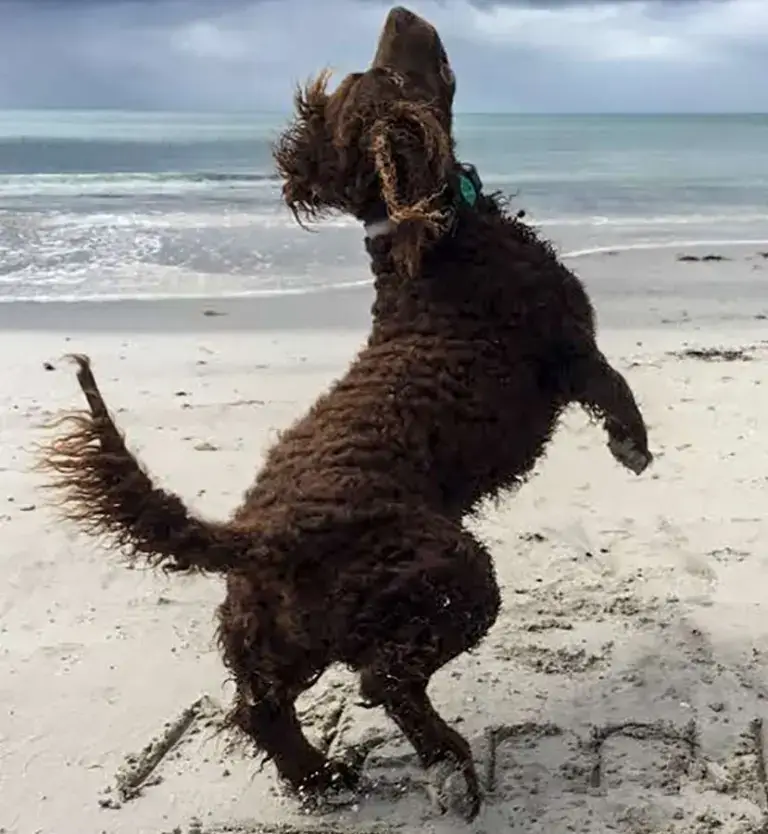
The Murray River Retriever is a medium-sized, stocky gun dog developed in Australia during the 19th century to guard paddle steamers and retrieve ducks. The Murray River Retriever has a friendly, self-confident, highly intelligent, and inquisitive temperament. The Murray River Retriever is recognized as a purebred dog. The Murray River Retriever is one of the latest ANKC recognised pure breeds. An Australian icon, it is also Australia's only home grown Gundog. The earliest reference has been traced back to early to mid 1800's and they have breed true ever since. A fair dinkum Aussie, its high-set well furnished ears that frame the face, give it its unique expression. The breed is named after a Murray River in Australia, where this breed was used a lot as retrievers and protectors on duck punts and on paddlesteamers. A confident and energetic breed, the Murray River Retriever is skilled at flushing, retrieving, and tracking. But these loyal pups also make loving pets and are protective of their families.
Murray River Retrievers are intelligent, determined hunters and good-natured family pets. Affectionate with their humans, they have an instinctively loyal and protective nature. This breed is typically friendly with other dogs. But they may benefit from slow, intentional introductions to cats or other small pets. This sporty breed needs a moderate amount of daily exercise to stay happy and healthy. Backyard play sessions, long walks, and games of fetch are all great ways to keep them active. These dogs also enjoy splashing around in the water and showing off their natural swimming abilities. Murrays are intelligent, eager-to-please dogs. They respond well to strong leadership and positive, reward-based training. This should always be an intelligent and energetic dog breed who enjoyes company of its family.
Because of these traits and also high focus, the Murray River Retriever is normally highly trainable. They can be trained to be both, excellent family companion or versatile worker. Naturally, they do best in retrieving, but they can also be trained to point, flush or track. Also, thanks to their high energy level, they make great adepts for various dog sports like agility. This is not only a hunter, the Murray River Retriever has potential to become great search and rescue, assistant dog or bomb sniffing dog. As you can see, this is truly versatile breed. Daily longer walks, hikes or swims accompanied with some task oriented playtime, fetching or training sessions are needed. It is important to know, that even though Murray River Retrievers are loving and friendly around its family, they are not that thrilled when they see strangers.
Of course, this can be vastly influenced by early socialization, but typically, Murray River Retrievers are aloof and reserved with strangers and they might bark when they will see a stranger near your property, which makes them good watchdogs. But dont worry, they should never be agressive without a reason. These are typically social dogs that get along with most people and other canines exhibiting a very loving and loyal demeanor, although without adequate socialization they have a tendency to chase small, fast-moving animals such as cats and they can be somewhat wary of strangers. While all children should be supervised when interacting with dogs, Murray River Curly Coated Retrievers are frequently gentle with children of all ages, although some may prove to be too boisterous for very small children. This breed prefers to be as integrated into the family as possible and is prone to developing separation anxiety if kept isolated from their family for very long at all. These dogs are also naturally inquisitive animals and as there are a number of venomous snakes in the Murray River area of Australia to be curious about, they are particularly prone to snakebite. Intensive snake avoidance training should occur when they are young and extra precautions should be taken when walking or hunting in the summer.
The Australian Cobberdog is a pure breed in development from Australia specifically bred for a calm, intuitive therapy temperament and a hypoallergenic coat. The Australian Cobberdog is a pure breed recognized by the MDBA and it has its own DNA sequence. In Australia, the word "cobber" is used to refer to a friend and that is exactly what the cobberdog has been bred to be – a therapy dog or service dog for those who need it as well as being an all-round wonderful companion to children and adults alike. Coming in four different sizes, this purebred-in-development is a specific kind of Labradoodle – a popular poodle mix. It is a hypoallergenic breed and has a beautiful temperament that oozes gentleness and sensitivity. Even-tempered, friendly, enthusiastic and empathetic, the cobberdog loves to learn new tricks, is eager to please and great at following orders.
Their respectful and unimposing nature means they are brilliant when it comes to working alongside people who find social interaction difficult. They have bucketloads of curiosity and love being with their people and yet they are also able to be left alone and will happily amuse themselves until their loved ones return. If you want a canine companion that will get along with every human and creature great or small, the cobberdog is the pup for you. The Australian Cobberdog is good with children and is easy to train. It gets along well with other dogs. It is extremely clever, sociable and joyful, and quick to learn unusual or special tasks. Active, with a comical goofy nature, it loves to make people laugh, it can attempt to outsmart its owner if undisciplined. It is very important that you are this dog’s firm but calm, consistent pack leader and provide him with daily mental and physical exercise to avoid behavior issues. Friendly, though obviously loyal to its own family, this dog is non-aggressive.
It is known for its intuition which makes it particularly suitable as a Therapy Dog, Medical Alert Dog and Assistance Dog, the purposes for which it has been developed. Key features of this dog breed are a unique intuition demonstrated by his deep eye to eye connection with humans, a total lack of aggression, easy going ways, and a keen intellect in a mind which soaks up learning like a sponge. He has a comical side also, with a goofy fun loving sense of humor. He loves to make you laugh! Because of his high intelligence, the Australian Cobberdog requires early training to occupy his mind and to avoid boredom. Athletic and graceful, he excels in dog sports, but is just as content to lay by your side as he is to go for a run. If a family member is sick this dog does not want to leave their side. Lack of aggression should immediately impress when viewing this breed, with overall symmetry and balance, light footed athleticism and a lively, joyful aura. A sociable dog that is self–confident and ready to make friends with humans or other animals when invited to do so.
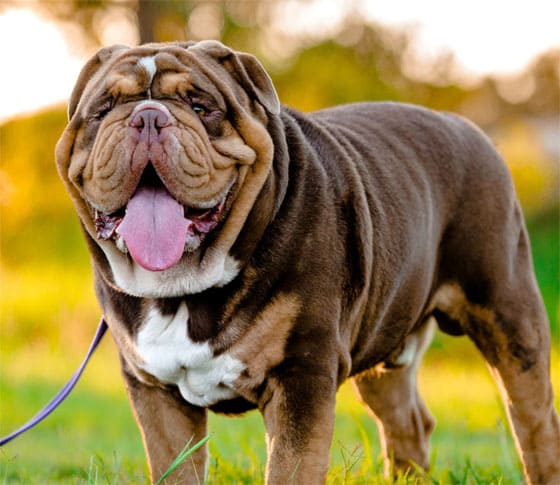
The Australian Bulldog is a strong, loyal, and affectionate companion dog bred in Queensland during the 1990s to better tolerate the warm Australian climate than its English counterpart. The Australian Bulldog is a distinct type of domestic dog, but it is not yet formally recognized as a purebred or pedigree breed by major official kennel organizations like Dogs Australia (the Australian National Kennel Council - ANKC). The Australian Bulldog is a medium sized dog that loves being part of a family. The Aussie Bulldog is intelligent, loving and loyal with a sound temperament. Good with children and fun-loving, this breed is pretty easygoing. It will enjoy playing with a ball or Frisbee and loves to play or swim in water. It is a good watch dog but not a guard dog, though its appearance can be a deterrent. Given the alertness of this breed, the Aussie Bulldog does have the ability to be a dependable watch dog at a mature age.
With its intelligence and loyalty it is a very easy dog to teach at home, but obedience training is recommended (as with any breed of dog). The Aussie Bulldog has stamina and its personality is one everyone could get attached to. This breed craves leadership from its owners. The Australian Bulldog, like its English cousin is a very persistent yet even-tempered and gentle breed of domesticated dog. Their affectionate, outgoing nature is devoid of any of the natural reserve found in many other breeds. They are very loyal animals and are keen to please their owners. Very people-orientated, they crave human attention at all times, so are best suited to a family environment where there will be some contact throughout the day. Separation anxiety is common in the breed if they are left alone for an extended period of time. Aussie Bulldogs are quite stubborn, but thanks to their intelligence and loyalty, they are controllable. That said, good luck trying to get your Aussie Bulldog up from his warm bed on a winter’s morning to go outside into the cold! Australian Bulldogs are not overly energetic but they have plenty of stamina and are enthusiastic at play time. They should be exercised at least once a day, with regular walks recommended to keep their weight down.
A lot of exercise is not necessary for their health and mental stability. Although bred to deal better with harsh Australian conditions, they are best suited to living indoors as they can feel the heat, especially in summer. Owners need to keep in mind that not all Bulldogs can swim, rather sink like a brick, so extra care around water is needed. Because the Australian Bulldog is a stubborn and persistent animal, training can be a chore – but only if the owner does not commit to a regime with patience and consistency. Commencing training when the Bulldog is a puppy is a must and establishing a pecking order early is essential for good behaviour to follow, while firm and consistent discipline is important when establishing the position of the pack leader.
The Halls Heeler is an extinct historical working dog breed from the mid-19th century and the primary ancestor of modern breeds like the Australian Cattle Dog. Developed by Thomas Simpson Hall in New South Wales, Australia, during the mid-1800s for cattle ranching. Hall crossed imported blue-speckled Highland Collies (or Northumberland Drover's Dogs) with tamed native Dingoes. After Hall's death, other breeders like the Bagust brothers crossed these dogs with Dalmatians and Kelpies to refine their traits, eventually leading to the modern Australian Cattle Dog and Australian Stumpy Tail Cattle Dog. Compact, muscular, and medium-sized, resembling a sturdy dingo with a speckled coat. Called "heelers" because they moved reluctant cattle by quietly nipping at their heels and dropping flat to avoid kicks. Highly intelligent, tireless, alert, and fiercely loyal to their handlers. Thomas Simpson Hall, pastoralist and son of pioneer Hawkesbury region colonist George Hall, developed an Australian working dog for cattle farming during the mid 1800s. Robert Kaleski, who wrote the first standard for the cattle dog (later, the Australian cattle dog), called Hall's dogs "Halls Heelers". Thomas Hall imported dogs from the United Kingdom, in particular blue-speckled Highland Collies, and crossed them with selected dingoes to create the breed.
The droving dogs used at the time were commonly the Smithfield dogs which often barked at and bit the nose of the cattle which aggravated the livestock. A replacement was needed, and the Halls were prepared for this challenge. Thomas Simpson Hall, one of George’s sons, had established the Dartbrook station in the Upper Hunter Valley in the 1820s. Hall began by importing collies from England, but these dogs should not be confused with any of today's breeds. ‘Collie’ encompasses a group of dogs similar in type and this was even more true before the invent of kennel clubs. It is believed his foundation stock included blue merles and likely some Smithfields. He crossed the collies with tamed Dingos, which increased the dog's stamina, without losing their working abilities. Some believe he also used another strain of developing cattle dog, the Timmon,s Biter in his line. However, other authors have credited Hall with supplying Timmon with a pair of Hall,s Heelers to begin this bloodline. According to some sources Timmon was known to be an associate of Hall's, so it is possible the strains influenced each other. By the 1840s the Hall,s Heeler was breeding true. However for business reasons Hall rarely allowed outsiders to obtain his dogs.
Upon his death in 1870 the line would finally be dispersed and the transformation from Hall,s Heeler to the modern Australian Cattle Dog began. He had taken with him dogs, as well as cattle, and had honed the cattle-handling potential in his dogs. He bred blue speckled Highland Collies with dingoes, an ancient type of dog which seldom barks and instinctively bites on the heel or hindquarters of the animals they chase down. The result was the creation of the first of the Halls Heelers which work silently and bite the heels of the cattle to enforce authority. Although development of the Halls Heelers probably began on Dartbrook in the 1820s, in later years Halls Heelers would have been bred on other Hall properties, particularly those remote from Dartbrook. And drovers, outside the Hall family, would have been keen to get such valuable dogs. Among them were members of the Timmins family, drovers whose Halls Heelers became known as Timmins Biters.
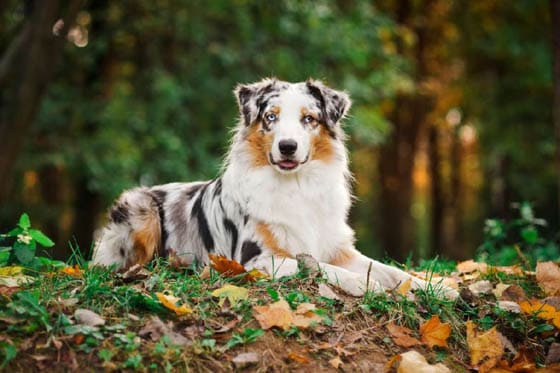
The Australian Shepherd is a smart, active medium-sized herding dog. Despite its name, the breed was developed in the United States, not Australia ! Australian Shepherd is a smart, active medium-sized herding dog. Developed in the United States (despite the name), they weigh 40 to 65 pounds, stand 18 to 23 inches tall, and live 12 to 15 years. They feature striking merle coats and high energy. Australian Shepherds are easy-going, remaining puppy-like even in their adult years. This courageous dog makes a good watchdog for the home. Aussies are excellent with children, even with an active child, as they love to play. They are devoted, loyal friends and guardians, for they are naturally protective. Affectionate, very lively, agile and attentive - they are eager to please, with a sixth sense about what the owner wants. Australian Shepherds are highly intelligent and easy to train. Though aggressive when at work with livestock, the Aussie is gentle with human friends.
Australian Shepherds are not the kind of dog to lie around the living room all day or live happily in the backyard with only a 15-minute walk. They need much more exercise than that and something to occupy their mind daily or they will become bored, leading to serious behavior problems. Without enough mental and physical exercise and/or a lack of a true pack leader, they can become nervous and destructive if left alone. Socialize well to prevent them from becoming suspicious of strangers. Working lines may be too energetic for people who only have a moderately active lifestyle. Some like to nip people's heels in an attempt to herd them, and this behavior needs to be corrected, teaching the dog that humans are not to be herded. The Aussie is a quiet worker. This breed is not usually dog aggressive. Australian Shepherds often have two different coloured eyes.
Aussie fans are so passionate about this breed that they declared January 9th as Australian Shepherd Appreciation Day, a special day to honour this beloved breed. Australian Shepherds, particularly when they are young, present unique challenges. This breed was specifically developed for herding and guarding animals, and those instincts are very strong. If you do not provide an Australian Shepherd with a job or purpose, they will create their own. When left to their own devices, these dogs may attempt to herd children or become territorial and possessive, guarding their homes and family members. This breed is talented in agility and has been used in rodeos and numerous films since the early years of cinema. Legend has it that Native Americans called Australian Shepherds "ghost eye" and thought they were sacred. Aussies have a one in five chance of being born with a naturally bobbed tail. Ranchers intentionally bred Aussies with these short tails because they are safer for herding. Australian Shepherds have the high levels of energy and stamina you’d expect from any working dog breed and they’re suited to life on the farm or with an active family.
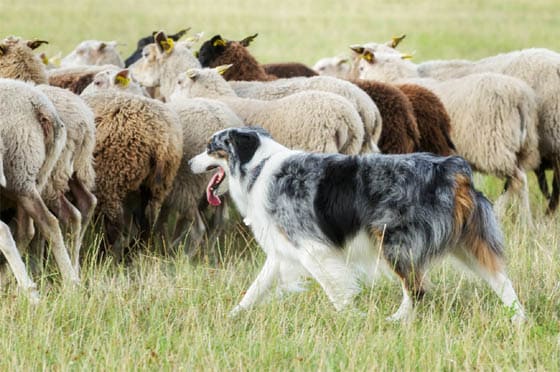
The quintessential Australian dog breed… or is it? Regardless of what it looks like, Border Collies are not Australian! Border Collies originated in the Anglo-Scottish border in the UK, hence their name! These dogs are very similar to traditional English Collies and were bred as versatile working dogs to herd livestock and help on the farm. However, their association with Australia runs deep, and Collies were first introduced to these lands in 1858. Since then, they have become one of the most popular working dog breeds and has become pretty much a national breed. Because they are so widely used to herd livestock and help with farm life, Australia is also considered the country of development of the Border Collie.
The Border Collie is a medium-sized, high-energy herding dog originating from the Anglo-Scottish border. Known as one of the world's smartest dog breeds, they weigh 30 to 55 pounds, stand 18 to 22 inches tall, and live 12 to 15 years. They require extensive physical exercise and mental stimulation. The Border Collie is very intelligent and aware of its surroundings. It is able to be trained to a high degree. This is one of the hardest working dogs thriving on praise. Border Collies are represented among the leaders in competitive levels in various sports, excelling in agility skills, obedience, sheepdog trials and Frisbee™. These competitions are right up their alley, and they are commonly used and often win. For those who wish to reach high levels in dog sports, the Border Collie is a gift from heaven. Farmers are also happy with them, as they were originally bred as a farmhand. The Border Collie is highly energetic with great stamina. Provided they get sufficient activity to keep them occupied and ample exercise, the Border Collie will get along quite happily with other dogs and children, however they may be aggressive with other dogs of the same sex if you are not showing 100% leadership with them.
They should not be trusted with small non-canine pets, however there are plenty of Border Collies that live and get along with family cats. This breed can be sensitive and should be very well socialized as a puppy to prevent shyness. To be truly happy, they need a lot of consistent leadership, extensive daily exercise, and a job to occupy their minds. Border Collies will often challenge their owners’ authority when they are adolescents. Dominance levels vary greatly, even within the same litter. You need to be this dog’s firm, confident, consistent pack leader, or he may try and take over. If you allow him to take over, without enough socialization and mental and physical exercise, he can be highly reactive and sound sensitive, making him a poor choice for families with young children. The Border Collie is a perfectionist with a permanent will to please. This breed lives for serving you day in and day out. It is not an ideal pet for people who do not plan to spend a lot of time with it.
These dogs are too intelligent to lie around the house all day with nothing to do. If you are not willing to put many hours a day into keeping these dogs well exercised in both mind and body, then it is recommended you do not adopt a Border Collie. There are other breeds that are similar yet not as demanding such as the Shetland Sheepdog or the Australian Shepherd, which are both highly trainbable, still need stimulation and exercise, but can usually get away with less than a Border Collie. If there is insufficient activity then the Border Collie will find its own work to do, and that may not be what YOU had in mind when we say the word WORK. When not challenged daily they can and will become destructive. They cannot be left alone for too long with nothing to do if they have not been exercised to the point where they are both mentally and physically tired. A bored Border Collie will not make a good pet, as it can become neurotic and may start using its escape artist talents, among other behavior problems. They have strong herding instincts and may try to herd children and strangers and must be told this is not acceptable.
The Thylacine or Thylacinus cynocephalus (Greek for "dog-headed pouched one") was technically not a canine but a marsupial. An apex predator, British settlers to Australia and Tasmania hunted the "Tasmanian tiger wolf" to extinction to protect their sheep herds. The last known specimens died in captivity, although the same folk who keep an eye out for the Loch Ness Monster and Yeti believe they will find evidence of this unique looking critter in the hinterlands of the outback. Despite common nicknames like "marsupial wolf" or "Australian tiger dog," the thylacine was a marsupial and is closely related to kangaroos and koalas rather than canines. It looked like a medium-to-large dog with a stiff tail and 15 to 20 dark stripes across its back, resembling a tiger. It vanished from mainland Australia about 2,000 to 3,000 years ago, largely due to competition with introduced dingoes and human hunting.
Dogica® collects only technical cookies. No any personal or private information being collected, saved or shared here. 3rd Party cookies could be collected by various installed widgets.
The information contained in or provided through DOGICA® site is intended for general consumer understanding and education only and is not intended to be and is not a substitute for professional advice.
Use of this site and any information contained on or provided through this site is provided on an "as is" basis without any representations, warranties or pay.





























WORLD OF DOG & PUPPY 🐶