117 Extinct Dog Breeds: 31 Modern Extinct Dog Breeds 86 Antique Extinct Dogs with lower population Extinct Dog Breeds List Rare dog breed list What are extinct dog breeds? What is the most extinct dog? What is the top rarest dog? What are the ancient dog breeds? Antique Dogs
This breed has an ancient fixed origin, very common on the mountains and hills of Friuli since 1970s, particularly in Carnia. Only around 50 examples left.
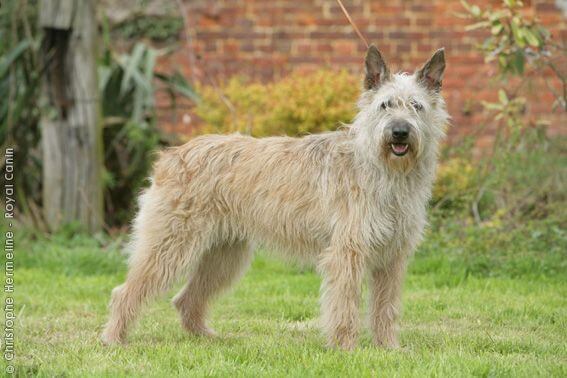
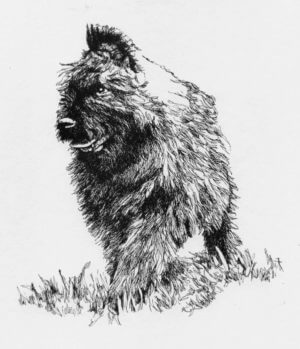
2. BERGER DE CRAW
Population: UNKNOWN Country: FRANCE
Very small number left, breeders are fighting for their survival in France. The Berger de Crau is a rare and captivating breed from the plains of southern France. Known for its rugged resilience and loyalty.
3. KANNI / CHIPPIPARAI
Population: less then 500 species Country: INDIA
The Chippiparai has typical streamlined sighthound features with long legs and a lean and lithe frame built for speed. The breed is usually white in colour, although other colours can be found. It averages 61 centimetres (24 in) in height at the withers, dogs averaging 63 centimetres (25 in) and bitches 56 centimetres (22 in). A hardy breed, the Chippiparai is reputed to prefer a single master, shunning food and pats from anyone except its handler. The Chippiparai is often regarded as the most intelligent and biddable of India's native dog breeds. Less than 500 Numbers exists not regonised by major Clubs.
4. LITHUANIAN HOUND
Population: UNKNOWN Country: LITHUANIA
The Lithuanian Hound is a rare, medium-size hunting dog from Lithuania. It is the only dog breed originating from Lithuania and dates back to the medieval Grand Duchy of Lithuania. However, the breed is not recognized by the Fédération Cynologique Internationale. At this momment there are some Lithuanian Hounds in Ukraina, Belarus, Russia and Lithuania. Very old and in his time, had a 4 subspecies. Was very famous and popular breed for noblemans hunting. Currently exists only for hunting enthusiasts, who like breed cancerous voice and excellent service in hunting and health properties.
5. WESTERWALDER COWDOG
Population: approx 50-150 Species Country:
Approx 50-150 left not reconized by FCI, the assc "F.w.s.k" is organizing the breeding. Westerwald Cowdog Also known as: Westerwälder Kuhhunde, Siegerländer Height at shoulder: 18 - 22 inches (45–55 cm) Weight: 40–70 pounds.
A D V E R T I S E M E N T
6. BAKERWALI SHEPHERD
Population: approx 700-800 Species Country: KASHMIR
The Bakharwal dog is a livestock guardian dog found in northern India. It is an ancient working Indian dog breed found in Ladakh and across the Pir Panjal Range. Commonly known for its deep-chest, muscular and agility, the Gujjar/Bakerwal sheepdog has a straight back, broad shoulders and long legs.
7. GOTLANDSTOVARE
Population: UNKNOWN Country: SWEDEN
Gotlandsstövaren is a driving hunting dog for hunting hare and fox. 19 puppies registered 2012.
8. SERBIAN SHEPHERD DOG
Population: UNKNOWN Country: SERBIA
Recognized by FCI in 2009. Localized breed. Calm, intelligent, independent, and devoted, Šarplaninacs have a protective, fearless nature that makes them excellent guard dogs. Though they are not known to be overly affectionate, they typically get along with children and are loyal family members. But they can be wary of strangers or reactive toward other dogs.
9. SEALYHAM TERRIER
Population: UNKNOWN Country: UK
The Sealyham Terrier is a rare Welsh breed of small to medium-sized terrier that originated in Wales as a working dog. It is principally a white-bodied, rough-coated breed, developed in the mid-to-late-19th century by Captain John Edwardes at Sealyham House, Pembrokeshire. Sir Alfred Hitchcock owned this breed. 2012 76 puppies registered. Even though increase that year, still endangered worldwide.
10. POSAVSKI GONIC
Population: UNKNOWN Country: CROATIA
Still used as a hunting dog rather than a pet. Not well known outside of Croatia. The Posavac Hound is a breed of dog, originating as a hunting dog of the scenthound type. Croatia is the home country for the breed. The name translates into English as the Scenthound From The Sava Valley, but is usually translated as the Posavac Hound.
A D V E R T I S E M E N T
11. BARAK
Population: UNKNOWN Country: BOSNIA
Rare even in country of origin. Few dedicated breeders are working to keep this breed alive. The Barak or Bosnian Broken-haired Hound, is a hunting dog breed developed in Bosnia. The breed is a scenthound, originally used to hunt large game. Other names include Bosnian Rough-haired Hound and Bosnian Rough-coated Hound.
12. SERBIAN YELLOW DOG
Population: UNKNOWN Country: SERBIA
Serbian Hounds are known to be exceptionally well-mannered animals both in the field and at home. They are tenacious hunters with a determined drive and significant endurance while on the hunt, but while at home with the family, they have been noted to be regularly kind, gentle, affectionate and incredibly loyal. Not recognized by FCI. Endangered breed, Localized.
13. JAKUTIAN LAIKA
Population: UNKNOWN Country: SIBERIA
The Yakutian Laika is a recently recognized dog breed originating from the Yakutia region of Siberia. In ancient times, the dogs were employed by the native Yakute people as universal animals. Yakutian Laikas are multipurpose laikas, with many lineages able to herd reindeer, hunt game, and or pull a sled. A club was formed to preserve this ancient endangered breed.
14. AMUR LAIKA
Population: UNKNOWN Country: SIBERIA
The East Siberian Laika (romanized: Vostotchno-Sibirskaia Laika) is a Russian laika of spitz type, a hunting dog originating in parts of Siberia east of the Yenisei River. Lesser known type of Laika. Kept in its original form.
15. AZAWAKH
Population: UNKNOWN Country: MALI, NIGERIA
The Azawakh is a breed of dog from West Africa. With ancient origins, it is raised throughout the Sahelian zone of Mali, Niger, and Burkina Faso. This region includes the Azawagh Valley for which the breed is named. 24 litters in 2011 in Europe. 8 of the 24 born in Germany. Endangered in their country of origin. A blow to the population was an outbreak of rabies recently.
16. ARYAN MOLOSSUS
KHURASANI DOG
Population: NEARLY EXTINCT Country: AFGHANISTAN
The ancient Aryan Molossus has close ties with the Sage Koochee and old Persian mastiffs, as well as other Central Asian dogs, but this is a pure and distinct Afghani breed, likely older than the rest of its relatives. An excellent watchdog and guardian, this remarkably powerful mastiff is most commonly employed as a fighting dog, used to settle various disputes among villagers, who respect the outcome of the match as the final judgment. If there is a feud between tribes and settlements, each party brings their own dog to represent them in the fighting ring. This way, the issues get resolved without human casualties.
17. ALGERIAN MASTIFF
Population: less then 100 species Country: AFRICA, ALGERIA
This ancient working breed is on its way to extinction, reportedly only existing in two-digit numbers in Algeria today. A close relative of the Moroccan Aidi, the Algerian Mastiff is the larger one of the Atlas Mountain dogs, believed to be a result of introducing the now-extinct Mt.Tahat Moloss to the North-Western parts of the country centuries ago. The Algerian Mastiff found its way into the bloodlines of many European breeds when the Phoenicians, and later Romans and Vandals, brought a great number of these dogs from Africa.
18. NORSK ELGHUND BLACK
Population: UNKNOWN Country: NORWAY
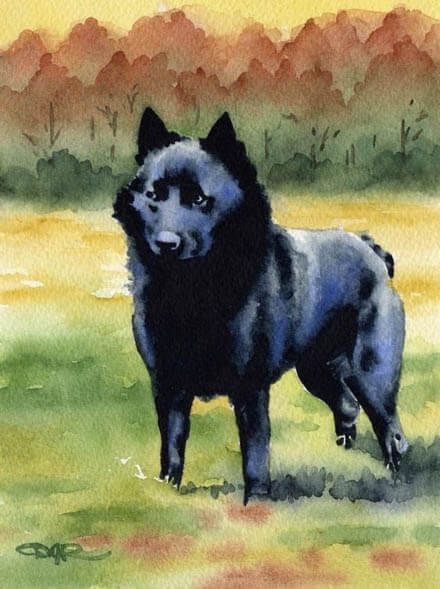
The Black Norwegian Elkhound is a small Spitz breed classified by the FCI as a hunting dog. It is currently an uncommon breed in Norway and very rare outside the Nordic countries of Scandinavia. Between 90 - 150 registered each year in Norway, due to a few dedicated followers, this breed could be saved. There is a sperm bank for this breed.
19. NORWEGIAN DUNKER
Population: UNKNOWN Country: NORWAY
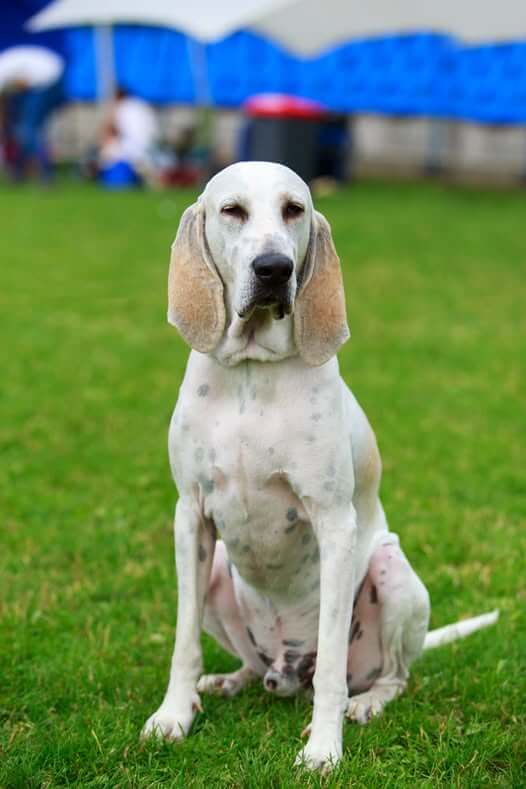
A Dunker, also known as the Norwegian Hound, is a medium-sized breed of dog from Norway. It was bred by Wilhelm Dunker to be a scenthound by crossing a Russian Harlequin Hound with dependable Norwegian scent hounds. It is a very rare dog breed, and most Dunkers are found in Norway and Sweden. Approx 130-180 born each year. Numbers are dangously low.
20. MEDJI
Population: UNKNOWN Country: CROATIA
The Small Međimurje Dog, also known as Međi, or locally well known as Štakoraš is a breed of dog native to Croatia. It has been bred for over a hundred years in northwestern Croatia, in Međimurje area mostly. Found in rural yards as a guard dog and hunter for harmful rodents. Small breed of Croatia. Localized and virtually unknown outside of country of origin.
21. OLD CROATIAN SIGHTHOUND
Population: UNKNOWN Country: CROATIA
The Old Croatian Sighthound, also known as the Old Bosnian Sighthound, is an extinct breed of sighthound from the countries of Bosnia–Herzegovina and Croatia. Only a few left in Croatia. Unknown outside country of origin. Widespread in Serbia, But localized only to this country.
22. SRPSKI GONIC
Population: UNKNOWN Country: SERBIA
The Serbian Hound, previously known as the Balkan Hound, is a breed of scent hound from Serbia.
23. TAIWAN DOG
Population: UNKNOWN Country: TAIWAN
The Taiwan Dog is a breed of small or medium dog indigenous to Taiwan. These dogs are also known as the Formosan Mountain Dog. Taiwan Dogs have been genetically traced back between 10,000 and 20,000 years ago, making them one of the oldest and most primitive dog breeds in the world. Widespread in Japan, But still being monitored.
24. CRETAN GREYHOUND
Population: UNKNOWN Country: GREECE, GERMANY
Remains unaltered and unchanged for centuries. The Kritikos Lagonikos is a breed of dog from the island of Crete, in Greece. The Cretan Hound is recognized both in Greece and in Germany. The breed is also considered to be the oldest European dog breed dating to perhaps before 3200 BCE and Neolithic times.
25. BULGARIAN PALASH
Population: UNKNOWN Country: BULGARIA
34 dogs covered breed standard.
26. OTTERHOUND
Population: approx 600 Species Country: BRITAIN
The Otterhound is an English dog breed. It is a scent hound and is currently recognised by the Kennel Club as a Vulnerable Native Breed with around 600 animals worldwide.
27. HYGENHUND
Population: UNKNOWN Country: NORWAY
A Hygen Hound is a Norwegian breed of dog from the hound group, created in the 19th century by Norwegian breeder Hygen from various other hound breeds. The Hygen Hound is an endurance hunter who can traverse Arctic terrain for long periods of time without fatigue. Only 14 puppies registered 2012 Endangered breed. There is a sperm bank for this breed in Norway.
28. SINHALA DOG
Population: UNKNOWN Country: SRI LANKA
The Sinhala Hound is a landrace of dog from Sri Lanka. The Sinhala Hound is a native dog found throughout Sri Lanka, often living in a semi-wild state scavenging for food.
29. KARST SHEPHERD
Population: UNKNOWN Country: SLOVENIA
The Karst Shepherd Dog is a breed of dog of the livestock guardian type, originating in Slovenia. This breed is recognised by the Fédération Cynologique Internationale.
30. ROUGH DUTCH SHEPHERD
Population: approx 800 species Country: NETHERLANDS
The Dutch Shepherd breed comes in four coat varieties: the smooth coat, the long coat, the rough coat, and the inter-varieties. All varieties of coats are dense double coats with a woolly undercoat and protective outer coat.
31. DUTCH STEENBRAK
Population: approx 30 species Country:
Maybe only 30 left, specimens are too old to breed.
Large running dogs used during the Middle Ages to seize and bring down game for the hunter to dispatch; they were described as having the body of a Greyhound with a broad and short brachycephalic-type head.
A mastiff-type dog known in the Western Alps from the Middle Ages, it is sometimes claimed they were descended from dogs introduced to the area by the Romans; a short-haired dog that is believed to be the progenitor of the St. Bernard.
A long-haired breed developed by the Argentine Army to act as sled dogs in the country's Argentine Antarctic Program. The creation of the Antarctic Treaty System forced Argentina to remove all of the dogs from the continent, since they were an exotic animal. The army then ended their dog breeding program and the remaining dogs were moved to Patagonia where most of them succumbed to diseases, since living their entire lives in Antarctica away from other dogs had made them lose their natural immunity to the common diseases of dogs.
A mastiff-type breed that was used throughout the Low Countries as a draught dog, it was a large, powerful dog with a smooth coat and docked tail, its role became redundant in the 20th century and it is now believed to be extinct.
A British breed of terrier that was common throughout all of Great Britain, it had a rough coat that was black and tan in colour - most of the Fell terrier breeds, including the Border Terrier, Lakeland Terrier, Patterdale Terrier and Welsh Terrier, descend from it.
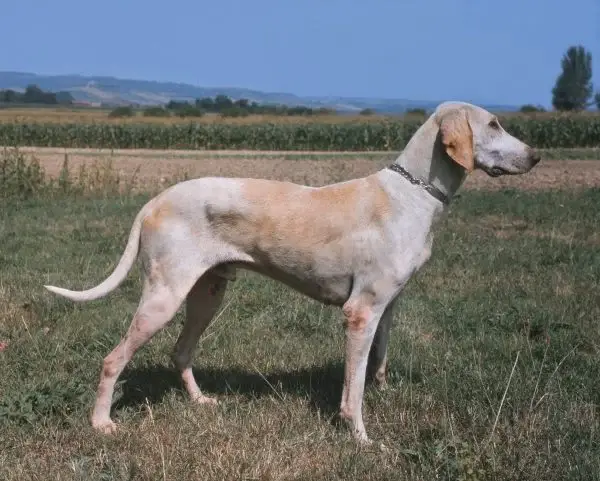
A French breed of pointer from the Poitou region, known for its pace compared to other French pointing breeds, it was sometimes claimed that Greyhound or Sloughi blood was used in their breeding.
The Celtic hounds were a breed of dogs in Gaelic Ireland described in Irish legend. Also known as the vertragus, they were popular breeds throughout many ancient civilisations - considered to be the ancestor of modern day sighthound breeds such as the Greyhound.
A French breed of scenthound known in the Middle Ages, it was said to have been introduced to France from the east by King Louis IX when he returned from the Crusades.
The Chiribaya Dog or Peruvian Shepherd Dog is an extinct pre-Columbian breed of dog from the southwest of Peru. It has been established that it was a llama herding dog. The dogs were not only an important part of the social structure of the ancient Peruvians, but they received special treatment after death as well.
A British herding dog from Cumberland that was very similar to the Border Collie; its numbers declined from the mid-20th century onward. The Cumberland sheepdog is an extinct dog breed related to the border collie and other old working collie types.
A British breed of herding dog used by cattle drovers in England, it was known for its distinctive stumpy tail; it likely became extinct in the mid-19th century.
A Cuban breed of mastiff originally used for bull-baiting, dog fighting and recapturing runaway slaves; believed to have been descended from introduced Spanish Mastiffs, they became extinct in the mid-20th century.
A British pack of foxhounds from Scotland bred in the interwar period; a combination of English Foxhound, Welsh Foxhound, Bloodhound and Gascon Saintongeois blood, they were a unique black and tan coloured pack; the pack was disbanded after foxhunting was banned in Great Britain in 2002.
A British breed of gundog that was described as being between a spaniel and a retriever in appearance; very popular with wildfowlers in the mid-19th century, it is considered to be the progenitor of both the Curly-Coated Retriever and the Flat-Coated Retriever, which both surpassed it in popularity and it disappeared around the end of the 19th century.
A British breed of terrier from England that was all-white in appearance; it was the progenitor of the Fox Terrier and one of several progenitors of the Bull Terrier.
A domesticated form of the culpeo (Lycalopex culpaeus). The Fuegian dog, or Yahgan dog, or Patagonian dog, is an extinct type of canid. Its ancestry is a matter of scientific debate, though traditionally it was thought to be bred and domesticated from the South American culpeo, also known as the culpeo fox.
An Australian breed of cattle-herding dog bred from imported Scotch collies crossed with dingoes; it is claimed that they were the progenitor of the Australian Cattle Dog.
A Hawaiian pye-dog that was kept by the native Hawaiians before European settlement; the Hawaiian Poi Dog was kept as both a pet and for human consumption, it also played a ceremonial role in Hawaiian culture; taking its name from poi, which was its main diet. It became extinct after the introduction of European dog breeds to the islands.
A French breed of scenthound that was kept by the Kings of France from Louis XI to Louis XV; known as the Chien Blanc du Roi in French, they became extinct when Louis XV disbanded the pack in 1725.
It was introduced to New Zealand by the Polynesian ancestors of the Māori during their migration from East Polynesia in the 13th century AD. The Kurī is an extinct breed of Polynesian Dog kept by Maori people. It was introduced to New Zealand by the Polynesian ancestors of the Maori during their migration from East Polynesia in the 13th century AD. According to Maori tradition, the demigod Māui transformed his brother-in-law Irawaru into the first dog.
An extinct Spartan hunting dog typically used for hunting, known for its speed. The Laconian, also known as the Spartan and the Castorian, is an extinct dog breed from Ancient Greece typically used for hunting. The breed originating in Laconia, a region of Ancient Greece, famous for its city state, Sparta.
Also known as Cockhill's Finnish Lapphound; it became extinct in the 1980s. The Lapponian Shepherd (Finnish: Lapinpaimenkoira or Cockhill's Finnish Lapphound) is an extinct dog breed originating from Finland. Despite its name, it did not come from Lapland, but from the southern parts of the country.
A scenthound in the Middle Ages used to locate a stag on the morning of a stag hunt, the limer was kept on a leash and led the huntsman to the stag, which was subsequently hunted by other hound types, limers were known for their scenting ability and had to work silently in order to avoid alerting the quarry.
The Moscow Water Dog, also known as the Moscow Diver, Moscow Retriever or Moskovsky Vodolaz; derived in the U.S.S.R. from the Newfoundland, Caucasian Shepherd Dog and East European Shepherd.
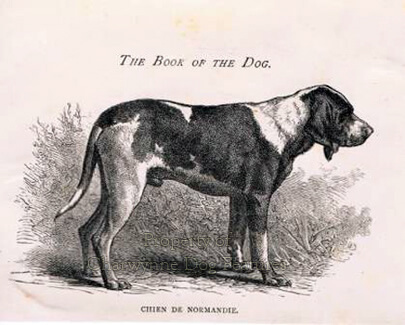
A large breed of French scenthound from Normandy believed to be one of the ancestors of the Bloodhound; it became extinct in the 19th century as hunters switched to faster hound types.
A British medium-sized scenthound that was used to hunt hare, it was said to be smaller, with a sharper nose and faster than the contemporary Southern Hound, it is believed to be one of the foundation breeds of the modern English Foxhound.
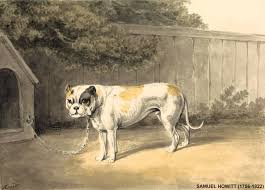
A British breed of specialised small mastiff-type dogs developed from the 16th century for the blood sports of bull-baiting and dog fighting, the prohibition of most blood sports in 1835 saw the decline of the breed, although some were retained as companion dogs and were bred into the modern Bulldog.
A breed of Spanish pointing dog known from the Early Modern Period; it is considered the first of its type from which all modern pointing dog breeds descend.
The Welsh Grey or Old Welsh Grey was a breed of sheepdog native to Wales. It is likely now extinct. Welsh Greys were shaggy, long-haired dogs, similar in appearance to working strains of the Scottish Bearded Collie or to the ancestors of the Old English Sheepdog, and the breeds probably have a common heritage
A terrier breed from Scotland that was bred primarily as a pet and a show dog version of the Skye Terrier, it is considered to be the progenitor of the Yorkshire Terrier.
A catch-all term for four breeds on this list: the Hawaiian Poi Dog, Kurī, Marquesan Dog and Tahitian Dog. The Polynesian Dog refers to a few extinct varieties of domesticated dogs from the islands of Polynesia. These dogs were used for both companionship and food and were introduced alongside poultry and pigs to various islands.
A British type of hound in the Middle Ages, they were a fast-running scenthound used to drive game toward the waiting hunters. It was a scenthound used in a pack to run down and kill game, or bring it to bay. The word appears before the Norman Conquest.
A scenthound bred specifically to hunt jaguars, when jaguars became endangered and then were protected as a result of this, the breed's purpose became obsolete.
A Canadian breed used by the fishermen of Newfoundland and Labrador, descended from imported European dogs brought to the New World on fishing vessels, it is considered to be the progenitor of the Labrador Retriever.
The Sakhalin Husky is a critically endangered landrace and sled laika associated with Sakhalin Island and adjacent areas. They are also known Karafuto Ken, Sakhalin Laika, or Gilyak Laika. While bred primarily as a sled dog, Sakhalin Huskies are also used for hunting bear and fishing.
The Salish Wool Dog or Comox Dog is an extinct breed of white, long-haired, Spitz-type dog that was developed and bred by the Coast Salish peoples of what is now Washington state and British Columbia. It was raised for its hair, which was used like a sheep's wool.
The sleuth hound was a breed of dog. Broadly, it was a Scottish term for what in England was called the Bloodhound, although it seems that there were slight differences between them.
A British medium-sized scenthound that was used for hunting hare, a slow-paced, deep-scenting hound believed to be related to the Bloodhound, they became extinct towards the end of the 18th century when faster hounds became more popular for hare hunting.
An English breed of scenthound that was used for stag hunting; developed in the Middle Ages, they effectively became extinct when the last pack was sold to Germany in 1826.
The Tahitian Dog - literally translated as "native dog" is an extinct breed of dog from Tahiti and the Society Islands. Similar to other strains of Polynesian dogs, it was introduced to the Society Islands and Tahiti by the ancestors of the Tahitian people during their migrations to Polynesia.
A British small to medium-sized white scenthound known from the Late Middle Ages; famed for its scenting ability, it was often employed pursuing criminals, it is believed to be a progenitor of the Bloodhound.
The Techichi is an extinct breed of small dog bred by the Toltec culture in the 9th century C.E. It is thought to be an ancestor of the modern Chihuahua.
Ancient Egyptian dogs that are now extinct. Tesem was the ancient Egyptian name for "hunting dog". In popular literature it denotes the prick-eared, leggy dog with a curled tail from the early Egyptian age, but it was also used with reference to the lop-eared "Saluki/Sloughi" type.
A British breed that was a miniature version of the Bulldog, popular in the late Victorian era as a companion dog; it is considered to be the progenitor of the French Bulldog, which surpassed it in popularity and the last record of it was in 1914.
The Toy Trawler Spaniel is an extinct breed of Spaniel which physically was similar to the King Charles Spaniel of the 16th century. It is considered to have descended from the original King Charles Spaniel, and the older variety of the Sussex Spaniel.
A British dog type used in larger kitchens to run in a wheel that turned a rotisserie; these short-legged dogs were known from the Middle Ages, they likely became extinct in the 19th century.
A British breed of gundog from the Anglo-Scottish border region, it was used by wildfowlers and is considered to be a progenitor of the Golden Retriever. The Tweed Water Spaniel, or Tweed Spaniel, is a breed of dog extinct since the 19th century. It is best known for being involved in the early development of the modern Curly Coated Retriever and Golden Retriever breeds of dogs.
A British breed of herding dog from Wales. The Welsh Hillman was an ancient landrace or type of herding dog in Wales, used for herding and droving. The variety was thought to have become extinct around 1990. The Welsh Hillman was thought to have been descended from ancient Welsh herding dogs.
The Bichon Tenerife was a small bichon-type dog that was once found on the Canary Island of Tenerife, located off the coast of northern Africa. Not a breed by the modern sense, but they bred pure on the island for several hundred years. Originally brought to the island by the Spanish, they have been listed by some authors as the primary ancestor of the bichon family. This seems unlikely, as the Maltese has been known to exist far before the Spanish arrived on Tenerife. Other authors state that the Bichon Tenerife was simply the predecessor to the modern Bichon Frisé and through the extinct Coton de Reunion, the Coton de Tuléar.
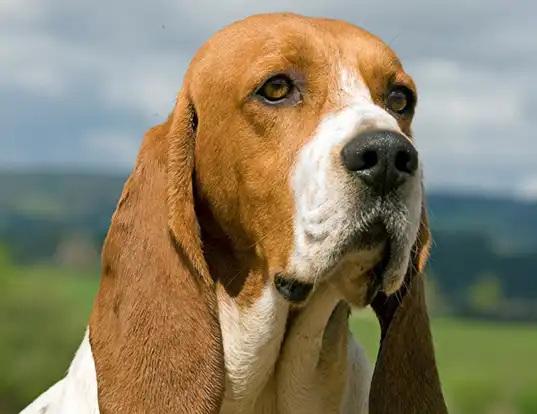
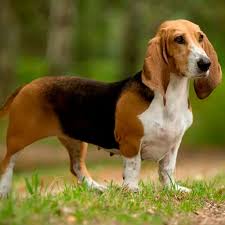
The Basset d’Artois was a basset scenthound that was part of the Chien d’Artois family. It is unknown how this type of dog was created, some have suggested they descend from other short-legged breeds such as Dachshunds or Cogis. Other experts believe that dwarfed scenthounds were the first bassets. The latter is the more preferred theory, however, their origin if further debated as to whether or not this occurred multiple times or if different breeds were simply crossed with existing bassets. In the early 1900s local breeders combined the Basset d’Artois and the Basset Normand into a single breed, the Basset Artésien Normand. The two were said to be so similar that the only difference between them was the Basset d’Artois had straight legs and the Basset Normand’s were crooked.
The Basset Normand was a basset scenthound that was part of the Normand family of hounds. It is unknown how this type of dog was created, some have suggested they descend from other short-legged breeds such as Dachshunds or Cogis. Other experts believe that dwarfed scenthounds were the first bassets. The latter is the more preferred theory, however, their origin if further debated as to whether or not this occurred multiple times or if different breeds were simply crossed with existing bassets. In the early 1900s local breeders combined the Basset Normand and the Basset d’Artois into a single breed, the Basset Artésien Normand. The two were said to be so similar that the only difference between them was the Basset d’Artois had straight legs and the Basset Normand’s were crooked.
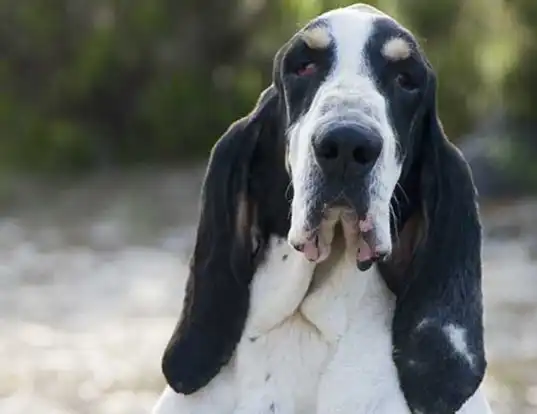
The Basset Saintongeois was a basset scenthound that was possibly the oldest of the basset varieties. It is unknown how this type of dog was created, some have suggested they descend from other short-legged breeds such as Dachshunds or Cogis. Other experts believe that dwarfed scenthounds were the first bassets. The latter is the more preferred theory, however, their origin if further debated as to whether or not this occurred multiple times or if different breeds were simply crossed with existing bassets. This variety of Basset, like its larger relative, the Saintongeois Hound, has been extinct for at least a century.
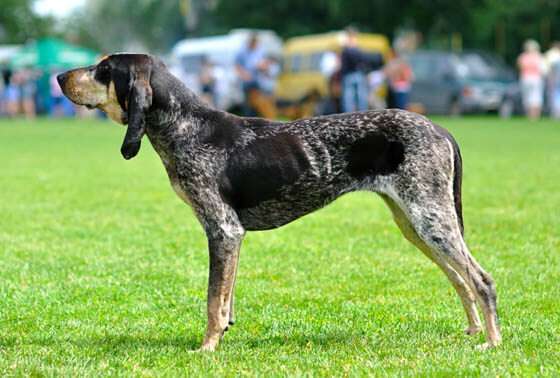
The Saintongeois Hound is an extinct breed that existed in the French region of Saintonge. Like most scenthounds, it hunted in packs and its primary ancestor would have been Saint Hubert/Normand Hounds. Its main prey was large animals, such as wolves, which became greatly diminished over the centuries. This loss of prey and the added turmoil of the French Revolution brought the breed very close to extinction. The last known pack was heavily inbred and of poor health. It was crossed with Gascony Hounds in the 1840s, giving rise to the modern Grand Gascon-Saintongeois. The large, elegant Gascon Saintongeois is a rare French dog breed that’s not well known outside its geographic area of origin, but once you see one of these handsome dogs, you’re not likely to forget it! The Gascon Saintongeois is a scent hound that works in packs to hunt large game like deer and wild boar.
The name Black and Tan Terrier litters the ancestry of most terriers. These prolific dogs seem to have been used to create nearly every terrier around the world. The surprising reality is the Black and Tan is closer to a type of coat rather than a breed. Often classified as a Fell Terrier, these long-legged dogs were developed in the United Kingdom to hunt fox. In the 1880s a group of enterprising English breeders attached the name Old English Broken-Haired Black and Tan Terrier to rough coated working terriers with a black and tan coat. The asserted that these dogs were the ‘root stock’ of all British terriers. Many of them were first or second generation and picked from litters based on their markings. The Welsh having dogs of a similar type of their own responded by producing the black and tan Welsh Terrier. By the early 1900s the Black and Tan Terrier had become "extinct", but not before it could father several modern breeds, at least in breed books. Including, apparently, depending on the author, the Welsh Terrier.
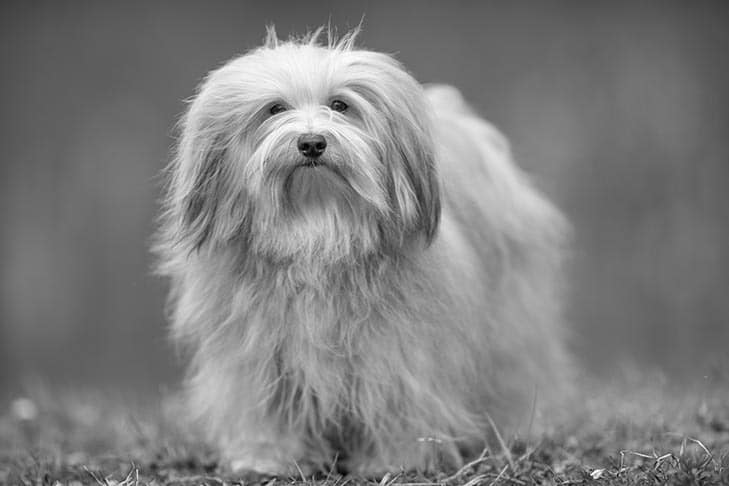
The Blanquito de la Habana is an extinct dog of the bichon-type that was once found on the island of Cuba. It is debated which bichons were used to create the breed. Some experts state their ancestors were brought by the Spanish and others the Italians. The Spanish would have arrived with the Bichon Tenerife, the most likely ancestor to the modern Bichon Frisé. On the other hand, the Italians would have brought either the Bolognese or the Maltese. The Blanquito de la Habana remained popular in Cuba until the 1800s when outside crosses with Poodles transformed the breed into the modern day Havanese.
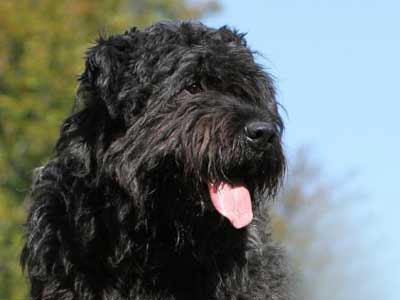
The Bouvier des Moerman was one of five recognized breeds of Belgian bouviers. Two of these breeds still exist today, the Bouvier des Flandres and Bouvier des Ardennes. The remaining two are also extinct, the Bouvier des Roulers and Bouvier des Paret. Bouviers have worked as cattle drovers across Belgium for centuries. Bred for their abilities, rather than appearance many different varieties existed in different regions. The Bouvier des Roulers, Bouvier des Moerman, and Bouvier des Paret were lost after their numbers were decimated during both World Wars. Any remaining breeding stock was used in rebuilding the Bouvier des Flandres.
The Bouvier des Paret was one of five recognized breeds of Belgian bouviers. Two of these breeds still exist today, the Bouvier des Flandres and Bouvier des Ardennes. The remaining two are also extinct, the Bouvier des Moerman and Bouvier des Roulers. Bouviers have worked as cattle drovers across Belgium for centuries. Bred for their abilities, rather than appearance many different varieties existed in different regions. The Bouvier des Roulers, Bouvier des Moerman, and Bouvier des Paret were lost after their numbers were decimated during both World Wars. Any remaining breeding stock was used in rebuilding the Bouvier des Flandres.
The Bouvier des Roulers was one of five recognized breeds of Belgian bouviers. Two of these breeds still exist today, the Bouvier des Flandres and Bouvier des Ardennes. The remaining two are also extinct, the Bouvier des Moerman and Bouvier des Paret. Bouviers have worked as cattle drovers across Belgium for centuries. Bred for their abilities, rather than appearance many different varieties existed in different regions. The Bouvier des Roulers, Bouvier des Moerman, and Bouvier des Paret were lost after their numbers were decimated during both World Wars. Any remaining breeding stock was used in rebuilding the Bouvier des Flandres.
The Céris is an extinct breed of dog that was created in France by Monsieur de Céris. It was developed for hunting both small prey, such as hare and larger animals such as wolves in packs. Their ancestors were the Chien Blanc du Roi and smaller Swiss hounds. Little information is known about this breed, other than it was used in the creation of the Billy before its extinction.
The Chien Blanc du Roi or King’s White Hound was a pack of scenthounds kept by a line of French kings from the 15th to 18th centuries. They were created in 1470 when a squire gifted King Louis the XI with a pure white Saint Hubert Hound. A superb hunter, he was crossed with the existing royal pack. In 1500 Louis XII introduced Italian Pointer blood and Francis I added a "Breton Hound" (likely a Grand Fauve de Bretagne) in 1520. Both of these crosses helped strengthen the bloodline, which had been suffering from inbreeding. Hounds were often gifted from one royal court to another, and the Chien Blanc du Roi was no exception.
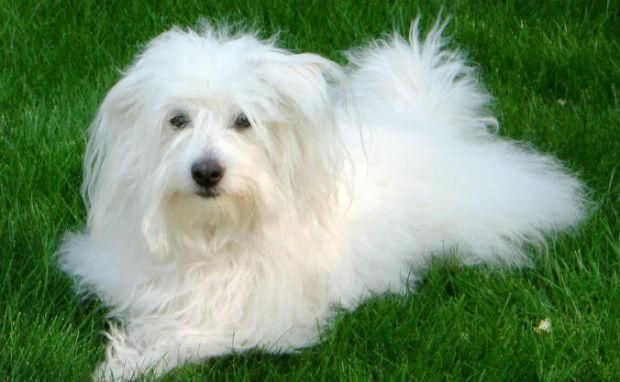
The Coton de Reunion was a bichon-type of dog once found on the African island of Reunion, which is located in the Indian Ocean, about 500 miles east of Madagascar. Most authors state these dogs were brought to the island by the French (likely early predecessors of the Bichon Frisé), but others state they arrived via the Bichon Tenerife of the Canary Islands. Either, or perhaps both theories may be correct, although it matters little as the same root stock would have been used to create both strains. When the Suez canal opened in 1869 this caused Reunion to lose much of its commercial importance. This brought extinction to the Coton de Reunion, but not before the breed made it to Madagascar and became the basis of the modern Coton de Tuléar.
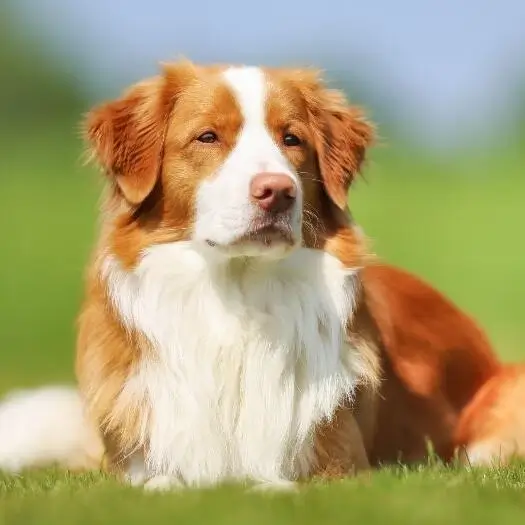
The English Red Decoy Dog is most often mentioned as a possible ancestor to the Nova Scotia Duck Tolling Retriever. At times it will even be found in text alongside the Kooikerhondje. In reality, these dogs were not a breed, but a type used as a decoy to hunt waterfowl. It is said any red dog that had the skill to entice waterfowl into waiting nets was used. During this time period, there were few established breeds. Today it remains one of many that exists only in breed reference books, repeated over and over from one source to the next. If these dogs had any part to play in the development of the Nova Scotia Duck Tolling Retriever or Kooikerhondje, it was in the hunting style passed from one generation to the next.
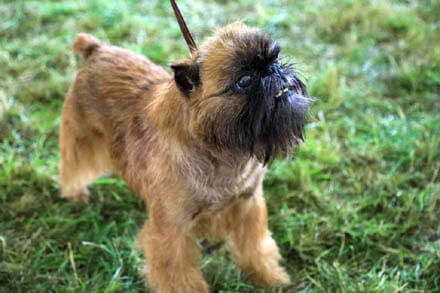
The Griffon d’Ecurie was developed as a ratter working in the stables of Belgian carriage men. They were part of the pinscher/schnauzer family of dogs, which includes modern breeds such as the Affenpinscher, Schnauzers, and German and Austrian Pinschers. Like many extinct dogs, this breed was transformed due to the addition of foreign breeds. In this case, the Griffons d’Ecurie became the modern Brussels Griffon, Belgian Griffon, and Petit Brabançon. It is believed both the Pug and King Charles Spaniel (English Toy Spaniel) were heavily crossed with the Griffon d’Ecurie during the late 1700s and 1800s. This led to them being much smaller than their working counterparts. They no longer had the drive to exterminate vermin and in time the need for stable dogs was lessened as horse-drawn carriages were replaced with automobiles.
The Hall’s Heeler was a strain of cattle dog developed by Thomas Hall in Australia. It is the direct ancestor to the modern day Australian Cattle Dog although other breeds were used in its development. By the 1840s the Hall’s Heeler was breeding true. However for business reasons Hall rarely allowed outsiders to obtain his dogs. Upon his death in 1870 the line would finally be dispersed and the transformation from Hall’s Heeler to the modern Australian Cattle Dog began.
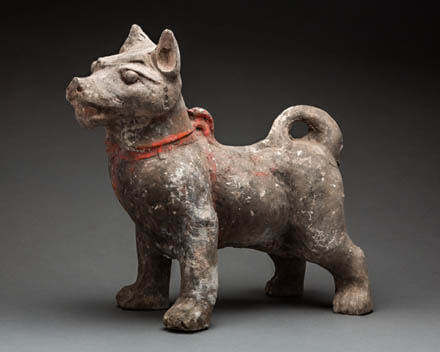
The Han Dog is a type of dog that existed in ancient China. They were common in the Han Dynasty and flourished from 25-220 AD. Although little mention of them is made in literature, they live on in artwork and sculpture. It is believed the Han Dog was a house and property guard, tethered outside to drive off intruders. Effigies of these dogs litter tombs, still protecting their dead masters. In appearance, the Han Dog resembles a short coated Chinese Shar-Pei or Chow Chow. Both breeds may be its modern descendants, along with the lesser-known Chinese Chongqing Dog.
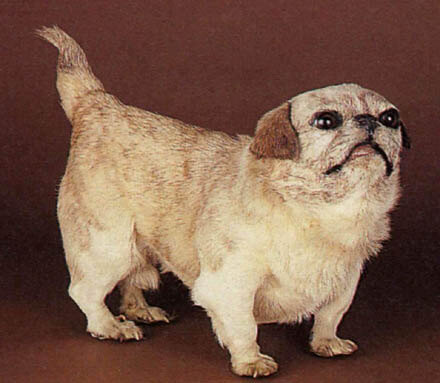
The Happa Dog was a breed of dog that originated in China. It was closely related to the Pug and Pekingese and looked much like a designer dog of the two. One that did not turn out as the breeder had intended. It is disputed which of these three breeds was ancestor to the other. A riddle with no answer, it may be that they were all developed around the same time period. In some literature the Happa Dog has also been declared the ancestor to the Tibetan Spaniel and Japanese Chin.
The Larye (sometimes spelled Layrre) is an extinct breed of dog that was created in France by Monsieur de Larye. It was a pack hound, said to have a keen nose. Little information is known about this breed, other than it was used in the creation of the Billy before its extinction. All that remains of two now-extinct hounds is the DNA found in the Billy, a French breed created by combining the extinct Larrye, and Montemboeuf, Ceris, and the extant Poitevin.
The Leauvenaar is an extinct breed of dog that once existed near the Belgian city of Leuven. It was said to be a large black sheepdog that doubled as a watchdog. It would accompany wagons on the roadways, assuring they arrived from one location to another without losses. Little is known about the Leauvenaar, but it is often stated as being the ancestor to both the Schipperke and the Groenendael.
The Montembeouf (sometimes spelled Montainboeuf or Montaimboeuf) is an extinct breed of dog that was created in France by Monsieur de Montembeouf. It was a large, elegant hound, developed for wild boar in packs. Little information is known about this breed, other than it was used in the creation of the Billy before its extinction.
The Normand Hound was a scenthound that hailed from the Normandy region of France. They are considered to be a direct descendant of the Saint Hubert Hound, which would eventually become the modern-day Bloodhound. Normand Hounds are believed to be the strain of Saint Huberts that were first taken to England. Already rare by the late 1700s, the last surviving pack was documented in 1875. Before its extinction, the Normand Hound gave rise not only to the Bloodhound but most of the French scenthounds.
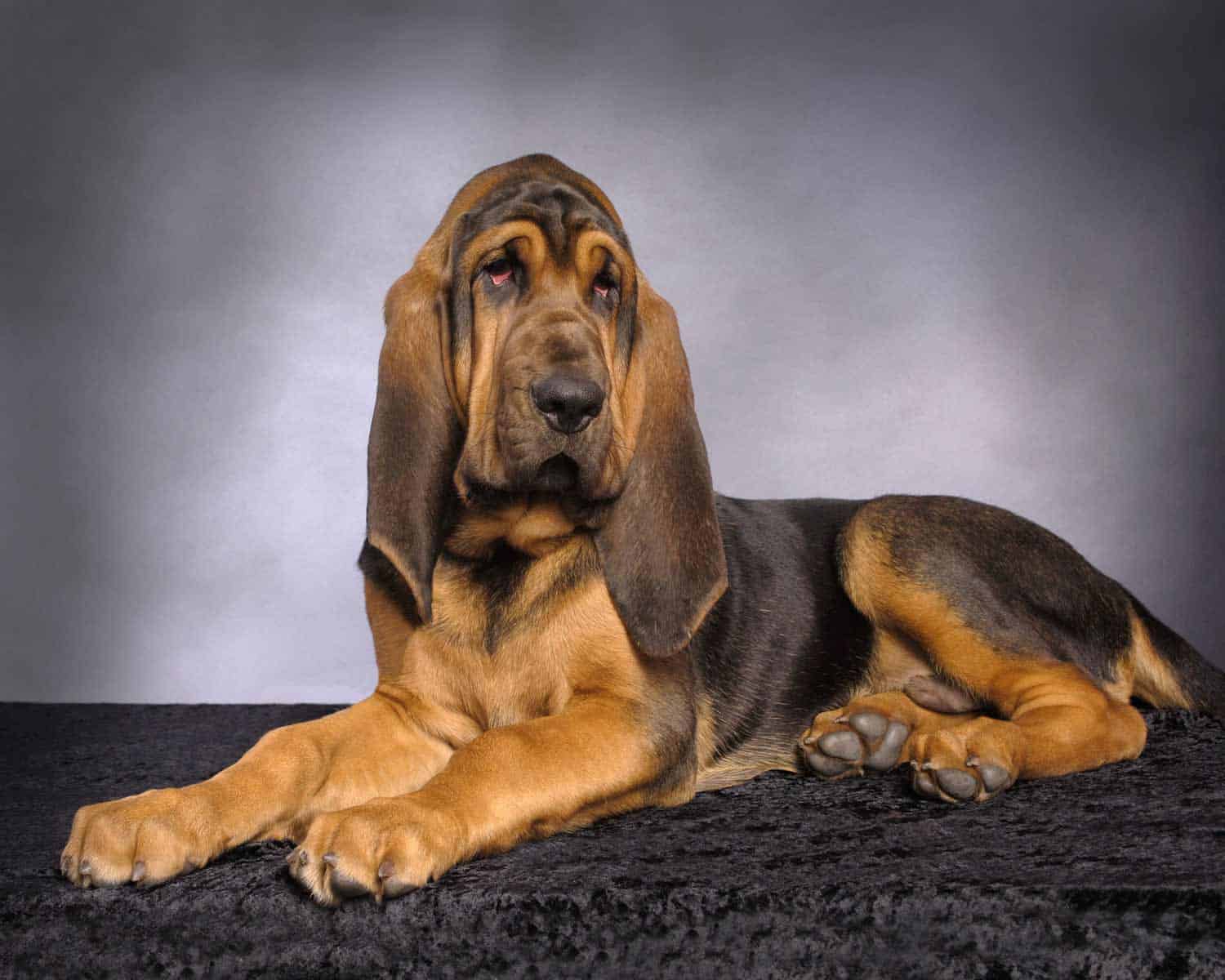
The Saint Hubert Hound was the direct ancestor to the modern Bloodhound. Indeed, it is still known by this name in some countries, particularly France, where it is known as the Chien de Saint Hubert. However, it is accepted by most experts that the Saint Hubert Hound was extinct by the 1800s, the last of their line likely perished in the French Revolution. For centuries the Monastery sent hounds to the King of France each year. Some kings used them almost exclusively, while others not at all. Whether or not French hounds were the root stock of the Saint Hubert Hound, it certainly influenced the former. Today the Saint Hubert Hound lives on, not only in name, but in the bloodline of many scenthounds around the world.
The Timmon’s Biter was a strain of cattle dog developed by a man by the name of James Timmons in Australia during the 1800s. Most sources state he used Smithfields crossed with Dingos to create his bloodline. The resulting dogs were often too rough with the cattle, giving them the name of "biters". Some authors credit the Timmon’s Biter as being used in the development of the Australian Cattle Dog. However, other authors indicate Thomas Hall supplied a pair of his Hall’s Heeler to Timmon to begin breeding. The Hall’s Heeler is the primary ancestor to the Australian Cattle Dog, although it is possible the Timmon’s Biter also played a role
A French breed of scenthound from Brittany that was used to hunt wolves and wild boar; the breed became extinct in the late 19th century after the extirpation of wolves from much of France.
Dogica® collects only technical cookies. No any personal or private information being collected, saved or shared here. 3rd Party cookies could be collected by various installed widgets.
The information contained in or provided through DOGICA® site is intended for general consumer understanding and education only and is not intended to be and is not a substitute for professional advice.
Use of this site and any information contained on or provided through this site is provided on an "as is" basis without any representations, warranties or pay.


























WORLD OF DOG & PUPPY 🐶